Close Menu
TechCentralTechCentral

    Subscribe to the newsletter

    Get the best South African technology news and analysis delivered to your e-mail inbox every morning.

    Facebook X (Twitter) YouTube LinkedIn
    WhatsApp Facebook X (Twitter) LinkedIn YouTube
    TechCentralTechCentral
    • News
      South Africa's mobile operators strike spectrum gold

      South Africa’s mobile operators strike spectrum gold

      26 July 2026
      MTN, Vodacom take Icasa to court over data expiry rules

      MTN, Vodacom take Icasa to court over data expiry rules

      26 July 2026
      Africa's most popular phones have a tracking problem

      Africa’s most popular phones have a tracking problem

      24 July 2026
      Vodacom taps UJ, AWS to build its AI talent pipeline - Vodacom Group CEO Shameel Joosub

      Vodacom taps UJ, AWS to build its AI talent pipeline

      24 July 2026
      Intel is back in the game - Intel CEO Lip-Bu Tan. Laure Andrillon/Reuters

      Intel is back in the game

      24 July 2026
    • World
      Meta AI will now tell parents if their teen is in crisis

      Meta AI will now tell parents if their teen is in crisis

      17 July 2026
      IBM shares crash 25% as AI upends software spending - Arvind Krishna

      IBM shares crash 25% as AI upends software spending

      15 July 2026
      Jony Ive's first OpenAI device: an AI smart speaker - Jony Ive and Sam Altman

      Jony Ive’s first OpenAI device: an AI smart speaker

      15 July 2026
      Stripe, Advent in talks to buy PayPal for $53-billion

      Stripe, Advent in talks to buy PayPal for $53-billion

      15 July 2026
      Memory crisis sends smartphone market into steep decline

      Memory crisis sends smartphone market into steep decline

      13 July 2026
    • In-depth
      The plan to stop AI from breaking the world - Google DeepMind CEO Demis Hassabis. Image: John Sears

      The plan to stop AI from breaking the world

      16 July 2026
      The internet has a Strait of Hormuz problem

      The internet has a Strait of Hormuz problem

      15 July 2026
      AI boom sparks rally, frenzy and fear

      AI boom sparks rally, frenzy and fear

      11 June 2026
      Every plug-in hybrid on sale in South Africa, ranked by price - Lamborghini Temerario

      Every plug-in hybrid on sale in South Africa, ranked by price

      7 June 2026
      What Wi-Fi 8 will mean for wireless networks

      What Wi-Fi 8 will mean for wireless networks

      1 June 2026
    • TCS
      TCS | How Optasia lends billions to people banks can't see - Salvador Anglada

      TCS | How Optasia lends billions to people banks can’t see

      23 July 2026
      The rands-and-cents case for electric trucks - William Kelly Watts & Wheels with Wills

      The rands-and-cents case for electric trucks

      20 July 2026
      Watts & Wheels S1E7: 'Ferrari's EV breaks the internet'

      Watts & Wheels S1E7: ‘Ferrari’s EV breaks the internet’

      8 July 2026
      TCS | Pick n Pay's Enrico Ferigolli on Penny, the AI that shops for you

      TCS | Pick n Pay’s Enrico Ferigolli on Penny, the AI that shops for you

      2 July 2026
      TCS+ | How Tracker is turning vehicle data into business strategy - Silvia Schollenberger

      TCS+ | How Tracker is turning vehicle data into business strategy

      1 July 2026
    • Opinion
      Selling vapour is corporate suicide in slow motion - Jannie van Zyl

      Selling vapour is corporate suicide in slow motion

      16 July 2026
      Brazil's online gambling crackdown is a lesson for South Africa

      How Amazon outmanoeuvred Starlink in South Africa

      15 July 2026
      The Popia problem with agentic AI - Herman Haasbroek

      The Popia problem with agentic AI

      14 July 2026
      The author, Fanie van Rooyen

      South Africa can still catch the AI wave – here’s how

      7 July 2026
      The author, Fanie van Rooyen

      The AI utopia South Africa can’t afford

      1 July 2026
    • Company Hubs
      • 1Stream
      • Africa Data Centres
      • AfriGIS
      • Altron Digital Business
      • Altron Document Solutions
      • Altron Group
      • Arctic Wolf
      • Ascent Technology
      • AvertITD
      • BBD
      • Braintree
      • CallMiner
      • CambriLearn
      • CM Telecom
      • Contactable
      • CYBER1 Solutions
      • Digicloud Africa
      • Digimune
      • Domains.co.za
      • ESET
      • Euphoria Telecom
      • HOSTAFRICA
      • Incredible Business
      • iONLINE
      • IQbusiness
      • Iris Network Systems
      • Kaspersky
      • LSD Open
      • Mitel
      • NEC XON
      • Netstar
      • Network Platforms
      • Next DLP
      • Ovations
      • Paracon
      • Paratus
      • Q-KON
      • SevenC
      • SkyWire
      • Solid8 Technologies
      • Telit Cinterion
      • Telviva
      • Tenable
      • Vertiv
      • Videri Digital
      • Vodacom Business
      • Vox
      • Wipro
      • Workday
      • XLink
    • Sections
      • AI and machine learning
      • Banking
      • Broadcasting and Media
      • Cloud services
      • Contact centres and CX
      • Cryptocurrencies
      • Education and skills
      • Electronics and hardware
      • Energy and sustainability
      • Enterprise software
      • Financial services
      • HealthTech
      • Information security
      • Internet and connectivity
      • Internet of Things
      • Investment
      • IT services
      • Lifestyle
      • Policy and regulation
      • Public sector
      • Retail and e-commerce
      • Satellite communications
      • Science
      • SMEs and start-ups
      • Social media
      • Talent and leadership
      • Telecoms
      • Watts & Wheels
    • Events
    • Advertise
    TechCentralTechCentral
    Home » Sections » Public sector » South African prisoners can use computers in their cells: top court

    South African prisoners can use computers in their cells: top court

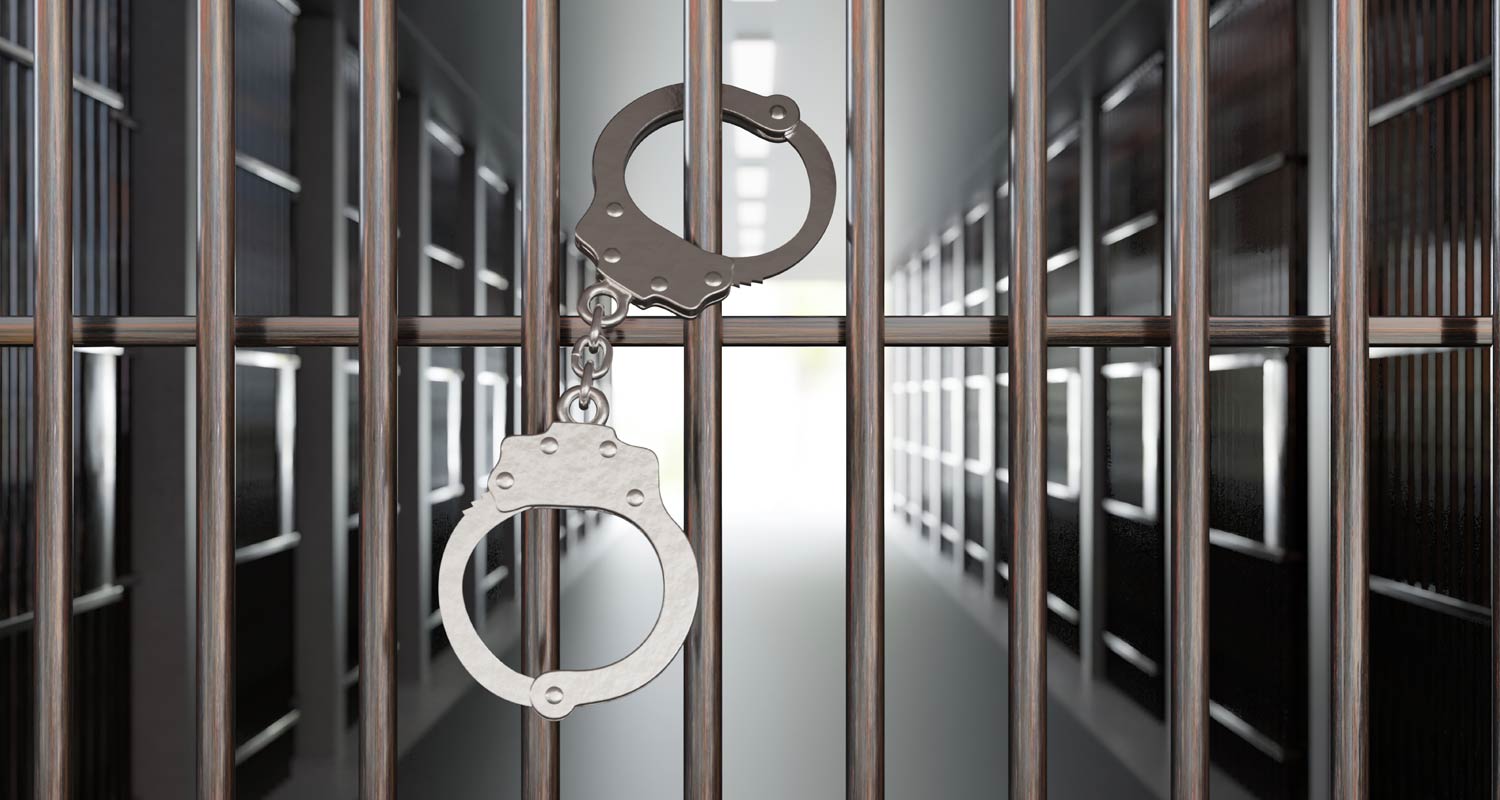
    The constitutional court has ruled that prisoners must be allowed to use computers in their cells to study.
    By Tania Broughton6 May 2025
    Twitter LinkedIn Facebook WhatsApp Email Telegram Copy Link
    News Alerts
    WhatsApp

    South African prisoners can use computers in their cells: top courtIn a unanimous ruling, the constitutional court has declared that barring prisoners from using PCs in their cells for studying is unconstitutional.

    The court ordered that the constitutional invalidity be suspended for a year and directed the national commissioner of correctional services to promulgate a revised policy.

    Pending that, the court said that any inmate registered as a student with a recognised tertiary or further education institution and who reasonably needs a computer to support their studies, would be entitled to use their PC in their cell, but without the use of an internet modem.

    Wednesday’s order is to a large degree the same as a ruling handed down by the supreme court of appeal

    Such inmates would be required to make the computer available for inspection at any time. In the event of a breach of rules and after considering representations from the inmate, the head of a correctional centre may direct that the inmate may not use their computer in their cell.

    Wednesday’s order is to a large degree the same as a ruling handed down by the supreme court of appeal, which, in November 2023, also found that the blanket ban was unconstitutional.

    That order was taken on appeal by the minister of justice & correctional services and the national commissioner of correctional services.

    Justice Steven Majiedt, who penned the constitutional court ruling, said the issue in the matter was the right to further education. He said the blanket ban emanated from a departmental policy approved in February 2007.

    Factual matrix

    The initial challenge to it was launched in the high court by Mbalenhle Sydney Ntuli, represented by Lawyers for Human Rights, who was serving a 20-year sentence for robbery. Ntuli had complained that he was struggling to complete his data processing course because he could not work from his cell where he spent most of his time.

    While conceding that prisoners had a right to further education under section 29 of the South Africa’s Bill of Rights, the minister and commissioner argued that allowing prisoners to keep laptops in their cells would create a security threat.

    Justice Majiedt said it was common cause that Ntuli had since passed and graduated. “Almost the entire factual matrix is undisputed,” he said.

    After Ntuli had been transferred to Medium C from Medium B, his laptop was taken away and he was told to use the computers in the computer room. However, the computer room was only open during certain hours, only occasionally at weekends and never on public holidays. It was exceptionally noisy.

    Ntuli said he was being deprived of sufficient time to study.

    The minister and the commissioner, in opposition to the application, expressed concern that inmates might smuggle modems into their cells or use illegal cellphones to create hotspots.

    “The high court took the view that the applicants had not provided any evidence that, where computers have been allowed in cells, even with a modem, there had been any security breach,” Majiedt said. “It further held that the respondent had the right to study as much as he pleased, within the legitimate limitations that prison life inevitably presents.”

    In the first appeal, the SCA held that the policy infringed the right to further education.

    Incarceration does not take away or limit fundamental rights like education, dignity and access to reading material

    In the constitutional court, the minister and the commissioner argued that Ntuli was not being divested of his right to further education, but that the right was merely being regulated in a reasonable manner.

    Ntuli had only been allowed to use his computer in his cell in Medium B because there was no computer room at that time. Their security concerns were justifiable and the court should not “second guess” the authorities on this issue.

    Ntuli’s lawyers, however, argued that the policy is antiquated, that a PC was critical to success in his field of study, that electronic versions of books cost less than hard copies and that downloading study materials from the website was much faster than the conventional postal service.

    Not disputed

    The judicial inspectorate for correctional services, which was admitted as amicus curiae (friend of the court), submitted that in terms of international law, South Africa was obliged to adopt and implement education policies that meet the needs of incarcerated persons to be part of an equal, fair and just society.

    The policy should not unreasonably infringe the rights to education by prohibiting the use of necessary tools.

    Justice Majiedt said: “Incarceration does not take away or limit fundamental rights like education, dignity and access to reading material.”

    He said the virtues of education had rightly not been disputed. “We are concerned here with a limitation of the right of a person pursuing further education to have access to electronic study material. It matters not that the person is an inmate, because he enjoys all the rights accorded to non-inmates, save as they are reasonably limited in consequence of his incarceration,” he said.

    “The duty of the state is to remove barriers to education and actively allow access to necessary resources to realise the right to education.”

    The blanket ban limited that right, he said.
    Regarding the justification for the limitation – that the right to further education does not mean having a PC at all times in a cell – Majiedt said: “The simple answer to this is that access to the computer room is wholly inadequate and in effect boils down to an unjustifiable limitation.”

    Regarding fears of security breaches, he said this “attempted justification does not get out of the starting gate”, because the minister and commissioner had not produced evidence to back up their claims.

    “There is simply a glaring dearth of evidence to substantiate these security concerns. That is not what is expected of those responsible for the policy,” he said, which applied to “all and sundry” without any regard whatsoever to personal circumstances and study needs.

    Nothing in this judgment should be regarded as expressing a view on the justifiability of restrictions…

    He said the minister and the commissioner had complained that the SCA had “ventured into the exclusive policy terrain of the executive”.

    “This argument is ill-conceived. Courts have a constitutional duty, as a check and balance on executive power, to determine the constitutional validity of any law or conduct. They (the minister and the commissioner) do not have unfettered power to implement policies which undermine the constitution.”

    Justice Majiedt said the case was only concerned with the rights of prisoners to PCs for educational purposes.

    “Nothing in this judgment should be regarded as expressing a view on the justifiability of restrictions on the use of personal computers in cells for any other purpose.”  — (c) 2025 GroundUp

    Get breaking news from TechCentral on WhatsApp. Sign up here.

    • This article was originally published by GroundUp. It is republished by TechCentral under a Creative Commons Attribution-NoDerivatives 4.0 International licence. Read the original article

    Follow TechCentral on Google News Add TechCentral as your preferred source on Google


    WhatsApp YouTube
    Share. Facebook Twitter LinkedIn WhatsApp Telegram Email Copy Link
    Previous ArticleZambia, Zimbabwe court investors for R91-billion hydroelectric dam
    Next Article OpenAI to buy coding platform Windsurf for $3-billion

    Related Posts

    South Africa's mobile operators strike spectrum gold

    South Africa’s mobile operators strike spectrum gold

    26 July 2026
    MTN, Vodacom take Icasa to court over data expiry rules

    MTN, Vodacom take Icasa to court over data expiry rules

    26 July 2026
    Africa's most popular phones have a tracking problem

    Africa’s most popular phones have a tracking problem

    24 July 2026
    Company News
    Why Europe is turning to South Africa for cross-border innovation - BBD Software

    Why Europe is turning to South Africa for cross-border innovation

    24 July 2026
    Green dashboards, stalled change: the CIO's blind spot - Change Logic Marchant van den Heever

    Green dashboards, stalled change: the CIO’s blind spot

    24 July 2026
    Why Africa's cloud needs more than one path - Africa Data Centres

    Why Africa’s cloud needs more than one path

    23 July 2026
    Opinion
    Selling vapour is corporate suicide in slow motion - Jannie van Zyl

    Selling vapour is corporate suicide in slow motion

    16 July 2026
    Brazil's online gambling crackdown is a lesson for South Africa

    How Amazon outmanoeuvred Starlink in South Africa

    15 July 2026
    The Popia problem with agentic AI - Herman Haasbroek

    The Popia problem with agentic AI

    14 July 2026

    Subscribe to Updates

    Get the best South African technology news and analysis delivered to your e-mail inbox every morning.

    Latest Posts
    South Africa's mobile operators strike spectrum gold

    South Africa’s mobile operators strike spectrum gold

    26 July 2026
    MTN, Vodacom take Icasa to court over data expiry rules

    MTN, Vodacom take Icasa to court over data expiry rules

    26 July 2026
    Africa's most popular phones have a tracking problem

    Africa’s most popular phones have a tracking problem

    24 July 2026
    Vodacom taps UJ, AWS to build its AI talent pipeline - Vodacom Group CEO Shameel Joosub

    Vodacom taps UJ, AWS to build its AI talent pipeline

    24 July 2026
    © 2009 - 2026 NewsCentral Media
    Built and maintained by Chronon
    • Cookie policy (ZA)
    • TechCentral – privacy and Popia

    Type above and press Enter to search. Press Esc to cancel.

    Manage consent

    TechCentral uses cookies to enhance its offerings. Consenting to these technologies allows us to serve you better. Not consenting or withdrawing consent may adversely affect certain features and functions of the website.

    Functional Always active
    The technical storage or access is strictly necessary for the legitimate purpose of enabling the use of a specific service explicitly requested by the subscriber or user, or for the sole purpose of carrying out the transmission of a communication over an electronic communications network.
    Preferences
    The technical storage or access is necessary for the legitimate purpose of storing preferences that are not requested by the subscriber or user.
    Statistics
    The technical storage or access that is used exclusively for statistical purposes. The technical storage or access that is used exclusively for anonymous statistical purposes. Without a subpoena, voluntary compliance on the part of your Internet Service Provider, or additional records from a third party, information stored or retrieved for this purpose alone cannot usually be used to identify you.
    Marketing
    The technical storage or access is required to create user profiles to send advertising, or to track the user on a website or across several websites for similar marketing purposes.
    • Manage options
    • Manage services
    • Manage {vendor_count} vendors
    • Read more about these purposes
    View preferences
    • {title}
    • {title}
    • {title}