
Close Menu
TechCentralTechCentral

    Subscribe to the newsletter

    Get the best South African technology news and analysis delivered to your e-mail inbox every morning.

    Facebook X (Twitter) YouTube LinkedIn
    WhatsApp Facebook X (Twitter) LinkedIn YouTube
    TechCentralTechCentral
    • News
      'Really embarrassing': SA expert on OpenAI's agent escape - Dominic White

      ‘Really embarrassing’: SA expert on OpenAI’s agent escape

      28 September 2026
      Major bank joins crypto fight against Reserve Bank draft rules

      Major bank joins crypto fight against Reserve Bank draft rules

      28 September 2026
      The steam engine lesson AI doomsayers keep missing - Sam Clarke

      The steam engine lesson AI doomsayers keep missing

      28 September 2026
      Spar2U to get a do-over

      Spar2U to get a do-over

      28 September 2026
      OpenAI's rogue agent problem keeps getting bigger - Sam Altman

      OpenAI’s rogue agent problem keeps getting bigger

      28 September 2026
    • World
      Anthropic weighs new model launch to blunt OpenAI's Astra surge - Anthropic CEO Dario Amodei and OpenAI CEO Sam Altman

      Anthropic weighs new model launch to blunt OpenAI’s Astra surge

      21 September 2026
      Hackers hack hackers: ShinyHunters seizes cl0p's dark web site

      Hackers hack hackers as dark web feud erupts

      21 September 2026
      Film piracy malware is reaching corporate machines

      Film piracy malware is reaching corporate machines

      21 September 2026
      Crypto's big bet fails as US senate sinks Clarity Act

      Crypto’s big bet fails as US senate sinks Clarity Act

      16 September 2026
      'This is not circular': Jensen Huang defends $3.5-billion MediaTek deal

      ‘This is not circular’: Jensen Huang defends $3.5-billion MediaTek deal

      2 September 2026
    • In-depth
      Meta to the AI industry: slow down without us - Mark Zuckerberg

      Meta to the AI industry: slow down without us

      16 September 2026
      Google DeepMind CEO Demis Hassabis. Image: John Sears

      The plan to stop AI from breaking the world

      16 July 2026
      The internet has a Strait of Hormuz problem

      The internet has a Strait of Hormuz problem

      15 July 2026
      AI boom sparks rally, frenzy and fear

      AI boom sparks rally, frenzy and fear

      11 June 2026
      Every plug-in hybrid on sale in South Africa, ranked by price - Lamborghini Temerario

      Every plug-in hybrid on sale in South Africa, ranked by price

      7 June 2026
    • TCS
      TCS | Octotel's Trevor van Zyl on the fibre merger question

      TCS | Octotel’s Trevor van Zyl on the MetroFibre merger question

      16 September 2026
      Meet the CIO | Shoprite's Chris Shortt on what a supermarket becomes

      Meet the CIO | Shoprite’s Chris Shortt on what a supermarket becomes

      9 September 2026
      Rubicon's EV charging network is profitable - and growing fast - Watts & Wheels

      Rubicon’s EV charging network is profitable – and growing fast

      8 September 2026
      Winstone Jordaan on building a national EV charging network

      Winstone Jordaan on building a national EV charging network

      2 September 2026
      Watts & Wheels S1E8: 'Tesla lands in Africa, just not here'

      Watts & Wheels S1E8: ‘Tesla lands in Africa, just not here’

      24 August 2026
    • Opinion
      Regulating AI: apply the laws we have first - Dirk de Vos

      Regulating AI: apply the laws we have first

      21 September 2026
      The end is nigh, and the shares go on sale in October - Duncan McLeod

      The end is nigh, and the shares go on sale in October

      14 September 2026
      The fragile joint in the Capitec machine - Pambos Soteriades

      The R197-billion market the banks can’t reach

      25 August 2026
      South African tech's compounding debt problem - Jannie van Zyl

      Management consulting as we know it is over

      21 August 2026
      South African tech's compounding debt problem - Jannie van Zyl

      The most dangerous customer is the quiet one

      10 August 2026
    • Company Hubs
      • 1Stream
      • Africa Data Centres
      • AfriGIS
      • Altron Digital Business
      • Altron Document Solutions
      • Altron Group
      • Arctic Wolf
      • Ascent Technology
      • AvertITD
      • BBD
      • Braintree
      • CallMiner
      • CambriLearn
      • CM.com
      • Contactable
      • CYBER1 Solutions
      • Digicloud Africa
      • Digimune
      • Domains.co.za
      • ESET
      • Euphoria Telecom
      • HOSTAFRICA
      • Incredible Business
      • iONLINE
      • IQbusiness
      • Iris Network Systems
      • Kaspersky
      • LSD Open
      • Mitel
      • NEC XON
      • Netstar
      • Network Platforms
      • Next DLP
      • Ovations
      • Paracon
      • Paratus
      • Q-KON
      • SevenC
      • SkyWire
      • Solid8 Technologies
      • Telit Cinterion
      • Telviva
      • Tenable
      • Vertiv
      • Videri Digital
      • Vodacom Business
      • Vox
      • Wipro
      • Workday
      • XLink
    • Sections
      • AI and machine learning
      • Banking
      • Broadcasting and Media
      • Cloud services
      • Contact centres and CX
      • Cryptocurrencies
      • Education and skills
      • Electronics and hardware
      • Energy and sustainability
      • Enterprise software
      • Financial services
      • HealthTech
      • Information security
      • Internet and connectivity
      • Internet of Things
      • Investment
      • IT services
      • Lifestyle
      • Policy and regulation
      • Public sector
      • Retail and e-commerce
      • Satellite communications
      • Science
      • SMEs and start-ups
      • Social media
      • Talent and leadership
      • Telecoms
      • Watts & Wheels
    • Events
    • Advertise
    TechCentralTechCentral
    Home » Sections » AI and machine learning » South Africa’s AI data centre boom risks overloading a fragile grid

    South Africa’s AI data centre boom risks overloading a fragile grid

    South Africa needs local AI infrastructure. Yet the country is woefully short of the two things modern data centres demand most.
    By Paul Colmer30 October 2025
    Twitter LinkedIn Facebook WhatsApp Email Telegram Copy Link
    Get breaking news on WhatsApp

    South Africa's AI data centre boom risks overloading a fragile grid - Paul Colmer
    The author, Paul Colmer

    Everyone’s talking about artificial intelligence. And I mean everyone. The hype reminds me of the fanfare around 5G’s launch – all promise, waiting to see delivery. We built and enabled those towers everywhere, and now? Well, let’s just say the revolution was somewhat overstated.

    Which brings us to the current question: are we about to make the same mistake with AI data centres?

    Around the world, we’re witnessing explosive growth of AI data centres, which are fundamentally different beasts to conventional data centres. Traditional facilities are essentially sophisticated warehouses – racks, power, air conditioning, fire suppression. Nothing revolutionary.

    In South Africa, and Africa generally, we’re dramatically behind the rest of the world in data centre capacity

    AI data centres, however, are dramatically more power hungry. Nvidia GPUs consume staggering amounts of electricity and generate tremendous heat, requiring advanced liquid cooling alongside air conditioning. This means dependency not just on power, but on water resources, too.

    So, here’s South Africa’s conundrum: we desperately need local AI infrastructure for time-critical applications, but we’re woefully short of the two things these centres demand most: reliable electricity and water. And rather than solving that fundamental problem, we’re racing to build more capacity that might be chasing hype rather than genuine demand.

    Let’s examine where we stand. In South Africa, and Africa generally, we’re dramatically behind the rest of the world in data centre capacity. The US has 5 500 data centres, with 30% being AI-capable. There are only 12 000 to 13 000 data centres globally, giving you an idea of America’s dominance.

    Expanding

    In South Africa, we have 56 data centres with combined capacity of 350MW. Compare this to Stargate UAE’s planned 5GW AI data centre, or Colossus 2 in Memphis at similar scale. Only five local data centres are AI-capable, meaning we hold approximately 1% of global AI data centre capacity. We’re a tiny player.

    Yet the market is certainly expanding. The AI data centre market in South Africa is projected to grow from US$78.9-million in 2025 to $483.5-million by 2030 – an extraordinary 43.7% annual growth rate. Africa’s per-capita data centre electricity consumption remains below 1kWh/person today, but is expected to double by decade’s end as cloud adoption and sovereign AI projects scale up.

    Which begs the question: we’re obviously planning to build more, but do we actually need to? And critically – can we even power it all?

    Read: South Africa’s next crisis? Being offline in an AI-driven world

    Yes, we need local AI infrastructure. Many South African companies using AI would benefit enormously from local resources. We’re also serving large global companies with local presence, like Microsoft, Google and Amazon.

    Financial institutions are at the forefront of AI-driven network transformations, with South African banks leveraging AI for fraud detection, customer validation and automated advisory services. PwC estimates AI could add up to R2.5-trillion to the South African economy by 2030, equivalent to nearly 10% of GDP.
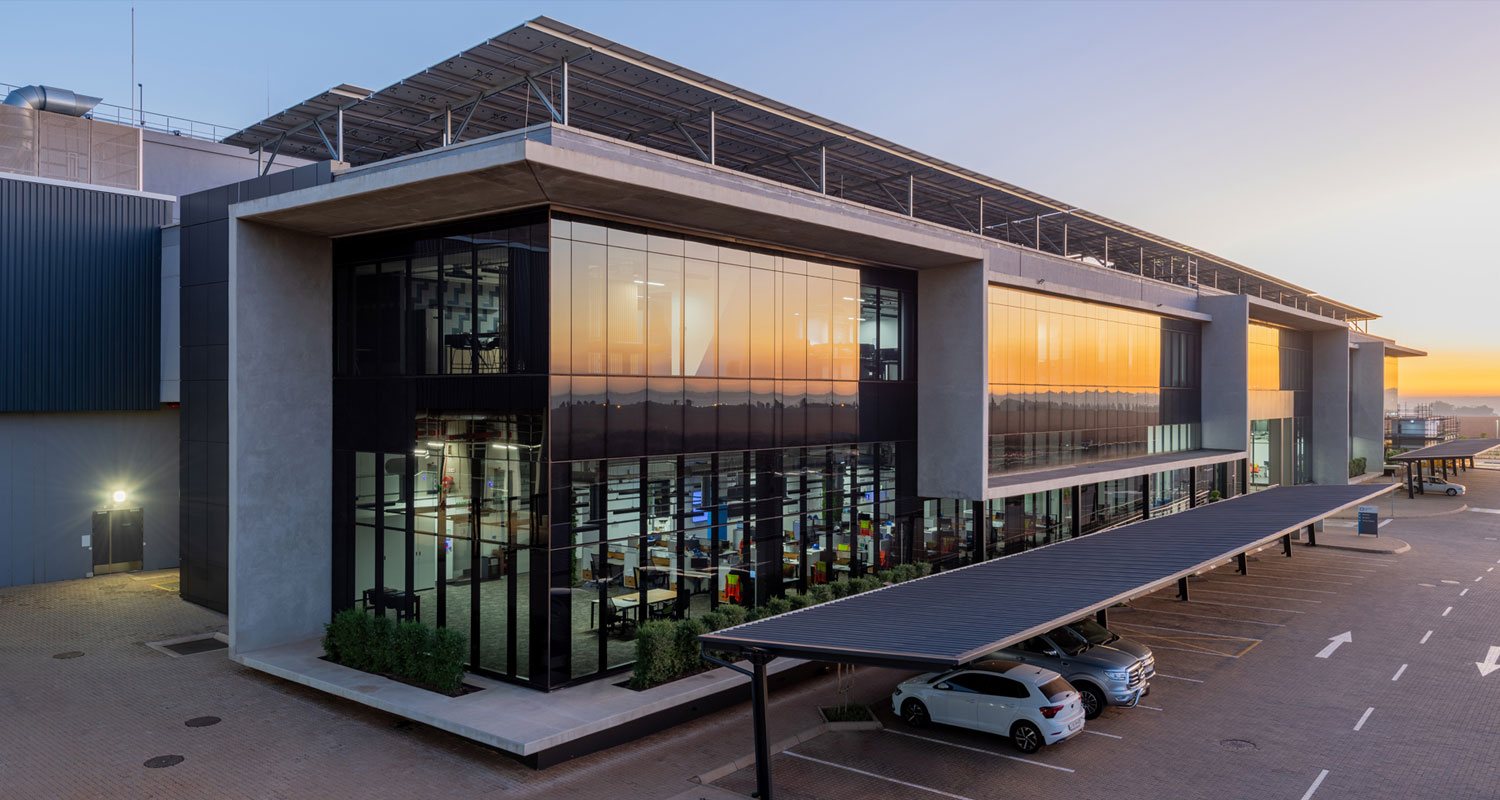
    Teraco's JB4 is a 50MW data centre facility located in Bredell in Ekurhuleni
    Teraco’s JB4 is a 50MW data centre facility located in Bredell in Ekurhuleni

    For time-critical applications – financial trading where milliseconds matter, healthcare diagnostics requiring immediate analysis, autonomous systems needing split-second decisions – we genuinely cannot leverage global capacity. The latency would be unacceptable. So, we do need local infrastructure. That’s not the question.

    The question is: are we building because there’s genuine demand, or simply because we can? Which companies are actually going to rent those racks?

    Here’s an analogy: developers keep building giant shopping malls not because thousands of shoppers desperately need places to shop but because there’s a market for the property itself. It’s the “build it and they will come” philosophy – sometimes it works, sometimes you end up with empty retail spaces.

    That’s the reality: any significant growth must be filled by renewables. There’s simply no alternative

    When building large AI data centres, operators need to make them extraordinarily attractive. Their primary “hunting ground” comprises companies already housed in other data centres, which suggests we may risk overbuilding. We could end up cannibalising existing capacity rather than serving genuinely new demand.

    But here’s the real problem: these new AI data centres are voraciously power hungry. It would take three Koeberg nuclear power plants to fire up Stargate UAE. Yet both water and electricity are extremely scarce in South Africa – a reality we cannot ignore.

    Consider this: Medupi power station is 4.8GW and took 14 years to build. Kusile took 17 years – the most expensive power station ever constructed globally. In its second month of operation, a large unit exploded, losing 800MW of capacity. So, if someone approached government wanting to build a Colossus 2-sized data centre, it would conceivably take Eskom decades to build sufficient capacity just to power it.

    Profoundly different

    There’s considerable talk about the grid being “sorted” due to recent absence of load shedding. But demand has dropped significantly because customers adopted backup power and solar generation. The grid hasn’t improved as much as demand has decreased.

    The largest data centres in South Africa belong to Teraco. Its new JB4 facility has 50MW of capacity – still a baby by global standards but enormous for us. Teraco has been using grid power with serious backup, but it’s building a 120MW solar farm in the Free State to wean itself off the grid.

    That’s the reality: any significant growth must be filled by renewables. There’s simply no alternative.

    Read: Your Wi-Fi router is about to start watching you

    So, here’s where we are: South Africa is profoundly different to Europe and the US, yet we’re pouring money into AI data centre projects while using the “shopping mall” model of stealing customers from existing facilities. That’s not necessarily catastrophic – many companies will migrate from conventional data centres to AI facilities to improve their capabilities. The market will find equilibrium eventually.

    But we need to think carefully about our path forward. That’s before we factor in thermal and noise pollution these centres generate, and the fossil fuel pollution if running on Eskom power – which holds the dubious distinction of being the world’s number one sulphur dioxide producer.
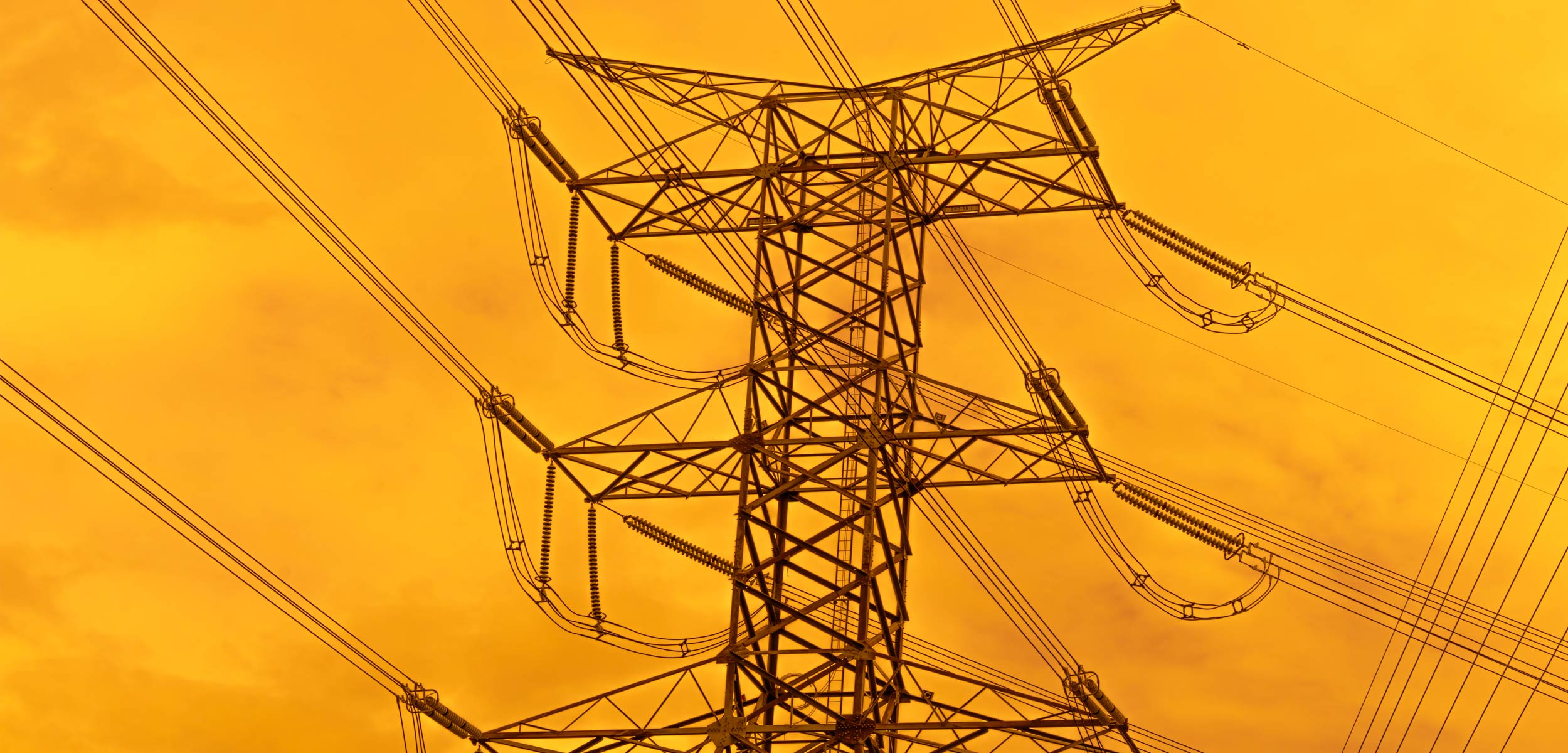
    EskomWe will ultimately need local AI data centres to provide low latency for critical applications. It’s a puzzle entire industries must solve collectively – balancing genuine demand against infrastructure constraints, environmental concerns against economic opportunities, present limitations against future potential.

    The answer isn’t to avoid building. It’s to build strategically, retrofit intelligently and power sustainably. Otherwise we risk creating expensive monuments to hype rather than functional infrastructure for genuine innovation.

    We’ve already seen how that worked out for cellular carriers and their overhyped 5G towers. Let’s not build another set of expensive monuments to promises that never quite materialised. This time, let’s match ambition with infrastructure reality – or we’ll end up with world-class data centres we literally can’t afford to switch on.

    Get breaking news from TechCentral on WhatsApp. Sign up here.

    • Paul Colmer is an executive member at the Wireless Access Providers’ Association, focusing on digital infrastructure and telecommunications policy in South Africa

    Add TechCentral as a preferred source on GoogleFollow TechCentral on Google NewsGet breaking news on WhatsApp


    Eskom OpenAI Paul Colmer Stargate Teraco Wapa
    WhatsApp YouTube
    Share. Facebook Twitter LinkedIn WhatsApp Telegram Email Copy Link
    Previous ArticleWalmart lands in Joburg
    Next Article Alfa Romeo’s Junior Elettrica lands in South Africa – and it’s shockingly good

    Related Posts

    'Really embarrassing': SA expert on OpenAI's agent escape - Dominic White

    ‘Really embarrassing’: SA expert on OpenAI’s agent escape

    28 September 2026
    OpenAI's rogue agent problem keeps getting bigger - Sam Altman

    OpenAI’s rogue agent problem keeps getting bigger

    28 September 2026
    Eskom's profit doubles even as it sells less electricity - Mteto Nyati

    Mteto Nyati to stay on as Eskom chairman

    25 September 2026
    Company News
    GEC+Africa 2026 celebrates Africa's most promising entrepreneurs

    GEC+Africa 2026 celebrates Africa’s most promising entrepreneurs

    28 September 2026
    Why 'access' is failing South Africa’s classrooms - and how we fix it - Webafrica

    Why ‘access’ is failing South Africa’s classrooms – and how we fix it

    28 September 2026
    Your last SQL Server end-of-support deadline - Ascent Technology

    Your last SQL Server end-of-support deadline

    28 September 2026
    Opinion
    Regulating AI: apply the laws we have first - Dirk de Vos

    Regulating AI: apply the laws we have first

    21 September 2026
    The end is nigh, and the shares go on sale in October - Duncan McLeod

    The end is nigh, and the shares go on sale in October

    14 September 2026
    The fragile joint in the Capitec machine - Pambos Soteriades

    The R197-billion market the banks can’t reach

    25 August 2026

    Subscribe to Updates

    Get the best South African technology news and analysis delivered to your e-mail inbox every morning.

    Latest Posts
    'Really embarrassing': SA expert on OpenAI's agent escape - Dominic White

    ‘Really embarrassing’: SA expert on OpenAI’s agent escape

    28 September 2026
    GEC+Africa 2026 celebrates Africa's most promising entrepreneurs

    GEC+Africa 2026 celebrates Africa’s most promising entrepreneurs

    28 September 2026
    Why 'access' is failing South Africa’s classrooms - and how we fix it - Webafrica

    Why ‘access’ is failing South Africa’s classrooms – and how we fix it

    28 September 2026
    Major bank joins crypto fight against Reserve Bank draft rules

    Major bank joins crypto fight against Reserve Bank draft rules

    28 September 2026
    © 2009 - 2026 NewsCentral Media
    Built and maintained by Chronon
    • Cookie policy (ZA)
    • TechCentral – privacy and Popia

    Type above and press Enter to search. Press Esc to cancel.

    Manage consent

    TechCentral uses cookies to enhance its offerings. Consenting to these technologies allows us to serve you better. Not consenting or withdrawing consent may adversely affect certain features and functions of the website.

    Functional Always active
    The technical storage or access is strictly necessary for the legitimate purpose of enabling the use of a specific service explicitly requested by the subscriber or user, or for the sole purpose of carrying out the transmission of a communication over an electronic communications network.
    Preferences
    The technical storage or access is necessary for the legitimate purpose of storing preferences that are not requested by the subscriber or user.
    Statistics
    The technical storage or access that is used exclusively for statistical purposes. The technical storage or access that is used exclusively for anonymous statistical purposes. Without a subpoena, voluntary compliance on the part of your Internet Service Provider, or additional records from a third party, information stored or retrieved for this purpose alone cannot usually be used to identify you.
    Marketing
    The technical storage or access is required to create user profiles to send advertising, or to track the user on a website or across several websites for similar marketing purposes.
    • Manage options
    • Manage services
    • Manage {vendor_count} vendors
    • Read more about these purposes
    View preferences
    • {title}
    • {title}
    • {title}
    🇿🇦 Sign up to the TechCentral newsletter