Close Menu
TechCentralTechCentral

    Subscribe to the newsletter

    Get the best South African technology news and analysis delivered to your e-mail inbox every morning.

    Facebook X (Twitter) YouTube LinkedIn
    WhatsApp Facebook X (Twitter) LinkedIn YouTube
    TechCentralTechCentral
    • News
      Vuyani Jarana: Mobile coverage masks a deeper broadband failure

      Vuyani Jarana: Mobile coverage masks a deeper broadband failure

      30 January 2026
      SABC Plus to flight Microsoft AI training videos

      SABC Plus to flight Microsoft AI training videos

      30 January 2026
      Fibre ducts

      Fibre industry consolidation in KZN

      30 January 2026
      Watts & Wheels S1E3: 'BYD's Corolla Cross challenger'

      Watts & Wheels S1E3: ‘BYD’s Corolla Cross challenger’

      30 January 2026
      What ordinary South Africans really think of AI

      What ordinary South Africans really think of AI

      30 January 2026
    • World
      Apple acquires audio AI start-up Q.ai

      Apple acquires audio AI start-up Q.ai

      30 January 2026
      SpaceX IPO may be largest in history

      SpaceX IPO may be largest in history

      28 January 2026
      Nvidia throws AI at the weather

      Nvidia throws AI at weather forecasting

      27 January 2026
      Debate erupts over value of in-flight Wi-Fi

      Debate erupts over value of in-flight Wi-Fi

      26 January 2026
      Intel takes another hit - Intel CEO Lip-Bu Tan. Laure Andrillon/Reuters

      Intel takes another hit

      23 January 2026
    • In-depth
      How liberalisation is rewiring South Africa's power sector

      How liberalisation is rewiring South Africa’s power sector

      21 January 2026
      The top-performing South African tech shares of 2025

      The top-performing South African tech shares of 2025

      12 January 2026
      Digital authoritarianism grows as African states normalise internet blackouts

      Digital authoritarianism grows as African states normalise internet blackouts

      19 December 2025
      TechCentral's South African Newsmakers of 2025

      TechCentral’s South African Newsmakers of 2025

      18 December 2025
      Black Friday goes digital in South Africa as online spending surges to record high

      Black Friday goes digital in South Africa as online spending surges to record high

      4 December 2025
    • TCS
      TCS+ | How Cloud On Demand is helping SA businesses succeed in the cloud - Xhenia Rhode, Dion Kalicharan

      TCS+ | Cloud On Demand and Consnet: inside a real-world AWS partner success story

      30 January 2026
      Watts & Wheels S1E3: 'BYD's Corolla Cross challenger'

      Watts & Wheels S1E2: ‘China attacks, BMW digs in, Toyota’s sublime supercar’

      23 January 2026

      TCS+ | Why cybersecurity is becoming a competitive advantage for SA businesses

      20 January 2026
      Watts & Wheels S1E3: 'BYD's Corolla Cross challenger'

      Watts & Wheels: S1E1 – ‘William, Prince of Wheels’

      8 January 2026
      TCS+ | Africa's digital transformation - unlocking AI through cloud and culture - Cliff de Wit Accelera Digital Group

      TCS+ | Cloud without culture won’t deliver AI: Accelera’s Cliff de Wit

      12 December 2025
    • Opinion
      South Africa's skills advantage is being overlooked at home - Richard Firth

      South Africa’s skills advantage is being overlooked at home

      29 January 2026
      Why Elon Musk's Starlink is a 'hard no' for me - Songezo Zibi

      Why Elon Musk’s Starlink is a ‘hard no’ for me

      26 January 2026
      South Africa's new fibre broadband battle - Duncan McLeod

      South Africa’s new fibre broadband battle

      20 January 2026
      AI moves from pilots to production in South African companies - Nazia Pillay SAP

      AI moves from pilots to production in South African companies

      20 January 2026
      South Africa's new fibre broadband battle - Duncan McLeod

      ANC’s attack on Solly Malatsi shows how BEE dogma trumps economic reality

      14 December 2025
    • Company Hubs
      • Africa Data Centres
      • AfriGIS
      • Altron Digital Business
      • Altron Document Solutions
      • Altron Group
      • Arctic Wolf
      • AvertITD
      • Braintree
      • CallMiner
      • CambriLearn
      • CYBER1 Solutions
      • Digicloud Africa
      • Digimune
      • Domains.co.za
      • ESET
      • Euphoria Telecom
      • Incredible Business
      • iONLINE
      • IQbusiness
      • Iris Network Systems
      • LSD Open
      • NEC XON
      • Netstar
      • Network Platforms
      • Next DLP
      • Ovations
      • Paracon
      • Paratus
      • Q-KON
      • SevenC
      • SkyWire
      • Solid8 Technologies
      • Telit Cinterion
      • Tenable
      • Vertiv
      • Videri Digital
      • Vodacom Business
      • Wipro
      • Workday
      • XLink
    • Sections
      • AI and machine learning
      • Banking
      • Broadcasting and Media
      • Cloud services
      • Contact centres and CX
      • Cryptocurrencies
      • Education and skills
      • Electronics and hardware
      • Energy and sustainability
      • Enterprise software
      • Financial services
      • Information security
      • Internet and connectivity
      • Internet of Things
      • Investment
      • IT services
      • Lifestyle
      • Motoring
      • Public sector
      • Retail and e-commerce
      • Satellite communications
      • Science
      • SMEs and start-ups
      • Social media
      • Talent and leadership
      • Telecoms
    • Events
    • Advertise
    TechCentralTechCentral
    Home » News » South Africa’s energy infrastructure is threatened, needs protection

    South Africa’s energy infrastructure is threatened, needs protection

    Public-private security partnerships must be established to bolster the security of the country’s electricity infrastructure.
    By The Conversation21 September 2022
    Twitter LinkedIn Facebook WhatsApp Email Telegram Copy Link
    News Alerts
    WhatsApp

    President Cyril Ramaphosa recently outlined plans to solve South Africa’s devastating electricity supply crisis. But he didn’t mention the country’s ability to protect its energy infrastructure as a prerequisite to any solution.

    South Africa has had power cuts since 2007 when Eskom, the power utility, began failing to meet demand. This got worse every year. The power utility is struggling to keep its aged coal-fired power stations running after many years of poor maintenance. It is also struggling to get its two new power stations to operate at full capacity.

    Explaining some of the recent power cuts, Ramaphosa said that some of the energy infrastructure had been sabotaged.

    Enhanced intelligence capacities are required to detect, deter and neutralise threats such as sabotage

    We flagged this in an earlier article. We argued that Eskom was the target of hybrid warfare operations aimed at destabilising South Africa’s national power generation capability.

    The question is whether the country has the necessary security capabilities to protect its energy infrastructure from such threats and risks. An assessment of the security capabilities also has to include a fit for purpose test of the legislation for the protection of critical infrastructure.

    Enhanced intelligence capacities are required to detect, deter and neutralise threats such as sabotage, or subversion caused by rioting. More – and appropriately equipped – security forces are also needed to physically secure critical infrastructure. These could be privately or publicly funded.

    The country does not have what is required where and when it is needed. A comprehensive approach is needed – including managing security threats – to address its energy crisis. This requires collaboration between the state and private sector to implement the president’s long-term energy security vision.

    Hybrid attacks now common

    South Africa is not the only country whose energy infrastructure is facing security threats. There are numerous examples of attacks on critical infrastructure. These are typically cyber-related. But physical attacks such as sabotage also occur.

    The Institute for Security Studies argues that attacks on the critical infrastructure of developing countries, such as South Africa, could be “potentially devastating”. South Africa’s national security vulnerabilities, combined with the security risks to a monolithic state owned entity with no backup, could exacerbate the country’s power supply insecurities.

    Cyberattacks on Eskom’s critical infrastructure could lead to severe damage. The result could be corresponding losses of generation capacity and damage to the economy.

    National security vulnerabilities can be reduced by state security capabilities that are equal to the task. A Report of the Expert Panel into civil unrest in the country in July 2021 revealed serious capacity problems within the state security sector. The sector is mandated to forewarn government, and to protect critical infrastructure and the public against hybrid threats. These include terrorism, subversion, sabotage, espionage and organised crime.
    This weakness was also highlighted in the 2018 High-Level Review Panel on the State Security Agency. It concluded that the country’s State Security Agency had been “compromised by factionalism, mismanagement and inefficiency”.

    The agency is South Africa’s primary authority tasked with protecting the country against such hybrid threats. Yet it is in a state of disrepair. This calls for the country to focus efforts on (at least) the capability to secure Eskom against obvious national security threats.

    The importance of critical infrastructure

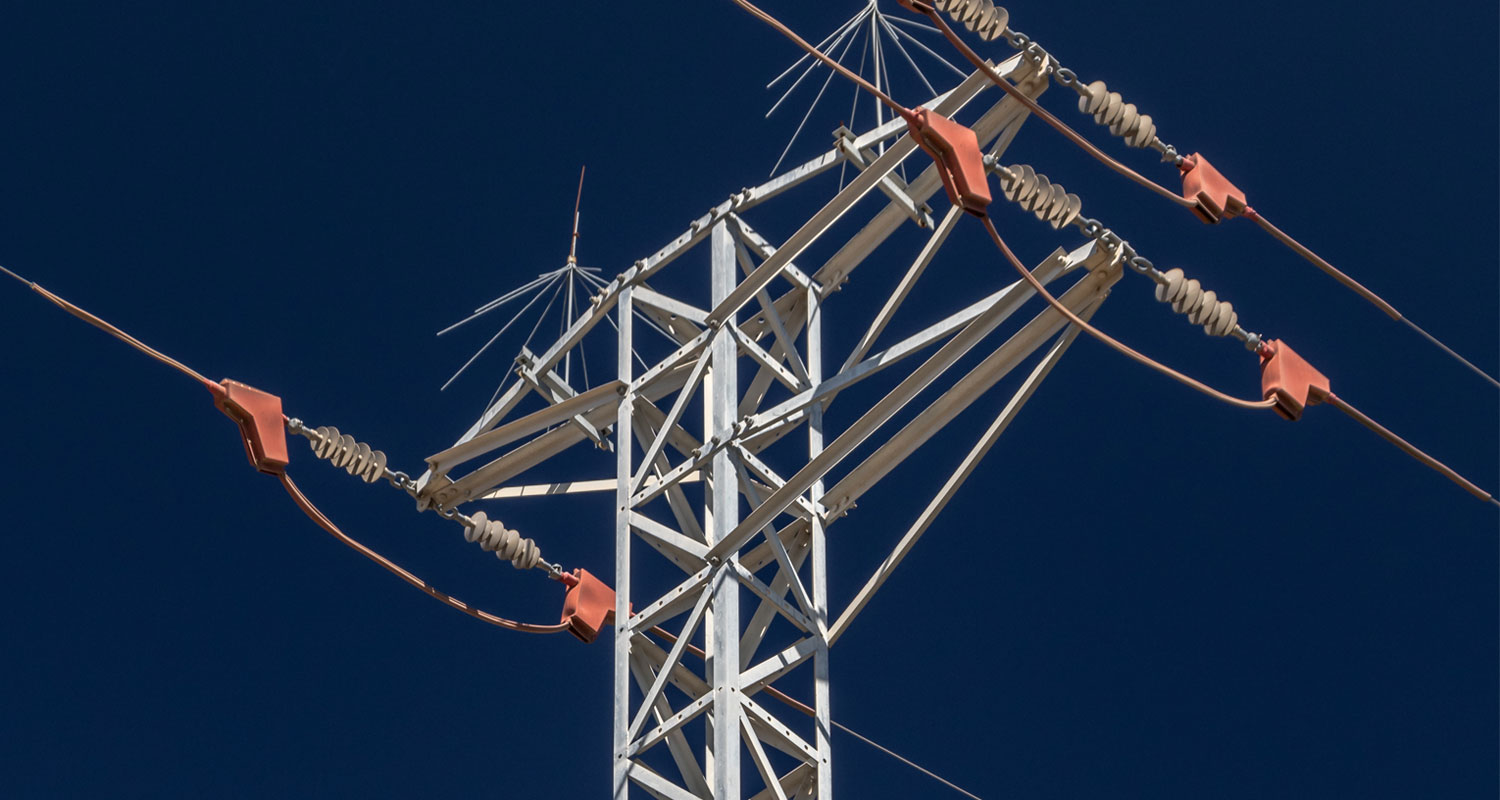
    The protection of South Africa’s energy infrastructure falls within the remit of the new Critical Infrastructure Protection Act. Such infrastructure is crucial for the effective functioning of the economy, national security and public safety.

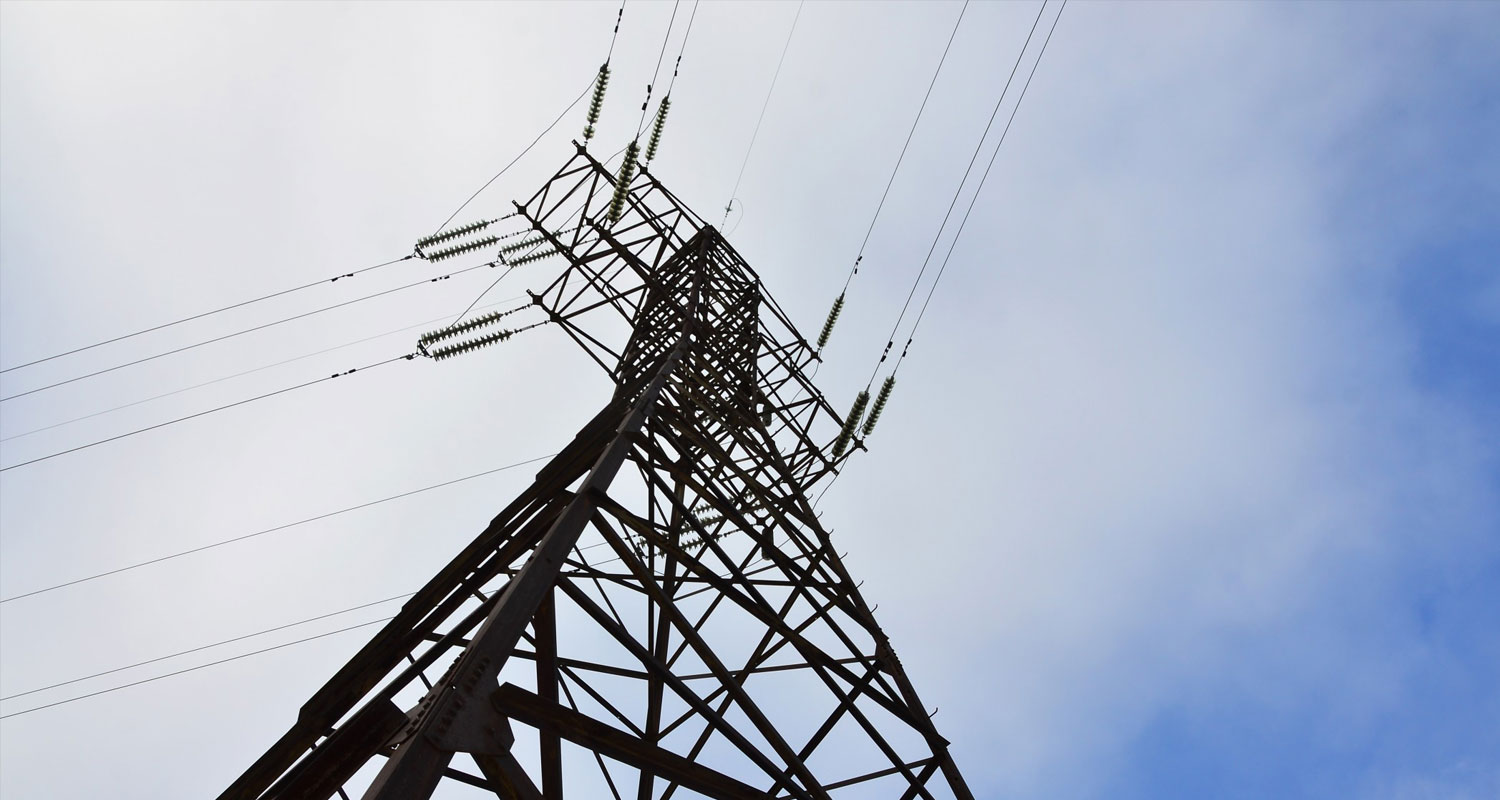
    Critical infrastructure consists of national assets that are viewed as having strategic importance. South Africa has plenty of critical infrastructure spread across its length and breadth – measuring about 1.219 million km². These include the Eskom energy grid – including power stations, substations and transmission networks – dams, the banking system, and oil storage. The sheer scale requires extensive security capabilities necessary for physical protection and monitoring threats.

    Beyond physically securing this infrastructure, the state also needs to have the ability to detect, deter and neutralise threat actors. These are classical counterintelligence prerogatives. Failure on this front makes the country vulnerable to destabilisation.

    The stretched nature of the country’s security agencies was laid bare during the violent riots in July 2021. It is thus reasonable to question the capacity of the police, and other security agencies, to secure Eskom’s critical infrastructure and that of private power producers.

    Planning for security

    All planning to develop and diversify the national power grid and energy supply should include enough resources to protect them. This requires cooperative planning between Eskom and the South African security sector (both state and private).

    The exact role of the South African National Defence Force in providing security for critical infrastructure remains unclear. The National Key Points Act, the Defence Act and the Critical Infrastructure Protection Act are not explicit on the issue.

    The protection of critical infrastructure has been assigned to the South African Police Service, with the defence force supporting it. Given that the defence budget has been shrinking annually, the military will probably not be able to sustain this.
    With the private sector playing an increased role in the energy sector, South Africa needs to develop dedicated private security capacities to protect its critical infrastructure. At the very least, it should adopt a mixed public-private security model akin to the police service’s community policing concept.

    The president’s energy vision envisages a much larger private industrial capacity. If left unsecured, such capacity would be just as vulnerable to sabotage as the current Eskom infrastructure is. It is time the country took stock of its security requirements in the same way it has started being serious about its energy vulnerabilities.

    There’s also the question of whether the penalties prescribed by law are fit to deter sabotage.

    What needs to happen

    The hybrid nature of threats to the country’s infrastructure can only be solved by an integrated solution. That requires, firstly, clarity about mandates as well as state security capabilities.

    Secondly, security sector capacity needs to be developed alongside critical infrastructure. Thirdly, legislation needs to increase existing sanctions in terms of fines and imprisonment.

    Lastly, public-private security partnerships must be established to bolster the security of the country’s electricity infrastructure.The Conversation

    • Written by Sascha-Dominik (Dov) Bachmann, professor in law and co-convener, National Security Hub (University of Canberra), and by Dries Putter, lecturer in the faculty of military science and affiliate member, National Security Hub, University of Canberra, and researcher for Security Institute for Governance and Leadership in Africa, Stellenbosch University
    • This article is republished from The Conversation under a Creative Commons licence

    Get the latest and best South African tech news


    Cyril Ramaphosa Dov Bachmann Dries Putter Eskom
    WhatsApp YouTube Follow on Google News Add as preferred source on Google
    Share. Facebook Twitter LinkedIn WhatsApp Telegram Email Copy Link
    Previous ArticleTencent buybacks fail to stem stock rout – and Prosus is to blame
    Next Article Gerrit Smit on Alphabet’s underappreciated growth drivers

    Related Posts

    BMW South Africa warns EV policy paralysis is stalling investment - Peter van Binsbergen

    BMW South Africa warns EV policy paralysis is stalling investment

    29 January 2026
    Outa warns homeowners against rushing to register rooftop solar

    Outa warns homeowners against rushing to register rooftop solar

    27 January 2026
    Digital IDs will launch before year-end, government says - Maropene Ramokgopa

    Digital IDs will launch before year-end, government says

    23 January 2026
    Company News
    Huawei turns 25 in South Africa, celebrates with major device discounts

    Huawei turns 25 in South Africa, celebrates with major device discounts

    30 January 2026
    Phishing has not disappeared, but it has grown up - KnowBe4

    Phishing has not disappeared, but it has grown up

    30 January 2026
    Smartphone affordability: South Africa's new economic divide - PayJoy

    Smartphone affordability: South Africa’s new economic divide

    29 January 2026
    Opinion
    South Africa's skills advantage is being overlooked at home - Richard Firth

    South Africa’s skills advantage is being overlooked at home

    29 January 2026
    Why Elon Musk's Starlink is a 'hard no' for me - Songezo Zibi

    Why Elon Musk’s Starlink is a ‘hard no’ for me

    26 January 2026
    South Africa's new fibre broadband battle - Duncan McLeod

    South Africa’s new fibre broadband battle

    20 January 2026

    Subscribe to Updates

    Get the best South African technology news and analysis delivered to your e-mail inbox every morning.

    Latest Posts
    Vuyani Jarana: Mobile coverage masks a deeper broadband failure

    Vuyani Jarana: Mobile coverage masks a deeper broadband failure

    30 January 2026
    TCS+ | How Cloud On Demand is helping SA businesses succeed in the cloud - Xhenia Rhode, Dion Kalicharan

    TCS+ | Cloud On Demand and Consnet: inside a real-world AWS partner success story

    30 January 2026
    Huawei turns 25 in South Africa, celebrates with major device discounts

    Huawei turns 25 in South Africa, celebrates with major device discounts

    30 January 2026
    SABC Plus to flight Microsoft AI training videos

    SABC Plus to flight Microsoft AI training videos

    30 January 2026
    © 2009 - 2026 NewsCentral Media
    • Cookie policy (ZA)
    • TechCentral – privacy and Popia

    Type above and press Enter to search. Press Esc to cancel.

    Manage consent

    TechCentral uses cookies to enhance its offerings. Consenting to these technologies allows us to serve you better. Not consenting or withdrawing consent may adversely affect certain features and functions of the website.

    Functional Always active
    The technical storage or access is strictly necessary for the legitimate purpose of enabling the use of a specific service explicitly requested by the subscriber or user, or for the sole purpose of carrying out the transmission of a communication over an electronic communications network.
    Preferences
    The technical storage or access is necessary for the legitimate purpose of storing preferences that are not requested by the subscriber or user.
    Statistics
    The technical storage or access that is used exclusively for statistical purposes. The technical storage or access that is used exclusively for anonymous statistical purposes. Without a subpoena, voluntary compliance on the part of your Internet Service Provider, or additional records from a third party, information stored or retrieved for this purpose alone cannot usually be used to identify you.
    Marketing
    The technical storage or access is required to create user profiles to send advertising, or to track the user on a website or across several websites for similar marketing purposes.
    • Manage options
    • Manage services
    • Manage {vendor_count} vendors
    • Read more about these purposes
    View preferences
    • {title}
    • {title}
    • {title}