


Close Menu
TechCentralTechCentral

    Subscribe to the newsletter

    Get the best South African technology news and analysis delivered to your e-mail inbox every morning.

    Facebook X (Twitter) YouTube LinkedIn
    WhatsApp Facebook X (Twitter) LinkedIn YouTube
    TechCentralTechCentral
    • News
      Digital authoritarianism grows as African states normalise internet blackouts

      Digital authoritarianism grows as African states normalise internet blackouts

      19 December 2025
      Starlink satellite anomaly creates debris in rare orbital mishap

      Starlink satellite anomaly creates debris in rare orbital mishap

      19 December 2025
      TechCentral's South African Newsmakers of 2025

      TechCentral’s South African Newsmakers of 2025

      18 December 2025
      Malatsi buries Post Office's long-dead monopoly

      Malatsi buries Post Office monopoly the market ignored

      18 December 2025
      China races to crack EUV as chip war with the West intensifies

      China races to crack EUV lithography as chip war with the West intensifies

      18 December 2025
    • World
      Trump space order puts the moon back at centre of US, China rivalry - US President Donald Trump

      Trump space order puts the moon back at centre of US, China rivalry

      19 December 2025
      Warner Bros slams the door on Paramount

      Warner Bros slams the door on Paramount

      17 December 2025
      X moves to block bid to revive Twitter brand

      X moves to block bid to revive Twitter brand

      17 December 2025
      Oracle’s AI ambitions face scrutiny on earnings miss

      Oracle’s AI ambitions face scrutiny on earnings miss

      11 December 2025
      China will get Nvidia H200 chips - but not without paying Washington first

      China will get Nvidia H200 chips – but not without paying Washington first

      9 December 2025
    • In-depth
      Black Friday goes digital in South Africa as online spending surges to record high

      Black Friday goes digital in South Africa as online spending surges to record high

      4 December 2025
      Canal+ plays hardball - and DStv viewers feel the pain

      Canal+ plays hardball – and DStv viewers feel the pain

      3 December 2025
      Jensen Huang Nvidia

      So, will China really win the AI race?

      14 November 2025
      Valve's Linux console takes aim at Microsoft's gaming empire

      Valve’s Linux console takes aim at Microsoft’s gaming empire

      13 November 2025
      iOCO's extraordinary comeback plan - Rhys Summerton

      iOCO’s extraordinary comeback plan

      28 October 2025
    • TCS
      TCS+ | Africa's digital transformation - unlocking AI through cloud and culture - Cliff de Wit Accelera Digital Group

      TCS+ | Cloud without culture won’t deliver AI: Accelera’s Cliff de Wit

      12 December 2025
      TCS+ | How Cloud on Demand helps partners thrive in the AWS ecosystem - Odwa Ndyaluvane and Xenia Rhode

      TCS+ | How Cloud On Demand helps partners thrive in the AWS ecosystem

      4 December 2025
      TCS | MTN Group CEO Ralph Mupita on competition, AI and the future of mobile

      TCS | Ralph Mupita on competition, AI and the future of mobile

      28 November 2025
      TCS | Dominic Cull on fixing South Africa's ICT policy bottlenecks

      TCS | Dominic Cull on fixing South Africa’s ICT policy bottlenecks

      21 November 2025
      TCS | BMW CEO Peter van Binsbergen on the future of South Africa's automotive industry

      TCS | BMW CEO Peter van Binsbergen on the future of South Africa’s automotive industry

      6 November 2025
    • Opinion
      Netflix, Warner Bros deal raises fresh headaches for MultiChoice - Duncan McLeod

      Netflix, Warner Bros deal raises fresh headaches for MultiChoice

      5 December 2025
      BIN scans, DDoS and the next cybercrime wave hitting South Africa's banks - Entersekt Gerhard Oosthuizen

      BIN scans, DDoS and the next cybercrime wave hitting South Africa’s banks

      3 December 2025
      Your data, your hardware: the DIY AI revolution is coming - Duncan McLeod

      Your data, your hardware: the DIY AI revolution is coming

      20 November 2025
      Zero Carbon Charge founder Joubert Roux

      The energy revolution South Africa can’t afford to miss

      20 November 2025
      It's time for a new approach to government IT spend in South Africa - Richard Firth

      It’s time for a new approach to government IT spend in South Africa

      19 November 2025
    • Company Hubs
      • Africa Data Centres
      • AfriGIS
      • Altron Digital Business
      • Altron Document Solutions
      • Altron Group
      • Arctic Wolf
      • AvertITD
      • Braintree
      • CallMiner
      • CambriLearn
      • CYBER1 Solutions
      • Digicloud Africa
      • Digimune
      • Domains.co.za
      • ESET
      • Euphoria Telecom
      • Incredible Business
      • iONLINE
      • IQbusiness
      • Iris Network Systems
      • LSD Open
      • NEC XON
      • Netstar
      • Network Platforms
      • Next DLP
      • Ovations
      • Paracon
      • Paratus
      • Q-KON
      • SevenC
      • SkyWire
      • Solid8 Technologies
      • Telit Cinterion
      • Tenable
      • Vertiv
      • Videri Digital
      • Vodacom Business
      • Wipro
      • Workday
      • XLink
    • Sections
      • AI and machine learning
      • Banking
      • Broadcasting and Media
      • Cloud services
      • Contact centres and CX
      • Cryptocurrencies
      • Education and skills
      • Electronics and hardware
      • Energy and sustainability
      • Enterprise software
      • Financial services
      • Information security
      • Internet and connectivity
      • Internet of Things
      • Investment
      • IT services
      • Lifestyle
      • Motoring
      • Public sector
      • Retail and e-commerce
      • Satellite communications
      • Science
      • SMEs and start-ups
      • Social media
      • Talent and leadership
      • Telecoms
    • Events
    • Advertise
    TechCentralTechCentral
    Home » Opinion » Spectrum tradeability will make all Icasa’s problems disappear

    Spectrum tradeability will make all Icasa’s problems disappear

    By Ivo Vegter2 February 2022
    Twitter LinkedIn Facebook WhatsApp Email Telegram Copy Link
    News Alerts
    WhatsApp

    Telkom has once again obstructed the long-awaited auction of spectrum mobile operators desperately need to expand their broadband data networks. Were communications regulator Icasa to make spectrum tradeable, Telkom’s objections, as well as those of other telelecommunications operators, would evaporate like mist before the sun.

    It has been more than 15 years since the last time South Africa’s telecoms operators received access to any new radio frequency spectrum. At the time, 3G was still fast, the very first iPhone was not yet available in South Africa and 4G was only a prototype in Japan. Operators desperately need additional spectrum to provide new-generation, high-speed mobile data services.

    Read: Six firms apply for spectrum ahead of disputed auction

    Yet the road to auctioning high-demand spectrum in the International Mobile Telecommunications (IMT) radio frequencies, which includes bands that are supposed to be freed by the endlessly delayed transition from analogue to digital terrestrial television, has been long and arduous.

    Achieving affordable prices is not something governments know how to do

    The regulator, Icasa, is trying to balance a number of conflicting interests, not only among market participants, but also those imposed by the government’s SA Connect broadband policy.

    This policy is couched in terms of grand central-planning buzzwords, from “active citizens” to “decent work”, from “social cohesion” to “nation building”, and from “job creation” to “prioritising rural and underserviced areas and stimulating economic growth”.

    Key among these ambitions is to establish a government-run wireless open-access network (Woan) as a response to the perceived failure of markets to deliver widespread access to broadband services at “affordable” prices.

    Flawed Woan

    Of course, what constitutes an affordable price is entirely subjective: achieving affordable prices is not something governments know how to do. The market managed to offer 3G to 99.7% of the population and 4G to almost 90% of the population entirely without government help, and it would have got a long way towards offering even more widespread access to even better broadband services at even more affordable prices if it had received the radio spectrum with which to do so a decade ago.

    The entire Woan enterprise is unnecessary, is flawed, has failed everywhere it has been tried and should be scrapped entirely.

    The SA Connect policy proposes both “demand- and supply-side policy interventions” in a “four-pronged strategy” aimed at achieving fast, cheap and universal broadband.

    Read: Icasa appeals to Telkom to end litigation over auction

    It is similar to the government policy for delivering high-quality, cheap and universal electricity, drivers’ licences and postal services – and will meet with similar levels of success.

    The problem is that, no matter how many prongs it has, government intervention has never improved on the efficiency of markets. In the South African telecoms sector in particular, it has always led to reduced competition, exploitative value-extraction by hand-picked cronies, and low-quality, overpriced services for businesses and consumers.

    The author, Ivo Vegter, argues that the solution to the central-planning madness in awarding spectrum in South Africa is to make all spectrum in the IMT bands tradeable

    Because of all these competing policy and commercial interests, Icasa’s plan to auction off spectrum isn’t a simple matter of defining it and putting it up for sale. No, it’s far more complicated than that.

    It has put the Woan on the back burner for now, where all useless government projects go to moulder for five or 10 years, but this has raised valid concerns among existing operators that they cannot predict the Woan’s future impact on the market, and therefore cannot properly value the spectrum bands that are being auctioned.

    In an effort to appear “fair”, Icasa has determined that it should distribute spectrum not to those companies who would use it most effectively, but among as many market participants as possible.

    Read: Why Cyril is going after Telkom

    To this end, it has capped the maximum amount of spectrum any operator may own and has created a preferential round of bidding for small players or new entrants to get their hands on spectrum, without the risk of being outbid by “tier one” operators.

    Only MTN and Vodacom were designated as “tier one” operators, and would have to wait their turn at the auction until the rats and mice have finished their feast. Among these rats and mice, one can find Telkom which, despite being a mobile minnow, actually owns a third more spectrum than Vodacom or MTN.

    Most of those rats and mice will end up hawking their spectrum to the large mobile operators for roaming agreements

    MTN challenged this so-called “opt-in” round in court claiming, quite reasonably, that all the best spectrum would have been cornered by the time they got to bid.

    Most of those rats and mice will end up hawking their spectrum to the large mobile operators for roaming agreements regardless, while running bargain-bin network infrastructure themselves. This creates a layer of middlemen profiteers that reduce the quality and raise the price of products that will ultimately reach end users.

    Telkom has been the most consistently obstructive over the years and has been raising complaints on the exact opposite grounds: that the auction process will entrench the power of its larger competitors, that its larger competitors will be unfairly advantaged, and might even – heaven forbid! – get to upgrade their networks and improve their service to customers.

    Read: Ramaphosa orders wide-ranging probe into Telkom

    The former state-owned monopolist does not deserve any sympathy, but it does raise another important point: that the 700MHz and 800MHz bands, which are to be freed by the final switch-off of analogue television broadcasts, are currently encumbered by legal action by e.tv – which after being given notice 100 years ago is not yet ready for the transition to digital broadcasts.

    The provisions in the invitation to apply for spectrum run to 91 pages of complex bureaucratese, and even so, everyone has complaints, some of which are entirely valid.
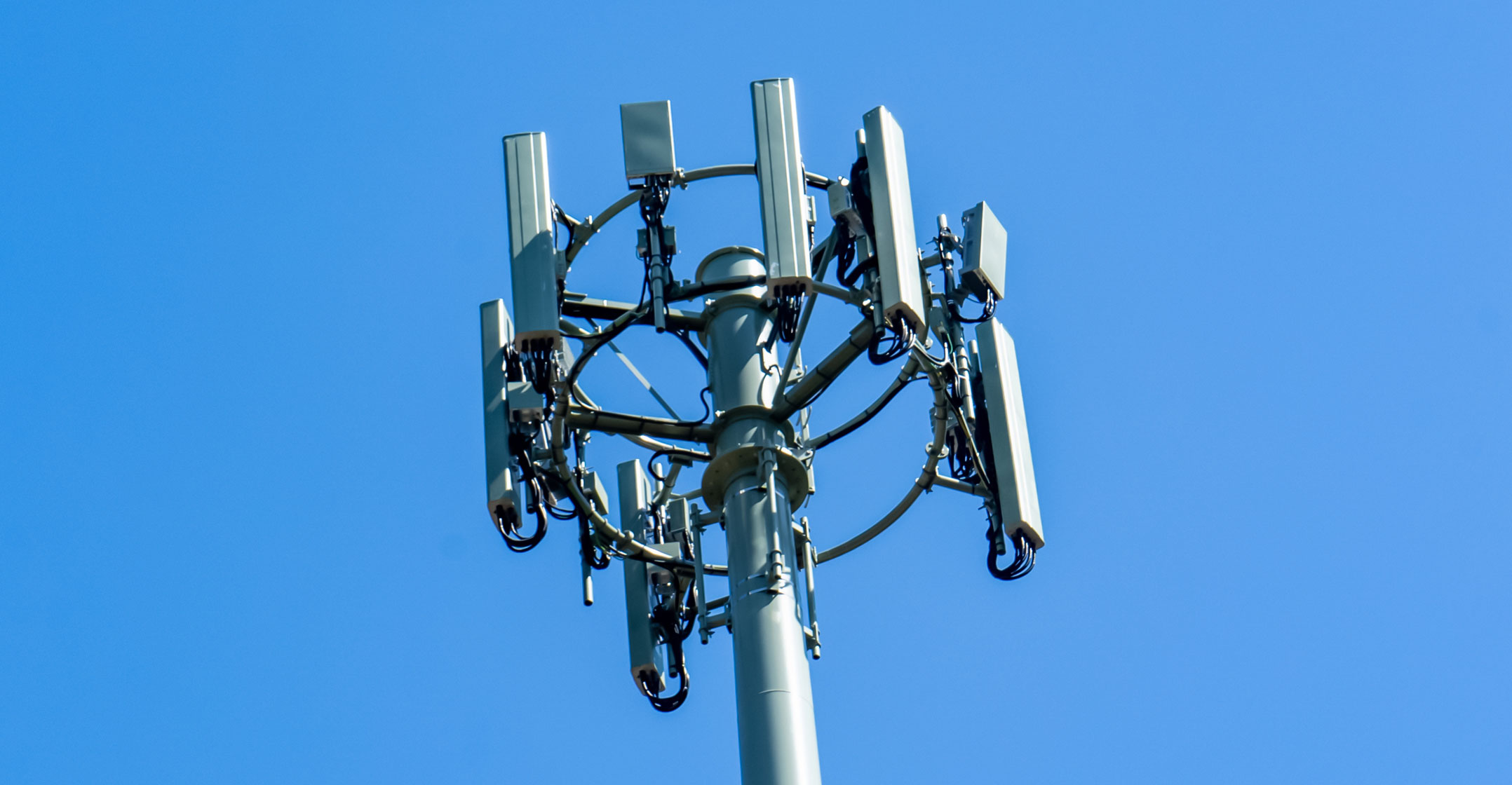
    The solution to all this central-planning madness is simple: make all spectrum in the IMT bands tradeable.

    There’s probably no way one could convince the government not to auction it off at a fat profit to pay for VIP security and “security” upgrades at politicians’ houses, but if the spectrum is tradeable, at least an auction isn’t the final, irrevocable commitment that it otherwise would be, and wouldn’t entrench any operator at the expense of another.

    If spectrum sold at auction, either through outright ownership or long-term leases, remains tradeable, then it does not matter how spectrum is initially allocated. Market forces will in due course produce the most efficient allocation. Instead of everyone suing the regulator, they could just fight it out among themselves.

    If that strengthens major players in the market, so be it. Ultimately, it is the interest of customers that matters, and customer interests are not served by rigging the market or artificially sustaining smaller operators who exist only to lease their networks to the major players in any case.

    Tradability of spectrum also incentivises spectrum owners to use their spectrum more efficiently, to minimise interference with neighbouring bands, and to maximise the network performance extracted out of any particular sliver of spectrum.

    Impossible burden

    Most of all, it would remove from Icasa’s shoulders the impossible burden of keeping everyone including the ruling party socialists happy. It would invalidate most of the challenges against its auction process and turn its “invitation to apply” from a lengthy book of lawyer-bait into a simple notice it could publish as a small newspaper advert.

    Ultimately, businesses and consumers would benefit by putting a swift end to the endless rounds of litigation and not creating a layer of middlemen in the name of “competition”.

    Competition is not something a government can create. It is what happens when you set the market free.

    • Ivo Vegter, a former technology journalist and a columnist for the Institute of Race Relations, writes in defence of free markets and individual liberty. This article was commissioned by the Free Market Foundation



    Icasa MTN Telkom Vodacom Woan
    Subscribe to TechCentral Subscribe to TechCentral
    Share. Facebook Twitter LinkedIn WhatsApp Telegram Email Copy Link
    Previous ArticleHow corruption crippled Denel
    Next Article How Neotel buckled to Gupta corruption

    Related Posts

    TechCentral's South African Newsmakers of 2025

    TechCentral’s South African Newsmakers of 2025

    18 December 2025
    Telecoms industry backs Malatsi policy directive, warns on execution - ACT CEO Nomvuyiso Batyi

    Telecoms industry backs Malatsi policy directive, warns on execution

    17 December 2025
    MTN Zambia launches world's first 4G cloud smartphone solution - Huawei

    MTN Zambia launches world’s first 4G cloud smartphone solution

    17 December 2025
    Company News
    Why TechCentral is the most powerful platform for reaching IT decision makers

    Why TechCentral is the most powerful platform for reaching IT decision makers

    17 December 2025
    Business trends to watch in 2026 - Domains.co.za

    Business trends to watch in 2026

    17 December 2025
    MTN Zambia launches world's first 4G cloud smartphone solution - Huawei

    MTN Zambia launches world’s first 4G cloud smartphone solution

    17 December 2025
    Opinion
    Netflix, Warner Bros deal raises fresh headaches for MultiChoice - Duncan McLeod

    Netflix, Warner Bros deal raises fresh headaches for MultiChoice

    5 December 2025
    BIN scans, DDoS and the next cybercrime wave hitting South Africa's banks - Entersekt Gerhard Oosthuizen

    BIN scans, DDoS and the next cybercrime wave hitting South Africa’s banks

    3 December 2025
    Your data, your hardware: the DIY AI revolution is coming - Duncan McLeod

    Your data, your hardware: the DIY AI revolution is coming

    20 November 2025

    Subscribe to Updates

    Get the best South African technology news and analysis delivered to your e-mail inbox every morning.

    Latest Posts
    Digital authoritarianism grows as African states normalise internet blackouts

    Digital authoritarianism grows as African states normalise internet blackouts

    19 December 2025
    Starlink satellite anomaly creates debris in rare orbital mishap

    Starlink satellite anomaly creates debris in rare orbital mishap

    19 December 2025
    Trump space order puts the moon back at centre of US, China rivalry - US President Donald Trump

    Trump space order puts the moon back at centre of US, China rivalry

    19 December 2025
    TechCentral's South African Newsmakers of 2025

    TechCentral’s South African Newsmakers of 2025

    18 December 2025
    © 2009 - 2025 NewsCentral Media
    • Cookie policy (ZA)
    • TechCentral – privacy and Popia

    Type above and press Enter to search. Press Esc to cancel.

    Manage consent

    TechCentral uses cookies to enhance its offerings. Consenting to these technologies allows us to serve you better. Not consenting or withdrawing consent may adversely affect certain features and functions of the website.

    Functional Always active
    The technical storage or access is strictly necessary for the legitimate purpose of enabling the use of a specific service explicitly requested by the subscriber or user, or for the sole purpose of carrying out the transmission of a communication over an electronic communications network.
    Preferences
    The technical storage or access is necessary for the legitimate purpose of storing preferences that are not requested by the subscriber or user.
    Statistics
    The technical storage or access that is used exclusively for statistical purposes. The technical storage or access that is used exclusively for anonymous statistical purposes. Without a subpoena, voluntary compliance on the part of your Internet Service Provider, or additional records from a third party, information stored or retrieved for this purpose alone cannot usually be used to identify you.
    Marketing
    The technical storage or access is required to create user profiles to send advertising, or to track the user on a website or across several websites for similar marketing purposes.
    • Manage options
    • Manage services
    • Manage {vendor_count} vendors
    • Read more about these purposes
    View preferences
    • {title}
    • {title}
    • {title}