Close Menu
TechCentralTechCentral

    Subscribe to the newsletter

    Get the best South African technology news and analysis delivered to your e-mail inbox every morning.

    Facebook X (Twitter) YouTube LinkedIn
    WhatsApp Facebook X (Twitter) LinkedIn YouTube
    TechCentralTechCentral
    • News
      Critical PHP vulnerabilities put a large part of the web at risk

      Critical PHP vulnerabilities put a large part of the web at risk

      21 October 2026
      Vodacom pitches a lighter AI rulebook as Pretoria redraws its policy

      Vodacom pitches a lighter AI rulebook as Pretoria redraws its policy

      21 October 2026
      Disney opens its vault to Netflix in South Africa

      Disney opens its vault to Netflix in South Africa

      21 October 2026
      Newspapers hit with import duty to save South Africa's last newsprint machine

      Newspapers hit with import duty to save South Africa’s last newsprint machine

      21 October 2026
      Before South Africa licenses Starlink, it should look at Ukraine

      Before South Africa licenses Starlink, it should look at Ukraine

      21 October 2026
    • World
      OpenAI turns the tables on Apple in trade secrets fight

      OpenAI turns the tables on Apple in trade secrets fight

      15 October 2026
      Google's Gemini 4 Argon is finally here

      Google’s Gemini 4 Argon is finally here

      14 October 2026
      Apple's new HomeView smart home hub

      Apple takes another shot at the smart home

      13 October 2026
      AI is now holding up the world economy, says IMF

      AI is now propping up the world economy, says IMF

      12 October 2026
      SpaceX takes aim at US wireless carriers with spectrum acquisition

      Starlink is coming for your mobile operator

      9 October 2026
    • In-depth

      10 days that changed the course of AI

      21 September 2026
      Meta to the AI industry: slow down without us - Mark Zuckerberg

      Meta to the AI industry: slow down without us

      16 September 2026
      Google DeepMind CEO Demis Hassabis. Image: John Sears

      The plan to stop AI from breaking the world

      16 July 2026
      The internet has a Strait of Hormuz problem

      The internet has a Strait of Hormuz problem

      15 July 2026
      AI boom sparks rally, frenzy and fear

      AI boom sparks rally, frenzy and fear

      11 June 2026
    • TCS
      W&W | LDV's Gerhard Moolman on electric bakkies, fleet orders and 'school fees'

      W&W | LDV’s Gerhard Moolman on electric bakkies and fleets

      9 October 2026
      TCS | Frogfoot sees bigger fibre deals coming - TechCentral Show guests Abraham van der Merwe and Shane Chorley

      TCS | Frogfoot sees bigger fibre deals coming

      8 October 2026
      Meet the CIO | Vodacom's Mohamed Sami on the agentic future

      Meet the CIO | Vodacom’s Mohamed Sami on the agentic future

      5 October 2026
      Lexi Novitske, general partner at Norrsken22, on the TechCentral Show

      TCS | Norrsken22’s Lexi Novitske on how China is winning African tech

      1 October 2026
      TCS | Dominic White and Adam Ely on AI agents going rogue

      TCS | Dominic White and Adam Ely on AI agents going rogue

      29 September 2026
    • Opinion
      Nonkqubela Thathakahle Jordan-Dyani

      Why cybersecurity is now a national security issue for South Africa

      15 October 2026
      When a machine can choose, who does it become? Fanie van Rooyen

      When a machine can choose, who does it become?

      9 October 2026
      Let South Africans jailbreak their way to digital sovereignty - Dirk de Vos

      Let South Africans jailbreak their way to digital sovereignty

      5 October 2026
      South Africa's next energy crisis is in the accounts department - Craig Holmes

      South Africa’s next energy crisis is in the accounts department

      29 September 2026
      The steam engine lesson AI doomsayers keep missing - Sam Clarke

      The steam engine lesson AI doomsayers keep missing

      28 September 2026
    • Company News
      • 1Stream
      • Africa Data Centres
      • AfriGIS
      • Altron Digital Business
      • Altron Document Solutions
      • Altron Group
      • Arctic Wolf
      • Ascent Technology
      • AvertITD
      • BBD
      • Braintree
      • CallMiner
      • CambriLearn
      • CM.com
      • Contactable
      • CYBER1 Solutions
      • Digicloud Africa
      • Digimune
      • Domains.co.za
      • ESET
      • Euphoria Telecom
      • HOSTAFRICA
      • Incredible Business
      • iONLINE
      • IQbusiness
      • Iris Network Systems
      • Kaspersky
      • LSD Open
      • Mitel
      • NEC XON
      • Netstar
      • Network Platforms
      • Next DLP
      • Ovations
      • Paracon
      • Paratus
      • Publishared
      • Q-KON
      • SevenC
      • SkyWire
      • Solid8 Technologies
      • Telit Cinterion
      • Telviva
      • Tenable
      • Vertiv
      • Videri Digital
      • Vodacom Business
      • Vox
      • Wipro
      • Workday
      • XLink
    • Sections
      • AI and machine learning
      • Banking
      • Broadcasting and media
      • Cloud services
      • Contact centres and CX
      • Cryptocurrencies
      • Education and skills
      • Electronics and hardware
      • Energy and sustainability
      • Enterprise software
      • Fintech and payments
      • HealthTech
      • Information security
      • Internet and connectivity
      • Internet of things
      • Investment
      • IT services
      • Lifestyle
      • Policy and regulation
      • Public sector
      • Retail and e-commerce
      • Satellite communications
      • Science
      • SMEs and start-ups
      • Social media
      • Talent and leadership
      • Telecoms
      • Watts & Wheels
    • Events
    • Advertise
    TechCentralTechCentral
    Home » In-depth » Telkom to spin off its wholesale business

    Telkom to spin off its wholesale business

    By Duncan McLeod30 August 2015
    Twitter LinkedIn Facebook WhatsApp Email Telegram Copy Link
    Get breaking news on WhatsApp

    ethernet-640

    Telkom is planning to spin off its large wholesale services division as a separate business, with its own brand identity, in a move that promises to shake up fixed-line telecommunications in South Africa.

    Though the company isn’t giving away too much yet — a detailed announcement, including the new name, is expected in the coming months — it intends creating an independent wholesale business that serves the entire market, and not just Telkom, on a fair and transparent basis.

    Under the new arrangement, Telkom will simply be another — albeit very important — customer of the wholesale unit.

    Internet service providers (ISPs) will welcome a move to separate the businesses — Telkom’s wholesale arm has been accused in the past of favouring its retail business to the exclusion of rival ISPs.

    What’s not clear yet, though, is just how far Telkom intends going. It agreed to a “functional” or accounting separation of its retail and wholesale businesses in a settlement agreement with the competition authorities for prior anticompetitive abuses. But a full “structural” separation is possible, too.

    Martyn Roetter, international associate to telecommunications consultancy BMI-TechKnowledge, says Openreach in the UK, which manages BT’s infrastructure assets, is an example of functional separation. A good example of structural separation is Chorus, which was spun out of Telecom New Zealand.

    “BT argues that functional separation is better than structural separation because it is easier to fine-tune regulations as and when needed. Another claimed advantage of functional vs structural separation is that the former permits coordination of investment decisions between the services and the network infrastructure operations. Of course, in this context one person’s beneficial collaboration is another person’s unfair or discriminatory collusion,” Roetter says.

    Separation, he adds, “can help reduce — although probably not remove — the natural suspicion and concern of wholesale customers that they are being treated unfairly compared to the retail business of a vertically integrated operator and that their confidential business plans may be leaked to the latter”.

    Whatever form Telkom’s separation takes, the hope is that it will result in less discrimination against third parties. It makes particular sense in South Africa, Roetter says, given the lack of competition in fixed-line infrastructure into homes and businesses.

    “Separation is an alternative to consumer protection regulation in the form of retail price controls. It can help reduce, although probably not entirely remove this concern, depending on the form it takes and the regulatory conditions that are established, and whether they are actually enforced.”

    Still, separation should lead to greater competition at the retail level, resulting in lower prices and better customer service, Roetter says.

    It’s imperative, however, that regulators try to establish a “balance of incentives and penalties for the wholesale unit that will reward it for reducing costs and improving quality, and penalise it for acting like a complacent monopoly that is not responsive to its customers”.

    “Penalties should be levied if quality targets are not met, and rewards [offered] if they are exceeded,” he says.

    Roetter’s colleague, BMI-T MD Denis Smit, says that in theory separation of Telkom’s business could pave the way for the creation of a national broadband network (NBN) as envisioned in government’s South Africa Connect broadband policy.

    “Government would invest in the new NBN while divesting in the retail operations. To unbundle, however, would require a de-listing of Telkom and this poses some tough but not insurmountable challenges,” Smit says.

    “Firstly, national treasury may find itself paying ‘twice’ for the Telkom assets as government largely paid for much of Telkom’s infrastructure in the first place. Buying minorities out could also be construed as ‘empty money’ as that investment could alternatively go into investments in underserved areas.

    “Treasury is also under huge pressure with the economy and may not have the appetite for this. It would also take a long time to do.”
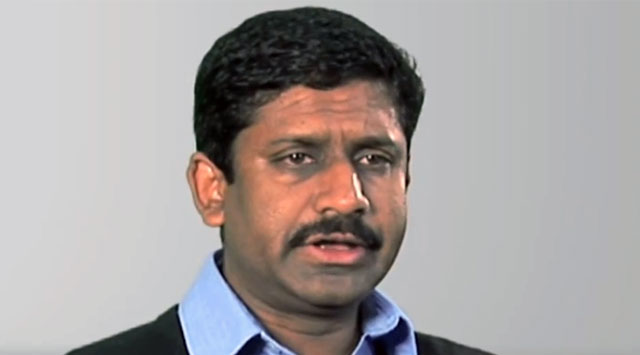
    Prenesh Padayachee
    Prenesh Padayachee

    Cheaper ADSL
    News of the impending shake-up comes in the same week that Telkom Wholesale announced a new product for Internet service providers (ISPs) that offers them access to the copper ADSL network at less than R50/month.

    Telkom’s wholesale services MD Prenesh Padayachee says the business intends announcing new products and services every two months as part of a much accelerated product development plan.

    Although the new, low-priced ADSL product is not technically broadband — offering Internet access at 1Mbit/s — it will allow ISPs to offer South Africa’s first retail fixed-line Internet services at less than R100/month (before mandatory dial-tone service fees are included).

    Padayachee says the new product, which is firmly aimed at expanding affordable access to the Internet, should have a big impact on ADSL growth by attracting more price-conscious consumers away from the mobile operators.

    A large number of South Africans rely solely on relatively pricey mobile data bundles to access the Internet and Padayachee believes a more affordable ADSL option, offering larger data caps or even uncapped data, could entice many of these consumers onto the fixed-line network.

    However, a big obstacle remains the fact that Telkom customers still have to pay for a legacy dial tone – a monthly analogue line rental fee – even if they all they want is Internet access.

    Telkom has long argued the line rental fees are necessary to recoup at least some of the cost of maintaining the copper infrastructure into homes and businesses. Indeed, it claims it still loses money for each line in service — the so-called “access line deficit”.

    But Padayachee hints strongly that Telkom may revisit how it structures these charges, possibly doing away with a separate dial tone fee and having one fixed charge for copper access. “It’s the way the world is going,” he says. If it happens, it will be further evidence the impending separation of the wholesale business is already having a real impact on Telkom’s approach to market.

    • This piece was first published in the Sunday Times

    Add TechCentral as a preferred source on GoogleFollow TechCentral on Google NewsGet breaking news on WhatsApp


    BMI-T BMI-TechKnowledge British Telecom BT Chorus Denis Smit Martyn Roetter Openreach Prenesh Padayachee South Africa Connect Telecom New Zealand Telkom Telkom Wholesale
    WhatsApp YouTube
    Share. Facebook Twitter LinkedIn WhatsApp Telegram Email Copy Link
    Previous ArticleThe case for a three-day weekend
    Next Article Regional PC sales tank

    Related Posts

    Shoprite takes on the banking apps with airtime on Sixty60

    Shoprite takes on the banking apps with airtime on Sixty60

    9 October 2026
    DNI's R500-million bet on Mission Mobile is mostly debt - Timothy Strike

    Behind DNI’s R500-million bet on Mission Mobile

    5 October 2026
    Africa now hosts world's fourth-largest Comic Con

    South Africa now hosts world’s fourth-largest Comic Con

    29 September 2026
    Company News
    How to choose a .co.za domain without paying more later

    How to choose a .co.za domain without paying more later

    20 October 2026
    Winners, from left: Zandile Monaisa (Rand Refinery), Sibongakonke Kheswa (PSG Capital), Stefan Links (Forestry South Africa), Thabang Modiba (Mondelez International), Charmaine Ncube (Razor PR), Shaun Burger-Smal (Bestmed Medical Scheme), Nandipha Ngcobo (Transnet), Tracy Mulwela (Vodacom), Cheryl-Lynn Freeman (Mzansi Business Services), Yasheen Harrielall (Zutari), Valentine Mabaso (Taonga Business Group) and Thabang Thlaku (African Rainbow Minerals). Image: Rising Star Awards

    Celebrating South Africa’s rising stars: the leaders shaping what comes next

    19 October 2026
    Paratus Zambia delivers Starlink to thousands of children in Family Legacy schools

    Paratus Zambia delivers Starlink to thousands of children in Family Legacy schools

    15 October 2026
    Opinion
    Nonkqubela Thathakahle Jordan-Dyani

    Why cybersecurity is now a national security issue for South Africa

    15 October 2026
    When a machine can choose, who does it become? Fanie van Rooyen

    When a machine can choose, who does it become?

    9 October 2026
    Let South Africans jailbreak their way to digital sovereignty - Dirk de Vos

    Let South Africans jailbreak their way to digital sovereignty

    5 October 2026

    Subscribe to Updates

    Get the best South African technology news and analysis delivered to your e-mail inbox every morning.

    Latest Posts
    Critical PHP vulnerabilities put a large part of the web at risk

    Critical PHP vulnerabilities put a large part of the web at risk

    21 October 2026
    Vodacom pitches a lighter AI rulebook as Pretoria redraws its policy

    Vodacom pitches a lighter AI rulebook as Pretoria redraws its policy

    21 October 2026
    Disney opens its vault to Netflix in South Africa

    Disney opens its vault to Netflix in South Africa

    21 October 2026
    Newspapers hit with import duty to save South Africa's last newsprint machine

    Newspapers hit with import duty to save South Africa’s last newsprint machine

    21 October 2026
    © 2009 - 2026 NewsCentral Media
    Built and maintained by Chronon
    • Cookie policy (ZA)
    • TechCentral – privacy and Popia

    Type above and press Enter to search. Press Esc to cancel.

    Manage consent

    TechCentral uses cookies to enhance its offerings. Consenting to these technologies allows us to serve you better. Not consenting or withdrawing consent may adversely affect certain features and functions of the website.

    Functional Always active
    The technical storage or access is strictly necessary for the legitimate purpose of enabling the use of a specific service explicitly requested by the subscriber or user, or for the sole purpose of carrying out the transmission of a communication over an electronic communications network.
    Preferences
    The technical storage or access is necessary for the legitimate purpose of storing preferences that are not requested by the subscriber or user.
    Statistics
    The technical storage or access that is used exclusively for statistical purposes. The technical storage or access that is used exclusively for anonymous statistical purposes. Without a subpoena, voluntary compliance on the part of your Internet Service Provider, or additional records from a third party, information stored or retrieved for this purpose alone cannot usually be used to identify you.
    Marketing
    The technical storage or access is required to create user profiles to send advertising, or to track the user on a website or across several websites for similar marketing purposes.
    • Manage options
    • Manage services
    • Manage {vendor_count} vendors
    • Read more about these purposes
    View preferences
    • {title}
    • {title}
    • {title}
    🇿🇦 Sign up to the TechCentral newsletter