Close Menu
TechCentralTechCentral

    Subscribe to the newsletter

    Get the best South African technology news and analysis delivered to your e-mail inbox every morning.

    Facebook X (Twitter) YouTube LinkedIn
    WhatsApp Facebook X (Twitter) LinkedIn YouTube
    TechCentralTechCentral
    • News
      World's first teen social media ban is failing

      World’s first teen social media ban is failing

      7 July 2026
      Total grid blackout in Zimbabwe

      Total grid blackout in Zimbabwe

      7 July 2026
      Malatsi comes out swinging in Starlink lobbying row - Solly Malatsi

      Malatsi comes out swinging in Starlink lobbying row

      6 July 2026
      'Functioning but limping': PSC lays bare the rot at Sita - State IT Agency

      ‘Functioning but limping’: PSC lays bare the rot at Sita

      6 July 2026
      Bookmakers to ISPs: stop debating, start blocking

      Bookmakers to ISPs: stop debating, start blocking

      6 July 2026
    • World
      Swingeing jobs cuts at Microsoft's Xbox unit

      Swingeing jobs cuts at Microsoft’s Xbox unit

      6 July 2026

      SK Hynix ends Samsung’s 26-year reign at the top

      22 June 2026
      Google on the hook for what its AI tells users, court rules

      Google on the hook for what its AI tells users, court rules

      15 June 2026
      How Russians juggle VPNs to outwit the Kremlin

      How Russians juggle VPNs to outwit the Kremlin

      15 June 2026
      Amazon CEO flagged Anthropic AI risks to Washington - Andy Jassy

      Amazon CEO flagged Anthropic AI risks to Washington

      14 June 2026
    • In-depth
      AI boom sparks rally, frenzy and fear

      AI boom sparks rally, frenzy and fear

      11 June 2026
      Every plug-in hybrid on sale in South Africa, ranked by price - Lamborghini Temerario

      Every plug-in hybrid on sale in South Africa, ranked by price

      7 June 2026
      What Wi-Fi 8 will mean for wireless networks

      What Wi-Fi 8 will mean for wireless networks

      1 June 2026
      Alfa's electric rebel - Alfa Romeo Junior Elettrica Veloce

      Alfa’s electric rebel

      29 April 2026
      Africa switches on as Europe dims the lights

      Africa switches on as Europe dims the lights

      9 April 2026
    • TCS
      TCS+ | How Tracker is turning vehicle data into business strategy - Silvia Schollenberger

      TCS+ | How Tracker is turning vehicle data into business strategy

      1 July 2026
      TCS+ | IBM Bob: an AI-powered 'development partner' for the enterprise - David Spurway

      TCS+ | IBM Bob: an AI-powered development partner for the enterprise

      30 June 2026
      Watts & Wheels S1E6: 'A flawless Alfa and a bakkie that divides'

      Watts & Wheels S1E6: ‘A flawless Alfa and a bakkie that divides’

      17 June 2026
      Watts & Wheels S1E6: 'A flawless Alfa and a bakkie that divides'

      Watts & Wheels S1E5: ‘A Bentley of the bush and a car that swims’

      8 June 2026
      TCS | Charge's R1.8-billion bet on an off-grid EV future - Charge chairman Joubert Roux

      TCS | Charge’s R1.8-billion bet on an off-grid EV future

      18 May 2026
    • Opinion
      The author, Fanie van Rooyen

      The AI utopia South Africa can’t afford

      1 July 2026
      The author, Jannie van Zyl

      South Africa’s broadband future is being decided in orbit, not in Pretoria

      30 June 2026
      The author, Pambos Soteriades

      The pivot South Africa’s MVNOs cannot afford to miss

      23 June 2026
      Brazil's online gambling crackdown is a lesson for South Africa

      Brazil’s online gambling crackdown is a lesson for South Africa

      22 June 2026
      Finish the job Mandela started - Farzam Ehsani

      Finish the job Mandela started

      18 June 2026
    • Company Hubs
      • 1Stream
      • Africa Data Centres
      • AfriGIS
      • Altron Digital Business
      • Altron Document Solutions
      • Altron Group
      • Arctic Wolf
      • Ascent Technology
      • AvertITD
      • BBD
      • Braintree
      • CallMiner
      • CambriLearn
      • CM Telecom
      • Contactable
      • CYBER1 Solutions
      • Digicloud Africa
      • Digimune
      • Domains.co.za
      • ESET
      • Euphoria Telecom
      • HOSTAFRICA
      • Incredible Business
      • iONLINE
      • IQbusiness
      • Iris Network Systems
      • Kaspersky
      • LSD Open
      • Mitel
      • NEC XON
      • Netstar
      • Network Platforms
      • Next DLP
      • Ovations
      • Paracon
      • Paratus
      • Q-KON
      • SevenC
      • SkyWire
      • Solid8 Technologies
      • Telit Cinterion
      • Telviva
      • Tenable
      • Vertiv
      • Videri Digital
      • Vodacom Business
      • Wipro
      • Workday
      • XLink
    • Sections
      • AI and machine learning
      • Banking
      • Broadcasting and Media
      • Cloud services
      • Contact centres and CX
      • Cryptocurrencies
      • Education and skills
      • Electronics and hardware
      • Energy and sustainability
      • Enterprise software
      • Financial services
      • HealthTech
      • Information security
      • Internet and connectivity
      • Internet of Things
      • Investment
      • IT services
      • Lifestyle
      • Motoring
      • Policy and regulation
      • Public sector
      • Retail and e-commerce
      • Satellite communications
      • Science
      • SMEs and start-ups
      • Social media
      • Talent and leadership
      • Telecoms
    • Events
    • Advertise
    TechCentralTechCentral
    Home » Sections » Public sector » The gaps in South Africa’s digital ID plan

    The gaps in South Africa’s digital ID plan

    Digital identity experts have welcomed new draft regulations as a good starting point but have flagged areas of concern.
    By Nkosinathi Ndlovu7 May 2026
    Twitter LinkedIn Facebook WhatsApp Email Telegram Copy Link
    News Alerts
    WhatsApp

    The gaps in South Africa's digital ID plan

    South Africa’s draft digital identity regulations lay a workable foundation but leave critical gaps around wallet architecture, biometric strength and the verification side of the ecosystem, according to industry specialists who spoke to TechCentral.

    The department of home affairs published the draft regulations this week, incorporating digital identity into South Africa’s identity system. The digital system will run in parallel with the green ID book and smart ID card, with citizens able to opt in.

    Much of the document focuses on cryptographic security from the home affairs database, through public and private sector verifiers and to user devices.

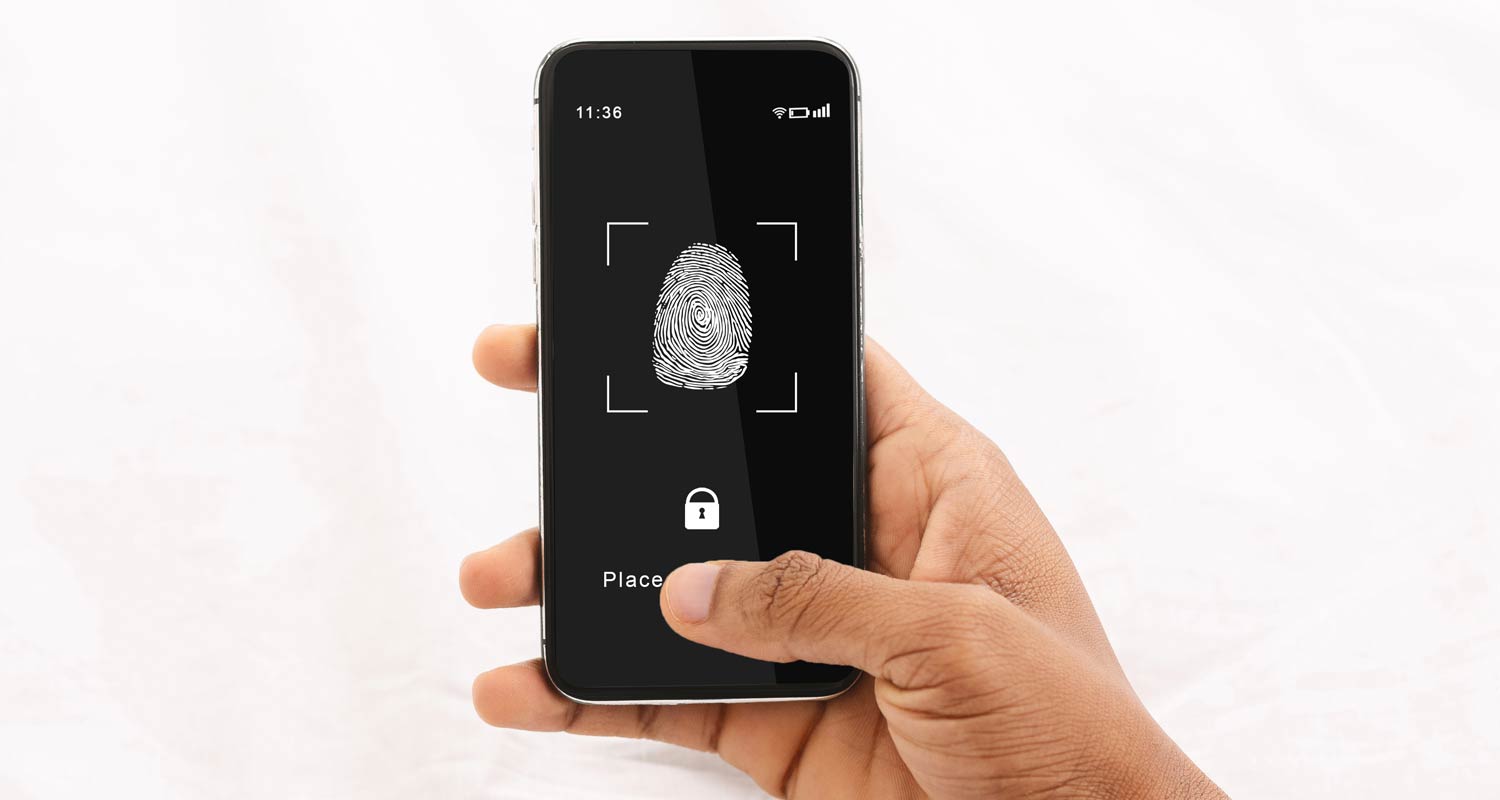
    Proof-of-liveness checks, where users take a live selfie to confirm they are real, will be central to security

    “The standards … may provide for the use of asymmetric cryptography, including elliptic-curve cryptography or comparable cryptographic methods, hashing, encryption, digital signatures, token expiry, and reissuance controls,” the draft document said.

    Lance Fanaroff, co-founder of digital identity specialist iiDENTIFii, said the methods listed are not prescriptive but lay a flexible foundation that can evolve. He described the regulations as “the beginning of a massive process” that will eventually see citizens carrying digital wallets containing cryptographically stamped IDs, driver’s licences, payslips and proof of address among other documents.

    Gaps that need attention

    But Gerhard Oosthuizen, chief technology officer of authentication specialist Entersekt – whose company is one of two large-scale pilots running under the EU’s eIDAS 2 framework – said the draft has several gaps that need attention before implementation.

    Fanaroff said proof-of-liveness checks, where users take a live selfie to confirm they are real, will be central to security. Such checks defend against presentation attacks using deepfakes or printed images. But these alone are not enough.

    Read: Schreiber publishes draft rules for South Africa’s digital ID system

    Both he and Oosthuizen warned against relying on a 2D selfie alone, especially as AI deepfake attacks get more sophisticated. Apple’s Face ID, for example, uses three sensors: facial recognition, a thermal check and a projected dot pattern that measures depth – precisely because a single 2D image is easy to spoof.

    “If I’m at home, I can set up the lighting in the right way. I have time to prepare and create a fake identity. I can play with things and just delete and retry. Unless we force in liveness with additional sensors, the risk of a 2D camera on its own is dangerous,” said Oosthuizen.

    Lance Fanaroff
    Lance Fanaroff

    Both experts recommended multi-factor authentication, combining something the user has with something they are, would be stronger. Examples include requiring users to tap their physical ID card against their phone using NFC during enrolment or adding Pin entry or a fingerprint scan to the verification process.

    The regulations name the MyMzansi app as the distribution mechanism for digital IDs but say little about its security architecture. Oosthuizen’s bigger concern is that they imply a single, government-issued wallet rather than an open, certified ecosystem.

    This is in stark contrast to what is happening internationally. Twelve US states, for example, allow citizens to carry their digital driver’s licence in Apple Wallet or Google Wallet, he said. International standards – including the ISO mobile driver’s licence (mDL) specification – allow for it.

    The draft regulations imply a single, government-issued wallet rather than an open, certified ecosystem

    “Will only the MyMzansi app be the purveyor? It would have been better if the regulation said there will be approved wallets and they need to comply,” he said.

    A single-wallet model also raises the question of whether non-government credentials such as employee badges or building access can sit alongside a citizen’s national ID, or whether South Africans will end up juggling several wallets for varying use cases.

    Digital identity ecosystems globally are built on three roles: issuers, holders and verifiers. Oosthuizen said the draft describes issuer (home affairs) and holder (citizen) responsibilities reasonably well but says almost nothing about verifiers – the banks, retailers, security companies and government departments that need apps to read and trust credentials.

    International standards

    He said South Africa should anchor the system in international standards such as OpenID Connect for verifiable credentials and the mDL specification.

    One area both specialists welcomed is the principle of data minimisation. The regulations state a credential “may encode only such mandatory particulars, or cryptographic derivatives of such particulars, as are necessary for the lawful verification purpose for which the credential is presented”. This is in line with the Protection of Personal Information Act and means a bar can confirm a patron is over 18 without seeing their date of birth or ID number, for example.

    Read: Estonia’s digital ID lesson for South Africa

    Oosthuizen added that users also need clear visibility of who is requesting their credentials and why before consenting, citing European requirements that verifier identity and intent be displayed at the moment of authentication. Without that, he said, social engineering attacks become easier.

    He flagged further silences in the draft: how many devices a citizen can hold their ID on, what happens when a phone is lost, how offline use is throttled to prevent abuse, and how wallet providers should collect fraud signals such as unusual locations, behaviour changes or signs of duress.

    Gerhard Oosthuizen
    Gerhard Oosthuizen

    “Why is a user suddenly claiming to be in Canada and opening up a bank account when the ID was only issued yesterday?” he asked.

    Public commentary on the draft regulations is open until 6 June.  – © 2026 NewsCentral Media

    Get breaking news from TechCentral on WhatsApp. Sign up here.

    Follow TechCentral on Google News Add TechCentral as your preferred source on Google


    Entersekt Gerhard Oosthuizen iiDENTIFii Lance Fanaroff
    WhatsApp YouTube
    Share. Facebook Twitter LinkedIn WhatsApp Telegram Email Copy Link
    Previous ArticleSouth Africa’s TikTok election is coming
    Next Article OpenAI’s new audio APIs aim for conversational voice agents

    Related Posts

    South Africa's fraud surge runs on trust, not hacking

    South African fraud surge runs on trust, not hacking

    29 May 2026
    The AI fraud crisis your bank is not ready for - Andries Maritz

    The AI fraud crisis your bank is not ready for

    18 February 2026
    BIN scans, DDoS and the next cybercrime wave hitting South Africa's banks - Entersekt Gerhard Oosthuizen

    BIN scans, DDoS and the next cybercrime wave hitting South Africa’s banks

    3 December 2025
    Company News
    Finding focus: a strategic approach to cybersecurity for SMBs - Kaspersky

    Finding focus: a strategic approach to cybersecurity for SMBs

    6 July 2026
    Why voice-first communication matters more in the AI era - Mitel

    Why voice-first communication matters more in the AI era

    6 July 2026
    Friendship was the hard part of online school - until now - CambriLearn

    Friendship was the hard part of online school – until now

    6 July 2026
    Opinion
    The author, Fanie van Rooyen

    The AI utopia South Africa can’t afford

    1 July 2026
    The author, Jannie van Zyl

    South Africa’s broadband future is being decided in orbit, not in Pretoria

    30 June 2026
    The author, Pambos Soteriades

    The pivot South Africa’s MVNOs cannot afford to miss

    23 June 2026

    Subscribe to Updates

    Get the best South African technology news and analysis delivered to your e-mail inbox every morning.

    Latest Posts
    World's first teen social media ban is failing

    World’s first teen social media ban is failing

    7 July 2026
    Total grid blackout in Zimbabwe

    Total grid blackout in Zimbabwe

    7 July 2026
    Malatsi comes out swinging in Starlink lobbying row - Solly Malatsi

    Malatsi comes out swinging in Starlink lobbying row

    6 July 2026
    'Functioning but limping': PSC lays bare the rot at Sita - State IT Agency

    ‘Functioning but limping’: PSC lays bare the rot at Sita

    6 July 2026
    © 2009 - 2026 NewsCentral Media
    Built and maintained by Chronon
    • Cookie policy (ZA)
    • TechCentral – privacy and Popia

    Type above and press Enter to search. Press Esc to cancel.

    Manage consent

    TechCentral uses cookies to enhance its offerings. Consenting to these technologies allows us to serve you better. Not consenting or withdrawing consent may adversely affect certain features and functions of the website.

    Functional Always active
    The technical storage or access is strictly necessary for the legitimate purpose of enabling the use of a specific service explicitly requested by the subscriber or user, or for the sole purpose of carrying out the transmission of a communication over an electronic communications network.
    Preferences
    The technical storage or access is necessary for the legitimate purpose of storing preferences that are not requested by the subscriber or user.
    Statistics
    The technical storage or access that is used exclusively for statistical purposes. The technical storage or access that is used exclusively for anonymous statistical purposes. Without a subpoena, voluntary compliance on the part of your Internet Service Provider, or additional records from a third party, information stored or retrieved for this purpose alone cannot usually be used to identify you.
    Marketing
    The technical storage or access is required to create user profiles to send advertising, or to track the user on a website or across several websites for similar marketing purposes.
    • Manage options
    • Manage services
    • Manage {vendor_count} vendors
    • Read more about these purposes
    View preferences
    • {title}
    • {title}
    • {title}