Close Menu
TechCentralTechCentral

    Subscribe to the newsletter

    Get the best South African technology news and analysis delivered to your e-mail inbox every morning.

    Facebook X (Twitter) YouTube LinkedIn
    WhatsApp Facebook X (Twitter) LinkedIn YouTube
    TechCentralTechCentral
    • News
      SA experts split on whether the singularity has begun

      SA experts split on whether the singularity has begun

      3 August 2026
      Telkom's prepaid growth is running on credit - Serame Taukobong

      Telkom’s prepaid growth is running on credit

      3 August 2026
      The debate about the grid is over

      The debate about the grid is over

      3 August 2026
      Nedbank hires MTN's former tech chief as group CIO - Nikos Angelopoulos

      Nedbank hires MTN’s former tech chief as group CIO

      31 July 2026
      Eskom's diesel bill falls 86% as breakdowns hit eight-year low

      Eskom’s diesel bill falls 86% as breakdowns hit eight-year low

      31 July 2026
    • World
      Meta AI will now tell parents if their teen is in crisis

      Meta AI will now tell parents if their teen is in crisis

      17 July 2026
      IBM shares crash 25% as AI upends software spending - Arvind Krishna

      IBM shares crash 25% as AI upends software spending

      15 July 2026
      Jony Ive's first OpenAI device: an AI smart speaker - Jony Ive and Sam Altman

      Jony Ive’s first OpenAI device: an AI smart speaker

      15 July 2026
      Stripe, Advent in talks to buy PayPal for $53-billion

      Stripe, Advent in talks to buy PayPal for $53-billion

      15 July 2026
      Memory crisis sends smartphone market into steep decline

      Memory crisis sends smartphone market into steep decline

      13 July 2026
    • In-depth
      The plan to stop AI from breaking the world - Google DeepMind CEO Demis Hassabis. Image: John Sears

      The plan to stop AI from breaking the world

      16 July 2026
      The internet has a Strait of Hormuz problem

      The internet has a Strait of Hormuz problem

      15 July 2026
      AI boom sparks rally, frenzy and fear

      AI boom sparks rally, frenzy and fear

      11 June 2026
      Every plug-in hybrid on sale in South Africa, ranked by price - Lamborghini Temerario

      Every plug-in hybrid on sale in South Africa, ranked by price

      7 June 2026
      What Wi-Fi 8 will mean for wireless networks

      What Wi-Fi 8 will mean for wireless networks

      1 June 2026
    • TCS
      TCS+ | Why South African workers must become supervisors of digital labour - Accelera Digital Group Cliff de Wit

      TCS+ | Why South African workers must become supervisors of digital labour

      31 July 2026
      TCS | Rapid deployment rules can't work without municipalities: ACT - Nomvuyiso Batyi

      TCS | Icasa’s rules skip the real bottleneck: ACT

      30 July 2026
      TCS+ | iStore Business on why Apple makes sense for SMEs - Sudesh Pillay and Tamia Nontsikelelo

      TCS+ | iStore Business on why Apple makes sense for SMEs

      30 July 2026
      TCS+ | A smarter approach to cloud for South African businesses - Joel Chacko and Jonathan Oaker

      TCS+ | A smarter approach to cloud for South African businesses

      28 July 2026
      TCS | How Optasia lends billions to people banks can't see - Salvador Anglada

      TCS | How Optasia lends billions to people banks can’t see

      23 July 2026
    • Opinion
      The author, Jannie van Zyl

      Selling vapour is corporate suicide in slow motion

      16 July 2026
      Brazil's online gambling crackdown is a lesson for South Africa

      How Amazon outmanoeuvred Starlink in South Africa

      15 July 2026
      The Popia problem with agentic AI - Herman Haasbroek

      The Popia problem with agentic AI

      14 July 2026
      The author, Fanie van Rooyen

      South Africa can still catch the AI wave – here’s how

      7 July 2026
      The author, Fanie van Rooyen

      The AI utopia South Africa can’t afford

      1 July 2026
    • Company Hubs
      • 1Stream
      • Africa Data Centres
      • AfriGIS
      • Altron Digital Business
      • Altron Document Solutions
      • Altron Group
      • Arctic Wolf
      • Ascent Technology
      • AvertITD
      • BBD
      • Braintree
      • CallMiner
      • CambriLearn
      • CM Telecom
      • Contactable
      • CYBER1 Solutions
      • Digicloud Africa
      • Digimune
      • Domains.co.za
      • ESET
      • Euphoria Telecom
      • HOSTAFRICA
      • Incredible Business
      • iONLINE
      • IQbusiness
      • Iris Network Systems
      • Kaspersky
      • LSD Open
      • Mitel
      • NEC XON
      • Netstar
      • Network Platforms
      • Next DLP
      • Ovations
      • Paracon
      • Paratus
      • Q-KON
      • SevenC
      • SkyWire
      • Solid8 Technologies
      • Telit Cinterion
      • Telviva
      • Tenable
      • Vertiv
      • Videri Digital
      • Vodacom Business
      • Vox
      • Wipro
      • Workday
      • XLink
    • Sections
      • AI and machine learning
      • Banking
      • Broadcasting and Media
      • Cloud services
      • Contact centres and CX
      • Cryptocurrencies
      • Education and skills
      • Electronics and hardware
      • Energy and sustainability
      • Enterprise software
      • Financial services
      • HealthTech
      • Information security
      • Internet and connectivity
      • Internet of Things
      • Investment
      • IT services
      • Lifestyle
      • Policy and regulation
      • Public sector
      • Retail and e-commerce
      • Satellite communications
      • Science
      • SMEs and start-ups
      • Social media
      • Talent and leadership
      • Telecoms
      • Watts & Wheels
    • Events
    • Advertise
    TechCentralTechCentral
    Home » Sections » Retail and e-commerce » The middlemen powering Africa’s online shopping boom

    The middlemen powering Africa’s online shopping boom

    Big e-commerce brands are largely absent from Africa – but intermediaries are bringing their goods to shoppers anyway.
    By Agency Staff14 July 2026
    Twitter LinkedIn Facebook WhatsApp Email Telegram Copy Link
    News Alerts
    WhatsApp
    The middlemen powering Africa's online shopping boom
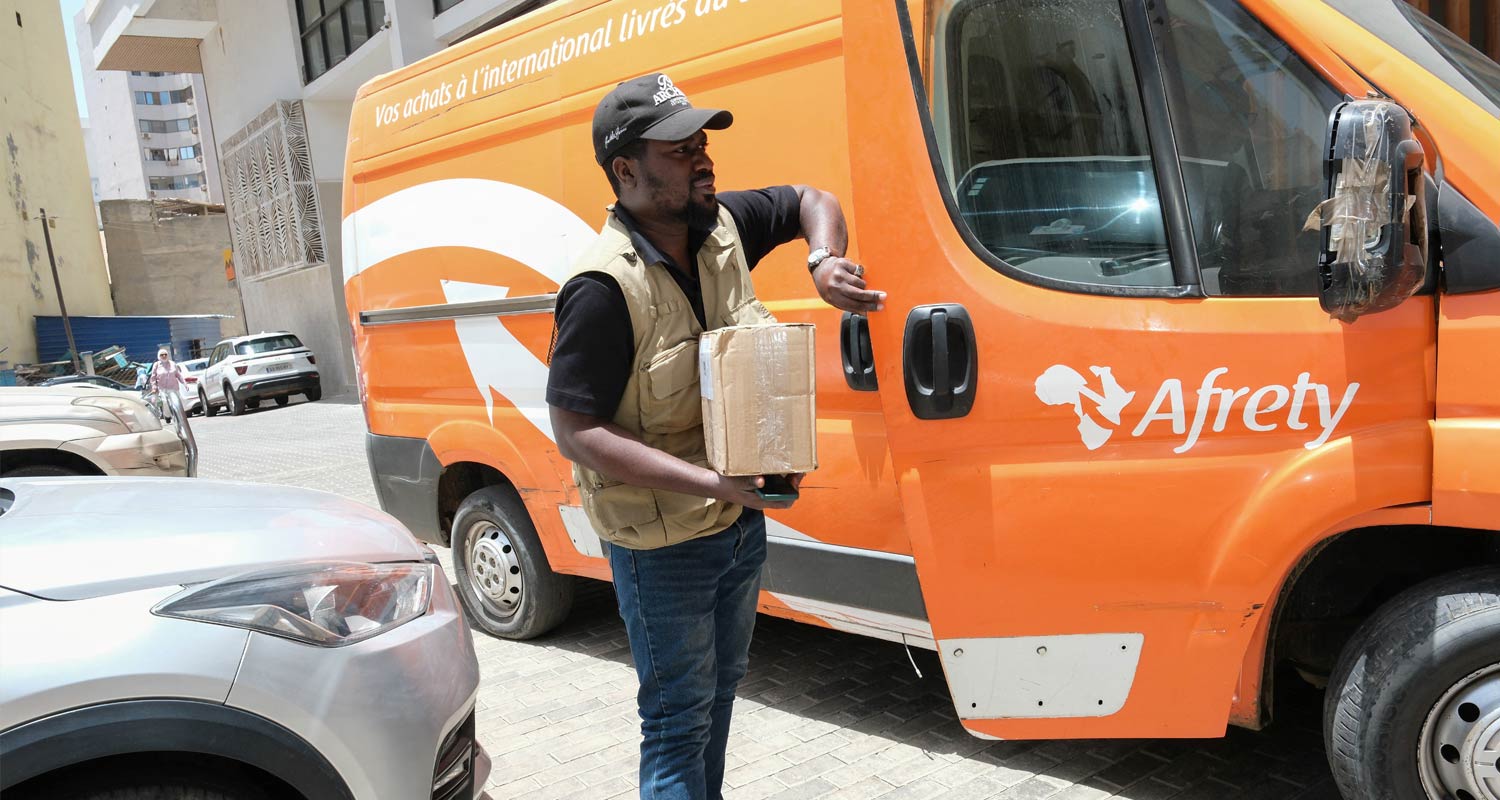
    Djima Antaley delivers a package for Afrety in Dakar, Senegal. Ricci Shryock/Reuters

    No bank card? No address? No problem. Shoppers in Africa increasingly are buying online from big brands such as Amazon or Walmart even though they have no physical presence on much of the continent.

    Among those benefiting from the shift are local and foreign package-forwarding companies that use technology and increasing internet penetration in Africa to overcome hurdles, including a lack of formal street addresses and customers with no access to traditional banks.

    One is Senegalese start-up Afrety, which provides a snapshot of how Africa’s shoppers can rely on intermediaries to buy from the US, Europe and China and receive the package at their doorstep.

    Among those benefiting from the shift are local and foreign package-forwarding companies

    Afrety’s service provides shoppers with delivery addresses at warehouses in France, the US and China. Multiple purchases can be consolidated for each customer and repackaged for dispatch to West Africa. On arrival, customs duties are paid, benefiting local governments.

    Customers without bank cards can pay by digital, mobile money accounts that can be charged with cash at kiosks. Mobile money is used widely in Senegal, along with other parts of Africa, instead of conventional banking.

    Once the packages arrive in Senegal, motorbikes and vans parked outside Afrety’s depot deliver using GPS across a major city like Dakar.

    ‘Flexible’

    “You have to be very, very, very flexible. That’s the key word,” Souane Diop, the 34-year-old CEO, said outside his depot filled with packages labelled Amazon and other international brands.

    Diop said the company started in 2018 with the aim of connecting informal networks of air travellers between France and Senegal.

    From small beginnings it has grown to four to five metric tons by air and two to three containers by sea each week. To keep costs low, Afrety rents its warehouse in France and uses partners in the US and China to handle trade there.

    Read: Takealot Group bets local scale can hold Amazon at bay

    Global logistics company Aramex is a much bigger rival, operating two platforms with overlapping services. Whereas Afrety grew out of the deep connections between Senegal and former colonial power France, which has a large Senegalese diaspora population, Aramex in sub-Saharan Africa relies on MyUS, which began by providing goods for US expatriates living in Africa.

    Aramex acquired MyUS in 2022 and in addition runs a platform that it created, Shop and Ship, which also delivers to many countries on the continent.
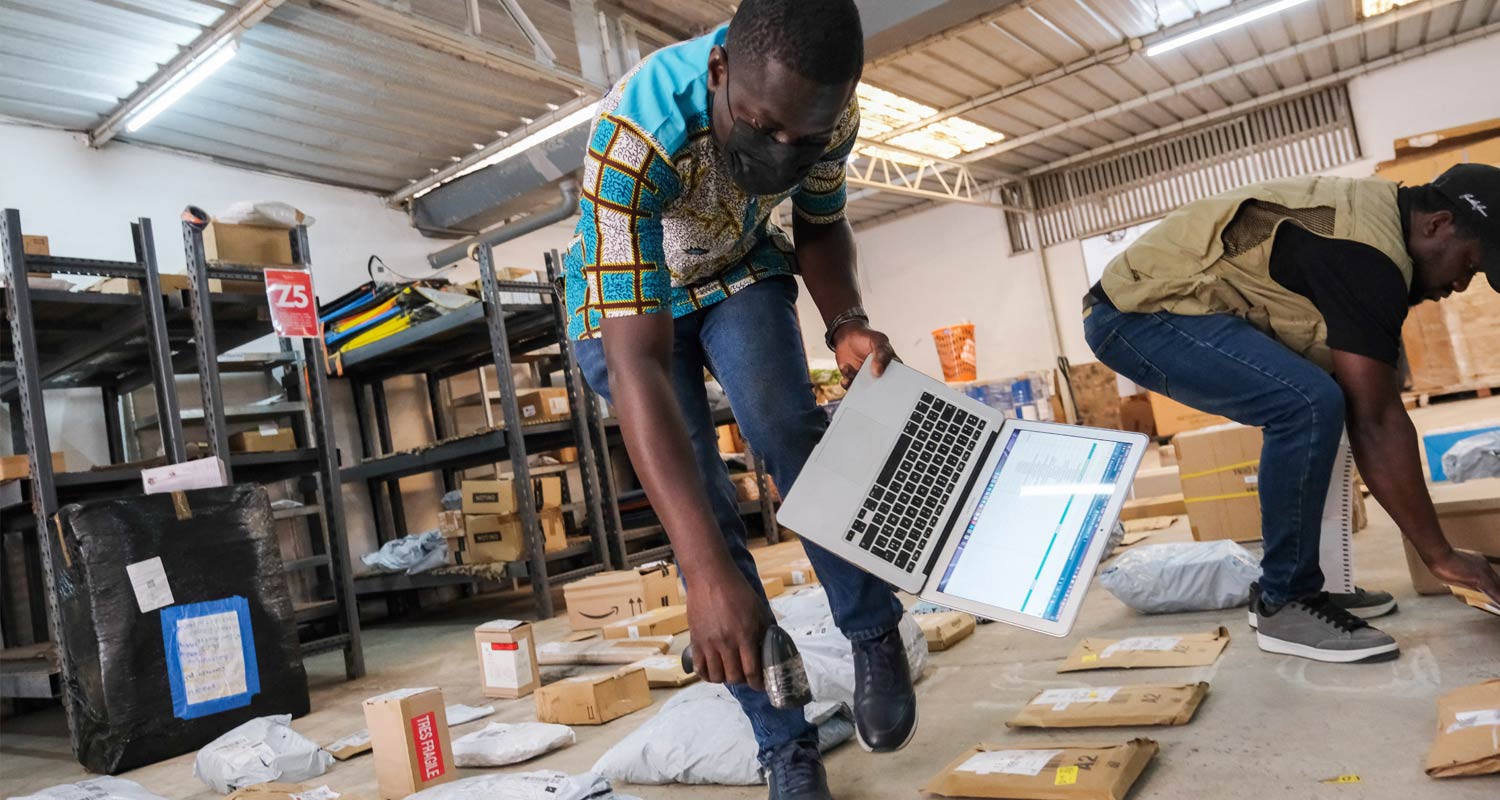
    Bouba Mane organises packages at Afrety headquarters in Dakar, Senegal. Ricci Shryock/Reuters
    Bouba Mane organises packages at Afrety headquarters in Dakar, Senegal. Ricci Shryock/Reuters

    Aramex Group CEO Amadou Diallo said the company aims to serve African customers that want choice and brands otherwise unavailable to them. Angola is one of its main destinations, but it also operates in difficult environments, notably Somalia, which has been riven by war for decades.

    Aramex said sub-Saharan Africa is one of its fastest growing regions. The products most in demand are electronics, apparel, toys, and machinery for agriculture and auto parts. The company said it plans to double revenue from shipping these and other goods there by 2030.

    But constraints on growth remain. For Aramex and also Afrety, customers mostly live in or near major cities, where relative wealth is concentrated. That is because e-commerce in Africa is largely driven by economic hubs, according to Tech Cabal Insights, a consultancy.

    South Africa, the richest economy in sub-Saharan Africa, stands alone for its level of online shopping

    Internet penetration has reached around 43% of Africa’s 1.5 billion people, but only a small fraction have enough income to shop online, it says. Even in Nigeria, West Africa’s economic powerhouse, only one in three internet users shop online. In poorer regions like Central Africa, only about one in 20 people shop online.

    South Africa, the richest economy in sub-Saharan Africa, dominates the continent’s internet use and stands alone in Africa for its level of online shopping. Online retail volumes in South Africa have grown by close to 35% annually over the last five years to about R140-billion in 2025, Mastercard figures show.

    The growth has drawn big brands to set up their first operations in sub-Saharan Africa. Amazon launched its first online marketplace in South Africa in 2024, competing with local e-commerce giant Takealot. The first Walmart-branded stores in Africa opened in Johannesburg last year.

    Jumia

    When asked, neither Amazon nor Walmart commented on whether they were considering expanding to other parts of sub-Saharan Africa. They also did not respond to requests for data on sales volumes to intermediaries.

    Even if the online giants remain absent from much of Africa, the intermediaries face other competition.

    Nigerian retail company Jumia, often known colloquially as the Amazon of Africa, operates in eight countries in sub-Saharan Africa, selling consumer goods ranging from fashion to electronics to home appliances. It has yet to make a profit but says it expects to break even this year.
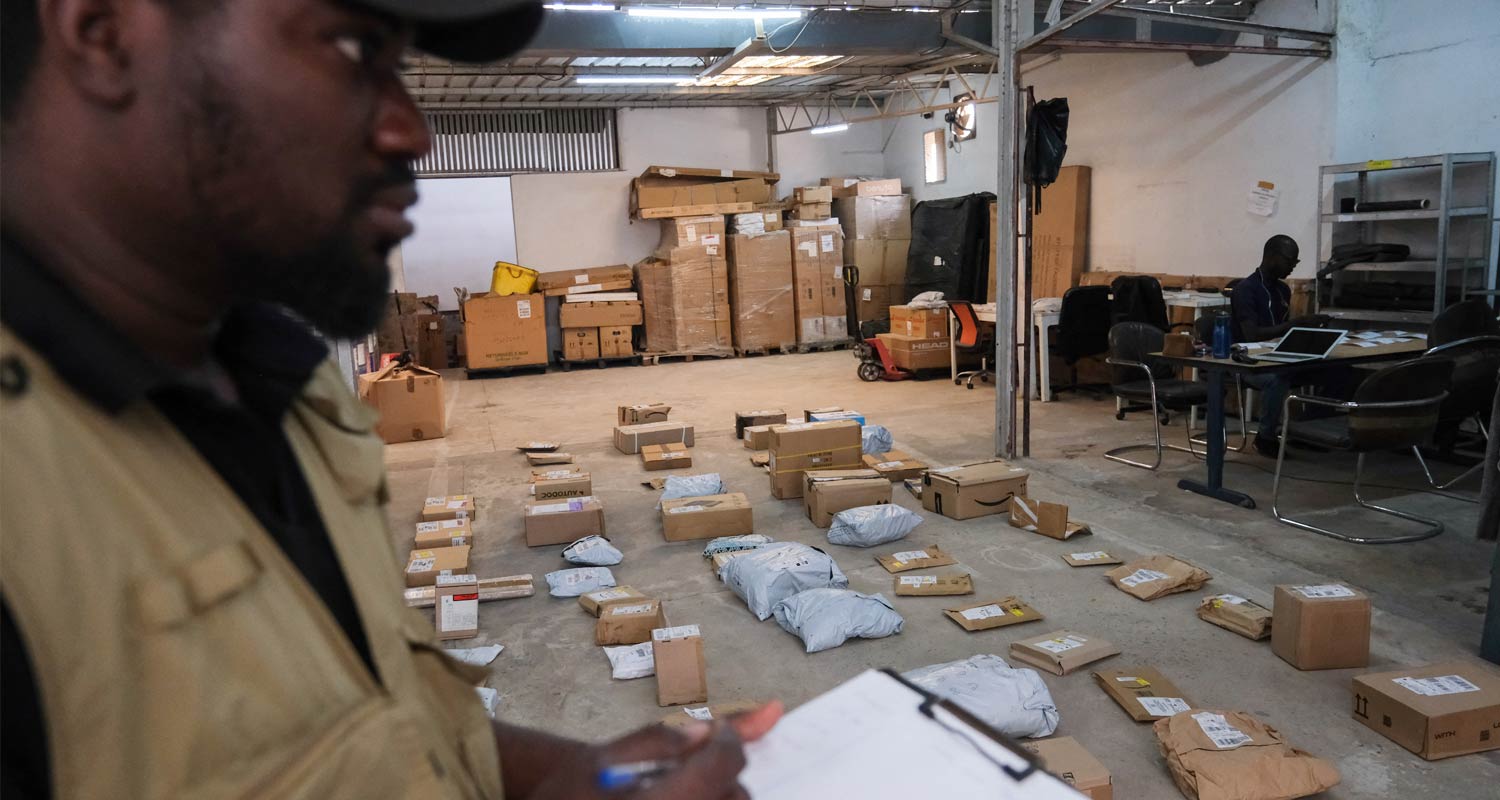
    Djima Antaley organizes packages at Afrety headquarters in Dakar, Senegal. Ricci Shryock/Reuters
    Djima Antaley organizes packages at Afrety headquarters in Dakar, Senegal. Ricci Shryock/Reuters

    Its CEO, Francis Dufay, said the company is fending off competition from Chinese retail giants including Temu and Shein by tailoring its services to each country, including opening local help centres and pick-up points in rural areas.

    Executives at both Jumia and Aramex said Nigeria was among the African e-commerce markets with most potential. The Nigerian government does not routinely publish e-commerce figures but has cited UN figures estimating the total at around US$75-billion in 2025.

    Read: Amazon Prime launched in South Africa

    Aramex opened a warehouse in Nigeria in April this year. Jumia’s Dufay said business there has grown by around 50% over the last quarter of 2025. “It’s still totally underpenetrated. We’re just at the beginning of our transformation In Nigeria,” he said.  — Jessica Donati, (c) 2026 Reuters

    • Subscribe to TechCentral’s daily newsletter
    • Get breaking news alerts on WhatsApp

    Follow TechCentral on Google News Add TechCentral as your preferred source on Google


    Afrety Amadou Diallo Amazon Aramex e-commerce Francis Dufay Jumia MasterCard MyUS Senegal Shein Shop and Ship Souane Diop Takealot Temu Walmart
    WhatsApp YouTube
    Share. Facebook Twitter LinkedIn WhatsApp Telegram Email Copy Link
    Previous ArticlePurple Group buys AI fintech Telescope in R177-million deal
    Next Article The Popia problem with agentic AI

    Related Posts

    The retailer that is about to become your bank

    The retailer that is about to become your bank

    30 July 2026
    South Africa's banks have become the exit ramp for its fintechs - Alison Collier

    South Africa’s banks have become the exit ramp for its fintechs

    27 July 2026
    Massive changes coming to Amazon Prime Video - Jeff Bezos

    Massive changes coming to Amazon Prime Video

    23 July 2026
    Company News
    Google Cloud, AI adoption gain momentum in Africa - Digicloud Africa

    Google Cloud, AI adoption gain momentum in Africa

    3 August 2026
    Domains.co.za launches self-hosted n8n VPS hosting

    Domains.co.za launches self-hosted n8n VPS hosting

    31 July 2026
    Smarter.tech '26 shows why smarter technology begins with context - Obsidian Systems

    Context is the missing piece in enterprise AI: Obsidian

    31 July 2026
    Opinion
    The author, Jannie van Zyl

    Selling vapour is corporate suicide in slow motion

    16 July 2026
    Brazil's online gambling crackdown is a lesson for South Africa

    How Amazon outmanoeuvred Starlink in South Africa

    15 July 2026
    The Popia problem with agentic AI - Herman Haasbroek

    The Popia problem with agentic AI

    14 July 2026

    Subscribe to Updates

    Get the best South African technology news and analysis delivered to your e-mail inbox every morning.

    Latest Posts
    SA experts split on whether the singularity has begun

    SA experts split on whether the singularity has begun

    3 August 2026
    Google Cloud, AI adoption gain momentum in Africa - Digicloud Africa

    Google Cloud, AI adoption gain momentum in Africa

    3 August 2026
    Telkom's prepaid growth is running on credit - Serame Taukobong

    Telkom’s prepaid growth is running on credit

    3 August 2026
    The debate about the grid is over

    The debate about the grid is over

    3 August 2026
    © 2009 - 2026 NewsCentral Media
    Built and maintained by Chronon
    • Cookie policy (ZA)
    • TechCentral – privacy and Popia

    Type above and press Enter to search. Press Esc to cancel.

    Manage consent

    TechCentral uses cookies to enhance its offerings. Consenting to these technologies allows us to serve you better. Not consenting or withdrawing consent may adversely affect certain features and functions of the website.

    Functional Always active
    The technical storage or access is strictly necessary for the legitimate purpose of enabling the use of a specific service explicitly requested by the subscriber or user, or for the sole purpose of carrying out the transmission of a communication over an electronic communications network.
    Preferences
    The technical storage or access is necessary for the legitimate purpose of storing preferences that are not requested by the subscriber or user.
    Statistics
    The technical storage or access that is used exclusively for statistical purposes. The technical storage or access that is used exclusively for anonymous statistical purposes. Without a subpoena, voluntary compliance on the part of your Internet Service Provider, or additional records from a third party, information stored or retrieved for this purpose alone cannot usually be used to identify you.
    Marketing
    The technical storage or access is required to create user profiles to send advertising, or to track the user on a website or across several websites for similar marketing purposes.
    • Manage options
    • Manage services
    • Manage {vendor_count} vendors
    • Read more about these purposes
    View preferences
    • {title}
    • {title}
    • {title}