Close Menu
TechCentralTechCentral

    Subscribe to the newsletter

    Get the best South African technology news and analysis delivered to your e-mail inbox every morning.

    Facebook X (Twitter) YouTube LinkedIn
    WhatsApp Facebook X (Twitter) LinkedIn YouTube
    TechCentralTechCentral
    • News
      Cape Town agency powers biggest gaming Kickstarter ever - Kyle Puller

      Cape Town agency powers biggest gaming Kickstarter ever

      3 May 2026
      Schreiber suspends home affairs officials over fake AI references - Leon Schreiber

      Schreiber suspends home affairs officials over fake AI references

      30 April 2026
      South Africa headed to the polls in November

      South Africa headed to the polls in November

      30 April 2026
      Google humbles Big Tech's cloud heavyweights

      Google humbles Big Tech’s cloud heavyweights

      30 April 2026
      Logistics start-up Shiprazor pulls in R44-million seed round

      Logistics start-up Shiprazor pulls in R44-million seed round

      30 April 2026
    • World
      'It was my idea': Musk claims paternity of OpenAI - Elon Musk

      ‘It was my idea’: Musk claims paternity of OpenAI

      29 April 2026
      Pivotal week for US tech stocks

      Pivotal week for US tech stocks

      28 April 2026
      Worries over OpenAI's growth as Anthropic gains ground - Sam Altman. Shelby Tauber/Reuters

      Worries over OpenAI’s growth as Anthropic gains ground

      28 April 2026
      Taylor Swift trademarks her voice to fight AI fakes

      Taylor Swift trademarks her voice to fight AI fakes

      28 April 2026
      DeepSeek's long-awaited V4 model enters preview

      DeepSeek’s long-awaited V4 model enters preview

      24 April 2026
    • In-depth
      Alfa's electric rebel - Alfa Romeo Junior Elettrica Veloce

      Alfa’s electric rebel

      29 April 2026
      Africa switches on as Europe dims the lights

      Africa switches on as Europe dims the lights

      9 April 2026
      The biggest untapped EV market on Earth is hiding in plain sight

      The biggest untapped EV market on Earth is hiding in plain sight

      1 April 2026
      The R18-billion tech giant hiding in plain sight - Jens Montanana

      The R16-billion tech giant hiding in plain sight

      26 March 2026
      The last generation of coders

      The last generation of coders

      18 February 2026
    • TCS

      TCS+ | ‘The ISP for ISPs’: Vox’s shift to wholesale aggregator

      20 April 2026
      TCS | Werner Lindemann on how AI is rewriting the infosec rulebook

      TCS | Werner Lindemann on how AI is rewriting the infosec rulebook

      15 April 2026
      TCS | Donovan Marsh on AI and the future of filmmaking

      TCS | Donovan Marsh on AI and the future of filmmaking

      7 April 2026
      TCS+ | Vodacom Business moves to crack the SME tech gap - Andrew Fulton, Sannesh Beharie

      TCS+ | Vodacom Business moves to crack the SME tech gap

      7 April 2026
      TCS | MTN's Divysh Joshi on the strategy behind Pi - Divyesh Joshi

      TCS | MTN’s Divyesh Joshi on the strategy behind Pi

      1 April 2026
    • Opinion
      Free calls, dead voice and Shameel Joosub's Spanish ghost - Duncan McLeod

      Free calls, dead voice and Shameel Joosub’s Spanish ghost

      22 April 2026
      The conflict of interest at the heart of PayShap's slow adoption - Cheslyn Jacobs

      The conflict of interest at the heart of PayShap’s slow adoption

      26 March 2026
      South Africa's energy future hinges on getting wheeling right - Aishah Gire

      South Africa’s energy future hinges on getting wheeling right

      10 March 2026
      Free calls, dead voice and Shameel Joosub's Spanish ghost - Duncan McLeod

      Apple just dropped a bomb on the Windows world

      5 March 2026
      R230-million in the bag for Endeavor's third Harvest Fund - Alison Collier

      VC’s centre of gravity is shifting – and South Africa is in the frame

      3 March 2026
    • Company Hubs
      • 1Stream
      • Africa Data Centres
      • AfriGIS
      • Altron Digital Business
      • Altron Document Solutions
      • Altron Group
      • Arctic Wolf
      • Ascent Technology
      • AvertITD
      • BBD
      • Braintree
      • CallMiner
      • CambriLearn
      • Contactable
      • CYBER1 Solutions
      • Digicloud Africa
      • Digimune
      • Domains.co.za
      • ESET
      • Euphoria Telecom
      • HOSTAFRICA
      • Incredible Business
      • iONLINE
      • IQbusiness
      • Iris Network Systems
      • Kaspersky
      • LSD Open
      • Mitel
      • NEC XON
      • Netstar
      • Network Platforms
      • Next DLP
      • Ovations
      • Paracon
      • Paratus
      • Q-KON
      • SevenC
      • SkyWire
      • Solid8 Technologies
      • Telit Cinterion
      • Telviva
      • Tenable
      • Vertiv
      • Videri Digital
      • Vodacom Business
      • Wipro
      • Workday
      • XLink
    • Sections
      • AI and machine learning
      • Banking
      • Broadcasting and Media
      • Cloud services
      • Contact centres and CX
      • Cryptocurrencies
      • Education and skills
      • Electronics and hardware
      • Energy and sustainability
      • Enterprise software
      • Financial services
      • HealthTech
      • Information security
      • Internet and connectivity
      • Internet of Things
      • Investment
      • IT services
      • Lifestyle
      • Motoring
      • Policy and regulation
      • Public sector
      • Retail and e-commerce
      • Satellite communications
      • Science
      • SMEs and start-ups
      • Social media
      • Talent and leadership
      • Telecoms
    • Events
    • Advertise
    TechCentralTechCentral
    Home » Sections » Satellite communications » The satellite war on terrestrial telecoms has already begun

    The satellite war on terrestrial telecoms has already begun

    Direct-to-device technology threatens to pit satellite and mobile operators against each other in the years ahead.
    By Nkosinathi Ndlovu13 April 2026
    Twitter LinkedIn Facebook WhatsApp Email Telegram Copy Link
    News Alerts
    WhatsApp

    The satellite war on terrestrial telecoms has already begun

    The convergence of several seemingly disparate but interrelated technological advances is bringing mass-market satellite direct-to-device capabilities closer to being an everyday reality.

    The shift promises to connect the unconnected, especially in remote and rural regions of the world where terrestrial infrastructure is non-existent.

    Large parts of Africa – a continent characterised by massive infrastructure deficits – stand to benefit. But even in urban areas, a battle for market share between terrestrial mobile operators and low-Earth-orbit (LEO) satellite broadband providers is brewing. Satellite direct-to-device capability is the technology that could spark it.

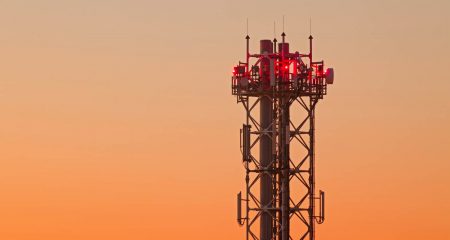
    The FCC will review satellite power-limit rules to allow more intensive use of wireless spectrum

    One of the technological advances pulling direct-to-device into the mainstream is the emergence of silicon-carbon anodes in smartphone batteries. Silicon-carbon chemistry is gradually increasing battery capacity without expanding physical size, allowing for more powerful batteries in thinner form factors. Honor’s Power2, for example, has a 10 080mAh silicon-carbon battery, yet is 8mm thick and weighs only 216g.

    The problem silicon-carbon batteries help solve is that a cellphone’s signal weakens the further it has to travel. That is why satellite phones of the past – which relied on medium-Earth-orbit (MEO) and geostationary (GEO) satellites – had massive batteries either carried in a case or many times the size of a modern cellphone. They were impractical for everyday use.

    LEO, MEO, GEO

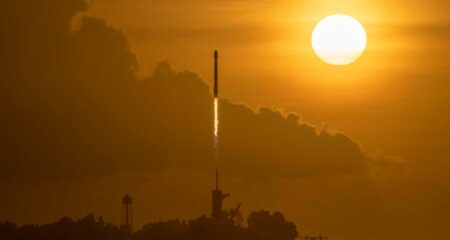
    LEO satellites orbit between 160km and 2 000km above Earth’s surface – with Starlink’s constellation operating at around 550km – much closer than their MEO and GEO counterparts. Less power is therefore needed to propagate signals to them, though LEO satellites are still much further away than the terrestrial cellphone tower down the road. The extra power headroom matters.

    But the ability to power a signal so it propagates further is rarely used to its full capacity. National communications regulators like South Africa’s Icasa typically mandate upper limits on the power to which specific types of signals can be boosted. This is partly to ensure radio frequency signals from one service do not interfere with others, such as television broadcasts or maritime radar.

    Read: Cell towers in space: inside the race to connect planet Earth

    LEO satellites have also come under fire from the astronomy community, with critical scientific projects like the Square Kilometre Array threatened by interference from satellite signals.

    Last week, the US Federal Communications Commission announced it would review satellite power-limit rules – last revised in the 1990s – to allow more intensive use of wireless spectrum for space activities. The FCC said the proposed revisions could boost capacity for space-based broadband services to as much as seven times current levels, enabling higher speeds, lower costs and greater reliability.
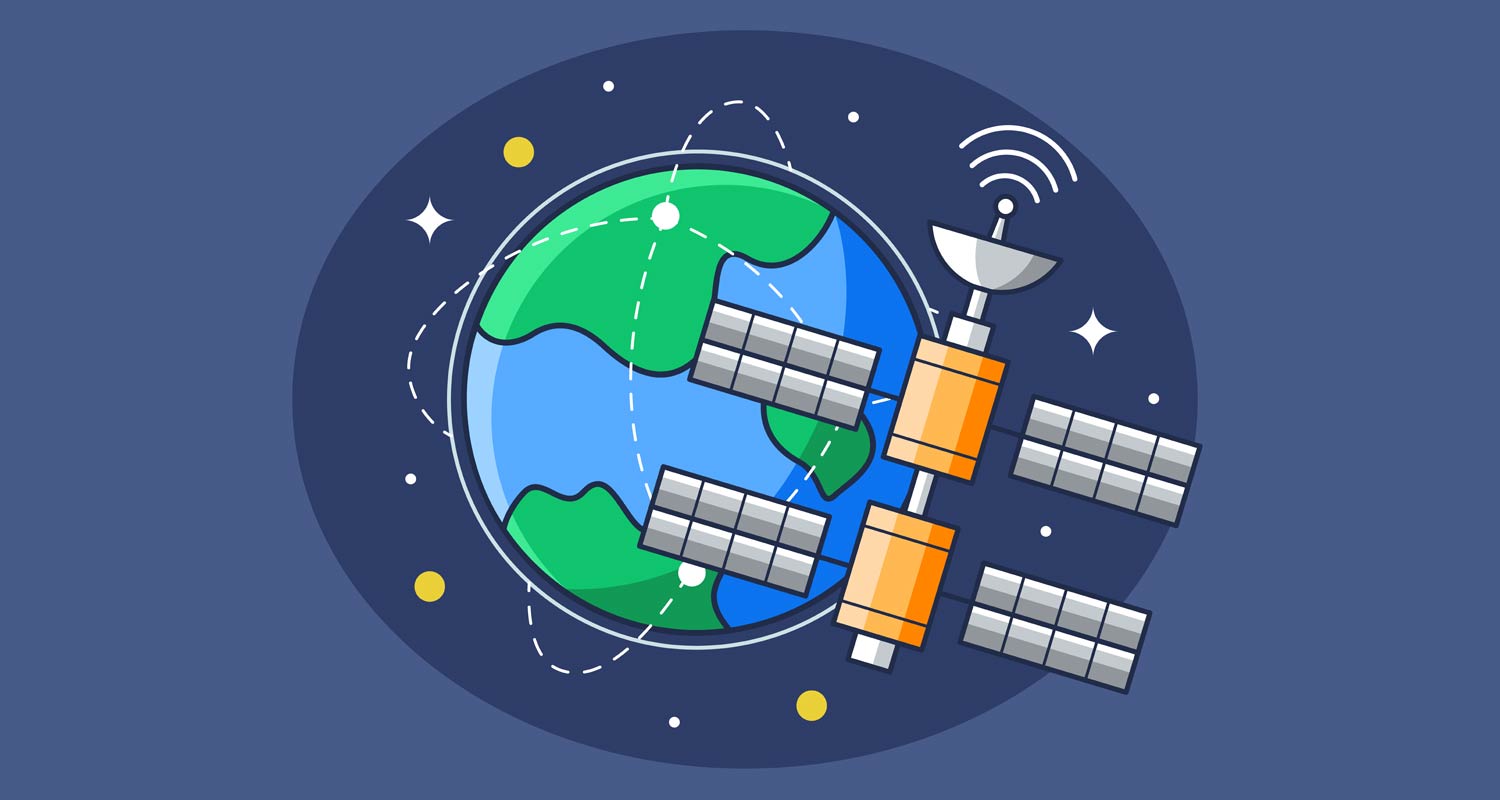
    Satellite

    Another factor bringing direct-to-device closer to the mainstream is the technology’s growing ability to handle higher-bandwidth services.

    The first commercially available direct-to-device service was introduced by Apple in 2022, in partnership with satellite operator Globalstar. Dubbed “satellite emergency SOS”, the feature allowed iPhone 14 users in areas with no terrestrial coverage to send short messages to emergency services. Higher-bandwidth uses such as voice calls or web browsing were not included.

    In March 2025, MTN claimed Africa’s first successful test of a direct-to-device phone call. The test, conducted in Vryburg in partnership with Lynk Global, showed that use cases like voice – with higher bandwidth and lower latency requirements than SMS – were possible over a LEO satellite connection.

    One big problem is it’s not a solution that works well indoors, inside a structure with walls and a roof

    In March 2026, Vodafone and Satellite Connect Europe expanded these capabilities further, successfully executing a video call over a direct-to-device connection using a standard smartphone.

    With the battery capacity of standard smartphones increasing without the devices getting physically larger, regulators easing restrictions on the power output of satellite signals, and higher-capacity use cases like video calls now enabled, the idea of user devices connecting to cell towers in space rather than to terrestrial infrastructure is becoming feasible.

    Outdoors

    There is one big problem, however: it’s not a solution that works well indoors, inside a structure with walls and a roof. Apple’s emergency SOS via Globalstar explicitly requires the user to step outside and point the phone at the sky, with an on-screen guide showing where the satellite is. T-Mobile’s Starlink direct-to-cell text service in the US works outdoors and in vehicles with a clear view of the sky, but not reliably inside buildings. The MTN Vryburg voice call and the Vodafone–AST SpaceMobile video call were both outdoor demonstrations.

    However, Given the global scale at which LEO broadband service providers operate and the declining cost of deploying satellites, it is not hard to imagine a future in which their economies of scale make it cheaper for them to offer mobile services than terrestrial operators.

    Read: Karoo collision: Starlink vs science in South African skies

    At present, mobile operators and LEO satellite companies often partner with each other. It is a sound go-to-market strategy: the operators get to extend their networks into areas where building terrestrial infrastructure is infeasible, and the LEO satellite companies get access to consumers without having to invest in customer-facing infrastructure or shoulder heavy regulatory compliance burdens.

    Direct-to-device, however, could mean direct competition, especially if LEO satellite companies start bidding for their own mobile spectrum – a scenario that would break the terrestrial-only assumption underpinning Icasa’s spectrum framework.
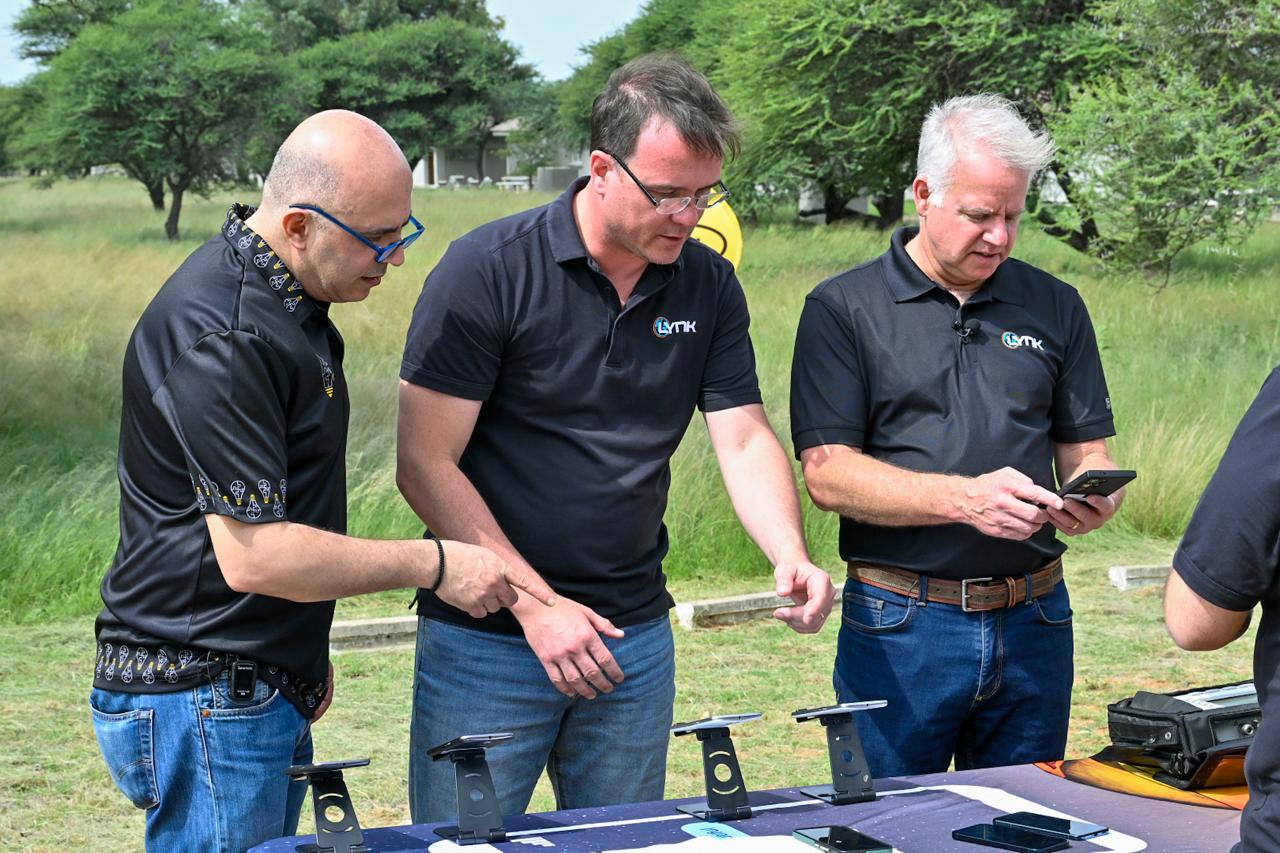
    MTN South Africa conducted a satellite test call near Vryburg in North West last year
    MTN South Africa conducted a satellite test call near Vryburg in North West last year

    As far back as 2024, MTN Group CEO Ralph Mupita acknowledged that direct-to-device technology could pit mobile and satellite operators against each other. He said then that MTN was positioning itself to mitigate against that threat.

    South Africa’s mobile operators, through their industry lobby group the Association of Comms & Technology, have expressed an openness to having satellite players enter the local market on their own instead of partnering with them. This is only on condition that the satellite operators are subject to the same regulatory requirements around data privacy, data transport, localisation and access to spectrum.

    But serving consumers directly comes with regulatory overheads that satellite operators may not be ready to contend with.  – © 2026 NewsCentral Media

    • The author, Nkosinathi Ndlovu, is a senior journalist at TechCentral

    Get breaking news from TechCentral on WhatsApp. Sign up here.

    Follow TechCentral on Google News Add TechCentral as your preferred source on Google


    Federal Communications Commission MTN Ralph Mupita SpaceX Starlink
    WhatsApp YouTube
    Share. Facebook Twitter LinkedIn WhatsApp Telegram Email Copy Link
    Previous ArticleAI sabotage in the workplace is real – and SA firms aren’t immune
    Next Article Streaming platform bags rights for Fifa World Cup in South Africa

    Related Posts

    Record R99-million payday for MTN CEO Ralph Mupita

    Record R99-million payday for MTN CEO Ralph Mupita

    29 April 2026
    MTN director traded shares during closed period - Vincent Rague

    MTN director traded shares during closed period

    29 April 2026
    MTN warns gambling is hurting its prepaid business in South Africa - Ferdi Moolman

    MTN warns gambling is hurting its prepaid business in South Africa

    29 April 2026
    Company News
    The breach is in the database - Ascent Technology Johan Lamberts

    The breach is in the database

    30 April 2026
    Hospitality sector embraces Google Workspace and Gemini to cut admin - Digicloud Africa, Rand Data Systems

    Hospitality sector embraces Google Workspace and Gemini to cut admin

    30 April 2026
    Paratus Mozambique powers 2026 Santa Maria fishing showdown

    Paratus Mozambique powers 2026 Santa Maria fishing showdown

    30 April 2026
    Opinion
    Free calls, dead voice and Shameel Joosub's Spanish ghost - Duncan McLeod

    Free calls, dead voice and Shameel Joosub’s Spanish ghost

    22 April 2026
    The conflict of interest at the heart of PayShap's slow adoption - Cheslyn Jacobs

    The conflict of interest at the heart of PayShap’s slow adoption

    26 March 2026
    South Africa's energy future hinges on getting wheeling right - Aishah Gire

    South Africa’s energy future hinges on getting wheeling right

    10 March 2026

    Subscribe to Updates

    Get the best South African technology news and analysis delivered to your e-mail inbox every morning.

    Latest Posts
    Cape Town agency powers biggest gaming Kickstarter ever - Kyle Puller

    Cape Town agency powers biggest gaming Kickstarter ever

    3 May 2026
    Schreiber suspends home affairs officials over fake AI references - Leon Schreiber

    Schreiber suspends home affairs officials over fake AI references

    30 April 2026
    South Africa headed to the polls in November

    South Africa headed to the polls in November

    30 April 2026
    Google humbles Big Tech's cloud heavyweights

    Google humbles Big Tech’s cloud heavyweights

    30 April 2026
    © 2009 - 2026 NewsCentral Media
    • Cookie policy (ZA)
    • TechCentral – privacy and Popia

    Type above and press Enter to search. Press Esc to cancel.

    Manage consent

    TechCentral uses cookies to enhance its offerings. Consenting to these technologies allows us to serve you better. Not consenting or withdrawing consent may adversely affect certain features and functions of the website.

    Functional Always active
    The technical storage or access is strictly necessary for the legitimate purpose of enabling the use of a specific service explicitly requested by the subscriber or user, or for the sole purpose of carrying out the transmission of a communication over an electronic communications network.
    Preferences
    The technical storage or access is necessary for the legitimate purpose of storing preferences that are not requested by the subscriber or user.
    Statistics
    The technical storage or access that is used exclusively for statistical purposes. The technical storage or access that is used exclusively for anonymous statistical purposes. Without a subpoena, voluntary compliance on the part of your Internet Service Provider, or additional records from a third party, information stored or retrieved for this purpose alone cannot usually be used to identify you.
    Marketing
    The technical storage or access is required to create user profiles to send advertising, or to track the user on a website or across several websites for similar marketing purposes.
    • Manage options
    • Manage services
    • Manage {vendor_count} vendors
    • Read more about these purposes
    View preferences
    • {title}
    • {title}
    • {title}