Close Menu
TechCentralTechCentral

    Subscribe to the newsletter

    Get the best South African technology news and analysis delivered to your e-mail inbox every morning.

    Facebook X (Twitter) YouTube LinkedIn
    WhatsApp Facebook X (Twitter) LinkedIn YouTube
    TechCentralTechCentral
    • News
      South Africa's data centre market ripe for consolidation - Joshua Smythwood

      South Africa’s data centre market ripe for consolidation

      10 February 2026
      Watts & Wheels S1E4: 'We drive an electric Uber'

      Watts & Wheels S1E4: ‘We drive an electric Uber’

      10 February 2026
      Online sales can't save Pick n Pay from Black Friday hangover

      Online sales can’t save Pick n Pay from Black Friday hangover

      10 February 2026
      A million reasons monopolies don't work

      A million reasons monopolies don’t work

      10 February 2026
      Dr Google, meet Dr Chatbot - neither is ready to see you now

      Dr Google, meet Dr Chatbot – neither is ready to see you now

      10 February 2026
    • World
      EU regulators take aim at WhatsApp

      EU regulators take aim at WhatsApp

      9 February 2026
      Musk hits brakes on Mars mission

      Musk hits brakes on Mars mission

      9 February 2026
      Crypto firm accidentally sends R700-billion in bitcoin to its users

      Crypto firm accidentally sends R700-billion in bitcoin to its users

      8 February 2026
      AI won't replace software, says Nvidia CEO amid market rout - Jensen Huang

      AI won’t replace software, says Nvidia CEO amid market rout

      4 February 2026
      Apple acquires audio AI start-up Q.ai

      Apple acquires audio AI start-up Q.ai

      30 January 2026
    • In-depth
      How liberalisation is rewiring South Africa's power sector

      How liberalisation is rewiring South Africa’s power sector

      21 January 2026
      The top-performing South African tech shares of 2025

      The top-performing South African tech shares of 2025

      12 January 2026
      Digital authoritarianism grows as African states normalise internet blackouts

      Digital authoritarianism grows as African states normalise internet blackouts

      19 December 2025
      TechCentral's South African Newsmakers of 2025

      TechCentral’s South African Newsmakers of 2025

      18 December 2025
      Black Friday goes digital in South Africa as online spending surges to record high

      Black Friday goes digital in South Africa as online spending surges to record high

      4 December 2025
    • TCS
      TCS+ | How Cloud On Demand is helping SA businesses succeed in the cloud - Xhenia Rhode, Dion Kalicharan

      TCS+ | Cloud On Demand and Consnet: inside a real-world AWS partner success story

      30 January 2026
      Watts & Wheels S1E4: 'We drive an electric Uber'

      Watts & Wheels S1E3: ‘BYD’s Corolla Cross challenger’

      30 January 2026
      Watts & Wheels S1E4: 'We drive an electric Uber'

      Watts & Wheels S1E2: ‘China attacks, BMW digs in, Toyota’s sublime supercar’

      23 January 2026

      TCS+ | Why cybersecurity is becoming a competitive advantage for SA businesses

      20 January 2026
      Watts & Wheels S1E4: 'We drive an electric Uber'

      Watts & Wheels: S1E1 – ‘William, Prince of Wheels’

      8 January 2026
    • Opinion
      South Africa's skills advantage is being overlooked at home - Richard Firth

      South Africa’s skills advantage is being overlooked at home

      29 January 2026
      Why Elon Musk's Starlink is a 'hard no' for me - Songezo Zibi

      Why Elon Musk’s Starlink is a ‘hard no’ for me

      26 January 2026
      South Africa's new fibre broadband battle - Duncan McLeod

      South Africa’s new fibre broadband battle

      20 January 2026
      AI moves from pilots to production in South African companies - Nazia Pillay SAP

      AI moves from pilots to production in South African companies

      20 January 2026
      South Africa's new fibre broadband battle - Duncan McLeod

      ANC’s attack on Solly Malatsi shows how BEE dogma trumps economic reality

      14 December 2025
    • Company Hubs
      • Africa Data Centres
      • AfriGIS
      • Altron Digital Business
      • Altron Document Solutions
      • Altron Group
      • Arctic Wolf
      • AvertITD
      • Braintree
      • CallMiner
      • CambriLearn
      • CYBER1 Solutions
      • Digicloud Africa
      • Digimune
      • Domains.co.za
      • ESET
      • Euphoria Telecom
      • Incredible Business
      • iONLINE
      • IQbusiness
      • Iris Network Systems
      • LSD Open
      • NEC XON
      • Netstar
      • Network Platforms
      • Next DLP
      • Ovations
      • Paracon
      • Paratus
      • Q-KON
      • SevenC
      • SkyWire
      • Solid8 Technologies
      • Telit Cinterion
      • Tenable
      • Vertiv
      • Videri Digital
      • Vodacom Business
      • Wipro
      • Workday
      • XLink
    • Sections
      • AI and machine learning
      • Banking
      • Broadcasting and Media
      • Cloud services
      • Contact centres and CX
      • Cryptocurrencies
      • Education and skills
      • Electronics and hardware
      • Energy and sustainability
      • Enterprise software
      • Financial services
      • Information security
      • Internet and connectivity
      • Internet of Things
      • Investment
      • IT services
      • Lifestyle
      • Motoring
      • Public sector
      • Retail and e-commerce
      • Satellite communications
      • Science
      • SMEs and start-ups
      • Social media
      • Talent and leadership
      • Telecoms
    • Events
    • Advertise
    TechCentralTechCentral
    Home » Top » What happened to the flying car?

    What happened to the flying car?

    By Editor6 March 2012
    Twitter LinkedIn Facebook WhatsApp Email Telegram Copy Link
    News Alerts
    WhatsApp
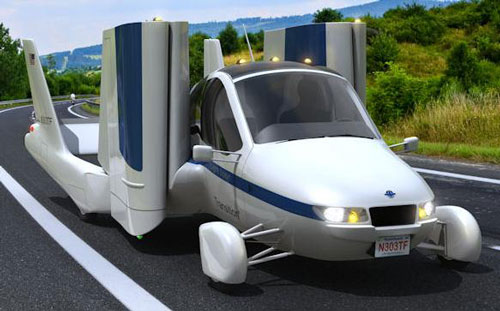
    Terrafugia's Transition

    For a generation of baby-boomers it has been a source of huge disappointment. They grew up believing that one day they would fly to work in their very own sky cars — only to find themselves still very much grounded. More than a century after the Wright brothers first took to the air, personal aviation remains an unrealised dream. But there have been some recent signs of progress, thanks to advances in technology and changes in regulation. More than a dozen flying cars are in development, and Terrafugia, a firm based in Woburn, Massachusetts, is about to launch the first commercial model, the Transition.

    The Transition is perhaps best described as a road plane, rather than a flying car. It is essentially a small, US$279 000 plane that has been designed to be legally roadworthy. Push a button and the wings fold up, allowing the pilot to start driving it like a car. It even runs on petrol, with a range of 1 000km on the ground or 640km in the air. Around 100 aircraft have been reserved, and the first is due to be delivered later this year. Technically, the Transition has been made possible by the availability of modern engines, composite materials and computerised avionics systems. But it has also taken advantage of the “Lite-Sport” aircraft category introduced by America’s Federal Aviation Administration (FAA) in 2004.

    This category was partly intended to plug gaps created by unregulated small aircraft, but there was another reason to introduce it, says Carl Dietrich, Terrafugia’s co-founder and chief executive: to spur innovation and make it easier to get a pilot’s licence. Part of the FAA’s remit is to promote flight, yet getting a licence is difficult and time-consuming. Safety is paramount, of course, but in theory this could be made simpler for people who want to fly a simpler class of plane.

    The complexity of the certification process deterred anyone from designing small, easy-to-use planes, however. As a result, says Dietrich, “you had an average age of aircraft of over 40 years”. The Lite-Sport category was introduced to encourage the development of such aircraft. Certification is simpler, and since the category’s introduction there has been a flowering of innovation. More than 120 new models of small aircraft have entered the market.

    An aircraft that is simpler to certify and easier to fly need not be any less safe. Whereas once a pilot needed to know how to triangulate his position using ground-based radio beacons, portable GPS units and altimeters can now do the job. “There are now off-the-shelf systems that can give you the same kind of instrumentation capabilities as an airliner,” says Dietrich. As a result, although there are restrictions on flying at night or through bad weather, it is possible for someone to get a Lite-Sport licence with just 20 hours’ flying experience — less time than many people spend learning to drive.

    The Transition is being aimed at pilots who want to be able to drive to the airport and take off without changing vehicles, or land at a distant airport and not be stranded. As its name implies, it is intended to be a transitional product, a step on the way to true sky cars capable of taking off and landing almost anywhere. Such aircraft will require the development of more efficient motors and better control systems, says Rob Bulaga, president of Trek Aerospace in Folsom, California, another company developing a flying car.

    Trek is adapting a “personal aerial vehicle” concept originally developed for Darpa, the research-funding agency of America’s department of defence, to create a civilian vehicle. This two-seater, the Tyrannos (pictured below), has ducted propellers powered by petrol engines, with a battery backup. Although it has been possible to make such vehicles for decades, they are notoriously difficult to fly. “It’s just basic physics,” says Bulaga. “Any vehicle that takes off and lands vertically is unstable.” To make it practical, computers are needed to make the constant tweaks required to achieve stable flight. Without them, even just hovering is like trying to stand on a beachball, he says.

    The Tyrannos

    Chris Malloy agrees. He is currently installing a new computerised control system on his Hoverbike, an aircraft which is ridden like a motorbike but has ducted fans at the front and back instead of wheels. “Originally I wanted the roll to be controlled by the rider shifting their body weight, like a motorbike,” he says, but he has had to revise this design. So far both Trek Aerospace and Malloy have only carried out tethered flight tests, but they believe they can have their vehicles in production within a few years. “I truly believe we could have a practical flying car within five years,” says Bulaga.

    Perhaps, but for whom, precisely? Neither Bulaga nor Malloy is keen for the general public to use his vehicles. “Most people can’t parallel park, so I can’t see most people owning one of these without killing themselves,” says Malloy. His $50 000 Hoverbike is intended as a cheaper alternative to a helicopter for cattle-mustering. Bulaga agrees: “I don’t want to see this in the hands of everybody, because I have seen what everybody drives like.”

    Moreover, any bad practices on the road are likely to be exaggerated in the air because aircraft are harder and more complicated to control than cars, says Ken Goodrich, a research engineer at Nasa’s Langley Research Centre in Hampton, Virginia. “With a car there’s a one-to-one relationship between how much you turn the wheel and how much the vehicle turns,” he says. “In an aircraft if you make an input on the stick or yoke, the flight path changes in all three directions.”

    But Goodrich thinks this problem can be fixed. He has been working on creating control systems for aircraft that are designed to make flying easier and safer. Essentially this means getting the plane to fly itself, but with some high-level guidance from the “pilot”, he says. “The automation interprets the inputs from the stick at a behavioural level. That’s the long-term vision.” The aim of his project is to enable a much larger number of people to become pilots. In Europe a similar project was launched last year called myCopter, with the aim of developing semi-autonomous aircraft for general use. With the FAA loosening its regulatory grip and with the cost and reliability of sensors and control systems improving, says Goodrich, all the necessary pieces for a flying car are at last coming together.  — (c) 2012 The Economist

    • Subscribe to our free daily newsletter
    • Follow us on Twitter or on Google+ or on Facebook
    • Visit our sister website, SportsCentral (still in beta)


    WhatsApp YouTube Follow on Google News Add as preferred source on Google
    Share. Facebook Twitter LinkedIn WhatsApp Telegram Email Copy Link
    Previous ArticleE-tolls strike won’t affect Eskom
    Next Article Ster-Kinekor ditches print media

    Related Posts

    Breaking down the data silos: why single views require collaboration - Altron Digital Business

    Breaking down the data silos: why single views require collaboration

    10 February 2026
    South Africa's data centre market ripe for consolidation - Joshua Smythwood

    South Africa’s data centre market ripe for consolidation

    10 February 2026
    Watts & Wheels S1E4: 'We drive an electric Uber'

    Watts & Wheels S1E4: ‘We drive an electric Uber’

    10 February 2026
    Company News
    Breaking down the data silos: why single views require collaboration - Altron Digital Business

    Breaking down the data silos: why single views require collaboration

    10 February 2026
    How Avast and Gen Digital are raising the bar in cybersecurity

    How Avast and Gen Digital are raising the bar in cybersecurity

    10 February 2026
    How mobile platforms are transforming online trading - Exness

    How mobile platforms are transforming online trading

    10 February 2026
    Opinion
    South Africa's skills advantage is being overlooked at home - Richard Firth

    South Africa’s skills advantage is being overlooked at home

    29 January 2026
    Why Elon Musk's Starlink is a 'hard no' for me - Songezo Zibi

    Why Elon Musk’s Starlink is a ‘hard no’ for me

    26 January 2026
    South Africa's new fibre broadband battle - Duncan McLeod

    South Africa’s new fibre broadband battle

    20 January 2026

    Subscribe to Updates

    Get the best South African technology news and analysis delivered to your e-mail inbox every morning.

    Latest Posts
    Breaking down the data silos: why single views require collaboration - Altron Digital Business

    Breaking down the data silos: why single views require collaboration

    10 February 2026
    South Africa's data centre market ripe for consolidation - Joshua Smythwood

    South Africa’s data centre market ripe for consolidation

    10 February 2026
    Watts & Wheels S1E4: 'We drive an electric Uber'

    Watts & Wheels S1E4: ‘We drive an electric Uber’

    10 February 2026
    Online sales can't save Pick n Pay from Black Friday hangover

    Online sales can’t save Pick n Pay from Black Friday hangover

    10 February 2026
    © 2009 - 2026 NewsCentral Media
    • Cookie policy (ZA)
    • TechCentral – privacy and Popia

    Type above and press Enter to search. Press Esc to cancel.

    Manage consent

    TechCentral uses cookies to enhance its offerings. Consenting to these technologies allows us to serve you better. Not consenting or withdrawing consent may adversely affect certain features and functions of the website.

    Functional Always active
    The technical storage or access is strictly necessary for the legitimate purpose of enabling the use of a specific service explicitly requested by the subscriber or user, or for the sole purpose of carrying out the transmission of a communication over an electronic communications network.
    Preferences
    The technical storage or access is necessary for the legitimate purpose of storing preferences that are not requested by the subscriber or user.
    Statistics
    The technical storage or access that is used exclusively for statistical purposes. The technical storage or access that is used exclusively for anonymous statistical purposes. Without a subpoena, voluntary compliance on the part of your Internet Service Provider, or additional records from a third party, information stored or retrieved for this purpose alone cannot usually be used to identify you.
    Marketing
    The technical storage or access is required to create user profiles to send advertising, or to track the user on a website or across several websites for similar marketing purposes.
    • Manage options
    • Manage services
    • Manage {vendor_count} vendors
    • Read more about these purposes
    View preferences
    • {title}
    • {title}
    • {title}