


Close Menu
TechCentralTechCentral

    Subscribe to the newsletter

    Get the best South African technology news and analysis delivered to your e-mail inbox every morning.

    Facebook X (Twitter) YouTube LinkedIn
    WhatsApp Facebook X (Twitter) LinkedIn YouTube
    TechCentralTechCentral
    • News
      South Africa's stablecoin silence is becoming a policy failure

      South Africa’s stablecoin silence is becoming a policy failure

      6 February 2026
      Every electric car you can buy in South Africa in early 2026, ranked by price

      Every electric car you can buy in South Africa in early 2026, ranked by price

      6 February 2026
      From stocks to crypto, markets reel as AI doubts grow

      From stocks to crypto, markets reel as AI doubts grow

      6 February 2026
      South Africa deepens China ties as US trade tensions escalate

      South Africa deepens China ties as US trade tensions escalate

      6 February 2026
      Big changes at Lesaka as Bank Zero deal nears completion - Lincoln Mali

      Big changes at Lesaka as Bank Zero deal nears completion

      6 February 2026
    • World
      AI won't replace software, says Nvidia CEO amid market rout - Jensen Huang

      AI won’t replace software, says Nvidia CEO amid market rout

      4 February 2026
      Apple acquires audio AI start-up Q.ai

      Apple acquires audio AI start-up Q.ai

      30 January 2026
      SpaceX IPO may be largest in history

      SpaceX IPO may be largest in history

      28 January 2026
      Nvidia throws AI at the weather

      Nvidia throws AI at weather forecasting

      27 January 2026
      Debate erupts over value of in-flight Wi-Fi

      Debate erupts over value of in-flight Wi-Fi

      26 January 2026
    • In-depth
      How liberalisation is rewiring South Africa's power sector

      How liberalisation is rewiring South Africa’s power sector

      21 January 2026
      The top-performing South African tech shares of 2025

      The top-performing South African tech shares of 2025

      12 January 2026
      Digital authoritarianism grows as African states normalise internet blackouts

      Digital authoritarianism grows as African states normalise internet blackouts

      19 December 2025
      TechCentral's South African Newsmakers of 2025

      TechCentral’s South African Newsmakers of 2025

      18 December 2025
      Black Friday goes digital in South Africa as online spending surges to record high

      Black Friday goes digital in South Africa as online spending surges to record high

      4 December 2025
    • TCS
      TCS+ | How Cloud On Demand is helping SA businesses succeed in the cloud - Xhenia Rhode, Dion Kalicharan

      TCS+ | Cloud On Demand and Consnet: inside a real-world AWS partner success story

      30 January 2026
      Watts & Wheels S1E3: 'BYD's Corolla Cross challenger'

      Watts & Wheels S1E3: ‘BYD’s Corolla Cross challenger’

      30 January 2026
      Watts & Wheels S1E3: 'BYD's Corolla Cross challenger'

      Watts & Wheels S1E2: ‘China attacks, BMW digs in, Toyota’s sublime supercar’

      23 January 2026

      TCS+ | Why cybersecurity is becoming a competitive advantage for SA businesses

      20 January 2026
      Watts & Wheels S1E3: 'BYD's Corolla Cross challenger'

      Watts & Wheels: S1E1 – ‘William, Prince of Wheels’

      8 January 2026
    • Opinion
      South Africa's skills advantage is being overlooked at home - Richard Firth

      South Africa’s skills advantage is being overlooked at home

      29 January 2026
      Why Elon Musk's Starlink is a 'hard no' for me - Songezo Zibi

      Why Elon Musk’s Starlink is a ‘hard no’ for me

      26 January 2026
      South Africa's new fibre broadband battle - Duncan McLeod

      South Africa’s new fibre broadband battle

      20 January 2026
      AI moves from pilots to production in South African companies - Nazia Pillay SAP

      AI moves from pilots to production in South African companies

      20 January 2026
      South Africa's new fibre broadband battle - Duncan McLeod

      ANC’s attack on Solly Malatsi shows how BEE dogma trumps economic reality

      14 December 2025
    • Company Hubs
      • Africa Data Centres
      • AfriGIS
      • Altron Digital Business
      • Altron Document Solutions
      • Altron Group
      • Arctic Wolf
      • AvertITD
      • Braintree
      • CallMiner
      • CambriLearn
      • CYBER1 Solutions
      • Digicloud Africa
      • Digimune
      • Domains.co.za
      • ESET
      • Euphoria Telecom
      • Incredible Business
      • iONLINE
      • IQbusiness
      • Iris Network Systems
      • LSD Open
      • NEC XON
      • Netstar
      • Network Platforms
      • Next DLP
      • Ovations
      • Paracon
      • Paratus
      • Q-KON
      • SevenC
      • SkyWire
      • Solid8 Technologies
      • Telit Cinterion
      • Tenable
      • Vertiv
      • Videri Digital
      • Vodacom Business
      • Wipro
      • Workday
      • XLink
    • Sections
      • AI and machine learning
      • Banking
      • Broadcasting and Media
      • Cloud services
      • Contact centres and CX
      • Cryptocurrencies
      • Education and skills
      • Electronics and hardware
      • Energy and sustainability
      • Enterprise software
      • Financial services
      • Information security
      • Internet and connectivity
      • Internet of Things
      • Investment
      • IT services
      • Lifestyle
      • Motoring
      • Public sector
      • Retail and e-commerce
      • Satellite communications
      • Science
      • SMEs and start-ups
      • Social media
      • Talent and leadership
      • Telecoms
    • Events
    • Advertise
    TechCentralTechCentral
    Home » Opinion » Genna Robb » Why mobile money has flopped in SA

    Why mobile money has flopped in SA

    By Genna Robb17 July 2015
    Twitter LinkedIn Facebook WhatsApp Email Telegram Copy Link
    News Alerts
    WhatsApp

    genna-robb-180Anyone who has recently spent time in Kenya, Zimbabwe or Tanzania will have noticed the pervasive influence of mobile money on everyday life. People use it for a wide range of purposes from buying airtime to paying taxi drivers to making loan repayments.

    Mobile money has revolutionised financial services in several African countries, lowering transaction costs, driving financial inclusion and providing consumers and small businesses with easy, cheap and safe ways to transact.

    More than that, the experience in Kenya has shown that mobile money can be instrumental in bringing people into the formal economy, generating information on individuals’ transacting behaviour and thus creating better risk profiles — and a credit record — which can be used to offer them financial services that would otherwise be inaccessible.

    The impact on financial inclusion is well documented, but it is not only the poor and unbanked in Kenya who use mobile payments. According to the GSMA, in 2014, 67% of transactions in Kenya’s National Payment System by volume were conducted using mobile money. Small businesses also use mobile payments as a way to pay their workers.

    In Tanzania, mobile money was slower to take off, but is now growing fast. Competition is already providing benefits to consumers in terms of low prices and convenience. In 2014, the major mobile money providers in Tanzania reached an agreement to allow their platforms to interoperate so that customers can send money to recipients with mobile wallets on other networks. This development, unprecedented internationally, allows consumers to benefit from a much bigger payment network.

    So, with such game-changing developments happening on our doorstep, the question for South Africa is: why are we so far behind? A number of attempts to launch mobile payments solutions have failed (including Vodacom’s M-Pesa), although recently both Vodacom and MTN have re-launched their services.

    It is often pointed out that South Africa has a much more sophisticated financial system than other African markets and more people already have access to financial services. In addition, cheap means of transferring money already exist, such as Shoprite’s R9,99 service that allows customers to send money to any Shoprite branch in the country.

    However, in 2014, according to the FinScope survey, 25% of adults in South Africa remained unbanked and of the 23% of adults who sent or received remittance transfers from friends or family within South Africa, the largest proportion, 32%, stated that they sent the cash with a relative or friend.

    Another area that is often cited as holding back developments in South Africa is its rigid regulatory framework. Mobile money proponents cite the flexible approach of the Central Bank of Kenya as a key success factor for M-Pesa. There is no denying that the South African regime is harder to navigate for new entrants.
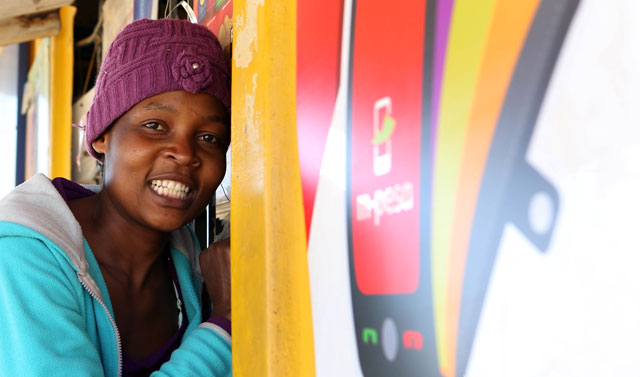
    M-Pesa has failed to live up to Vodacom's expectations in South Africa
    M-Pesa has failed to live up to Vodacom’s expectations in South Africa

    First of all, in the absence of a special dispensation for non-banks or e-money providers (which is the approach taken by the Tanzanian authorities, for example), payments providers in South Africa are treated as banks and subject to the full regulatory compliance requirements (and costs) associated with this.

    This forces providers to partner with banks, necessitating complicated joint ventures where banks naturally would like to see the mobile money product do well, but not too well.

    This approach is unnecessarily stringent and stifles innovation and disruption which would benefit consumers, especially the poor. In fact, mobile payments introduce very little risk into the payment system as the funds sent by customers are typically held in a trust account and not invested or on-lent by the mobile operators as would be done by a bank.

    This is why, in most jurisdictions, mobile money providers have not been regulated as fully fledged banks, but regulators with an eye on financial inclusion have come up with a more proportionate regulatory response. Unfortunately, this does not appear to be high on the regulatory agenda in South Africa.

    Fica regulations are another hurdle in South Africa, although here at least a more proportionate response to risk has prevailed. Exemption 17 allows clients to be registered for mobile money without proof of address or face-to-face ID verification as long as there is a low daily transaction limit.

    The benefits that mobile money can bring through driving competition in the payments space are clear. In Tanzania, to send the equivalent of R500 from one M-Pesa account to another costs only R3,23. Also, mobile money delivers more than just cheap money transfers: the money can remain in the wallet and be used for other transactions such as purchasing electricity. On the back of mobile money platforms, providers can build other solutions and services such as credit and savings products.

    If we truly want to create a more inclusive economy then creating the regulatory space, as other countries have done, for mobile money providers to innovate and compete is an important step.

    • Genna Robb is a senior research fellow at the Centre for Competition, Regulation and Economic Development (CCRED) and an economist at DNA Economics
    • CCRED will be hosting a public platform on mobile money on 22 July 2015. More details are available on the CCRED website



    CCRED Genna Robb M-Pesa MTN Vodacom
    WhatsApp YouTube Follow on Google News Add as preferred source on Google
    Share. Facebook Twitter LinkedIn WhatsApp Telegram Email Copy Link
    Previous ArticleMTN embraces open access for fibre
    Next Article Icasa down to just three councillors

    Related Posts

    MTN Group in talks to buy out IHS Towers

    MTN Group in talks to buy out IHS Towers

    5 February 2026
    Vodacom's real growth story isn't mobile

    Vodacom’s real growth story isn’t mobile

    4 February 2026
    Vodacom to take control of Safaricom in R36-billion deal - Shameel Joosub

    Vodacom leans on Africa growth as SA remains under pressure

    4 February 2026
    Company News
    The skills gap is a thinking gap: why South African employers can't find problem solvers

    The skills gap is a thinking gap: why SA employers can’t find problem solvers

    6 February 2026
    Vox Kiwi Wireless: fibre-like broadband for South African homes

    Vox Kiwi Wireless: fibre-like broadband for South African homes

    5 February 2026
    NEC XON achieves an African first with full Fortinet accreditation - Ian Kruger

    NEC XON achieves an African first with full Fortinet accreditation

    5 February 2026
    Opinion
    South Africa's skills advantage is being overlooked at home - Richard Firth

    South Africa’s skills advantage is being overlooked at home

    29 January 2026
    Why Elon Musk's Starlink is a 'hard no' for me - Songezo Zibi

    Why Elon Musk’s Starlink is a ‘hard no’ for me

    26 January 2026
    South Africa's new fibre broadband battle - Duncan McLeod

    South Africa’s new fibre broadband battle

    20 January 2026

    Subscribe to Updates

    Get the best South African technology news and analysis delivered to your e-mail inbox every morning.

    Latest Posts
    South Africa's stablecoin silence is becoming a policy failure

    South Africa’s stablecoin silence is becoming a policy failure

    6 February 2026
    Every electric car you can buy in South Africa in early 2026, ranked by price

    Every electric car you can buy in South Africa in early 2026, ranked by price

    6 February 2026
    From stocks to crypto, markets reel as AI doubts grow

    From stocks to crypto, markets reel as AI doubts grow

    6 February 2026
    South Africa deepens China ties as US trade tensions escalate

    South Africa deepens China ties as US trade tensions escalate

    6 February 2026
    © 2009 - 2026 NewsCentral Media
    • Cookie policy (ZA)
    • TechCentral – privacy and Popia

    Type above and press Enter to search. Press Esc to cancel.

    Manage consent

    TechCentral uses cookies to enhance its offerings. Consenting to these technologies allows us to serve you better. Not consenting or withdrawing consent may adversely affect certain features and functions of the website.

    Functional Always active
    The technical storage or access is strictly necessary for the legitimate purpose of enabling the use of a specific service explicitly requested by the subscriber or user, or for the sole purpose of carrying out the transmission of a communication over an electronic communications network.
    Preferences
    The technical storage or access is necessary for the legitimate purpose of storing preferences that are not requested by the subscriber or user.
    Statistics
    The technical storage or access that is used exclusively for statistical purposes. The technical storage or access that is used exclusively for anonymous statistical purposes. Without a subpoena, voluntary compliance on the part of your Internet Service Provider, or additional records from a third party, information stored or retrieved for this purpose alone cannot usually be used to identify you.
    Marketing
    The technical storage or access is required to create user profiles to send advertising, or to track the user on a website or across several websites for similar marketing purposes.
    • Manage options
    • Manage services
    • Manage {vendor_count} vendors
    • Read more about these purposes
    View preferences
    • {title}
    • {title}
    • {title}