Close Menu
TechCentralTechCentral

    Subscribe to the newsletter

    Get the best South African technology news and analysis delivered to your e-mail inbox every morning.

    Facebook X (Twitter) YouTube LinkedIn
    WhatsApp Facebook X (Twitter) LinkedIn YouTube
    TechCentralTechCentral
    • News
      DStv drops premium paywall on Fifa World Cup in Canal+-era shift - SuperSport Rendani Ramovha

      DStv drops premium paywall on Fifa World Cup in Canal+-era shift

      17 April 2026
      How a connectivity levy became a tax on telecoms

      How a connectivity levy became a tax on telecoms

      17 April 2026
      Wits project pits African creators against AI music's blind spots

      Wits project pits African creators against AI music’s blind spots

      17 April 2026
      Prosus offloads 4.5% of Delivery Hero to Uber for €270-million

      Prosus offloads 4.5% of Delivery Hero to Uber for €270-million

      17 April 2026
      Numsa digs in for 8% as Eskom wage pact splits unions

      Numsa digs in as Eskom wage pact splits unions

      17 April 2026
    • World
      Adobe bets on AI agents to fend off cheaper rivals

      Adobe bets on AI agents to fend off cheaper rivals

      16 April 2026
      Google poised to lose ad crown to Meta

      Google poised to lose ad crown to Meta

      14 April 2026
      Grand Theft Data - hackers hit Rockstar Games - Grand Theft Auto

      Grand Theft Data – hackers hit Rockstar Games

      14 April 2026
      UK PM Keir Starmer declares war on doomscrolling

      UK PM Keir Starmer declares war on doomscrolling

      13 April 2026
      Big Tech is going nuclear

      Big Tech is going nuclear

      10 April 2026
    • In-depth
      Africa switches on as Europe dims the lights

      Africa switches on as Europe dims the lights

      9 April 2026
      The biggest untapped EV market on Earth is hiding in plain sight

      The biggest untapped EV market on Earth is hiding in plain sight

      1 April 2026
      The R18-billion tech giant hiding in plain sight - Jens Montanana

      The R16-billion tech giant hiding in plain sight

      26 March 2026
      The last generation of coders

      The last generation of coders

      18 February 2026
      Sentech is in dire straits

      Sentech is in dire straits

      10 February 2026
    • TCS
      TCS | Werner Lindemann on how AI is rewriting the infosec rulebook

      TCS | Werner Lindemann on how AI is rewriting the infosec rulebook

      15 April 2026
      TCS | Donovan Marsh on AI and the future of filmmaking

      TCS | Donovan Marsh on AI and the future of filmmaking

      7 April 2026
      TCS+ | Vodacom Business moves to crack the SME tech gap - Andrew Fulton, Sannesh Beharie

      TCS+ | Vodacom Business moves to crack the SME tech gap

      7 April 2026
      TCS | MTN's Divysh Joshi on the strategy behind Pi - Divyesh Joshi

      TCS | MTN’s Divyesh Joshi on the strategy behind Pi

      1 April 2026
      Anoosh Rooplal

      TCS | Anoosh Rooplal on the Post Office’s last stand

      27 March 2026
    • Opinion
      The conflict of interest at the heart of PayShap's slow adoption - Cheslyn Jacobs

      The conflict of interest at the heart of PayShap’s slow adoption

      26 March 2026
      South Africa's energy future hinges on getting wheeling right - Aishah Gire

      South Africa’s energy future hinges on getting wheeling right

      10 March 2026
      Hold the doom: the case for a South African comeback - Duncan McLeod

      Apple just dropped a bomb on the Windows world

      5 March 2026
      R230-million in the bag for Endeavor's third Harvest Fund - Alison Collier

      VC’s centre of gravity is shifting – and South Africa is in the frame

      3 March 2026
      Hold the doom: the case for a South African comeback - Duncan McLeod

      Hold the doom: the case for a South African comeback

      26 February 2026
    • Company Hubs
      • 1Stream
      • Africa Data Centres
      • AfriGIS
      • Altron Digital Business
      • Altron Document Solutions
      • Altron Group
      • Arctic Wolf
      • Ascent Technology
      • AvertITD
      • BBD
      • Braintree
      • CallMiner
      • CambriLearn
      • CYBER1 Solutions
      • Digicloud Africa
      • Digimune
      • Domains.co.za
      • ESET
      • Euphoria Telecom
      • HOSTAFRICA
      • Incredible Business
      • iONLINE
      • IQbusiness
      • Iris Network Systems
      • Kaspersky
      • LSD Open
      • Mitel
      • NEC XON
      • Netstar
      • Network Platforms
      • Next DLP
      • Ovations
      • Paracon
      • Paratus
      • Q-KON
      • SevenC
      • SkyWire
      • Solid8 Technologies
      • Telit Cinterion
      • Telviva
      • Tenable
      • Vertiv
      • Videri Digital
      • Vodacom Business
      • Wipro
      • Workday
      • XLink
    • Sections
      • AI and machine learning
      • Banking
      • Broadcasting and Media
      • Cloud services
      • Contact centres and CX
      • Cryptocurrencies
      • Education and skills
      • Electronics and hardware
      • Energy and sustainability
      • Enterprise software
      • Financial services
      • HealthTech
      • Information security
      • Internet and connectivity
      • Internet of Things
      • Investment
      • IT services
      • Lifestyle
      • Motoring
      • Policy and regulation
      • Public sector
      • Retail and e-commerce
      • Satellite communications
      • Science
      • SMEs and start-ups
      • Social media
      • Talent and leadership
      • Telecoms
    • Events
    • Advertise
    TechCentralTechCentral
    Home » Sections » Electronics and hardware » World’s gadget makers are splitting along US-Chinese lines

    World’s gadget makers are splitting along US-Chinese lines

    By Agency Staff15 August 2019
    Twitter LinkedIn Facebook WhatsApp Email Telegram Copy Link
    News Alerts
    WhatsApp

    Even the unseasonable downpour couldn’t dampen the spirits of the executives and officials gathered on the Indonesian island of Batam to cut the ribbon on a new Pegatron factory. The men exchanged jokes as they took shelter under a white canopy, and when company vice chairman Jason Cheng pledged to hire hundreds of locals, the assembled audience erupted in applause.

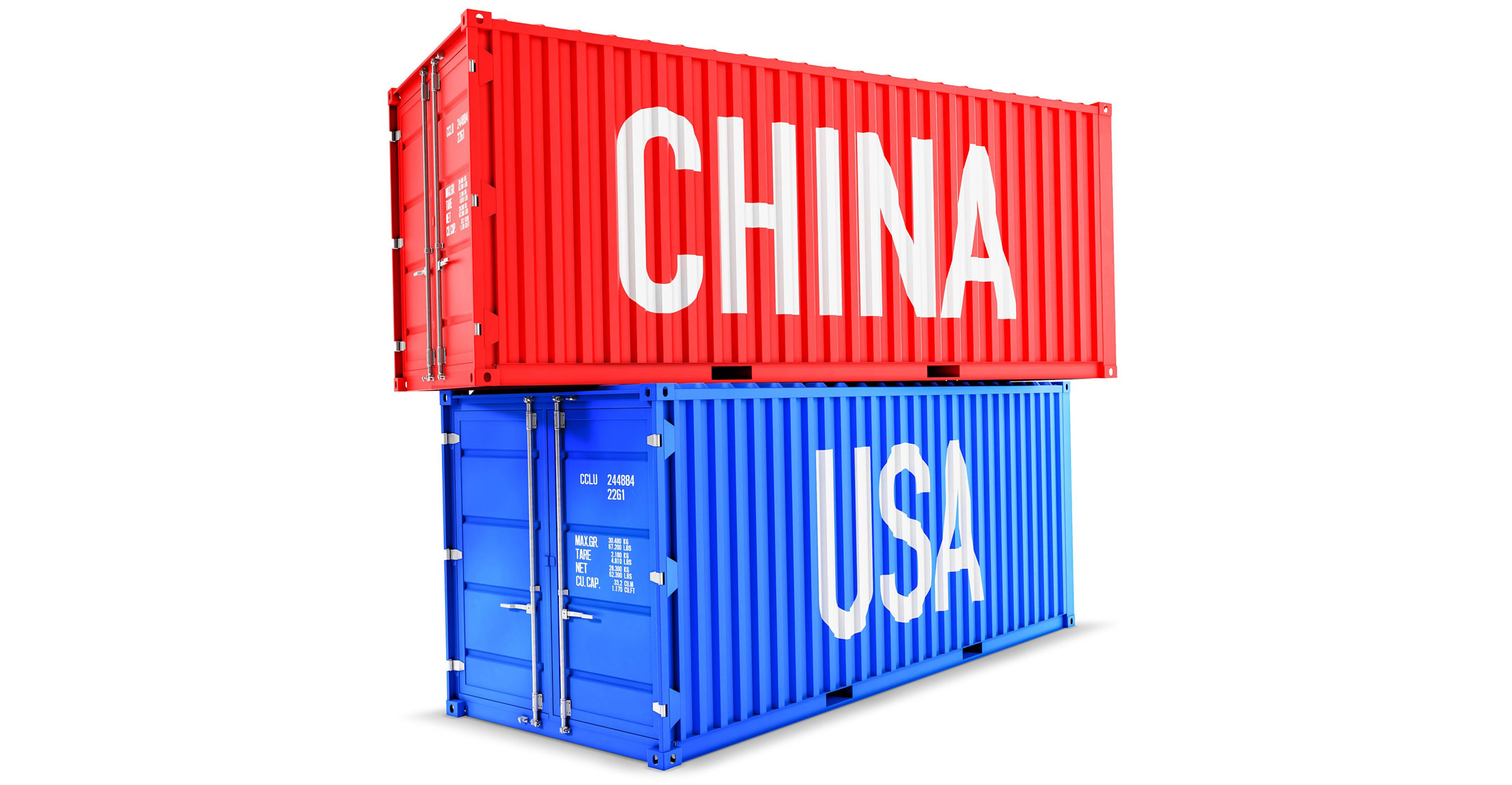
    This low-key July ceremony to launch a manufacturing outpost marked a critical first step into Southeast Asia for one of Apple’s most important suppliers. It also encapsulates a fundamental move of electronics production, set in motion by the escalating US-China trade war, that may hurt the world’s second largest economy while enriching Southeast Asia and beyond.

    “Pegatron, and many more to come, is an opportunity,” Edy Putra Irawady, head of a local agency charged with enticing capital, told the crowd. “Batam has prepared various incentives to chase the opportunity and attract more investment.” Irawady is one of many making preparations for the most profound shift in global manufacturing since the advent of the made-in-China model in the 1980s: its potential dismantling.

    The US president’s campaign of tariffs and export restrictions threatens to up-end the production of the world’s electronics

    US President Donald Trump’s flip-flops on trade, including a backtracking just this week on threats to slap punishing tariffs on US$300-billion of goods, are spurring an exodus from China of manufacturers. Some recognise that US-Chinese tensions won’t fade soon, while others are just tired of the uncertainty. In one of the most dramatic responses since Trump first brandished full tariffs, HP laptop maker Inventec declared plans to move its entire US-bound laptop operations from China to its home base of Taiwan within months. “The trade war is very painful for us,” president Maurice Wu said.

    Like Pegatron, the makers of the world’s electronics are increasingly rushing out of the way of Trump-administration tariffs on Chinese-made goods. Server motherboard makers for Google and Amazon.com are already shifting to Taiwan. Even Apple, whose gargantuan Chinese production machine hires more people than any other private employer, is testing the waters. GoerTek, for one, is trying out production of AirPods in Vietnam, people familiar said. A GoerTek representative declined to comment on the specifics of its Apple business but said the company will gradually make several products in both China and Vietnam.

    Split in two

    The US president’s campaign of tariffs and export restrictions against Chinese champions like Huawei Technologies threatens to up-end the production of the world’s electronics, from iPhones and laptops to 4K televisions. The decades-old supply chain is starting to split in two: one beyond China’s borders that serves American concerns, and another within the world’s most populous country that caters to local consumers.

    It’s something Foxconn’s billionaire founder, Terry Gou, calls “G2”, or the emergence of two competing global standards created by China and the US. Gou — who as Apple’s main production partner helped pioneer the made-in-China model — has volunteered to “help the US reshape a new supply chain”. Young Liu, Gou’s successor, told shareholders the company could make every US-bound iPhone outside of China if it had to.

    While US-based companies seek alternatives beyond mainland China, their counterparts in China likewise are “de-Americanising” their supply chains, reducing their reliance on American core technology for fear they will suffer the same fate as Huawei. The company is now hunting for Asian and European component makers to reduce its dependence on US firms from Google to Micron.
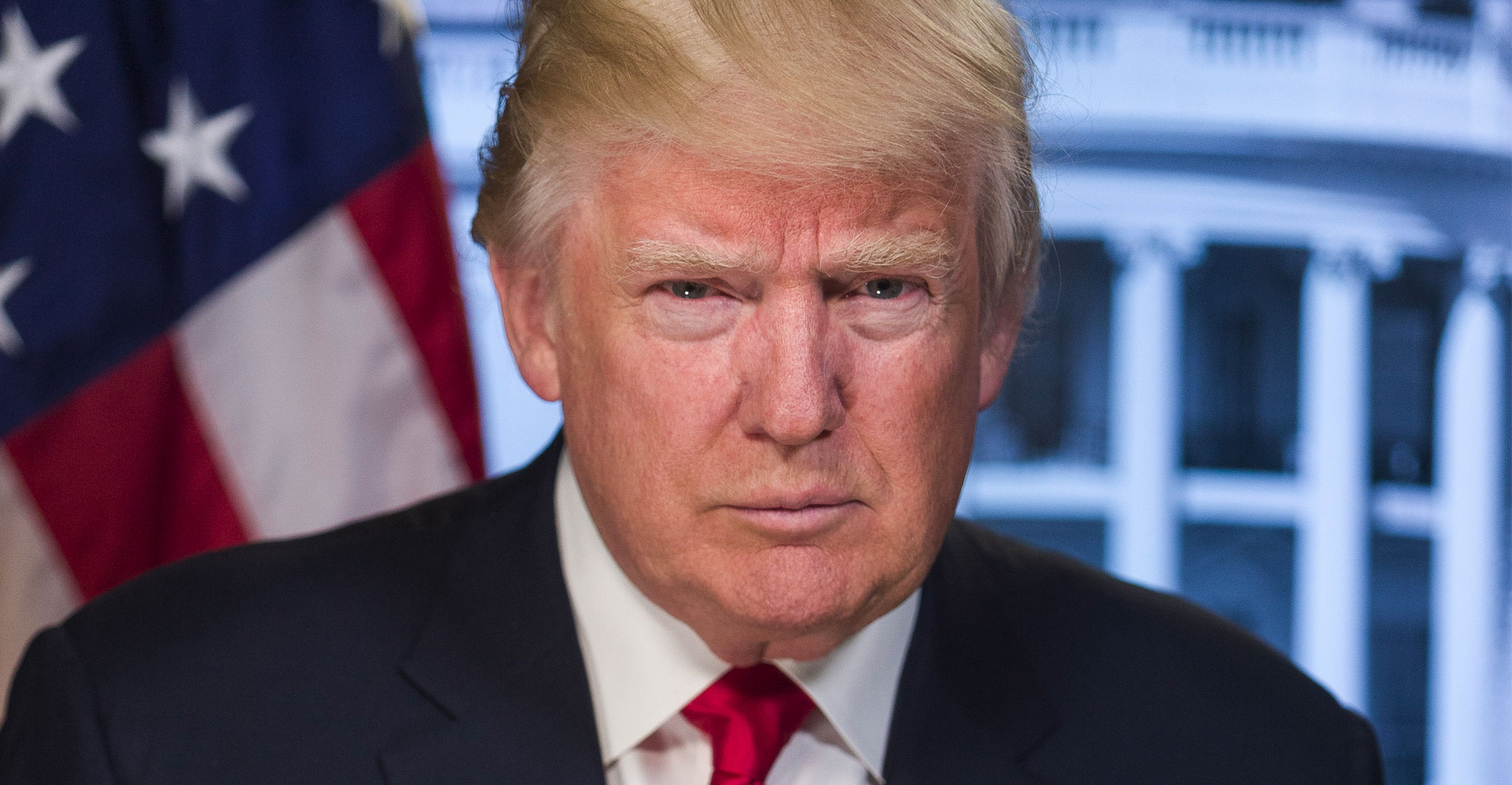
    US President Donald Trump

    In August, Huawei approved Taiwan-based Wi-Fi module maker RichWave Technology to supply parts that US wireless semiconductor company Skyworks used to provide. Analysts including Kevin Chen of Taipei-based President Capital Management say Huawei is increasingly looking to Taiwan’s Win Semiconductors to manufacture radio frequency chips previously supplied by Skyworks and compatriot integrated circuits maker Qorvo.

    “Both US and Chinese companies are diversifying their supply chains due to similar reasons — to mitigate geopolitical risks,” said Gordon Sun, director of the Taiwan Institute of Economic Research’s Macroeconomic Forecasting Centre.

    Mere months ago, it seemed as if China had a virtual lock on the business of making the world’s electronics — an arrangement that benefited not just tech juggernauts from Dell Technologies to HP but also ensured jobs for millions across the country and fostered the growth of a massive domestic manufacturing industry.

    Both US and Chinese companies are diversifying their supply chains due to similar reasons – to mitigate geopolitical risks

    While there’s little chance that China will fully cede its mantle as the world’s electronics workshop anytime soon, the outward-bound trend is accelerating. That’s because the household names that built the technology industry’s global supply chain aren’t waiting to see how the conflict turns out.

    Delta Electronics, which makes power and cooling components for clients like Microsoft and Huawei, is moving some production back to its home base of Taiwan and to Thailand. It’s also taking the unusual step of building three to four plants in India, responding to Prime Minister Narendra Modi’s Make-in-India programme.

    Modi’s efforts to drive foreign companies to source components locally is showing success. Foxconn will start to churn out iPhones in the country this year after its print circuit board affiliate and Apple supplier Zhen Ding Technology Holding announced plans to invest there late last year. Luxshare Precision Industry, another Apple supplier, is considering moving some production of cables and connectors to India as well, according to people familiar with the matter, with one saying Apple made the request to the Chinese company. Calls to a number listed on the Luxshare website went unanswered and the company did not respond to an e-mail seeking comment. Chinese smartphone brands including Huawei, Oppo and Xiaomi are all making handsets in India.

    Protectionism

    It’s not just US-China tension that keeps supply chain executives up at night. Politically motivated trade protectionism may be spreading. Japanese curbs on the export of vital chip- and display-making materials to South Korea — the latest manifestation of lingering tensions stretching back to colonisation by Tokyo and World War 2 — threaten to further splinter the industry. If unresolved, that dispute may hinder efforts to sate the enormous appetites of Samsung Electronics and SK Hynix, expediting a production migration from Japan.

    Any shift won’t happen overnight. While moving assembly operations is unlike relocating a chip fabrication facility — arguably the most expensive type of plant at $10-billion or more to set up from scratch — the cost can run into millions of dollars and entails a plethora of issues from licences to new regulations and hiring. That’s an additional burden that manufacturers with single-digit margins can ill afford.

    “Our net profit margin stands at a mere 1.4% in the first quarter. The tariffs are 25%. We simply cannot help our customers absorb those,” Quanta Computer chairman Barry Lam said in May when talking about potential production shift and tariff impact.
    Despite Trump’s proclamations, the US won’t get many of the jobs moving out of China. Taiwan and Southeast Asia are first in line to absorb any manufacturing exodus. Vietnam has become the largest beneficiary of the trade war in the 12-month period beginning in the first quarter of 2018, gaining 7.9% of GDP from trade diversion, Nomura said in a 3 June note.

    Batam, once a poverty-stricken corner of the Indonesian archipelago, is on the cusp of a boom thanks to abundant cheap labour and quick access to the adjacent trading hub of Singapore. Pegatron has poured $40-million into its newest Indonesian plant, which will produce networking gear for the US market. It’s pledging to grow the workforce there from 40 people to as many as 1 800 eventually.

    “We’re very determined to invest more,” said Pegatron’s Cheng.  — Reported by Debby Wu, with assistance from Gao Yuan, Arys Aditya and Adrian Leung, (c) 2019 Bloomberg LP


    Follow TechCentral on Google News Add TechCentral as your preferred source on Google


    Apple Donald Trump Foxconn HP Pegatron Terry Gou top
    WhatsApp YouTube
    Share. Facebook Twitter LinkedIn WhatsApp Telegram Email Copy Link
    Previous ArticleRamaphosa’s dependence on the left is undermining SA’s prospects
    Next Article Spotify to test more expensive version of popular music service

    Related Posts

    Amazon ramps up satellite war with $11.6-billion Globalstar buy

    Amazon ramps up satellite war with $11.6-billion Globalstar buy

    15 April 2026
    Microsoft is sacrificing Edge on the altar of Copilot

    Microsoft is sacrificing Edge on the altar of Copilot

    10 April 2026
    Why Apple is sitting pretty - AI hype be damned

    Why Apple is sitting pretty – AI hype be damned

    8 April 2026
    Company News
    Fibre: the backbone of South Africa's digital health ecosystem - Mweb

    Fibre: the backbone of South Africa’s digital health ecosystem

    16 April 2026
    New man to accelerate wholesale connectivity in the DRC - Gaetan Soltesz, FAST Congo

    New man to accelerate wholesale connectivity in the DRC

    15 April 2026
    Avast Business and Avert IT Distribution rewrite the SMB cybersecurity playbook

    Avast Business and Avert IT Distribution rewrite the SMB cybersecurity playbook

    15 April 2026
    Opinion
    The conflict of interest at the heart of PayShap's slow adoption - Cheslyn Jacobs

    The conflict of interest at the heart of PayShap’s slow adoption

    26 March 2026
    South Africa's energy future hinges on getting wheeling right - Aishah Gire

    South Africa’s energy future hinges on getting wheeling right

    10 March 2026
    Hold the doom: the case for a South African comeback - Duncan McLeod

    Apple just dropped a bomb on the Windows world

    5 March 2026

    Subscribe to Updates

    Get the best South African technology news and analysis delivered to your e-mail inbox every morning.

    Latest Posts
    DStv drops premium paywall on Fifa World Cup in Canal+-era shift - SuperSport Rendani Ramovha

    DStv drops premium paywall on Fifa World Cup in Canal+-era shift

    17 April 2026
    How a connectivity levy became a tax on telecoms

    How a connectivity levy became a tax on telecoms

    17 April 2026
    Wits project pits African creators against AI music's blind spots

    Wits project pits African creators against AI music’s blind spots

    17 April 2026
    Prosus offloads 4.5% of Delivery Hero to Uber for €270-million

    Prosus offloads 4.5% of Delivery Hero to Uber for €270-million

    17 April 2026
    © 2009 - 2026 NewsCentral Media
    • Cookie policy (ZA)
    • TechCentral – privacy and Popia

    Type above and press Enter to search. Press Esc to cancel.

    Manage consent

    TechCentral uses cookies to enhance its offerings. Consenting to these technologies allows us to serve you better. Not consenting or withdrawing consent may adversely affect certain features and functions of the website.

    Functional Always active
    The technical storage or access is strictly necessary for the legitimate purpose of enabling the use of a specific service explicitly requested by the subscriber or user, or for the sole purpose of carrying out the transmission of a communication over an electronic communications network.
    Preferences
    The technical storage or access is necessary for the legitimate purpose of storing preferences that are not requested by the subscriber or user.
    Statistics
    The technical storage or access that is used exclusively for statistical purposes. The technical storage or access that is used exclusively for anonymous statistical purposes. Without a subpoena, voluntary compliance on the part of your Internet Service Provider, or additional records from a third party, information stored or retrieved for this purpose alone cannot usually be used to identify you.
    Marketing
    The technical storage or access is required to create user profiles to send advertising, or to track the user on a website or across several websites for similar marketing purposes.
    • Manage options
    • Manage services
    • Manage {vendor_count} vendors
    • Read more about these purposes
    View preferences
    • {title}
    • {title}
    • {title}