Close Menu
TechCentralTechCentral

    Subscribe to the newsletter

    Get the best South African technology news and analysis delivered to your e-mail inbox every morning.

    Facebook X (Twitter) YouTube LinkedIn
    WhatsApp Facebook X (Twitter) LinkedIn YouTube
    TechCentralTechCentral
    • News
      Digital authoritarianism grows as African states normalise internet blackouts

      Digital authoritarianism grows as African states normalise internet blackouts

      19 December 2025
      Starlink satellite anomaly creates debris in rare orbital mishap

      Starlink satellite anomaly creates debris in rare orbital mishap

      19 December 2025
      TechCentral's South African Newsmakers of 2025

      TechCentral’s South African Newsmakers of 2025

      18 December 2025
      Malatsi buries Post Office's long-dead monopoly

      Malatsi buries Post Office monopoly the market ignored

      18 December 2025
      China races to crack EUV as chip war with the West intensifies

      China races to crack EUV lithography as chip war with the West intensifies

      18 December 2025
    • World
      Trump space order puts the moon back at centre of US, China rivalry - US President Donald Trump

      Trump space order puts the moon back at centre of US, China rivalry

      19 December 2025
      Warner Bros slams the door on Paramount

      Warner Bros slams the door on Paramount

      17 December 2025
      X moves to block bid to revive Twitter brand

      X moves to block bid to revive Twitter brand

      17 December 2025
      Oracle’s AI ambitions face scrutiny on earnings miss

      Oracle’s AI ambitions face scrutiny on earnings miss

      11 December 2025
      China will get Nvidia H200 chips - but not without paying Washington first

      China will get Nvidia H200 chips – but not without paying Washington first

      9 December 2025
    • In-depth
      Black Friday goes digital in South Africa as online spending surges to record high

      Black Friday goes digital in South Africa as online spending surges to record high

      4 December 2025
      Canal+ plays hardball - and DStv viewers feel the pain

      Canal+ plays hardball – and DStv viewers feel the pain

      3 December 2025
      Jensen Huang Nvidia

      So, will China really win the AI race?

      14 November 2025
      Valve's Linux console takes aim at Microsoft's gaming empire

      Valve’s Linux console takes aim at Microsoft’s gaming empire

      13 November 2025
      iOCO's extraordinary comeback plan - Rhys Summerton

      iOCO’s extraordinary comeback plan

      28 October 2025
    • TCS
      TCS+ | Africa's digital transformation - unlocking AI through cloud and culture - Cliff de Wit Accelera Digital Group

      TCS+ | Cloud without culture won’t deliver AI: Accelera’s Cliff de Wit

      12 December 2025
      TCS+ | How Cloud on Demand helps partners thrive in the AWS ecosystem - Odwa Ndyaluvane and Xenia Rhode

      TCS+ | How Cloud On Demand helps partners thrive in the AWS ecosystem

      4 December 2025
      TCS | MTN Group CEO Ralph Mupita on competition, AI and the future of mobile

      TCS | Ralph Mupita on competition, AI and the future of mobile

      28 November 2025
      TCS | Dominic Cull on fixing South Africa's ICT policy bottlenecks

      TCS | Dominic Cull on fixing South Africa’s ICT policy bottlenecks

      21 November 2025
      TCS | BMW CEO Peter van Binsbergen on the future of South Africa's automotive industry

      TCS | BMW CEO Peter van Binsbergen on the future of South Africa’s automotive industry

      6 November 2025
    • Opinion
      Netflix, Warner Bros deal raises fresh headaches for MultiChoice - Duncan McLeod

      Netflix, Warner Bros deal raises fresh headaches for MultiChoice

      5 December 2025
      BIN scans, DDoS and the next cybercrime wave hitting South Africa's banks - Entersekt Gerhard Oosthuizen

      BIN scans, DDoS and the next cybercrime wave hitting South Africa’s banks

      3 December 2025
      Your data, your hardware: the DIY AI revolution is coming - Duncan McLeod

      Your data, your hardware: the DIY AI revolution is coming

      20 November 2025
      Zero Carbon Charge founder Joubert Roux

      The energy revolution South Africa can’t afford to miss

      20 November 2025
      It's time for a new approach to government IT spend in South Africa - Richard Firth

      It’s time for a new approach to government IT spend in South Africa

      19 November 2025
    • Company Hubs
      • Africa Data Centres
      • AfriGIS
      • Altron Digital Business
      • Altron Document Solutions
      • Altron Group
      • Arctic Wolf
      • AvertITD
      • Braintree
      • CallMiner
      • CambriLearn
      • CYBER1 Solutions
      • Digicloud Africa
      • Digimune
      • Domains.co.za
      • ESET
      • Euphoria Telecom
      • Incredible Business
      • iONLINE
      • IQbusiness
      • Iris Network Systems
      • LSD Open
      • NEC XON
      • Netstar
      • Network Platforms
      • Next DLP
      • Ovations
      • Paracon
      • Paratus
      • Q-KON
      • SevenC
      • SkyWire
      • Solid8 Technologies
      • Telit Cinterion
      • Tenable
      • Vertiv
      • Videri Digital
      • Vodacom Business
      • Wipro
      • Workday
      • XLink
    • Sections
      • AI and machine learning
      • Banking
      • Broadcasting and Media
      • Cloud services
      • Contact centres and CX
      • Cryptocurrencies
      • Education and skills
      • Electronics and hardware
      • Energy and sustainability
      • Enterprise software
      • Financial services
      • Information security
      • Internet and connectivity
      • Internet of Things
      • Investment
      • IT services
      • Lifestyle
      • Motoring
      • Public sector
      • Retail and e-commerce
      • Satellite communications
      • Science
      • SMEs and start-ups
      • Social media
      • Talent and leadership
      • Telecoms
    • Events
    • Advertise
    TechCentralTechCentral
    Home » In-depth » Suez crisis shows civilisation is more vulnerable than we think

    Suez crisis shows civilisation is more vulnerable than we think

    By Agency Staff27 March 2021
    Twitter LinkedIn Facebook WhatsApp Email Telegram Copy Link
    News Alerts
    WhatsApp
    The opening of the Suez Canal in 1869

    A gust of wind was all it took to bring global container flows and oil shipments to a halt. The errant container ship that blocked the Suez canal this week has cut off a route that handles more than 10% of international trade.

    Part of this situation was simply unfortunate: Egypt has expanded parts of the canal to enable two-way traffic and accommodate larger carriers. The Ever Given ship went off course and got stuck in part of the waterway that’s still narrow.

    But it’s also a reminder that even an advanced civilisation like ours has points of acute vulnerability. In the strategy and military realm, such bottlenecks are also known as “choke points”. And we often don’t pay enough attention to them until something goes wrong.

    Having a backup is pretty handy. You learn that when the roof falls in, or when a ship called the Ever Given snarls up the Suez Canal

    Systems designers strive to avoid these single points of failure, so that transport, energy and communication networks are able to withstand attacks or unexpected calamities. (The twin crashes involving a Boeing 737 Max are one example of a flawed design — a single sensor gave faulty readings to the plane’s automated flight system.) Technological advances and globalisation were also supposed to make us less susceptible to this type of problem. The Internet, for example, was conceived as a decentralised system that’s pretty difficult to break, as was bitcoin.

    Pinch points

    But global infrastructure, defined broadly, still has a surprising number of pinch points. These can be difficult to remedy, as creating backup options is expensive and counteracts economies of scale. In some cases, the problem is even getting worse: Industries are becoming more concentrated due to corporate takeovers. Furthermore, big chunks of our lives are now mediated by a just handful of technology companies. Nokia, Ericsson and Huawei control about 60% of the telecommunications equipment market, for example.

    The upshot is that governments are now more cognisant of the political and economic power held by those who control choke points. It’s one reason why the US has big concerns about Huawei’s involvement in building critical 5G networks.

    But first, back to canals. The Panama Canal (which connects the Atlantic and Pacific oceans), the Suez Canal (linking the Mediterranean and the Red Sea) and the Strait of Hormuz (at the mouth of the Persian Gulf) are places where container ships and oil tankers are forced to navigate narrow passages. The alternative is a long detour or more expensive air freight.
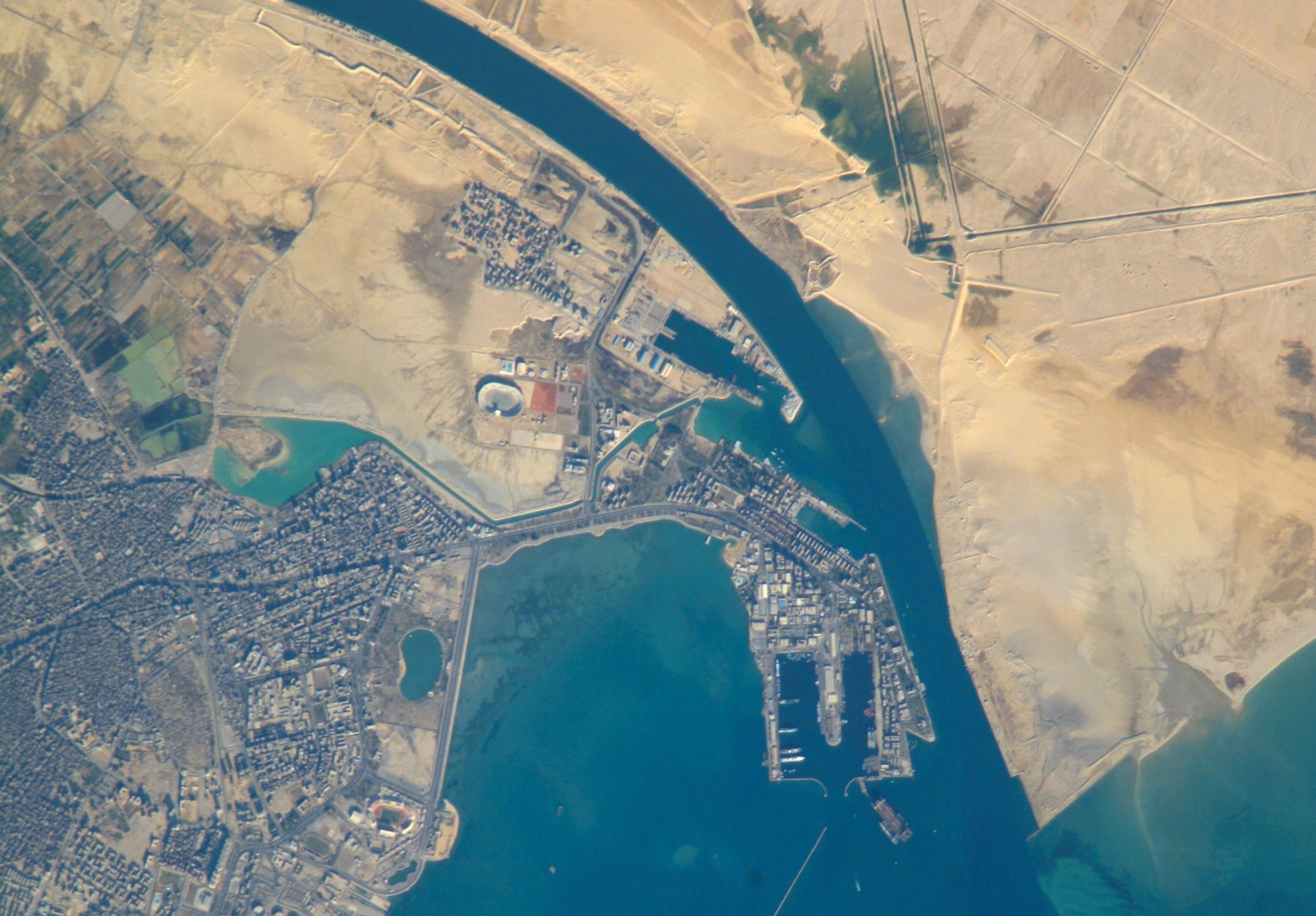
    Port of Suez, Egypt is featured in this image photographed by an Expedition 16 crew member on the International Space Station. The Port of Suez is located in Egypt along the northern coastline of the Gulf of Suez. The port and city are the southern terminus of the Suez Canal that transits through Egypt and debouches into the Mediterranean Sea near Port Said. Image: Nasa

    For decades, these waterways have been recognised as areas of huge strategic importance and as being susceptible to military or terror attacks. Iran has frequently used the Strait of Hormuz to pressure foreign powers. Various backup routes have been mooted but most haven’t materialised. Nicaragua pitched a canal linking the Pacific and Caribbean Sea, for example, but the rumoured cost of US$50-billion has been prohibitive.

    One can perhaps excuse vulnerabilities arising from the natural world, but we should be less accepting of those in the economic sphere over which we have more control.

    Consider energy. In seeking to rid itself of one pinch point — the fact that Europe gets much of its gas via pipelines that traverse Ukraine — Germany has created another: the twin Nord Stream gas pipelines that connect Russia and Germany under the Baltic Sea. The US worries these will weaken Eastern Europe and increase Germany’s dependence on Russia.

    In technology, people have warned for years that the US needs a backup for the Global Positioning System

    In the realm of finance, trillions of dollars of financial instruments are tied to the London interbank offered rate, which a small circle of banks found to be shockingly easy to manipulate until they were exposed in the years following the 2008 financial crisis. Libor is now being replaced. Similarly, Europe has long relied on the Swift payments system and the US dollar, but that dependence came into question in 2018 as it disagreed with the US over Iran sanctions.

    In technology, people have warned for years that the US needs a backup for the Global Positioning System, the satellite-based navigation infrastructure that underpins much of the modern digital economy. The system can be spoofed or otherwise disrupted. It has yet to develop one.

    Semiconductors

    Semiconductors are where the clearest pinch points are emerging. A global computer chip shortage during Covid has forced car manufacturers to tear up production plans. The hiatus is temporary, but this belies the real problem: Very few companies are able to produce the most advanced chips, due to the technical challenges and vast cost of constructing foundries. The most important of these, Taiwan’s TSMC, is based on an island that’s under constant threat of invasion by Beijing.

    It’s not the only example of this industry’s dangerous concentration: ASML of the Netherlands has a monopoly on the machines needed to fabricate the best chips. Now China’s inability to buy the most cutting-edge gear from ASML is holding back its own semiconductor ambitions.

    None of these choke-point problems are easy to resolve. Not only are there geopolitical ambitions at work here, but there are also usually trade-offs between building greater resilience and efficiency. Reinforcing supply chains is expensive.
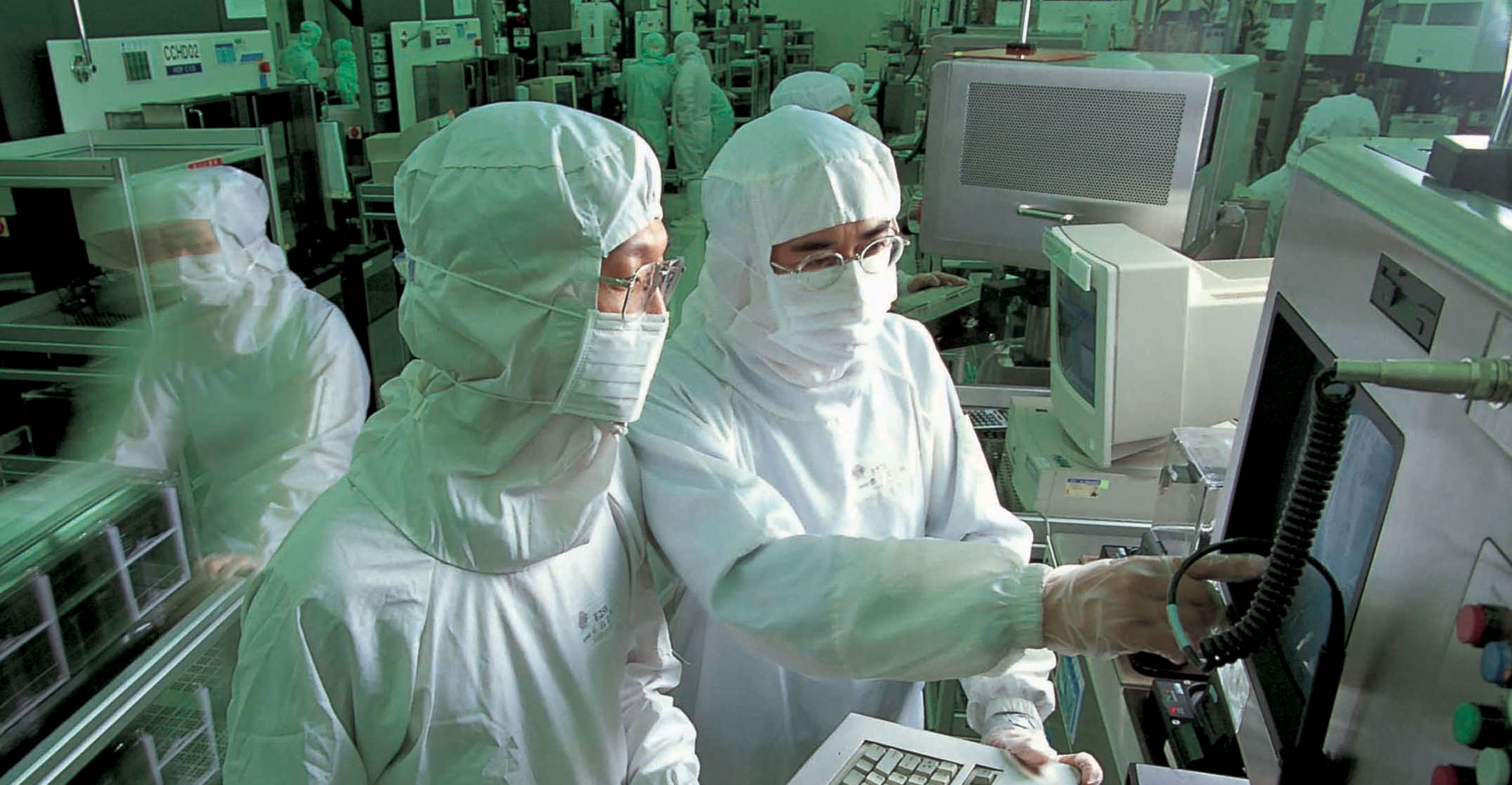
    Works in a TSMC chip fabrication plant

    But because redundancy offers protection and is therefore a public good, there’s an argument that governments should play a role in providing it. Antitrust policy, for example, can be used to challenge monopolies and foster more competition.

    Because having a backup is pretty handy. You learn that when the roof falls in, or when a ship called the Ever Given snarls up the Suez Canal.  — By Chris Bryant, (c) 2021 Bloomberg LP


    ASML Even Given ship Ever Given GPS Huawei Suez Canal top TSMC
    Subscribe to TechCentral Subscribe to TechCentral
    Share. Facebook Twitter LinkedIn WhatsApp Telegram Email Copy Link
    Previous ArticleIcasa extends temporary spectrum assignments
    Next Article What is Discord, and why does Microsoft want to buy it?

    Related Posts

    China races to crack EUV as chip war with the West intensifies

    China races to crack EUV lithography as chip war with the West intensifies

    18 December 2025
    MTN Zambia launches world's first 4G cloud smartphone solution - Huawei

    MTN Zambia launches world’s first 4G cloud smartphone solution

    17 December 2025
    Huawei makes the season brighter with service offers that truly care

    Huawei makes the season brighter with service offers that truly care

    3 December 2025
    Company News
    Why TechCentral is the most powerful platform for reaching IT decision makers

    Why TechCentral is the most powerful platform for reaching IT decision makers

    17 December 2025
    Business trends to watch in 2026 - Domains.co.za

    Business trends to watch in 2026

    17 December 2025
    MTN Zambia launches world's first 4G cloud smartphone solution - Huawei

    MTN Zambia launches world’s first 4G cloud smartphone solution

    17 December 2025
    Opinion
    Netflix, Warner Bros deal raises fresh headaches for MultiChoice - Duncan McLeod

    Netflix, Warner Bros deal raises fresh headaches for MultiChoice

    5 December 2025
    BIN scans, DDoS and the next cybercrime wave hitting South Africa's banks - Entersekt Gerhard Oosthuizen

    BIN scans, DDoS and the next cybercrime wave hitting South Africa’s banks

    3 December 2025
    Your data, your hardware: the DIY AI revolution is coming - Duncan McLeod

    Your data, your hardware: the DIY AI revolution is coming

    20 November 2025

    Subscribe to Updates

    Get the best South African technology news and analysis delivered to your e-mail inbox every morning.

    Latest Posts
    Digital authoritarianism grows as African states normalise internet blackouts

    Digital authoritarianism grows as African states normalise internet blackouts

    19 December 2025
    Starlink satellite anomaly creates debris in rare orbital mishap

    Starlink satellite anomaly creates debris in rare orbital mishap

    19 December 2025
    Trump space order puts the moon back at centre of US, China rivalry - US President Donald Trump

    Trump space order puts the moon back at centre of US, China rivalry

    19 December 2025
    TechCentral's South African Newsmakers of 2025

    TechCentral’s South African Newsmakers of 2025

    18 December 2025
    © 2009 - 2025 NewsCentral Media
    • Cookie policy (ZA)
    • TechCentral – privacy and Popia

    Type above and press Enter to search. Press Esc to cancel.

    Manage consent

    TechCentral uses cookies to enhance its offerings. Consenting to these technologies allows us to serve you better. Not consenting or withdrawing consent may adversely affect certain features and functions of the website.

    Functional Always active
    The technical storage or access is strictly necessary for the legitimate purpose of enabling the use of a specific service explicitly requested by the subscriber or user, or for the sole purpose of carrying out the transmission of a communication over an electronic communications network.
    Preferences
    The technical storage or access is necessary for the legitimate purpose of storing preferences that are not requested by the subscriber or user.
    Statistics
    The technical storage or access that is used exclusively for statistical purposes. The technical storage or access that is used exclusively for anonymous statistical purposes. Without a subpoena, voluntary compliance on the part of your Internet Service Provider, or additional records from a third party, information stored or retrieved for this purpose alone cannot usually be used to identify you.
    Marketing
    The technical storage or access is required to create user profiles to send advertising, or to track the user on a website or across several websites for similar marketing purposes.
    • Manage options
    • Manage services
    • Manage {vendor_count} vendors
    • Read more about these purposes
    View preferences
    • {title}
    • {title}
    • {title}