Close Menu
TechCentralTechCentral

    Subscribe to the newsletter

    Get the best South African technology news and analysis delivered to your e-mail inbox every morning.

    Facebook X (Twitter) YouTube LinkedIn
    WhatsApp Facebook X (Twitter) LinkedIn YouTube
    TechCentralTechCentral
    • News
      Digital authoritarianism grows as African states normalise internet blackouts

      Digital authoritarianism grows as African states normalise internet blackouts

      19 December 2025
      Starlink satellite anomaly creates debris in rare orbital mishap

      Starlink satellite anomaly creates debris in rare orbital mishap

      19 December 2025
      TechCentral's South African Newsmakers of 2025

      TechCentral’s South African Newsmakers of 2025

      18 December 2025
      Malatsi buries Post Office's long-dead monopoly

      Malatsi buries Post Office monopoly the market ignored

      18 December 2025
      China races to crack EUV as chip war with the West intensifies

      China races to crack EUV lithography as chip war with the West intensifies

      18 December 2025
    • World
      Trump space order puts the moon back at centre of US, China rivalry - US President Donald Trump

      Trump space order puts the moon back at centre of US, China rivalry

      19 December 2025
      Warner Bros slams the door on Paramount

      Warner Bros slams the door on Paramount

      17 December 2025
      X moves to block bid to revive Twitter brand

      X moves to block bid to revive Twitter brand

      17 December 2025
      Oracle’s AI ambitions face scrutiny on earnings miss

      Oracle’s AI ambitions face scrutiny on earnings miss

      11 December 2025
      China will get Nvidia H200 chips - but not without paying Washington first

      China will get Nvidia H200 chips – but not without paying Washington first

      9 December 2025
    • In-depth
      Black Friday goes digital in South Africa as online spending surges to record high

      Black Friday goes digital in South Africa as online spending surges to record high

      4 December 2025
      Canal+ plays hardball - and DStv viewers feel the pain

      Canal+ plays hardball – and DStv viewers feel the pain

      3 December 2025
      Jensen Huang Nvidia

      So, will China really win the AI race?

      14 November 2025
      Valve's Linux console takes aim at Microsoft's gaming empire

      Valve’s Linux console takes aim at Microsoft’s gaming empire

      13 November 2025
      iOCO's extraordinary comeback plan - Rhys Summerton

      iOCO’s extraordinary comeback plan

      28 October 2025
    • TCS
      TCS+ | Africa's digital transformation - unlocking AI through cloud and culture - Cliff de Wit Accelera Digital Group

      TCS+ | Cloud without culture won’t deliver AI: Accelera’s Cliff de Wit

      12 December 2025
      TCS+ | How Cloud on Demand helps partners thrive in the AWS ecosystem - Odwa Ndyaluvane and Xenia Rhode

      TCS+ | How Cloud On Demand helps partners thrive in the AWS ecosystem

      4 December 2025
      TCS | MTN Group CEO Ralph Mupita on competition, AI and the future of mobile

      TCS | Ralph Mupita on competition, AI and the future of mobile

      28 November 2025
      TCS | Dominic Cull on fixing South Africa's ICT policy bottlenecks

      TCS | Dominic Cull on fixing South Africa’s ICT policy bottlenecks

      21 November 2025
      TCS | BMW CEO Peter van Binsbergen on the future of South Africa's automotive industry

      TCS | BMW CEO Peter van Binsbergen on the future of South Africa’s automotive industry

      6 November 2025
    • Opinion
      Netflix, Warner Bros deal raises fresh headaches for MultiChoice - Duncan McLeod

      Netflix, Warner Bros deal raises fresh headaches for MultiChoice

      5 December 2025
      BIN scans, DDoS and the next cybercrime wave hitting South Africa's banks - Entersekt Gerhard Oosthuizen

      BIN scans, DDoS and the next cybercrime wave hitting South Africa’s banks

      3 December 2025
      Your data, your hardware: the DIY AI revolution is coming - Duncan McLeod

      Your data, your hardware: the DIY AI revolution is coming

      20 November 2025
      Zero Carbon Charge founder Joubert Roux

      The energy revolution South Africa can’t afford to miss

      20 November 2025
      It's time for a new approach to government IT spend in South Africa - Richard Firth

      It’s time for a new approach to government IT spend in South Africa

      19 November 2025
    • Company Hubs
      • Africa Data Centres
      • AfriGIS
      • Altron Digital Business
      • Altron Document Solutions
      • Altron Group
      • Arctic Wolf
      • AvertITD
      • Braintree
      • CallMiner
      • CambriLearn
      • CYBER1 Solutions
      • Digicloud Africa
      • Digimune
      • Domains.co.za
      • ESET
      • Euphoria Telecom
      • Incredible Business
      • iONLINE
      • IQbusiness
      • Iris Network Systems
      • LSD Open
      • NEC XON
      • Netstar
      • Network Platforms
      • Next DLP
      • Ovations
      • Paracon
      • Paratus
      • Q-KON
      • SevenC
      • SkyWire
      • Solid8 Technologies
      • Telit Cinterion
      • Tenable
      • Vertiv
      • Videri Digital
      • Vodacom Business
      • Wipro
      • Workday
      • XLink
    • Sections
      • AI and machine learning
      • Banking
      • Broadcasting and Media
      • Cloud services
      • Contact centres and CX
      • Cryptocurrencies
      • Education and skills
      • Electronics and hardware
      • Energy and sustainability
      • Enterprise software
      • Financial services
      • Information security
      • Internet and connectivity
      • Internet of Things
      • Investment
      • IT services
      • Lifestyle
      • Motoring
      • Public sector
      • Retail and e-commerce
      • Satellite communications
      • Science
      • SMEs and start-ups
      • Social media
      • Talent and leadership
      • Telecoms
    • Events
    • Advertise
    TechCentralTechCentral
    Home » Sections » Information security » NSA ducks questions about back doors in tech products

    NSA ducks questions about back doors in tech products

    By Agency Staff28 October 2020
    Twitter LinkedIn Facebook WhatsApp Email Telegram Copy Link
    News Alerts
    WhatsApp
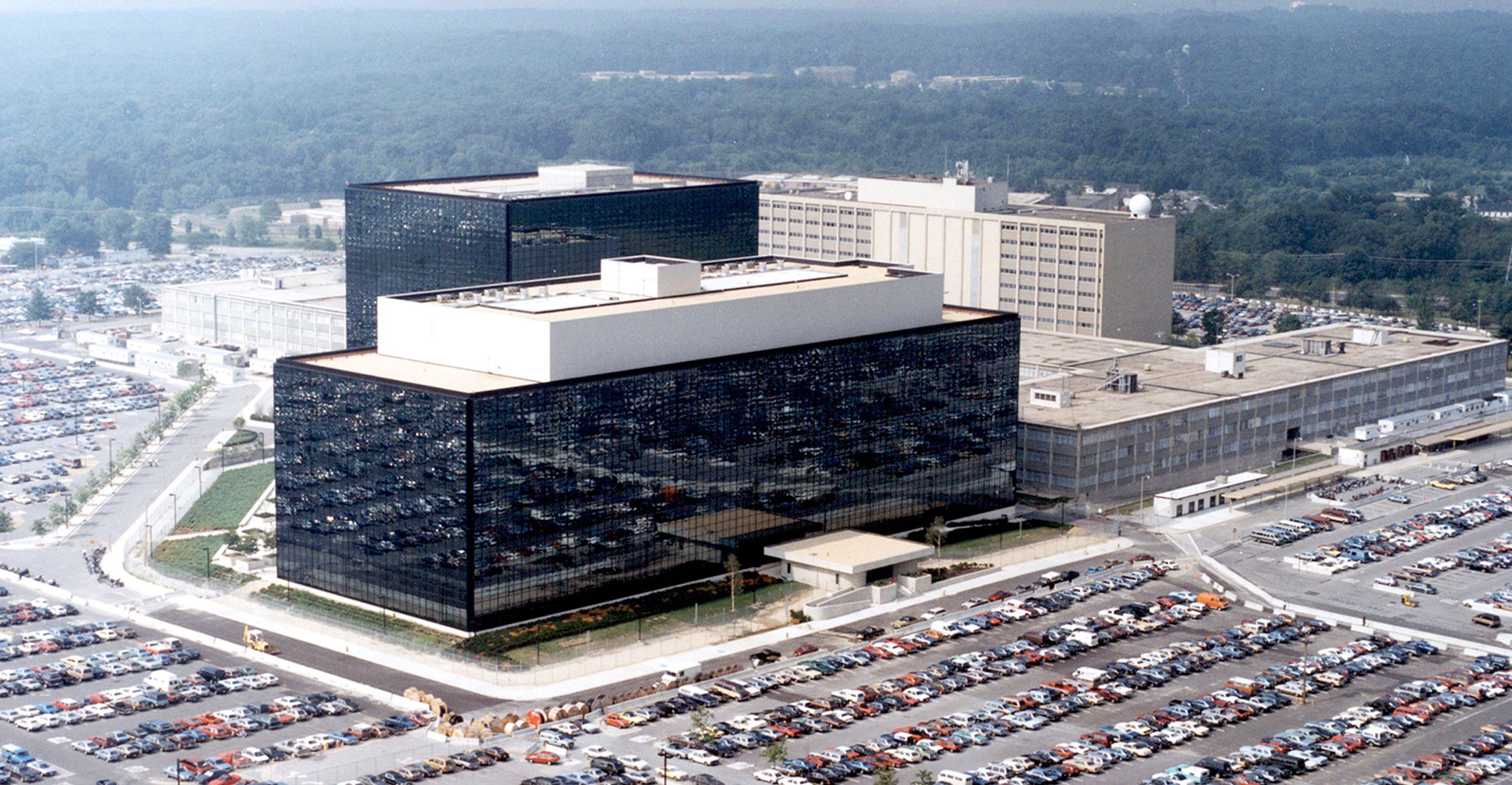
    NSA headquarters

    The US National Security Agency is rebuffing efforts by a leading congressional critic to determine whether it is continuing to place so-called back doors into commercial technology products, in a controversial practice that critics say damages both US industry and national security.

    The NSA has long sought agreements with technology companies under which they would build special access for the spy agency into their products, according to disclosures by former NSA contractor Edward Snowden and reporting by Reuters and others.

    These so-called back doors enable the NSA and other agencies to scan large amounts of traffic without a warrant. Agency advocates say the practice has eased collection of vital intelligence in other countries, including interception of terrorist communications.

    At the NSA, it’s common practice to constantly assess processes to identify and determine best practices. We don’t share specific processes and procedures

    The agency developed new rules for such practices after the Snowden leaks in order to reduce the chances of exposure and compromise, three former intelligence officials said. But aides to senator Ron Wyden, a leading Democrat on the senate intelligence committee, say the NSA has stonewalled on providing even the gist of the new guidelines.

    “Secret encryption back doors are a threat to national security and the safety of our families – it’s only a matter of time before foreign hackers or criminals exploit them in ways that undermine American national security,” Wyden said in an interview. “The government shouldn’t have any role in planting secret back doors in encryption technology used by Americans.”

    Rebuilding trust

    The agency declined to say how it had updated its policies on obtaining special access to commercial products. NSA officials said the agency has been rebuilding trust with the private sector through such measures as offering warnings about software flaws.

    “At the NSA, it’s common practice to constantly assess processes to identify and determine best practices,” said Anne Neuberger, who heads the NSA’s year-old Cybersecurity Directorate. “We don’t share specific processes and procedures.”

    Three former senior intelligence agency figures told Reuters that the NSA now requires that before a back door is sought, the agency must weigh the potential fallout and arrange for some kind of warning if the back door gets discovered and manipulated by adversaries.

    Whistle-blower Edward Snowden on a video link in 2015. Image: Gage Skidmore

    The continuing quest for hidden access comes as governments in the US, the UK and elsewhere seek laws that would require tech companies to let governments see unencrypted traffic. Defenders of strong encryption say the NSA’s sometimes-botched efforts to install back doors in commercial products show the dangers of such requirements.

    Critics of the NSA’s practices say they create targets for adversaries, undermine trust in US technology and compromise efforts to persuade allies to reject Chinese technology that could be used for espionage, since US gear can also be turned to such purposes.

    In at least one instance, a foreign adversary was able to take advantage of a back door invented by US intelligence, according to Juniper Networks, which said in 2015 its equipment had been compromised. In a previously unreported statement to members of the US congress in July seen by Reuters, Juniper said an unnamed national government had converted the mechanism first created by the NSA. The NSA told Wyden staffers in 2018 that there was a “lessons learned” report about the Juniper incident and others, according to Wyden spokesman Keith Chu.

    “NSA now asserts that it cannot locate this document,” Chu said.

    The NSA and Juniper declined to comment on the matter.

    Manipulating standards

    The NSA has pursued many means for getting inside equipment, sometimes striking commercial deals to induce companies to insert back doors, and in other cases manipulating standards — namely by setting processes so that companies unknowingly adopt software that NSA experts can break, according to various media reports.

    The tactics drew widespread attention starting in 2013, when Snowden leaked documents referencing these practices.

    Tech companies that were later exposed for having cut deals that allowed backdoor access, including security pioneer RSA, lost credibility and customers. Other US firms lost business overseas as customers grew wary of the NSA’s reach.

    All of that prompted a White House policy review.

    “There were all sorts of ‘lessons learnt’ processes,” said former White House cybersecurity coordinator Michael Daniel, who was advising then-president Barack Obama when the Snowden files erupted. A special commission appointed by Obama said the government should never “subvert” or “weaken” tech products or compromise standards.

    The White House did not publicly embrace that recommendation, instead beefing up review procedures for whether to use newly discovered software flaws for offensive cyber operations or get them fixed to improve defence, Daniel and others said. The secret government contracts for special access remained outside of the formal review.

    “The NSA had contracts with companies across the board to help them out, but that’s extremely protected,” said an intelligence community lawyer.

    RSA said publicly that it would not have knowingly installed a back door, but its reputation was tarnished and the company was sold

    The starkest example of the risks inherent in the NSA’s approach involved an encryption-system component known as Dual Elliptic Curve, or Dual EC. The intelligence agency worked with the US commerce department to get the technology accepted as a global standard, but cryptographers later showed that the NSA could exploit Dual EC to access encrypted data.

    RSA accepted a US$10-million contract to incorporate Dual EC into a widely used Web security system, Reuters reported in 2013. RSA said publicly that it would not have knowingly installed a back door, but its reputation was tarnished and the company was sold.

    Hot water

    Juniper Networks got into hot water over Dual EC two years later. At the end of 2015, the maker of Internet switches disclosed that it had detected malicious code in some firewall products. Researchers later determined that hackers had turned the firewalls into their own spy tool by altering Juniper’s version of Dual EC.

    Juniper said little about the incident. But the company acknowledged to security researcher Andy Isaacson in 2016 that it had installed Dual EC as part of a “customer requirement”, according to a previously undisclosed contemporaneous message seen by Reuters. Isaacson and other researchers believe that customer was a US government agency, since only the US is known to have insisted on Dual EC elsewhere.

    Juniper has never identified the customer, and declined to comment for this story.

    Likewise, the company never identified the hackers. But two people familiar with the case said that investigators concluded the Chinese government was behind it. They declined to detail the evidence they used.

    The Chinese government has long denied involvement in hacking of any kind. In a statement, the Chinese foreign ministry said that cyberspace is “highly virtual and difficult to trace. It is extremely irresponsible to make accusations of hacker attacks without complete and conclusive evidence. At the same time, we also noticed that the report mentioned that it was the US intelligence agency — the National Security Agency — that created this backdoor technology.”

    Wyden remains determined to find out exactly what happened at Juniper and what has changed since as the encryption wars heat up.

    Juniper does not and will not insert back doors into its products and we oppose any legislation mandating back doors

    This July, in previously unreported responses to questions from Wyden and allies in congress, Juniper said that an unidentified nation was believed to be behind the hack into its firewall code but that it had never investigated why it installed Dual EC in the first place.

    “We understand that there is a vigorous policy debate about whether and how to provide government access to encrypted content,” it said in a July letter. “Juniper does not and will not insert back doors into its products and we oppose any legislation mandating back doors.”

    A former senior NSA official told Reuters that many tech companies remain nervous about working covertly with the government. But the agencies’ efforts continue, the person said, because special access is seen as too valuable to give up.  — Reported by Joseph Menn, (c) 2020 Reuters



    Edward Snowden Juniper Networks National Security Agency NSA Ron Wyden top
    Subscribe to TechCentral Subscribe to TechCentral
    Share. Facebook Twitter LinkedIn WhatsApp Telegram Email Copy Link
    Previous ArticleBitcoin faithful say this time is different after price surge
    Next Article MTN Nigeria sees massive growth in subscriber numbers

    Related Posts

    Edward Snowden warns of AI ‘werewolves’

    5 June 2024

    NSA chief accuses China of ‘very aggressive’ hacking strategy

    31 May 2024
    Microsoft to shut Africa development centre in Nigeria

    Microsoft under fire over ‘shambolic’ security practices

    15 April 2024
    Company News
    Why TechCentral is the most powerful platform for reaching IT decision makers

    Why TechCentral is the most powerful platform for reaching IT decision makers

    17 December 2025
    Business trends to watch in 2026 - Domains.co.za

    Business trends to watch in 2026

    17 December 2025
    MTN Zambia launches world's first 4G cloud smartphone solution - Huawei

    MTN Zambia launches world’s first 4G cloud smartphone solution

    17 December 2025
    Opinion
    Netflix, Warner Bros deal raises fresh headaches for MultiChoice - Duncan McLeod

    Netflix, Warner Bros deal raises fresh headaches for MultiChoice

    5 December 2025
    BIN scans, DDoS and the next cybercrime wave hitting South Africa's banks - Entersekt Gerhard Oosthuizen

    BIN scans, DDoS and the next cybercrime wave hitting South Africa’s banks

    3 December 2025
    Your data, your hardware: the DIY AI revolution is coming - Duncan McLeod

    Your data, your hardware: the DIY AI revolution is coming

    20 November 2025

    Subscribe to Updates

    Get the best South African technology news and analysis delivered to your e-mail inbox every morning.

    Latest Posts
    Digital authoritarianism grows as African states normalise internet blackouts

    Digital authoritarianism grows as African states normalise internet blackouts

    19 December 2025
    Starlink satellite anomaly creates debris in rare orbital mishap

    Starlink satellite anomaly creates debris in rare orbital mishap

    19 December 2025
    Trump space order puts the moon back at centre of US, China rivalry - US President Donald Trump

    Trump space order puts the moon back at centre of US, China rivalry

    19 December 2025
    TechCentral's South African Newsmakers of 2025

    TechCentral’s South African Newsmakers of 2025

    18 December 2025
    © 2009 - 2025 NewsCentral Media
    • Cookie policy (ZA)
    • TechCentral – privacy and Popia

    Type above and press Enter to search. Press Esc to cancel.

    Manage consent

    TechCentral uses cookies to enhance its offerings. Consenting to these technologies allows us to serve you better. Not consenting or withdrawing consent may adversely affect certain features and functions of the website.

    Functional Always active
    The technical storage or access is strictly necessary for the legitimate purpose of enabling the use of a specific service explicitly requested by the subscriber or user, or for the sole purpose of carrying out the transmission of a communication over an electronic communications network.
    Preferences
    The technical storage or access is necessary for the legitimate purpose of storing preferences that are not requested by the subscriber or user.
    Statistics
    The technical storage or access that is used exclusively for statistical purposes. The technical storage or access that is used exclusively for anonymous statistical purposes. Without a subpoena, voluntary compliance on the part of your Internet Service Provider, or additional records from a third party, information stored or retrieved for this purpose alone cannot usually be used to identify you.
    Marketing
    The technical storage or access is required to create user profiles to send advertising, or to track the user on a website or across several websites for similar marketing purposes.
    • Manage options
    • Manage services
    • Manage {vendor_count} vendors
    • Read more about these purposes
    View preferences
    • {title}
    • {title}
    • {title}