
Close Menu
TechCentralTechCentral

    Subscribe to the newsletter

    Get the best South African technology news and analysis delivered to your e-mail inbox every morning.

    Facebook X (Twitter) YouTube LinkedIn
    WhatsApp Facebook X (Twitter) LinkedIn YouTube
    TechCentralTechCentral
    • News
      Digital authoritarianism grows as African states normalise internet blackouts

      Digital authoritarianism grows as African states normalise internet blackouts

      19 December 2025
      Starlink satellite anomaly creates debris in rare orbital mishap

      Starlink satellite anomaly creates debris in rare orbital mishap

      19 December 2025
      TechCentral's South African Newsmakers of 2025

      TechCentral’s South African Newsmakers of 2025

      18 December 2025
      Malatsi buries Post Office's long-dead monopoly

      Malatsi buries Post Office monopoly the market ignored

      18 December 2025
      China races to crack EUV as chip war with the West intensifies

      China races to crack EUV lithography as chip war with the West intensifies

      18 December 2025
    • World
      Trump space order puts the moon back at centre of US, China rivalry - US President Donald Trump

      Trump space order puts the moon back at centre of US, China rivalry

      19 December 2025
      Warner Bros slams the door on Paramount

      Warner Bros slams the door on Paramount

      17 December 2025
      X moves to block bid to revive Twitter brand

      X moves to block bid to revive Twitter brand

      17 December 2025
      Oracle’s AI ambitions face scrutiny on earnings miss

      Oracle’s AI ambitions face scrutiny on earnings miss

      11 December 2025
      China will get Nvidia H200 chips - but not without paying Washington first

      China will get Nvidia H200 chips – but not without paying Washington first

      9 December 2025
    • In-depth
      Black Friday goes digital in South Africa as online spending surges to record high

      Black Friday goes digital in South Africa as online spending surges to record high

      4 December 2025
      Canal+ plays hardball - and DStv viewers feel the pain

      Canal+ plays hardball – and DStv viewers feel the pain

      3 December 2025
      Jensen Huang Nvidia

      So, will China really win the AI race?

      14 November 2025
      Valve's Linux console takes aim at Microsoft's gaming empire

      Valve’s Linux console takes aim at Microsoft’s gaming empire

      13 November 2025
      iOCO's extraordinary comeback plan - Rhys Summerton

      iOCO’s extraordinary comeback plan

      28 October 2025
    • TCS
      TCS+ | Africa's digital transformation - unlocking AI through cloud and culture - Cliff de Wit Accelera Digital Group

      TCS+ | Cloud without culture won’t deliver AI: Accelera’s Cliff de Wit

      12 December 2025
      TCS+ | How Cloud on Demand helps partners thrive in the AWS ecosystem - Odwa Ndyaluvane and Xenia Rhode

      TCS+ | How Cloud On Demand helps partners thrive in the AWS ecosystem

      4 December 2025
      TCS | MTN Group CEO Ralph Mupita on competition, AI and the future of mobile

      TCS | Ralph Mupita on competition, AI and the future of mobile

      28 November 2025
      TCS | Dominic Cull on fixing South Africa's ICT policy bottlenecks

      TCS | Dominic Cull on fixing South Africa’s ICT policy bottlenecks

      21 November 2025
      TCS | BMW CEO Peter van Binsbergen on the future of South Africa's automotive industry

      TCS | BMW CEO Peter van Binsbergen on the future of South Africa’s automotive industry

      6 November 2025
    • Opinion
      Netflix, Warner Bros deal raises fresh headaches for MultiChoice - Duncan McLeod

      Netflix, Warner Bros deal raises fresh headaches for MultiChoice

      5 December 2025
      BIN scans, DDoS and the next cybercrime wave hitting South Africa's banks - Entersekt Gerhard Oosthuizen

      BIN scans, DDoS and the next cybercrime wave hitting South Africa’s banks

      3 December 2025
      Your data, your hardware: the DIY AI revolution is coming - Duncan McLeod

      Your data, your hardware: the DIY AI revolution is coming

      20 November 2025
      Zero Carbon Charge founder Joubert Roux

      The energy revolution South Africa can’t afford to miss

      20 November 2025
      It's time for a new approach to government IT spend in South Africa - Richard Firth

      It’s time for a new approach to government IT spend in South Africa

      19 November 2025
    • Company Hubs
      • Africa Data Centres
      • AfriGIS
      • Altron Digital Business
      • Altron Document Solutions
      • Altron Group
      • Arctic Wolf
      • AvertITD
      • Braintree
      • CallMiner
      • CambriLearn
      • CYBER1 Solutions
      • Digicloud Africa
      • Digimune
      • Domains.co.za
      • ESET
      • Euphoria Telecom
      • Incredible Business
      • iONLINE
      • IQbusiness
      • Iris Network Systems
      • LSD Open
      • NEC XON
      • Netstar
      • Network Platforms
      • Next DLP
      • Ovations
      • Paracon
      • Paratus
      • Q-KON
      • SevenC
      • SkyWire
      • Solid8 Technologies
      • Telit Cinterion
      • Tenable
      • Vertiv
      • Videri Digital
      • Vodacom Business
      • Wipro
      • Workday
      • XLink
    • Sections
      • AI and machine learning
      • Banking
      • Broadcasting and Media
      • Cloud services
      • Contact centres and CX
      • Cryptocurrencies
      • Education and skills
      • Electronics and hardware
      • Energy and sustainability
      • Enterprise software
      • Financial services
      • Information security
      • Internet and connectivity
      • Internet of Things
      • Investment
      • IT services
      • Lifestyle
      • Motoring
      • Public sector
      • Retail and e-commerce
      • Satellite communications
      • Science
      • SMEs and start-ups
      • Social media
      • Talent and leadership
      • Telecoms
    • Events
    • Advertise
    TechCentralTechCentral
    Home » In-depth » Why the iPhone confounds disruption theorists

    Why the iPhone confounds disruption theorists

    By The Conversation10 March 2015
    Twitter LinkedIn Facebook WhatsApp Email Telegram Copy Link
    News Alerts
    WhatsApp
    original-iphone-640
    The original Apple iPhone

    Nokia, Motorola, Sony Ericsson and BlackBerry were all victims of disruption. During the 1990s and 2000s, they shepherded the cellphone during its period of take-off into ubiquity. Then in the last five years, they all lost their leadership positions and are now on the verge of irrelevance. The common culprit was the 2007 launch of Apple’s iPhone.

    Why has the iPhone confounded both industry rivals and proponents of disruption theory alike? Because they have had a one-sided view of disruption — enough to make them blind to its true nature.

    The main proponent of disruption theory is Clay Christensen, who invented the term. His theory is that disruption (that is, the failure of otherwise successful companies) comes when those companies miss important innovations precisely because they are unappealing to their primary customer base. That provides an opportunity for new entrants to leap onto those technologies, ride them through improvements until they actually end up competing head-to-head for the customers of established firms.

    With regard to the iPhone, Christensen made an initial assessment that he later admitted was incorrect. He missed that the iPhone represented one of these worrisome technologies and instead saw it as a sustaining innovation: an innovation that improved upon the phones of Nokia and the like rather than appealed to a different sort of customer.

    As it turns out, he was wrong about that. As both Nokia and BlackBerry realised, the iPhone actually performed worse on things their customers cared about. It is hard to remember, but the initial iPhone was an awful phone, so Nokia dismissed it out of hand. Moreover, it didn’t have a physical keyboard, the primary thing that had attracted BlackBerry’s customers — and, actually, still does. What’s more, the iPhone, by making smartphones a sexier commodity, actually boosted BlackBerry sales in the late 2000s. So they all could be forgiven for thinking perhaps Apple had missed the boat.

    Obviously, Apple was on the right course, as we now know. Christensen admitted that a few years later, saying that his mistake was to consider the iPhone as disruptive to phone makers when, in fact, it was disruptive to laptops.

    Now lots of people have recognised that the iPhone is more of a handheld computer than a phone, but when you take this notion seriously, it is clear that it wasn’t disruptive to laptops. That isn’t even clear for the iPad. Instead, the companies that were disrupted were all handset makers. So it is pretty clear that if the iPhone was disruptive to anything it was disruptive to them.

    The Christensen-style theory of disruption cannot handle the iPhone because the iPhone did not follow the path of that theory. To be sure, it was a poor performer on traditional metrics and then improved. But the path by which that disrupts is because the poor performance leads to lower-priced products that then improve and attract away the most price sensitive of established firm customers.

    But that never happened with the iPhone. It was high priced from the start and remains so today. To be sure, those who adopted the iPhone-like approach to smartphones (Samsung, HTC and LG) were cheaper, but they were still more expensive than traditional handsets.
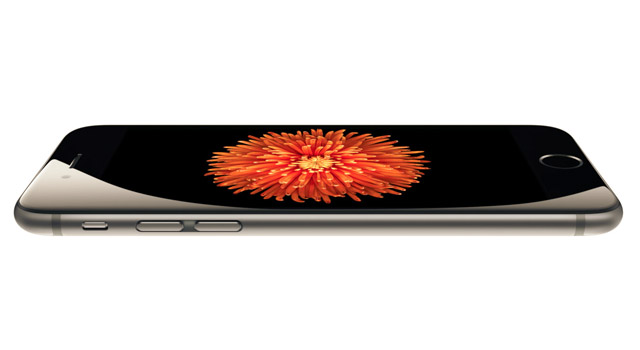
    The new iPhone 6
    The new iPhone 6

    Some have taken this high price point to formulate a theory that the iPhone was disruptive from above (the high end) rather than the low end as Christensen has emphasised. Andreessen Horowitz’s Benedict Evans goes further and suggests this is endemic in mobile. Now it might be that entry in mobile comes from superior, higher-priced products. But that cannot cause disruption  — the failure of incumbent firms.

    This is because it is only by having low-priced products that incumbent firms can be wiped out rather than just stung. And that is an important element of the demand-side theory of disruption. Put simply, there is no such thing as high-end disruption, only high-end entry.

    Instead, the way to think about this disruption is not to look to the demand-side (where the customers touch the firms) but the supply-side (what goes on inside the firms). Nokia, BlackBerry and the like were extremely good at producing well engineered, cheaper phones that did a limited range of functions but did them well.

    The iPhone never competed on those functions and instead offered people things that weren’t otherwise available  –  desktop-like Web pages, a large screen and an intuitive but new user interface based on touch. The iPhone was made from traditional components but put together with what might be termed a different “architecture”. That architecture was designed around a completely new way of interacting with a handheld device. Traditional handset makers either dismissed that as a power-hungry luxury people would not pay for or tried to replicate it but ended up with something decidedly clunkier and not feeling quite up to what Apple had produced.

    Academics like Rebecca Henderson and Kim Clark long recognised that this supply-side mechanism for disruption based on new architectures could trip up otherwise successful firms. And that is really what appears to have gone on with the iPhone. It was a new architecture, and to replicate it required essentially a clean slate for innovative teams.

    Established firms rarely want to give up development teams that have worked well. This is what leaves the room open for entrants and, in the case of smartphones, we saw disruption on a large and long-term scale. And the only way to see it is to understand that there is more than one path to disruption. To do otherwise is to often try and drive a square peg in a round hole.The Conversation

    • Joshua Gans is professor of strategic management at University of Toronto
    • This article was originally published on The Conversation


    Apple BlackBerry Clay Christensen HTC Joshua Gans Kim Clark LG Nokia Rebecca Henderson Samsung
    Subscribe to TechCentral Subscribe to TechCentral
    Share. Facebook Twitter LinkedIn WhatsApp Telegram Email Copy Link
    Previous ArticleMuthambi, Cwele no-shows in parliament
    Next Article EOH earnings up by a quarter

    Related Posts

    LG lights up Studio V, South Korea's new virtual production powerhouse

    LG lights up Studio V, South Korea’s new virtual production powerhouse

    9 December 2025
    The best seat in the house? It's behind your Samsung Galaxy smartphone

    The best seat in the house? It’s behind your Samsung Galaxy smartphone

    9 December 2025
    Samsung Galaxy Tab A11: a smarter, sharper companion for work and play

    Samsung Galaxy Tab A11: a smarter, sharper companion for work and play

    8 December 2025
    Company News
    Why TechCentral is the most powerful platform for reaching IT decision makers

    Why TechCentral is the most powerful platform for reaching IT decision makers

    17 December 2025
    Business trends to watch in 2026 - Domains.co.za

    Business trends to watch in 2026

    17 December 2025
    MTN Zambia launches world's first 4G cloud smartphone solution - Huawei

    MTN Zambia launches world’s first 4G cloud smartphone solution

    17 December 2025
    Opinion
    Netflix, Warner Bros deal raises fresh headaches for MultiChoice - Duncan McLeod

    Netflix, Warner Bros deal raises fresh headaches for MultiChoice

    5 December 2025
    BIN scans, DDoS and the next cybercrime wave hitting South Africa's banks - Entersekt Gerhard Oosthuizen

    BIN scans, DDoS and the next cybercrime wave hitting South Africa’s banks

    3 December 2025
    Your data, your hardware: the DIY AI revolution is coming - Duncan McLeod

    Your data, your hardware: the DIY AI revolution is coming

    20 November 2025

    Subscribe to Updates

    Get the best South African technology news and analysis delivered to your e-mail inbox every morning.

    Latest Posts
    Digital authoritarianism grows as African states normalise internet blackouts

    Digital authoritarianism grows as African states normalise internet blackouts

    19 December 2025
    Starlink satellite anomaly creates debris in rare orbital mishap

    Starlink satellite anomaly creates debris in rare orbital mishap

    19 December 2025
    Trump space order puts the moon back at centre of US, China rivalry - US President Donald Trump

    Trump space order puts the moon back at centre of US, China rivalry

    19 December 2025
    TechCentral's South African Newsmakers of 2025

    TechCentral’s South African Newsmakers of 2025

    18 December 2025
    © 2009 - 2025 NewsCentral Media
    • Cookie policy (ZA)
    • TechCentral – privacy and Popia

    Type above and press Enter to search. Press Esc to cancel.

    Manage consent

    TechCentral uses cookies to enhance its offerings. Consenting to these technologies allows us to serve you better. Not consenting or withdrawing consent may adversely affect certain features and functions of the website.

    Functional Always active
    The technical storage or access is strictly necessary for the legitimate purpose of enabling the use of a specific service explicitly requested by the subscriber or user, or for the sole purpose of carrying out the transmission of a communication over an electronic communications network.
    Preferences
    The technical storage or access is necessary for the legitimate purpose of storing preferences that are not requested by the subscriber or user.
    Statistics
    The technical storage or access that is used exclusively for statistical purposes. The technical storage or access that is used exclusively for anonymous statistical purposes. Without a subpoena, voluntary compliance on the part of your Internet Service Provider, or additional records from a third party, information stored or retrieved for this purpose alone cannot usually be used to identify you.
    Marketing
    The technical storage or access is required to create user profiles to send advertising, or to track the user on a website or across several websites for similar marketing purposes.
    • Manage options
    • Manage services
    • Manage {vendor_count} vendors
    • Read more about these purposes
    View preferences
    • {title}
    • {title}
    • {title}