Close Menu
TechCentralTechCentral

    Subscribe to the newsletter

    Get the best South African technology news and analysis delivered to your e-mail inbox every morning.

    Facebook X (Twitter) YouTube LinkedIn
    WhatsApp Facebook X (Twitter) LinkedIn YouTube
    TechCentralTechCentral
    • News
      Digital authoritarianism grows as African states normalise internet blackouts

      Digital authoritarianism grows as African states normalise internet blackouts

      19 December 2025
      Starlink satellite anomaly creates debris in rare orbital mishap

      Starlink satellite anomaly creates debris in rare orbital mishap

      19 December 2025
      TechCentral's South African Newsmakers of 2025

      TechCentral’s South African Newsmakers of 2025

      18 December 2025
      Malatsi buries Post Office's long-dead monopoly

      Malatsi buries Post Office monopoly the market ignored

      18 December 2025
      China races to crack EUV as chip war with the West intensifies

      China races to crack EUV lithography as chip war with the West intensifies

      18 December 2025
    • World
      Trump space order puts the moon back at centre of US, China rivalry - US President Donald Trump

      Trump space order puts the moon back at centre of US, China rivalry

      19 December 2025
      Warner Bros slams the door on Paramount

      Warner Bros slams the door on Paramount

      17 December 2025
      X moves to block bid to revive Twitter brand

      X moves to block bid to revive Twitter brand

      17 December 2025
      Oracle’s AI ambitions face scrutiny on earnings miss

      Oracle’s AI ambitions face scrutiny on earnings miss

      11 December 2025
      China will get Nvidia H200 chips - but not without paying Washington first

      China will get Nvidia H200 chips – but not without paying Washington first

      9 December 2025
    • In-depth
      Black Friday goes digital in South Africa as online spending surges to record high

      Black Friday goes digital in South Africa as online spending surges to record high

      4 December 2025
      Canal+ plays hardball - and DStv viewers feel the pain

      Canal+ plays hardball – and DStv viewers feel the pain

      3 December 2025
      Jensen Huang Nvidia

      So, will China really win the AI race?

      14 November 2025
      Valve's Linux console takes aim at Microsoft's gaming empire

      Valve’s Linux console takes aim at Microsoft’s gaming empire

      13 November 2025
      iOCO's extraordinary comeback plan - Rhys Summerton

      iOCO’s extraordinary comeback plan

      28 October 2025
    • TCS
      TCS+ | Africa's digital transformation - unlocking AI through cloud and culture - Cliff de Wit Accelera Digital Group

      TCS+ | Cloud without culture won’t deliver AI: Accelera’s Cliff de Wit

      12 December 2025
      TCS+ | How Cloud on Demand helps partners thrive in the AWS ecosystem - Odwa Ndyaluvane and Xenia Rhode

      TCS+ | How Cloud On Demand helps partners thrive in the AWS ecosystem

      4 December 2025
      TCS | MTN Group CEO Ralph Mupita on competition, AI and the future of mobile

      TCS | Ralph Mupita on competition, AI and the future of mobile

      28 November 2025
      TCS | Dominic Cull on fixing South Africa's ICT policy bottlenecks

      TCS | Dominic Cull on fixing South Africa’s ICT policy bottlenecks

      21 November 2025
      TCS | BMW CEO Peter van Binsbergen on the future of South Africa's automotive industry

      TCS | BMW CEO Peter van Binsbergen on the future of South Africa’s automotive industry

      6 November 2025
    • Opinion
      Netflix, Warner Bros deal raises fresh headaches for MultiChoice - Duncan McLeod

      Netflix, Warner Bros deal raises fresh headaches for MultiChoice

      5 December 2025
      BIN scans, DDoS and the next cybercrime wave hitting South Africa's banks - Entersekt Gerhard Oosthuizen

      BIN scans, DDoS and the next cybercrime wave hitting South Africa’s banks

      3 December 2025
      Your data, your hardware: the DIY AI revolution is coming - Duncan McLeod

      Your data, your hardware: the DIY AI revolution is coming

      20 November 2025
      Zero Carbon Charge founder Joubert Roux

      The energy revolution South Africa can’t afford to miss

      20 November 2025
      It's time for a new approach to government IT spend in South Africa - Richard Firth

      It’s time for a new approach to government IT spend in South Africa

      19 November 2025
    • Company Hubs
      • Africa Data Centres
      • AfriGIS
      • Altron Digital Business
      • Altron Document Solutions
      • Altron Group
      • Arctic Wolf
      • AvertITD
      • Braintree
      • CallMiner
      • CambriLearn
      • CYBER1 Solutions
      • Digicloud Africa
      • Digimune
      • Domains.co.za
      • ESET
      • Euphoria Telecom
      • Incredible Business
      • iONLINE
      • IQbusiness
      • Iris Network Systems
      • LSD Open
      • NEC XON
      • Netstar
      • Network Platforms
      • Next DLP
      • Ovations
      • Paracon
      • Paratus
      • Q-KON
      • SevenC
      • SkyWire
      • Solid8 Technologies
      • Telit Cinterion
      • Tenable
      • Vertiv
      • Videri Digital
      • Vodacom Business
      • Wipro
      • Workday
      • XLink
    • Sections
      • AI and machine learning
      • Banking
      • Broadcasting and Media
      • Cloud services
      • Contact centres and CX
      • Cryptocurrencies
      • Education and skills
      • Electronics and hardware
      • Energy and sustainability
      • Enterprise software
      • Financial services
      • Information security
      • Internet and connectivity
      • Internet of Things
      • Investment
      • IT services
      • Lifestyle
      • Motoring
      • Public sector
      • Retail and e-commerce
      • Satellite communications
      • Science
      • SMEs and start-ups
      • Social media
      • Talent and leadership
      • Telecoms
    • Events
    • Advertise
    TechCentralTechCentral
    Home » Top » Self-driving cars will need people, too

    Self-driving cars will need people, too

    By The Conversation3 May 2015
    Twitter LinkedIn Facebook WhatsApp Email Telegram Copy Link
    News Alerts
    WhatsApp

    car-640

    Self-driving cars are expected to revolutionise the automobile industry. Rapid advances have led to working prototypes faster than most people expected. The anticipated benefits of this emerging technology include safer, faster and more eco-friendly transportation.

    Until now, the public dialogue about self-driving cars has centred mostly on technology. The public has been led to believe that engineers will soon remove humans from driving. But researchers in the field of human factors — experts on how people interact with machines — have shown that we shouldn’t ignore the human element of automated driving.

    Automation is the technical term for when a machine — here a complex array of sensors and computers — takes over a task that was formerly accomplished by a human being. Many people assume that automation can replace the person altogether. For example, Google, a leader in the self-driving car quest, has removed steering wheels from prototype cars. Mercedes-Benz promotional materials show self-driving vehicles with rear-facing front seats. The hype on self-driving cars implies that the driver will be unneeded and free to ignore the road.

    The public also has begun to embrace this notion. Studies show that people want to engage in activities such as reading, watching movies, or napping in self-driving cars, and also that automation encourages these distractions. A study in France even indicated that riding while intoxicated was a perceived benefit.

    Unfortunately, these expectations will be difficult to fulfil. Handing control of a process to a computer rarely eliminates the need for human involvement. The reliability of automated systems is imperfect. Tech innovators know from experience that automation will fail at least some of the time. Anticipating inevitable automation glitches, Google recently patented a system in which the computers in “stuck” self-driving cars will contact a remote assistance centre for human help.

    Yet the perception that self-driving cars will perform flawlessly has a strong foothold in the public consciousness already. One commentator recently predicted the end of automotive deaths. Another calculated the economic windfall of “free time” during the commute. Self-driving technologies will undoubtedly be engineered with high reliability in mind, but will it be high enough to cut the human out of the loop entirely?

    A recent example was widely reported in the media as an indicator of the readiness of self-driving technology. A Delphi-engineered self-driving vehicle completed a cross-country trip. The technology drove 99% of the way without any problems.

    This sounds impressive — the human engineers watching at the wheel during the journey took emergency control of the vehicle in only a handful of instances, such as when a police car was present on the shoulder or a construction zone was painted with unusual line markings.

    These scenarios are infrequent, but they’re not especially unusual for a long road trip. In large-scale deployment, however, a low individual automation failure rate multiplied by hundreds of millions of vehicles on US highways will result in a nontrivial number of problems. Further, today’s most advanced prototypes are supported by teams of engineers dedicated to keeping a single vehicle safely on the road. Individual high-tech pit crews won’t be possible for every self-driving car on the road of the future.

    How will flaws in automation technology be addressed? Despite Google’s remote assistance centre patent, the best option remains intervention by the human driver. But engineering human interactions with self-driving cars will be a significant challenge.

    We can draw insights from aviation, as many elements of piloting planes already have been taken over by computers. Automation works well for routine, repetitive tasks, especially when the consequences of automation mistakes are minor — think automatic sewing machines or dishwashers. The stakes are higher when automation failures can cause harm. People may rely too much on imperfect automation or become out-of-practice and unable to perform tasks the old-fashioned way when needed.
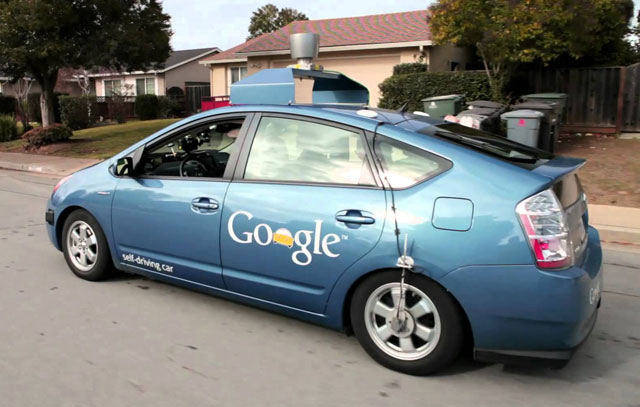
    Google prototype
    Google prototype

    Several recent plane accidents have been attributed to failures in the ways pilots interact with automation, such as when pilots in correctable situations have responded inappropriately when automation fails. A term — automation surprises — has even been coined to describe when pilots lose track of what the automation is doing. This is a quintessential human factors problem, characterised not by flaws with either automation or pilots per se, but instead by failures in the design of the human-technology interaction.

    When machines take over, the work required of the human is typically not removed — sometimes it is not even reduced — as compared to before the automation was implemented. Rather, the job becomes different. Instead of manual work, the human is relegated to the role of a monitor — one who constantly watches to detect and correct technology failures. The problem is that people are not especially well suited for this tedious job. It’s not surprising that drivers retaking manual control from automation need up to 40 seconds to return to normal, baseline driving behaviours.

    All of this is not to say that self-driving cars will fail to deliver benefits; they will undoubtedly transform the driving experience. But to develop this promising technology, human factors must be considered. For example, multimodal displays that use a combination of visual, auditory, and tactile (touch) information may be useful for keeping the driver informed about what the automation is doing. Adaptive automation — where the computer strategically gives some control of the car back to the driver at regular intervals — may be able to keep the human engaged and ready to respond when needed.

    The technology-centric expectations currently being fostered overlook the substantial body of science on the human element of automation. If other examples of automation, including aviation, can provide any insight, focusing on technology to the exclusion of the human it serves may be counterproductive.

    Instead, engineers, researchers, and the general public should see vehicle automation as a cooperative effort between humans and technology — one where the human plays a vital, active role in systems that optimise the interaction between the driver and the technology. A key element will likely require designing new, innovative ways to keep the driver in the loop and informed about the status of automated systems. In other words, “self-driving” cars will need people, too.The Conversation

    • Michael Nees is assistant professor of psychology at Lafayette College in the US
    • This article was originally published on The Conversation

    Google Mercedes-Benz Michael Nees
    Subscribe to TechCentral Subscribe to TechCentral
    Share. Facebook Twitter LinkedIn WhatsApp Telegram Email Copy Link
    Previous ArticleEthos buys into Eaton Towers
    Next Article After Mad Men, big money replaced big ideas

    Related Posts

    TechCentral's International Newsmakers of 2025

    TechCentral’s International Newsmakers of 2025

    17 December 2025
    OpenAI launches GPT-5.2 after 'code red' push to counter Google. Shelby Tauber/Reuters

    OpenAI launches GPT-5.2 after ‘code red’ push to counter Google

    12 December 2025
    What South Africans searched for most in 2025

    What South Africans searched for most in 2025, according to Google

    4 December 2025
    Company News
    Why TechCentral is the most powerful platform for reaching IT decision makers

    Why TechCentral is the most powerful platform for reaching IT decision makers

    17 December 2025
    Business trends to watch in 2026 - Domains.co.za

    Business trends to watch in 2026

    17 December 2025
    MTN Zambia launches world's first 4G cloud smartphone solution - Huawei

    MTN Zambia launches world’s first 4G cloud smartphone solution

    17 December 2025
    Opinion
    Netflix, Warner Bros deal raises fresh headaches for MultiChoice - Duncan McLeod

    Netflix, Warner Bros deal raises fresh headaches for MultiChoice

    5 December 2025
    BIN scans, DDoS and the next cybercrime wave hitting South Africa's banks - Entersekt Gerhard Oosthuizen

    BIN scans, DDoS and the next cybercrime wave hitting South Africa’s banks

    3 December 2025
    Your data, your hardware: the DIY AI revolution is coming - Duncan McLeod

    Your data, your hardware: the DIY AI revolution is coming

    20 November 2025

    Subscribe to Updates

    Get the best South African technology news and analysis delivered to your e-mail inbox every morning.

    Latest Posts
    Digital authoritarianism grows as African states normalise internet blackouts

    Digital authoritarianism grows as African states normalise internet blackouts

    19 December 2025
    Starlink satellite anomaly creates debris in rare orbital mishap

    Starlink satellite anomaly creates debris in rare orbital mishap

    19 December 2025
    Trump space order puts the moon back at centre of US, China rivalry - US President Donald Trump

    Trump space order puts the moon back at centre of US, China rivalry

    19 December 2025
    TechCentral's South African Newsmakers of 2025

    TechCentral’s South African Newsmakers of 2025

    18 December 2025
    © 2009 - 2025 NewsCentral Media
    • Cookie policy (ZA)
    • TechCentral – privacy and Popia

    Type above and press Enter to search. Press Esc to cancel.

    Manage consent

    TechCentral uses cookies to enhance its offerings. Consenting to these technologies allows us to serve you better. Not consenting or withdrawing consent may adversely affect certain features and functions of the website.

    Functional Always active
    The technical storage or access is strictly necessary for the legitimate purpose of enabling the use of a specific service explicitly requested by the subscriber or user, or for the sole purpose of carrying out the transmission of a communication over an electronic communications network.
    Preferences
    The technical storage or access is necessary for the legitimate purpose of storing preferences that are not requested by the subscriber or user.
    Statistics
    The technical storage or access that is used exclusively for statistical purposes. The technical storage or access that is used exclusively for anonymous statistical purposes. Without a subpoena, voluntary compliance on the part of your Internet Service Provider, or additional records from a third party, information stored or retrieved for this purpose alone cannot usually be used to identify you.
    Marketing
    The technical storage or access is required to create user profiles to send advertising, or to track the user on a website or across several websites for similar marketing purposes.
    • Manage options
    • Manage services
    • Manage {vendor_count} vendors
    • Read more about these purposes
    View preferences
    • {title}
    • {title}
    • {title}