Close Menu
TechCentralTechCentral

    Subscribe to the newsletter

    Get the best South African technology news and analysis delivered to your e-mail inbox every morning.

    Facebook X (Twitter) YouTube LinkedIn
    WhatsApp Facebook X (Twitter) LinkedIn YouTube
    TechCentralTechCentral
    • News
      TechCentral's South African Newsmakers of 2025

      TechCentral’s South African Newsmakers of 2025

      18 December 2025
      Malatsi buries Post Office's long-dead monopoly

      Malatsi buries Post Office monopoly the market ignored

      18 December 2025
      China races to crack EUV as chip war with the West intensifies

      China races to crack EUV lithography as chip war with the West intensifies

      18 December 2025
      Coursera to buy Udemy, in which Prosus is an investor

      Coursera to buy Udemy, in which Prosus is an investor

      18 December 2025
      It has been a year of policy victories, but crypto firms warn momentum could fade without durable US legislation.- Donald Trump

      Crypto’s Trump-era boom faces a 2026 reality check

      18 December 2025
    • World
      Warner Bros slams the door on Paramount

      Warner Bros slams the door on Paramount

      17 December 2025
      X moves to block bid to revive Twitter brand

      X moves to block bid to revive Twitter brand

      17 December 2025
      Oracle’s AI ambitions face scrutiny on earnings miss

      Oracle’s AI ambitions face scrutiny on earnings miss

      11 December 2025
      China will get Nvidia H200 chips - but not without paying Washington first

      China will get Nvidia H200 chips – but not without paying Washington first

      9 December 2025
      IBM reportedly close to $11-billion deal to buy Confluent - Arvind Krishna

      IBM reportedly close to $11-billion deal to buy Confluent

      8 December 2025
    • In-depth
      Black Friday goes digital in South Africa as online spending surges to record high

      Black Friday goes digital in South Africa as online spending surges to record high

      4 December 2025
      Canal+ plays hardball - and DStv viewers feel the pain

      Canal+ plays hardball – and DStv viewers feel the pain

      3 December 2025
      Jensen Huang Nvidia

      So, will China really win the AI race?

      14 November 2025
      Valve's Linux console takes aim at Microsoft's gaming empire

      Valve’s Linux console takes aim at Microsoft’s gaming empire

      13 November 2025
      iOCO's extraordinary comeback plan - Rhys Summerton

      iOCO’s extraordinary comeback plan

      28 October 2025
    • TCS
      TCS+ | Africa's digital transformation - unlocking AI through cloud and culture - Cliff de Wit Accelera Digital Group

      TCS+ | Cloud without culture won’t deliver AI: Accelera’s Cliff de Wit

      12 December 2025
      TCS+ | How Cloud on Demand helps partners thrive in the AWS ecosystem - Odwa Ndyaluvane and Xenia Rhode

      TCS+ | How Cloud On Demand helps partners thrive in the AWS ecosystem

      4 December 2025
      TCS | MTN Group CEO Ralph Mupita on competition, AI and the future of mobile

      TCS | Ralph Mupita on competition, AI and the future of mobile

      28 November 2025
      TCS | Dominic Cull on fixing South Africa's ICT policy bottlenecks

      TCS | Dominic Cull on fixing South Africa’s ICT policy bottlenecks

      21 November 2025
      TCS | BMW CEO Peter van Binsbergen on the future of South Africa's automotive industry

      TCS | BMW CEO Peter van Binsbergen on the future of South Africa’s automotive industry

      6 November 2025
    • Opinion
      Netflix, Warner Bros deal raises fresh headaches for MultiChoice - Duncan McLeod

      Netflix, Warner Bros deal raises fresh headaches for MultiChoice

      5 December 2025
      BIN scans, DDoS and the next cybercrime wave hitting South Africa's banks - Entersekt Gerhard Oosthuizen

      BIN scans, DDoS and the next cybercrime wave hitting South Africa’s banks

      3 December 2025
      Your data, your hardware: the DIY AI revolution is coming - Duncan McLeod

      Your data, your hardware: the DIY AI revolution is coming

      20 November 2025
      Zero Carbon Charge founder Joubert Roux

      The energy revolution South Africa can’t afford to miss

      20 November 2025
      It's time for a new approach to government IT spend in South Africa - Richard Firth

      It’s time for a new approach to government IT spend in South Africa

      19 November 2025
    • Company Hubs
      • Africa Data Centres
      • AfriGIS
      • Altron Digital Business
      • Altron Document Solutions
      • Altron Group
      • Arctic Wolf
      • AvertITD
      • Braintree
      • CallMiner
      • CambriLearn
      • CYBER1 Solutions
      • Digicloud Africa
      • Digimune
      • Domains.co.za
      • ESET
      • Euphoria Telecom
      • Incredible Business
      • iONLINE
      • IQbusiness
      • Iris Network Systems
      • LSD Open
      • NEC XON
      • Netstar
      • Network Platforms
      • Next DLP
      • Ovations
      • Paracon
      • Paratus
      • Q-KON
      • SevenC
      • SkyWire
      • Solid8 Technologies
      • Telit Cinterion
      • Tenable
      • Vertiv
      • Videri Digital
      • Vodacom Business
      • Wipro
      • Workday
      • XLink
    • Sections
      • AI and machine learning
      • Banking
      • Broadcasting and Media
      • Cloud services
      • Contact centres and CX
      • Cryptocurrencies
      • Education and skills
      • Electronics and hardware
      • Energy and sustainability
      • Enterprise software
      • Financial services
      • Information security
      • Internet and connectivity
      • Internet of Things
      • Investment
      • IT services
      • Lifestyle
      • Motoring
      • Public sector
      • Retail and e-commerce
      • Satellite communications
      • Science
      • SMEs and start-ups
      • Social media
      • Talent and leadership
      • Telecoms
    • Events
    • Advertise
    TechCentralTechCentral
    Home » In-depth » Silicon Valley is winning the driverless car race

    Silicon Valley is winning the driverless car race

    By The Conversation26 February 2018
    Twitter LinkedIn Facebook WhatsApp Email Telegram Copy Link
    News Alerts
    WhatsApp
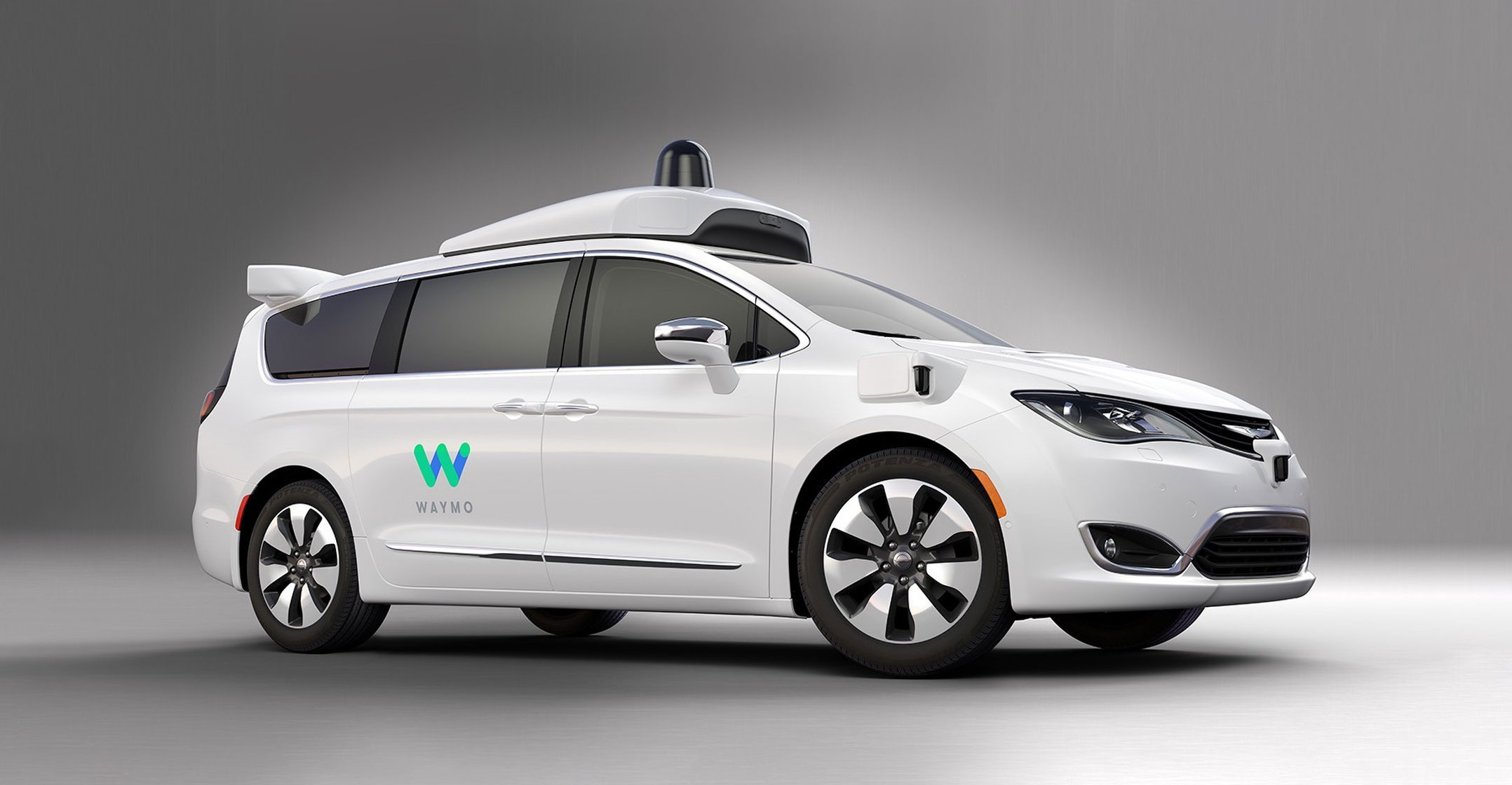
    A Waymo autonomous car

    Henry Ford didn’t invent the motor car. The late 1800s saw a flurry of innovation by hundreds of companies battling to deliver on the promise of fast, efficient and reasonably priced mechanical transportation. Ford later came to dominate the industry thanks to the development of the moving assembly line.

    Today the sector is poised for another breakthrough with the advent of cars that drive themselves. But unlike the original wave of automobile innovation, the race for supremacy in autonomous vehicles is concentrated among a few corporate giants. So, who is set to dominate this time?

    I’ve analysed six companies we think are leading the race to build the first truly driverless car. Three of these — General Motors, Ford and Volkswagen — come from the existing car industry and need to integrate self-driving technology into their existing fleet of mass-produced vehicles. The other three — Tesla, Uber and Waymo (owned by the same company as Google) — are newcomers from the digital technology world of Silicon Valley and have to build a mass manufacturing capability.

    Waymo’s experience, technology capability and ability to secure solid partnerships puts it at the head of the pack

    While it’s impossible to know all the developments at any given time, we have tracked investments, strategic partnerships and official press releases to learn more about what’s happening behind the scenes. The car industry typically rates self-driving technology on a scale from level 0 (no automation) to level 5 (full automation). We’ve assessed where each company is now and estimated how far they are from reaching the top level. Here’s how we think each player is performing.

    Volkswagen

    Volkswagen has invested in taxi-hailing app Gett and partnered with chip maker Nvidia to develop an artificial intelligence co-pilot for its cars. In 2018, the VW Group is set to release the Audi A8, the first production vehicle that reaches level 3 on the scale, “conditional driving automation”. This means the car’s computer will handle all driving functions, but a human has to be ready to take over if necessary.

    Ford

    Ford already sells cars with a level 2 autopilot, “partial driving automation”. This means one or more aspects of driving are controlled by a computer based on information about the environment, for example combined cruise control and lane centring. Alongside other investments, the company has put US$1 billion into Argo AI, an artificial intelligence company for self-driving vehicles. Following a trial to test pizza delivery using autonomous vehicles, Ford is now testing level 4 cars on public roads. These feature “high automation”, where the car can drive entirely on its own but not in certain conditions such as when the road surface is poor or the weather is bad.
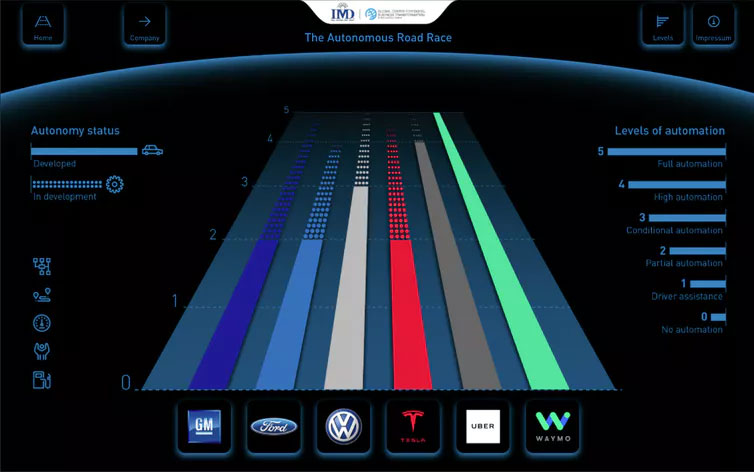
    Who’s winning the race. Image: IMD

    General Motors

    GM also sells vehicles with level 2 automation but, after buying Silicon Valley start-up Cruise Automation in 2016, now plans to launch the first mass production-ready level-5 autonomy vehicle that drives completely on its own by 2019. The Cruise AV will have no steering wheel or pedals to allow a human to take over and be part of a large fleet of driverless taxis the company plans to operate in big cities. But crucially the company hasn’t yet secured permission to test the car on public roads.

    Waymo (Google)

    Founded as a special project in 2009, Waymo separated from Google (though they’re both owned by the same parent firm, Alphabet) in 2016. Though it has never made, sold or operated a car on a commercial basis, Waymo has created test vehicles that have clocked more than 6.5m kilometress without human drivers as of November 2017. Waymo tested its level-5 car, Firefly, between 2015 and 2017 but then decided to focus on hardware that could be installed in other manufacturers’ vehicles, starting with the Chrysler Pacifica.

    Uber

    The taxi-hailing app maker Uber has been testing autonomous cars on the streets of Pittsburgh since 2016, always with an employee behind the wheel ready to take over in case of a malfunction. After buying the self-driving truck company Otto in 2016 for a reported $680m, Uber is now expanding its AI capabilities and plans to test Nvidia’s latest chips in Otto’s vehicles. It has also partnered with Volvo to create a self-driving fleet of cars, and with Toyota to co-create a ride-sharing autonomous vehicle.
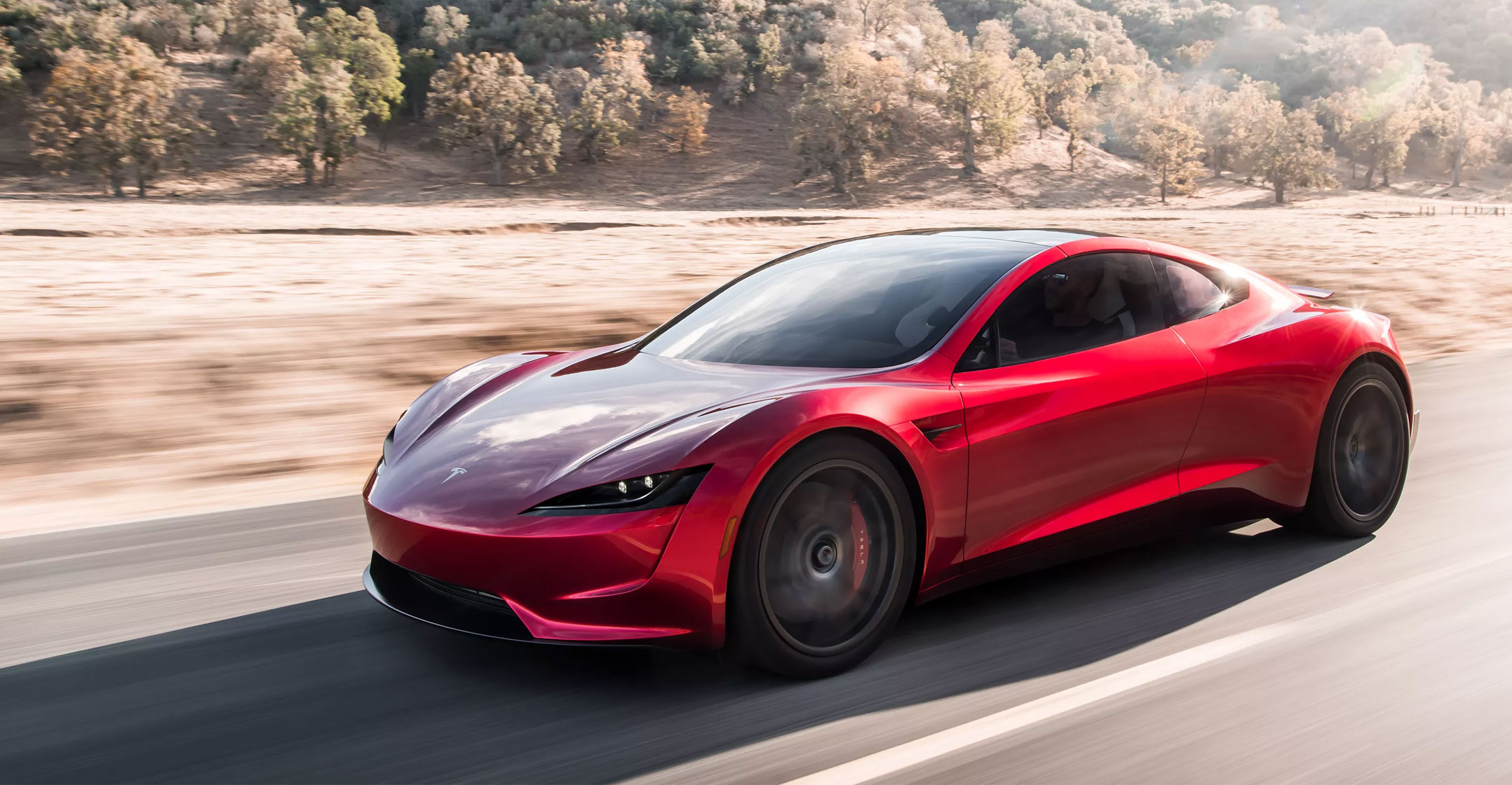
    Tesla Roadster

    Tesla

    The first major car manufacturer to come from Silicon Valley, Tesla was also the first to introduce level-2 autopilot back in 2015. The following year, it announced that all new Teslas would have the hardware for full autonomy, meaning once the software is finished it can be deployed on existing cars with an instant upgrade. Some experts have challenged this approach, arguing that the company has merely added surround cameras to its production cars that aren’t as capable as the laser-based sensing systems that most other car makers are using.

    But the company has collected data from hundreds of thousands of cars, driving millions of kilometres across all terrains. So we shouldn’t dismiss the firm’s founder, Elon Musk, when he claims a level-4 Tesla will drive from Los Angeles to New York without any human interference within the first half of 2018.

    Winners

    For now, the disruptors like Tesla, Waymo and Uber seem to have the upper hand. While the traditional automakers are focusing on bringing level-3 and -4 partial automation to market, the new companies are leapfrogging them by moving more directly towards level-5 full automation. Waymo may have the least experience of dealing with consumers in this sector but it has already clocked up a huge amount of time testing some of the most advanced technology on public roads.

    The incumbent car makers are also focused on the difficult process of integrating new technology and business models into their existing manufacturing operations by buying up small companies. The challengers, on the other hand, are easily partnering with other big players including manufacturers to get the scale and expertise they need more quickly.

    Tesla is building its own manufacturing capability but also collecting vast amounts of critical data that will enable it to more easily upgrade its cars when ready for full automation. Waymo’s experience, technology capability and ability to secure solid partnerships puts it at the head of the pack.The Conversation

    • Michael Wade is professor of innovation and strategy, Cisco chair in digital business transformation, IMD Business School
    • This article was originally published on The Conversation

    Elon Musk Ford General Motors GM Tesla top Uber Volkswagen VW Waymo
    Subscribe to TechCentral Subscribe to TechCentral
    Share. Facebook Twitter LinkedIn WhatsApp Telegram Email Copy Link
    Previous ArticleSpaceX, Uber CEOs square off over flying cars
    Next Article Pharmaceuticals industry ‘facing its own Y2K’

    Related Posts

    TechCentral's International Newsmakers of 2025

    TechCentral’s International Newsmakers of 2025

    17 December 2025
    X moves to block bid to revive Twitter brand

    X moves to block bid to revive Twitter brand

    17 December 2025
    Presidency backs Solly Malatsi in BEE reform fight - Cyril Ramaphosa

    Presidency backs Solly Malatsi in BEE reform fight

    15 December 2025
    Company News
    Why TechCentral is the most powerful platform for reaching IT decision makers

    Why TechCentral is the most powerful platform for reaching IT decision makers

    17 December 2025
    Business trends to watch in 2026 - Domains.co.za

    Business trends to watch in 2026

    17 December 2025
    MTN Zambia launches world's first 4G cloud smartphone solution - Huawei

    MTN Zambia launches world’s first 4G cloud smartphone solution

    17 December 2025
    Opinion
    Netflix, Warner Bros deal raises fresh headaches for MultiChoice - Duncan McLeod

    Netflix, Warner Bros deal raises fresh headaches for MultiChoice

    5 December 2025
    BIN scans, DDoS and the next cybercrime wave hitting South Africa's banks - Entersekt Gerhard Oosthuizen

    BIN scans, DDoS and the next cybercrime wave hitting South Africa’s banks

    3 December 2025
    Your data, your hardware: the DIY AI revolution is coming - Duncan McLeod

    Your data, your hardware: the DIY AI revolution is coming

    20 November 2025

    Subscribe to Updates

    Get the best South African technology news and analysis delivered to your e-mail inbox every morning.

    Latest Posts
    TechCentral's South African Newsmakers of 2025

    TechCentral’s South African Newsmakers of 2025

    18 December 2025
    Malatsi buries Post Office's long-dead monopoly

    Malatsi buries Post Office monopoly the market ignored

    18 December 2025
    China races to crack EUV as chip war with the West intensifies

    China races to crack EUV lithography as chip war with the West intensifies

    18 December 2025
    Coursera to buy Udemy, in which Prosus is an investor

    Coursera to buy Udemy, in which Prosus is an investor

    18 December 2025
    © 2009 - 2025 NewsCentral Media
    • Cookie policy (ZA)
    • TechCentral – privacy and Popia

    Type above and press Enter to search. Press Esc to cancel.

    Manage consent

    TechCentral uses cookies to enhance its offerings. Consenting to these technologies allows us to serve you better. Not consenting or withdrawing consent may adversely affect certain features and functions of the website.

    Functional Always active
    The technical storage or access is strictly necessary for the legitimate purpose of enabling the use of a specific service explicitly requested by the subscriber or user, or for the sole purpose of carrying out the transmission of a communication over an electronic communications network.
    Preferences
    The technical storage or access is necessary for the legitimate purpose of storing preferences that are not requested by the subscriber or user.
    Statistics
    The technical storage or access that is used exclusively for statistical purposes. The technical storage or access that is used exclusively for anonymous statistical purposes. Without a subpoena, voluntary compliance on the part of your Internet Service Provider, or additional records from a third party, information stored or retrieved for this purpose alone cannot usually be used to identify you.
    Marketing
    The technical storage or access is required to create user profiles to send advertising, or to track the user on a website or across several websites for similar marketing purposes.
    • Manage options
    • Manage services
    • Manage {vendor_count} vendors
    • Read more about these purposes
    View preferences
    • {title}
    • {title}
    • {title}