

The Donald Trump administration widened its dragnet this week on Chinese companies in a push to slow China’s technological advances. But the plan might backfire.
The Donald Trump administration widened its dragnet this week on Chinese companies in a push to slow China’s technological advances. But the plan might backfire.
Unlike bitcoin, Facebook’s aim with GlobalCoin is not to bring down the established financial system, but to co-opt it.

For Elon Musk and Tesla, the blows from Wall Street came one after another this week – a relentless barrage that left the stock so beaten up that some now wonder if it can ever regain its status as the ultimate 21st century disrupter.
By imposing restrictions on Huawei, the US may force the Chinese company to do something that no one in tech has dared to do for a long time: challenge Google’s control of the Android universe.
As Donald Trump continues to raise the stakes with threats to kneecap Huawei and other companies over what the US says are rising national security risks, officials in Beijing are weighing their options to respond.

The first message sent by Morse code’s dots and dashes across a long distance travelled from Washington, DC to Baltimore on Friday, 24 May 1844 – 175 years ago. Incredibly, the system is still used today.
Many view the US action against Huawei Technologies as just another twist in President Donald Trump’s broader trade war. That may be naive.
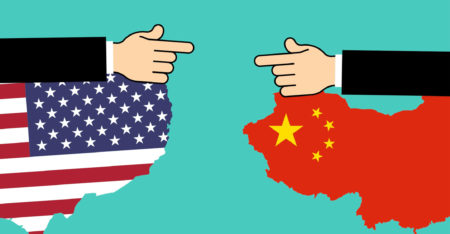
The first great power rivalry of the 21st century has begun. It is not a re-run of the Cold War, however. Instead, this rivalry will look unlike any that has come before it.
But research conducted at Unisa has found there’s a huge disconnect between the privacy that consumers expect and are legally entitled to, and what organisations are doing to meet their obligations.
In its struggle with China over trade and national security, the US has many legitimate grievances, and a variety of weapons for seeking redress. That doesn’t mean it should use all of them.