Close Menu
TechCentralTechCentral

    Subscribe to the newsletter

    Get the best South African technology news and analysis delivered to your e-mail inbox every morning.

    Facebook X (Twitter) YouTube LinkedIn
    WhatsApp Facebook X (Twitter) LinkedIn YouTube
    TechCentralTechCentral
    • News
      Nedbank hires MTN's former tech chief as group CIO - Nikos Angelopoulos

      Nedbank hires MTN’s former tech chief as group CIO

      31 July 2026
      Eskom's diesel bill falls 86% as breakdowns hit eight-year low

      Eskom’s diesel bill falls 86% as breakdowns hit eight-year low

      31 July 2026
      Ramaphosa signs off on taking the grid away from Eskom

      Ramaphosa signs off on taking the grid away from Eskom

      31 July 2026
      Microsoft just had the biggest day in stock market history

      Microsoft just had the biggest day in stock market history

      31 July 2026
      MTN Nigeria's growth engine stalled in second quarter - Karl Toriola

      MTN Nigeria’s growth engine stalled in second quarter

      31 July 2026
    • World
      Meta AI will now tell parents if their teen is in crisis

      Meta AI will now tell parents if their teen is in crisis

      17 July 2026
      IBM shares crash 25% as AI upends software spending - Arvind Krishna

      IBM shares crash 25% as AI upends software spending

      15 July 2026
      Jony Ive's first OpenAI device: an AI smart speaker - Jony Ive and Sam Altman

      Jony Ive’s first OpenAI device: an AI smart speaker

      15 July 2026
      Stripe, Advent in talks to buy PayPal for $53-billion

      Stripe, Advent in talks to buy PayPal for $53-billion

      15 July 2026
      Memory crisis sends smartphone market into steep decline

      Memory crisis sends smartphone market into steep decline

      13 July 2026
    • In-depth
      The plan to stop AI from breaking the world - Google DeepMind CEO Demis Hassabis. Image: John Sears

      The plan to stop AI from breaking the world

      16 July 2026
      The internet has a Strait of Hormuz problem

      The internet has a Strait of Hormuz problem

      15 July 2026
      AI boom sparks rally, frenzy and fear

      AI boom sparks rally, frenzy and fear

      11 June 2026
      Every plug-in hybrid on sale in South Africa, ranked by price - Lamborghini Temerario

      Every plug-in hybrid on sale in South Africa, ranked by price

      7 June 2026
      What Wi-Fi 8 will mean for wireless networks

      What Wi-Fi 8 will mean for wireless networks

      1 June 2026
    • TCS
      TCS+ | Why South African workers must become supervisors of digital labour - Accelera Digital Group Cliff de Wit

      TCS+ | Why South African workers must become supervisors of digital labour

      31 July 2026
      TCS | Rapid deployment rules can't work without municipalities: ACT - Nomvuyiso Batyi

      TCS | Icasa’s rules skip the real bottleneck: ACT

      30 July 2026
      TCS+ | iStore Business on why Apple makes sense for SMEs - Sudesh Pillay and Tamia Nontsikelelo

      TCS+ | iStore Business on why Apple makes sense for SMEs

      30 July 2026
      TCS+ | A smarter approach to cloud for South African businesses - Joel Chacko and Jonathan Oaker

      TCS+ | A smarter approach to cloud for South African businesses

      28 July 2026
      TCS | How Optasia lends billions to people banks can't see - Salvador Anglada

      TCS | How Optasia lends billions to people banks can’t see

      23 July 2026
    • Opinion
      The author, Jannie van Zyl

      Selling vapour is corporate suicide in slow motion

      16 July 2026
      Brazil's online gambling crackdown is a lesson for South Africa

      How Amazon outmanoeuvred Starlink in South Africa

      15 July 2026
      The Popia problem with agentic AI - Herman Haasbroek

      The Popia problem with agentic AI

      14 July 2026
      The author, Fanie van Rooyen

      South Africa can still catch the AI wave – here’s how

      7 July 2026
      The author, Fanie van Rooyen

      The AI utopia South Africa can’t afford

      1 July 2026
    • Company Hubs
      • 1Stream
      • Africa Data Centres
      • AfriGIS
      • Altron Digital Business
      • Altron Document Solutions
      • Altron Group
      • Arctic Wolf
      • Ascent Technology
      • AvertITD
      • BBD
      • Braintree
      • CallMiner
      • CambriLearn
      • CM Telecom
      • Contactable
      • CYBER1 Solutions
      • Digicloud Africa
      • Digimune
      • Domains.co.za
      • ESET
      • Euphoria Telecom
      • HOSTAFRICA
      • Incredible Business
      • iONLINE
      • IQbusiness
      • Iris Network Systems
      • Kaspersky
      • LSD Open
      • Mitel
      • NEC XON
      • Netstar
      • Network Platforms
      • Next DLP
      • Ovations
      • Paracon
      • Paratus
      • Q-KON
      • SevenC
      • SkyWire
      • Solid8 Technologies
      • Telit Cinterion
      • Telviva
      • Tenable
      • Vertiv
      • Videri Digital
      • Vodacom Business
      • Vox
      • Wipro
      • Workday
      • XLink
    • Sections
      • AI and machine learning
      • Banking
      • Broadcasting and Media
      • Cloud services
      • Contact centres and CX
      • Cryptocurrencies
      • Education and skills
      • Electronics and hardware
      • Energy and sustainability
      • Enterprise software
      • Financial services
      • HealthTech
      • Information security
      • Internet and connectivity
      • Internet of Things
      • Investment
      • IT services
      • Lifestyle
      • Policy and regulation
      • Public sector
      • Retail and e-commerce
      • Satellite communications
      • Science
      • SMEs and start-ups
      • Social media
      • Talent and leadership
      • Telecoms
      • Watts & Wheels
    • Events
    • Advertise
    TechCentralTechCentral
    Home » News » China shifts balance of power in $1.9-trillion crypto industry

    China shifts balance of power in $1.9-trillion crypto industry

    By Agency Staff24 September 2021
    Twitter LinkedIn Facebook WhatsApp Email Telegram Copy Link
    News Alerts
    WhatsApp

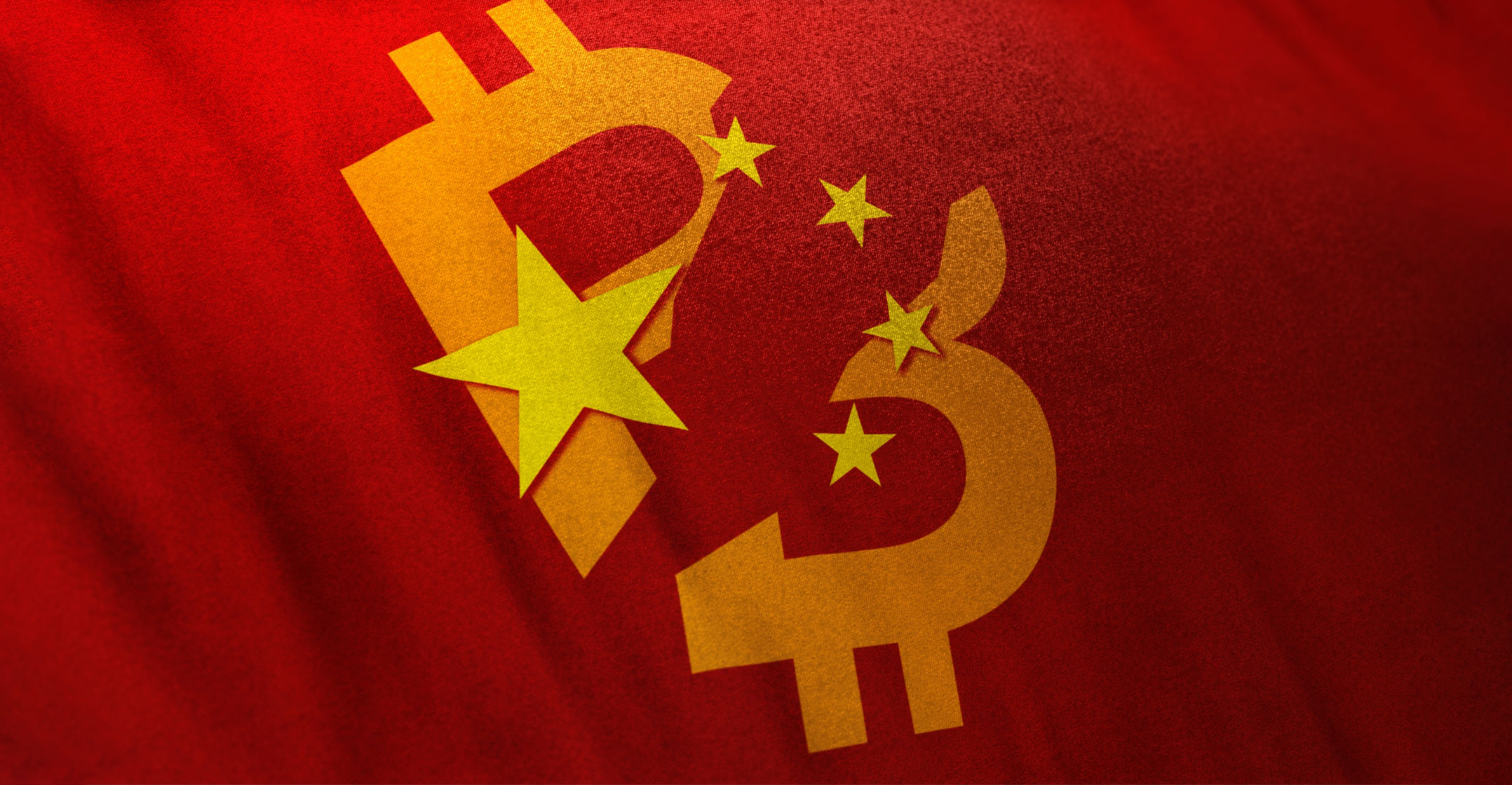
    China’s multiyear crackdown on the crypto industry may have reached its apex on Friday, cementing a shift in the balance of power away from one of the countries that first embraced the digital currency world.

    The People’s Bank of China vowed to end illegal mining and stop offshore exchanges from conducting business with its citizens — spurring a wipeout of as much as R2.4-trillion in the market value of digital currencies from bitcoin and solana to XRP.

    “This is the latest and perhaps final stage of the Chinese government’s crackdown on crypto,” said Jehan Chu, founder of investment firm Kenetic Capital in Hong Kong. “China has been consistent about its desire to rid itself of free trading in cryptocurrencies and emphasise more controlled projects.”

    China has been consistent about its desire to rid itself of free trading in cryptocurrencies

    Once a cradle of the industry, China — under the Communist Party’s leadership — has since pushed crypto to the fringes with some of the harshest regulations among large economies. After chasing out local exchanges, banning crypto services by financial firms and more recently weeding out miners, the centre of crypto power is now developed markets.

    One telltale sign: On trading platforms Binance and FTX, volumes for popular derivatives known as perpetual futures surges on average at noon in New York. Bitcoin dropped as much as 9% and ether 13%, with losses paring somewhat as of 10.32am in New York.

    Regulatory screw

    It comes as countries around the world tighten the regulatory screw, with the US threatening industry players with lawsuits or cease-and-desist orders. But China’s stance is unequivocally hardline — dovetailing with the Communist Party’s bid to bring key industries to heel from online gaming and tutoring to high-frequency trading.

    It’s been quite the journey. In the first phase of bitcoin’s rise since its 2009 inception, China was the base for the biggest miners and exchanges as well as a horde of active speculators. There were also signs people used digital currencies to skirt a cap on taking money out of the country, especially when the yuan was depreciating.

    But the 2017 crackdown on Chinese exchanges changed all that. It prompted some like Huobi, OKEx and Binance to move their operations abroad, and by now, Chinese onshore traders’ participation in centralised exchanges is minimal.

    Any remaining activity is hard to trace as it will probably be conducted via virtual private networks that obscure the user’s location

    Any remaining activity is hard to trace as it will probably be conducted via virtual private networks that obscure the user’s location, said Clara Medalie, research lead at data provider Kaiko. Some also trade on over-the-counter venues.

    Still, Friday’s moves represent a further crackdown on even these alternative channels. Before China outlawed crypto exchanges in 2017, local investors held an estimated 7% of the world’s bitcoin and made up roughly 80% of trading, according to state media.

    “News out of China definitely impacts markets because it can shake market sentiment, but the actual effect of another Chinese ban has minimal impact on underlying market structure at this point,” said Medalie.

    At the same time, the country has remained supportive of the blockchain technology that underlies bitcoin, as well as — naturally — its own digital yuan, which has been enthusiastically promoted by the People’s Bank of China.

    “China might still be setting the scene for its own central bank digital currency, and therefore wants to clear the plate for what will be a centrally controlled but blockchain-denominated coin,” Justin d’Anethan, Hong Kong-based sales manager at crypto exchange Equos, wrote in a message. “Or maybe it’s simply trying to actively fight capital flowing out in a period of need.”

    At Bequant, a crypto prime brokerage, head of research Martha Reyes said the Friday selloff was probably exacerbated by widespread caution after a 7 September plunge as well as options expiring on Friday. Funding rates, or the interest paid by bulls to trade futures, have been falling recently, and US$2.9-billion of outstanding options were set to expire on Friday, according to the Deribit exchange. It’s an event that some say has typically fueled volatility.

    An index of bitcoin volatility jumped from 80 to as high as 91 over the course of Friday

    An index of bitcoin volatility jumped from 80 to as high as 91 over the course of Friday, Deribit data shows.

    Even as the influence of Chinese traders’ wanes, the country’s bid to avert a property debt crisis has demonstrated immense sway on both global stock and crypto markets this week. The 50-day correlation between the S&P 500 and bitcoin has been consistently positive this year, jumping to the highest since October recently.

    “The sentiment was quite fragile anyway,” says Reyes. “We started the week with China FUD and we’re ending the week with China FUD,” she said, referring the slang for fear, uncertainty and doubt.  — Reported by Justina Lee, (c) 2021 Bloomberg LP

    Follow TechCentral on Google News Add TechCentral as your preferred source on Google


    Binance Bitcoin Clara Medalie Equos ether FTX Jehan Chu Justin d’Anethan Kaiko Kenetic Capital
    WhatsApp YouTube
    Share. Facebook Twitter LinkedIn WhatsApp Telegram Email Copy Link
    Previous ArticleChina bans crypto mining and trading nationwide
    Next Article Business must respond to increasingly mobile consumer behaviour in SA

    Related Posts

    Bitcoin at $65 000: stalled, or simply early?

    Bitcoin at $65 000: stalled, or simply early?

    22 July 2026
    Quantum computers are coming for bitcoin

    Quantum computers are coming for bitcoin

    9 July 2026
    More pain ahead for bitcoin investors

    More pain ahead for bitcoin investors

    10 June 2026
    Company News
    Domains.co.za launches self-hosted n8n VPS hosting

    Domains.co.za launches self-hosted n8n VPS hosting

    31 July 2026
    Smarter.tech '26 shows why smarter technology begins with context - Obsidian Systems

    Context is the missing piece in enterprise AI: Obsidian

    31 July 2026
    Huawei launches 12 intelligent transport solutions in South Africa - Sam Tang

    Huawei launches 12 intelligent transport solutions in South Africa

    30 July 2026
    Opinion
    The author, Jannie van Zyl

    Selling vapour is corporate suicide in slow motion

    16 July 2026
    Brazil's online gambling crackdown is a lesson for South Africa

    How Amazon outmanoeuvred Starlink in South Africa

    15 July 2026
    The Popia problem with agentic AI - Herman Haasbroek

    The Popia problem with agentic AI

    14 July 2026

    Subscribe to Updates

    Get the best South African technology news and analysis delivered to your e-mail inbox every morning.

    Latest Posts
    Nedbank hires MTN's former tech chief as group CIO - Nikos Angelopoulos

    Nedbank hires MTN’s former tech chief as group CIO

    31 July 2026
    Eskom's diesel bill falls 86% as breakdowns hit eight-year low

    Eskom’s diesel bill falls 86% as breakdowns hit eight-year low

    31 July 2026
    Ramaphosa signs off on taking the grid away from Eskom

    Ramaphosa signs off on taking the grid away from Eskom

    31 July 2026
    TCS+ | Why South African workers must become supervisors of digital labour - Accelera Digital Group Cliff de Wit

    TCS+ | Why South African workers must become supervisors of digital labour

    31 July 2026
    © 2009 - 2026 NewsCentral Media
    Built and maintained by Chronon
    • Cookie policy (ZA)
    • TechCentral – privacy and Popia

    Type above and press Enter to search. Press Esc to cancel.

    Manage consent

    TechCentral uses cookies to enhance its offerings. Consenting to these technologies allows us to serve you better. Not consenting or withdrawing consent may adversely affect certain features and functions of the website.

    Functional Always active
    The technical storage or access is strictly necessary for the legitimate purpose of enabling the use of a specific service explicitly requested by the subscriber or user, or for the sole purpose of carrying out the transmission of a communication over an electronic communications network.
    Preferences
    The technical storage or access is necessary for the legitimate purpose of storing preferences that are not requested by the subscriber or user.
    Statistics
    The technical storage or access that is used exclusively for statistical purposes. The technical storage or access that is used exclusively for anonymous statistical purposes. Without a subpoena, voluntary compliance on the part of your Internet Service Provider, or additional records from a third party, information stored or retrieved for this purpose alone cannot usually be used to identify you.
    Marketing
    The technical storage or access is required to create user profiles to send advertising, or to track the user on a website or across several websites for similar marketing purposes.
    • Manage options
    • Manage services
    • Manage {vendor_count} vendors
    • Read more about these purposes
    View preferences
    • {title}
    • {title}
    • {title}