
Close Menu
TechCentralTechCentral

    Subscribe to the newsletter

    Get the best South African technology news and analysis delivered to your e-mail inbox every morning.

    Facebook X (Twitter) YouTube LinkedIn
    WhatsApp Facebook X (Twitter) LinkedIn YouTube
    TechCentralTechCentral
    • News
      TechCentral's South African Newsmakers of 2025

      TechCentral’s South African Newsmakers of 2025

      18 December 2025
      Malatsi buries Post Office's long-dead monopoly

      Malatsi buries Post Office monopoly the market ignored

      18 December 2025
      China races to crack EUV as chip war with the West intensifies

      China races to crack EUV lithography as chip war with the West intensifies

      18 December 2025
      Coursera to buy Udemy, in which Prosus is an investor

      Coursera to buy Udemy, in which Prosus is an investor

      18 December 2025
      It has been a year of policy victories, but crypto firms warn momentum could fade without durable US legislation.- Donald Trump

      Crypto’s Trump-era boom faces a 2026 reality check

      18 December 2025
    • World
      Warner Bros slams the door on Paramount

      Warner Bros slams the door on Paramount

      17 December 2025
      X moves to block bid to revive Twitter brand

      X moves to block bid to revive Twitter brand

      17 December 2025
      Oracle’s AI ambitions face scrutiny on earnings miss

      Oracle’s AI ambitions face scrutiny on earnings miss

      11 December 2025
      China will get Nvidia H200 chips - but not without paying Washington first

      China will get Nvidia H200 chips – but not without paying Washington first

      9 December 2025
      IBM reportedly close to $11-billion deal to buy Confluent - Arvind Krishna

      IBM reportedly close to $11-billion deal to buy Confluent

      8 December 2025
    • In-depth
      Black Friday goes digital in South Africa as online spending surges to record high

      Black Friday goes digital in South Africa as online spending surges to record high

      4 December 2025
      Canal+ plays hardball - and DStv viewers feel the pain

      Canal+ plays hardball – and DStv viewers feel the pain

      3 December 2025
      Jensen Huang Nvidia

      So, will China really win the AI race?

      14 November 2025
      Valve's Linux console takes aim at Microsoft's gaming empire

      Valve’s Linux console takes aim at Microsoft’s gaming empire

      13 November 2025
      iOCO's extraordinary comeback plan - Rhys Summerton

      iOCO’s extraordinary comeback plan

      28 October 2025
    • TCS
      TCS+ | Africa's digital transformation - unlocking AI through cloud and culture - Cliff de Wit Accelera Digital Group

      TCS+ | Cloud without culture won’t deliver AI: Accelera’s Cliff de Wit

      12 December 2025
      TCS+ | How Cloud on Demand helps partners thrive in the AWS ecosystem - Odwa Ndyaluvane and Xenia Rhode

      TCS+ | How Cloud On Demand helps partners thrive in the AWS ecosystem

      4 December 2025
      TCS | MTN Group CEO Ralph Mupita on competition, AI and the future of mobile

      TCS | Ralph Mupita on competition, AI and the future of mobile

      28 November 2025
      TCS | Dominic Cull on fixing South Africa's ICT policy bottlenecks

      TCS | Dominic Cull on fixing South Africa’s ICT policy bottlenecks

      21 November 2025
      TCS | BMW CEO Peter van Binsbergen on the future of South Africa's automotive industry

      TCS | BMW CEO Peter van Binsbergen on the future of South Africa’s automotive industry

      6 November 2025
    • Opinion
      Netflix, Warner Bros deal raises fresh headaches for MultiChoice - Duncan McLeod

      Netflix, Warner Bros deal raises fresh headaches for MultiChoice

      5 December 2025
      BIN scans, DDoS and the next cybercrime wave hitting South Africa's banks - Entersekt Gerhard Oosthuizen

      BIN scans, DDoS and the next cybercrime wave hitting South Africa’s banks

      3 December 2025
      Your data, your hardware: the DIY AI revolution is coming - Duncan McLeod

      Your data, your hardware: the DIY AI revolution is coming

      20 November 2025
      Zero Carbon Charge founder Joubert Roux

      The energy revolution South Africa can’t afford to miss

      20 November 2025
      It's time for a new approach to government IT spend in South Africa - Richard Firth

      It’s time for a new approach to government IT spend in South Africa

      19 November 2025
    • Company Hubs
      • Africa Data Centres
      • AfriGIS
      • Altron Digital Business
      • Altron Document Solutions
      • Altron Group
      • Arctic Wolf
      • AvertITD
      • Braintree
      • CallMiner
      • CambriLearn
      • CYBER1 Solutions
      • Digicloud Africa
      • Digimune
      • Domains.co.za
      • ESET
      • Euphoria Telecom
      • Incredible Business
      • iONLINE
      • IQbusiness
      • Iris Network Systems
      • LSD Open
      • NEC XON
      • Netstar
      • Network Platforms
      • Next DLP
      • Ovations
      • Paracon
      • Paratus
      • Q-KON
      • SevenC
      • SkyWire
      • Solid8 Technologies
      • Telit Cinterion
      • Tenable
      • Vertiv
      • Videri Digital
      • Vodacom Business
      • Wipro
      • Workday
      • XLink
    • Sections
      • AI and machine learning
      • Banking
      • Broadcasting and Media
      • Cloud services
      • Contact centres and CX
      • Cryptocurrencies
      • Education and skills
      • Electronics and hardware
      • Energy and sustainability
      • Enterprise software
      • Financial services
      • Information security
      • Internet and connectivity
      • Internet of Things
      • Investment
      • IT services
      • Lifestyle
      • Motoring
      • Public sector
      • Retail and e-commerce
      • Satellite communications
      • Science
      • SMEs and start-ups
      • Social media
      • Talent and leadership
      • Telecoms
    • Events
    • Advertise
    TechCentralTechCentral
    Home » World » China to retaliate over US tech restrictions

    China to retaliate over US tech restrictions

    By Agency Staff16 October 2020
    Twitter LinkedIn Facebook WhatsApp Email Telegram Copy Link
    News Alerts
    WhatsApp
    Alejandro Luengo/Unsplash.com

    China is set to pass a new law that would restrict sensitive exports vital to national security, expanding its toolkit of policy options as competition grows with the US over access to technologies that will drive the modern economy.

    China’s top legislative body, the National People’s Congress Standing Committee, is expected to adopt the measure in a session that concludes on Saturday. The Export Control Law primarily aims to protect China’s national security by regulating the export of sensitive materials and technologies that appear on a control list. It would apply to all companies in China, including foreign-invested ones.

    The measure would add to Beijing’s regulatory arsenal, which also includes a tech export restriction catalogue and an unreliable entity list. The law would also help put China on a similar footing to the US, which regularly uses export controls and licences strategically against its adversaries.

    The measure would add to Beijing’s regulatory arsenal, which also includes a tech export restriction catalogue and an unreliable entity list

    Mounting tensions between China and the US have spilled over into the realm of technology. Big Chinese companies including Huawei Technologies, ByteDance’s TikTok, Tencent’s WeChat and Semiconductor Manufacturing International find themselves in Washington’s cross-hairs.

    “Chinese authorities may have learned a lesson from the US and other countries,” said Qing Ren, a partner at Global Law Office in Beijing.

    A report carried by official Xinhua News Agency said the draft law stipulates that China could take reciprocal measures against a certain country or region that has “abused export control measures and damaged China’s national security and interests”.

    Controlled items

    The official Legal Daily reported on Thursday that some legislators had suggested source codes, algorithms and technical documents be added as controlled items, and that China should set up some restrictions on exporting technologies on which Beijing has a competitive edge, such as 5G and quantum communications.

    Whether Beijing will allow the export of valuable Chinese technology is one of the biggest uncertainties hovering over the partial sale of TikTok to Oracle and American investors. China in August asserted the right to block the deal by adding speech recognition and recommendation technology — the core of TikTok’s global popularity — to a list of regulated exports.

    The existing control lists are much narrower than the one used by the US, staying limited to materials that could be used for nuclear, chemical or biological weapons, Ren said. If it’s expanded in the future “then more products or technologies will be subject to export control in China”, he said.

    Huawei is China’s leading technology company

    While the US is generally ahead of China in most spheres, China controls critical aspects of technology in industries from wireless networking to unmanned aerial vehicles.

    American officials have warned that Huawei — the leader in next-generation wireless patents — controls a tenth of worldwide essential 5G patents, and its deep involvement in international standards-setting could post a threat to US national security. The company ranked among the top 10 recipients of US patents in 2019 — helping China become the fourth biggest recipient of American patents, behind Japan and South Korea but ahead of Germany for the first time.

    Chinese companies have also made headway in dominating certain niches. Shenzhen-based DJI Technology controls something like three-quarters of the global consumer drones market. Display maker BOE Technology Group is aggressively filing patents in its bid to get into next-generation OLED screens for smartphones.

    Foreign ministry officials have repeatedly accused Washington of stretching and abusing the concept of national security…

    And in artificial intelligence, companies from Alibaba Group to Tencent and upstarts like SenseTime Group are taking advantage of unparalleled reserves of data to advance in areas such as facial recognition.

    When approved, China’s law will be applied extra-territorially, taking a page from the US Export Administration Regulations’ long-arm jurisdiction that Beijing has frequently criticised. Foreign ministry officials have repeatedly accused Washington of stretching and abusing the concept of national security in justifying actions against Chinese companies.

    China is the biggest exporting country in the world and overseas sales provide jobs for millions of people, so it will be careful not to abuse the law, said Mei Xinyu, a researcher at a research group under China’s commerce ministry. “We highly value China’s image as a reliable supplier in the international market,” Mei said. “So we wouldn’t expand the scope of export control at will.”

    Higher priority

    China’s ministry of commerce first published a draft of the legislation in June 2017. It went through two reviews by the NPC in December 2019 and at the end of June. When the draft bill was introduced for its first review, minister of commerce Zhong Shan explained to the national legislature that export control is a mechanism aimed at “honouring international obligations such as nonproliferation and safeguarding national security and developmental interests”.

    But in a draft reviewed in June, national security was given higher priority.

    “Threats to national security could come from various fields, including the economic field,” said Cui Fan, a professor of international trade at the University of International Business and Economics. “But we can’t confuse normal competition between companies with threats to economic security and national interests.”
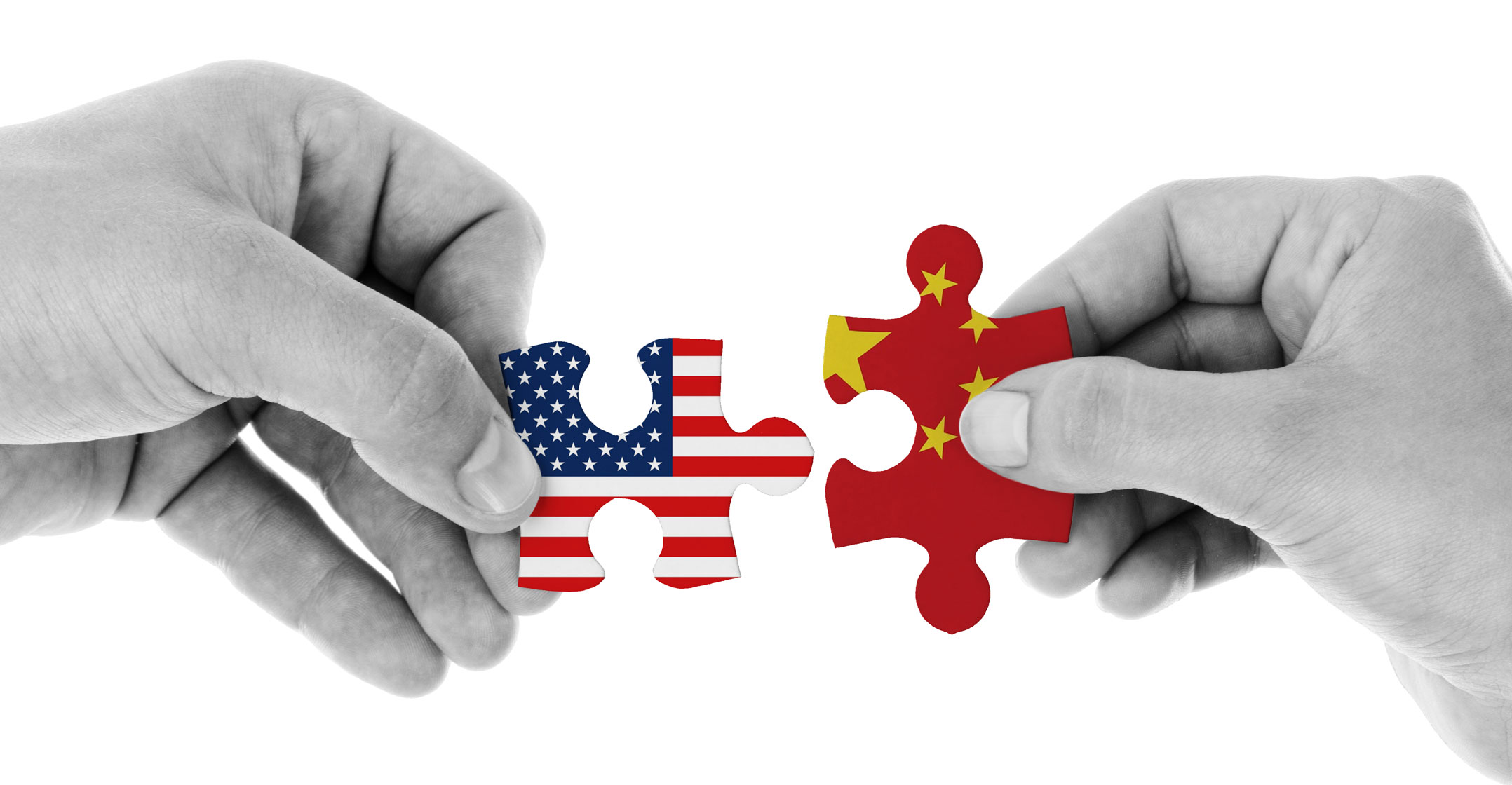
    The latest version further clarifies the scope of controlled items and punishment measures for violations. Government departments overseeing export control should publish export control guidance in a timely manner, a spokesperson of the NPC’s legislative affairs commission said on Monday, without elaborating.

    Foreign companies need not fear the law since it applied equally to all companies operating in China, according to Ren from Global Law Office. Still, he said, foreign-invested companies should be careful if their activities involve the export of technologies.

    “Chinese employees maybe are not allowed to release the controlled technologies to their foreign colleagues,” Ren said. “This depends on the very specific circumstances of the each individual company. But it could happen.”  — (c) 2020 Bloomberg LP



    ByteDance Huawei Oracle Tencent TikTok top
    Subscribe to TechCentral Subscribe to TechCentral
    Share. Facebook Twitter LinkedIn WhatsApp Telegram Email Copy Link
    Previous ArticleTwitter revises hacked documents policy after Post dispute
    Next Article SA needs a national database of addresses: How it could be done

    Related Posts

    China races to crack EUV as chip war with the West intensifies

    China races to crack EUV lithography as chip war with the West intensifies

    18 December 2025
    TechCentral's International Newsmakers of 2025

    TechCentral’s International Newsmakers of 2025

    17 December 2025
    Warner Bros slams the door on Paramount

    Warner Bros slams the door on Paramount

    17 December 2025
    Company News
    Why TechCentral is the most powerful platform for reaching IT decision makers

    Why TechCentral is the most powerful platform for reaching IT decision makers

    17 December 2025
    Business trends to watch in 2026 - Domains.co.za

    Business trends to watch in 2026

    17 December 2025
    MTN Zambia launches world's first 4G cloud smartphone solution - Huawei

    MTN Zambia launches world’s first 4G cloud smartphone solution

    17 December 2025
    Opinion
    Netflix, Warner Bros deal raises fresh headaches for MultiChoice - Duncan McLeod

    Netflix, Warner Bros deal raises fresh headaches for MultiChoice

    5 December 2025
    BIN scans, DDoS and the next cybercrime wave hitting South Africa's banks - Entersekt Gerhard Oosthuizen

    BIN scans, DDoS and the next cybercrime wave hitting South Africa’s banks

    3 December 2025
    Your data, your hardware: the DIY AI revolution is coming - Duncan McLeod

    Your data, your hardware: the DIY AI revolution is coming

    20 November 2025

    Subscribe to Updates

    Get the best South African technology news and analysis delivered to your e-mail inbox every morning.

    Latest Posts
    TechCentral's South African Newsmakers of 2025

    TechCentral’s South African Newsmakers of 2025

    18 December 2025
    Malatsi buries Post Office's long-dead monopoly

    Malatsi buries Post Office monopoly the market ignored

    18 December 2025
    China races to crack EUV as chip war with the West intensifies

    China races to crack EUV lithography as chip war with the West intensifies

    18 December 2025
    Coursera to buy Udemy, in which Prosus is an investor

    Coursera to buy Udemy, in which Prosus is an investor

    18 December 2025
    © 2009 - 2025 NewsCentral Media
    • Cookie policy (ZA)
    • TechCentral – privacy and Popia

    Type above and press Enter to search. Press Esc to cancel.

    Manage consent

    TechCentral uses cookies to enhance its offerings. Consenting to these technologies allows us to serve you better. Not consenting or withdrawing consent may adversely affect certain features and functions of the website.

    Functional Always active
    The technical storage or access is strictly necessary for the legitimate purpose of enabling the use of a specific service explicitly requested by the subscriber or user, or for the sole purpose of carrying out the transmission of a communication over an electronic communications network.
    Preferences
    The technical storage or access is necessary for the legitimate purpose of storing preferences that are not requested by the subscriber or user.
    Statistics
    The technical storage or access that is used exclusively for statistical purposes. The technical storage or access that is used exclusively for anonymous statistical purposes. Without a subpoena, voluntary compliance on the part of your Internet Service Provider, or additional records from a third party, information stored or retrieved for this purpose alone cannot usually be used to identify you.
    Marketing
    The technical storage or access is required to create user profiles to send advertising, or to track the user on a website or across several websites for similar marketing purposes.
    • Manage options
    • Manage services
    • Manage {vendor_count} vendors
    • Read more about these purposes
    View preferences
    • {title}
    • {title}
    • {title}