South Africa’s Chinese car boom is usually explained with a price list. But that explanation has stopped being sufficient.
Accenture South Africa’s principal director for automotive & e-mobility, Greg Cress – who recently told TechCentral the industry was having its “iPhone moment” – said this week that the market has entered a second phase in which how the cars actually look is doing more of the commercial work.
“While the first wave of Chinese success in South Africa was largely about affordability, with price parity being reached among the Chinese OEMs, the second wave appears to increasingly be about desirability,” Cress said, referring to car makers (an OEM is an original equipment manufacturer). Buyers remain “very cost and value-conscious”, he said, but with Chinese cars “purchase decisions seem to be made about styling and design”.
Five Chinese brands sat inside the top 15 by sales in August, based on figures published by Naamsa: Chery sixth on 2 709 units, GWM seventh on 2 504, Jetour ninth on 2 034, Omoda & Jaecoo 11th on 1 502 and BYD 15th on 860 – together 9 609 of the 57 898 vehicles sold that month. As TechCentral reported in July, Chinese brands took 16.8% of the passenger car market in 2025, up from 11.2% in 2024, and one in every five new vehicles sold in the first quarter of 2026 was Chinese.
The recruitment behind the restyling
Cress traces the change to one cause. “One might have historically said that Chinese vehicles all looked similar, but the recruitment of high-profile global designers has seen some unique styling filtering into these brands,” he said, citing designs from brands such as BYD, Geely and Xiaomi.
The record supports this view. Wolfgang Egger, who had led Audi Group design, joined BYD as design director in 2016 from Italdesign and authored the Dragon Face language now on every BYD sold here. Geely’s design was run for years by Volvo and Ford veteran Peter Horbury, and passed in 2021 to ex-Bentley director Stefan Sielaff. At Xiaomi, Kai Langer joined in August 2025 after two decades at BMW, and Chris Bangle has consulted on its EV design since January 2024.
Two hires Cress did not name carry more weight here:
- In August 2018, Great Wall Motor’s Haval brand appointed Phil Simmons as global design director and vice-president after about 28 years at Jaguar Land Rover, latterly as Range Rover studio director. Australian outlet Drive quoted him shortly afterwards saying the industry would look back in a decade and “wonder why we ever had any doubt” about China reaching the top.
- Chery moved the same year, appointing Kevin Rice of Mazda Europe and BMW as design vice-president in October 2018. Rice left for Pininfarina in early 2020 and was succeeded by Steve Eum, a General Motors veteran in China.
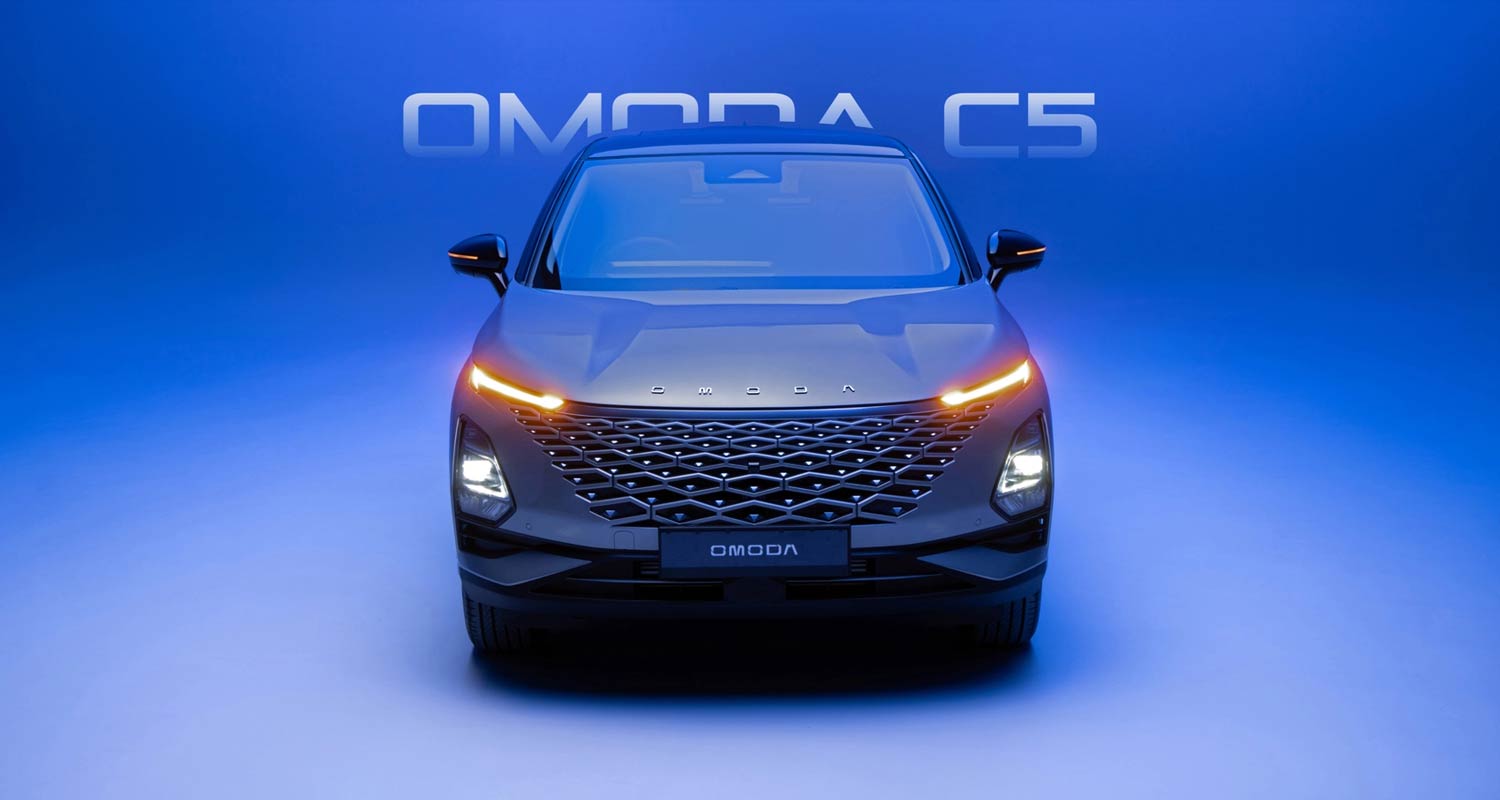
On figures reported to Naamsa and collated by Cars.co.za, the Chery Tiggo 4 led all Chinese models in 2025 on 18 178 units including the Tiggo Cross, followed by the Haval Jolion on 13 607 and the Omoda C5 on 8 475, with the Chery Tiggo 7 on 4 886, the Haval H6 on 4 713 and the Jaecoo J7 on 2 122.
A trust play, dressed well
Cress is careful not to overstate the importance of improved design. “It is still a value play in South Africa, and more so a trust play, with design becoming the layer that is creating the premium perception around these vehicles,” he said.
“Competitive pricing and value for money has helped Chinese brands scale in South Africa, but design aspects are increasingly helping them move beyond just being ‘cheap alternatives’ to legacy OEM brands, and more towards being brands that consumers genuinely aspire to own.
“This is particularly important, because Chinese brands find themselves in competition with each other in South Africa, not only against legacy OEMs,” he added.
With price parity reached among them, styling is one of the few ways left to win an argument between two similarly priced Chinese SUVs.
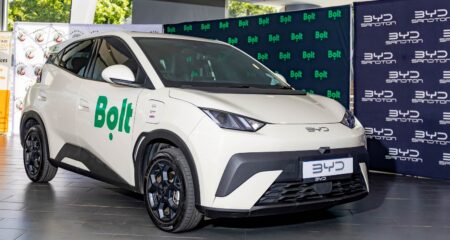
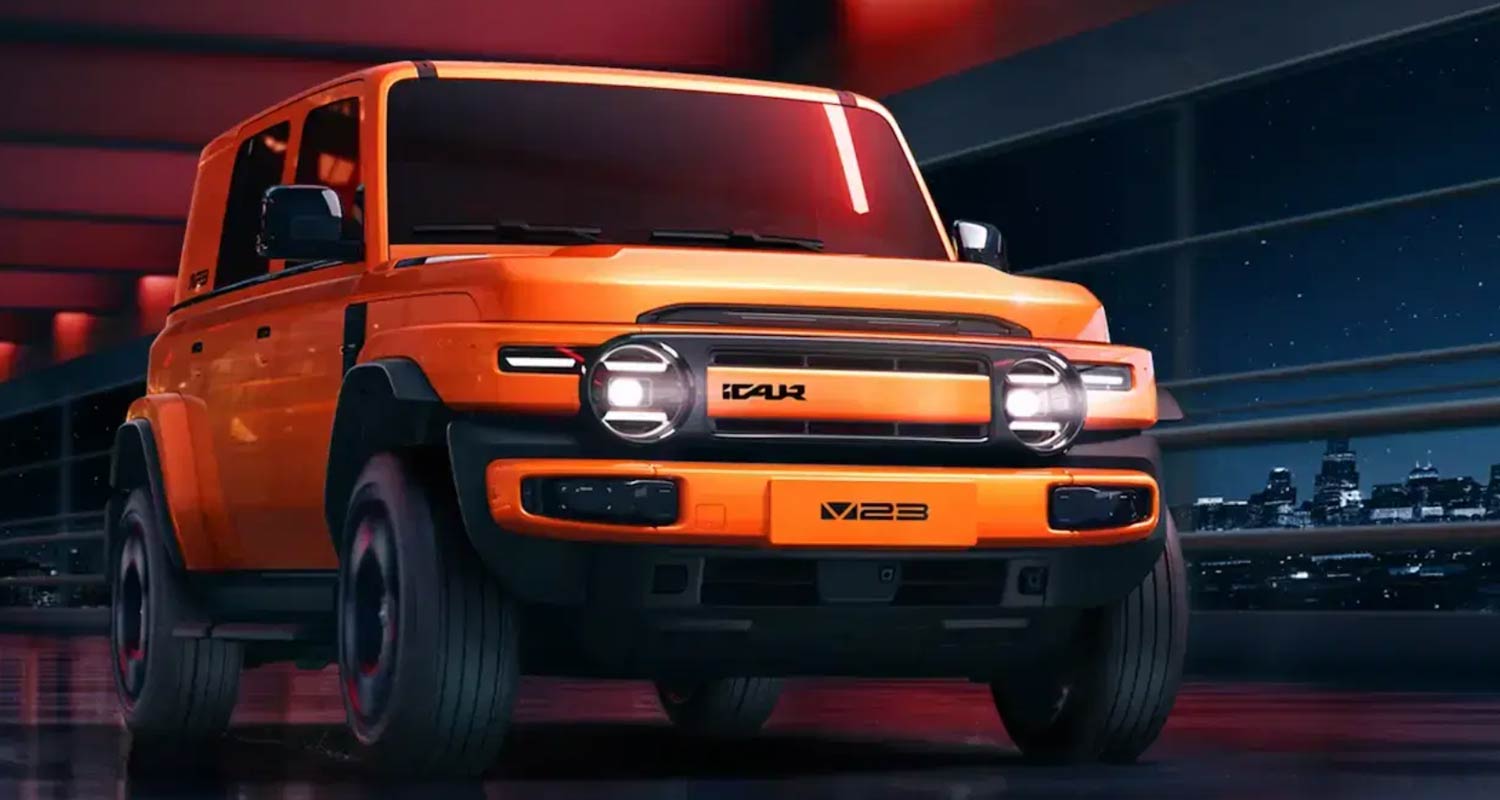
Cress pointed to the BYD Surf and newly launched iCaur models, each with “their own distinctive design identities”. Both featured at this month’s Festival of Motoring, where, as TechCentral reported, the Surf was among only four battery-electrics under R400 000 – the bracket that takes about 61% of local new-car sales. – © 2026 NewsCentral Media
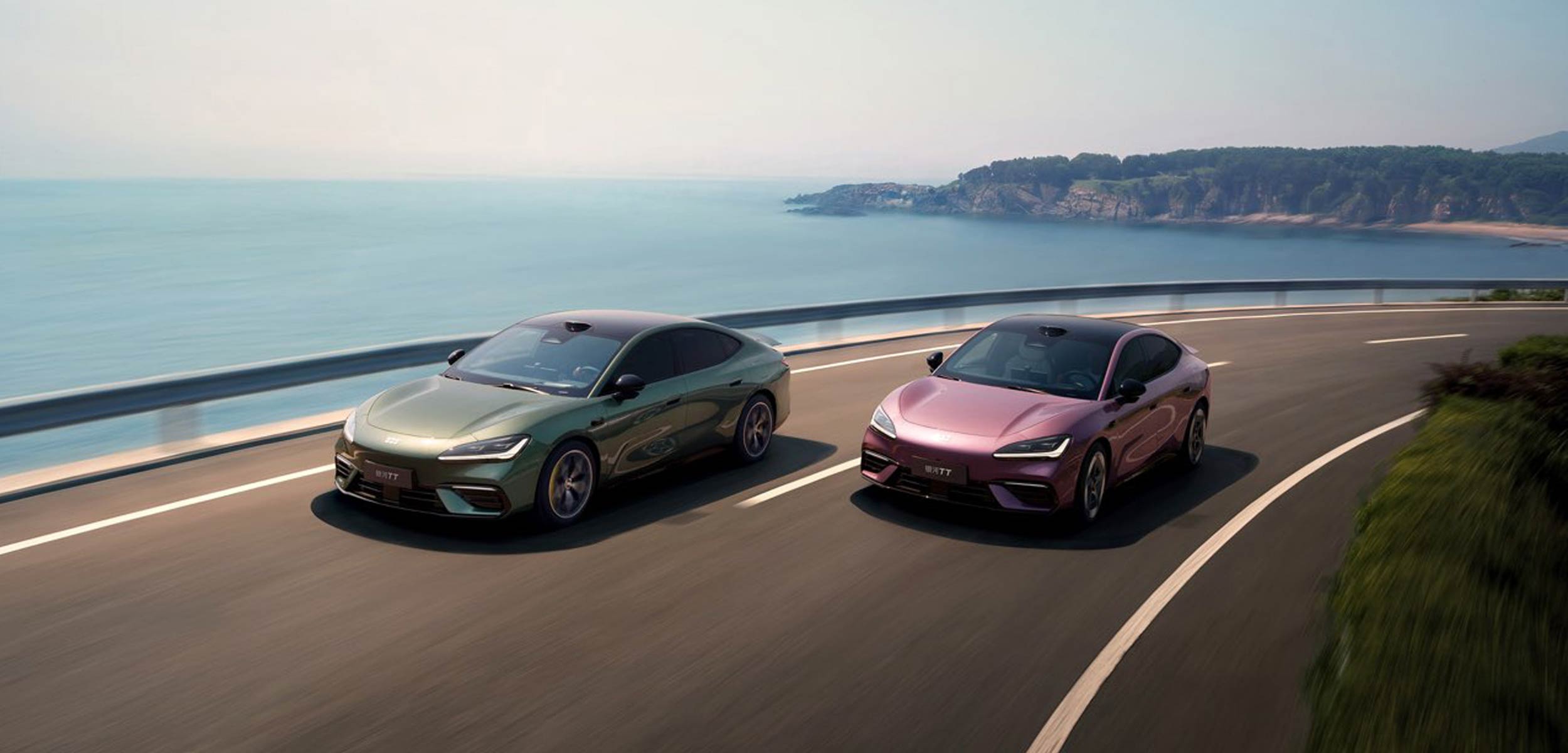
- Main image: The Geely Galaxy TT, which was launched in China on 10 September at the equivalent of about R316 000. It is not yet confirmed for South Africa