Close Menu
TechCentralTechCentral

    Subscribe to the newsletter

    Get the best South African technology news and analysis delivered to your e-mail inbox every morning.

    Facebook X (Twitter) YouTube LinkedIn
    WhatsApp Facebook X (Twitter) LinkedIn YouTube
    TechCentralTechCentral
    • News
      Digital authoritarianism grows as African states normalise internet blackouts

      Digital authoritarianism grows as African states normalise internet blackouts

      19 December 2025
      Starlink satellite anomaly creates debris in rare orbital mishap

      Starlink satellite anomaly creates debris in rare orbital mishap

      19 December 2025
      TechCentral's South African Newsmakers of 2025

      TechCentral’s South African Newsmakers of 2025

      18 December 2025
      Malatsi buries Post Office's long-dead monopoly

      Malatsi buries Post Office monopoly the market ignored

      18 December 2025
      China races to crack EUV as chip war with the West intensifies

      China races to crack EUV lithography as chip war with the West intensifies

      18 December 2025
    • World
      Trump space order puts the moon back at centre of US, China rivalry - US President Donald Trump

      Trump space order puts the moon back at centre of US, China rivalry

      19 December 2025
      Warner Bros slams the door on Paramount

      Warner Bros slams the door on Paramount

      17 December 2025
      X moves to block bid to revive Twitter brand

      X moves to block bid to revive Twitter brand

      17 December 2025
      Oracle’s AI ambitions face scrutiny on earnings miss

      Oracle’s AI ambitions face scrutiny on earnings miss

      11 December 2025
      China will get Nvidia H200 chips - but not without paying Washington first

      China will get Nvidia H200 chips – but not without paying Washington first

      9 December 2025
    • In-depth
      Black Friday goes digital in South Africa as online spending surges to record high

      Black Friday goes digital in South Africa as online spending surges to record high

      4 December 2025
      Canal+ plays hardball - and DStv viewers feel the pain

      Canal+ plays hardball – and DStv viewers feel the pain

      3 December 2025
      Jensen Huang Nvidia

      So, will China really win the AI race?

      14 November 2025
      Valve's Linux console takes aim at Microsoft's gaming empire

      Valve’s Linux console takes aim at Microsoft’s gaming empire

      13 November 2025
      iOCO's extraordinary comeback plan - Rhys Summerton

      iOCO’s extraordinary comeback plan

      28 October 2025
    • TCS
      TCS+ | Africa's digital transformation - unlocking AI through cloud and culture - Cliff de Wit Accelera Digital Group

      TCS+ | Cloud without culture won’t deliver AI: Accelera’s Cliff de Wit

      12 December 2025
      TCS+ | How Cloud on Demand helps partners thrive in the AWS ecosystem - Odwa Ndyaluvane and Xenia Rhode

      TCS+ | How Cloud On Demand helps partners thrive in the AWS ecosystem

      4 December 2025
      TCS | MTN Group CEO Ralph Mupita on competition, AI and the future of mobile

      TCS | Ralph Mupita on competition, AI and the future of mobile

      28 November 2025
      TCS | Dominic Cull on fixing South Africa's ICT policy bottlenecks

      TCS | Dominic Cull on fixing South Africa’s ICT policy bottlenecks

      21 November 2025
      TCS | BMW CEO Peter van Binsbergen on the future of South Africa's automotive industry

      TCS | BMW CEO Peter van Binsbergen on the future of South Africa’s automotive industry

      6 November 2025
    • Opinion
      Netflix, Warner Bros deal raises fresh headaches for MultiChoice - Duncan McLeod

      Netflix, Warner Bros deal raises fresh headaches for MultiChoice

      5 December 2025
      BIN scans, DDoS and the next cybercrime wave hitting South Africa's banks - Entersekt Gerhard Oosthuizen

      BIN scans, DDoS and the next cybercrime wave hitting South Africa’s banks

      3 December 2025
      Your data, your hardware: the DIY AI revolution is coming - Duncan McLeod

      Your data, your hardware: the DIY AI revolution is coming

      20 November 2025
      Zero Carbon Charge founder Joubert Roux

      The energy revolution South Africa can’t afford to miss

      20 November 2025
      It's time for a new approach to government IT spend in South Africa - Richard Firth

      It’s time for a new approach to government IT spend in South Africa

      19 November 2025
    • Company Hubs
      • Africa Data Centres
      • AfriGIS
      • Altron Digital Business
      • Altron Document Solutions
      • Altron Group
      • Arctic Wolf
      • AvertITD
      • Braintree
      • CallMiner
      • CambriLearn
      • CYBER1 Solutions
      • Digicloud Africa
      • Digimune
      • Domains.co.za
      • ESET
      • Euphoria Telecom
      • Incredible Business
      • iONLINE
      • IQbusiness
      • Iris Network Systems
      • LSD Open
      • NEC XON
      • Netstar
      • Network Platforms
      • Next DLP
      • Ovations
      • Paracon
      • Paratus
      • Q-KON
      • SevenC
      • SkyWire
      • Solid8 Technologies
      • Telit Cinterion
      • Tenable
      • Vertiv
      • Videri Digital
      • Vodacom Business
      • Wipro
      • Workday
      • XLink
    • Sections
      • AI and machine learning
      • Banking
      • Broadcasting and Media
      • Cloud services
      • Contact centres and CX
      • Cryptocurrencies
      • Education and skills
      • Electronics and hardware
      • Energy and sustainability
      • Enterprise software
      • Financial services
      • Information security
      • Internet and connectivity
      • Internet of Things
      • Investment
      • IT services
      • Lifestyle
      • Motoring
      • Public sector
      • Retail and e-commerce
      • Satellite communications
      • Science
      • SMEs and start-ups
      • Social media
      • Talent and leadership
      • Telecoms
    • Events
    • Advertise
    TechCentralTechCentral
    Home » Editor's pick » Dawn of the planet of machines

    Dawn of the planet of machines

    By Sarah Wild17 November 2014
    Twitter LinkedIn Facebook WhatsApp Email Telegram Copy Link
    News Alerts
    WhatsApp

    robots-640

    The day is coming, we are told, when the world as we know it ends. Somewhere in a laboratory, possibly Silicon Valley in the US or more likely a rogue research group in China or North Korea, an engineer or a programmer will create a machine that is clever enough to make machines that are smarter than itself.

    The technological singularity will be upon us, and there is no turning back. With each successive generation, these hyper-intelligent machines will become smarter, ­outstripping their increasingly redundant creators.

    But how likely is this?

    Recent months have seen a barrage of comments, from the likes of Tesla and SpaceX founder Elon Musk and Nobel-prize-winning physicist Stephen Hawking, warning against the dangers of artificial intelligence.

    “This is quite possibly the most important and most daunting challenge humanity has ever faced,” writes Nick Bostrom, Oxford University philosopher and author of Superintelligence. “If some day we build machine brains that surpass human brains in general intelligence, then this new superintelligence could become very powerful. And, as the fate of the gorillas now depends more on us humans than on the gorillas themselves, so the fate of our species would depend on the actions of the machine superintelligence.”

    The warnings of people ­working in the field are more commonplace, but equally concerning, albeit without the possibility of an action-packed blockbuster to depict mankind’s imminent demise. The more realistic question is what will happen when the “haves” — whether they are people or countries — develop the AI technologies that will make the “have-nots” entirely disposable.

    AI is a broad and sprawling field: from statistical modelling and heavy-duty data crunching through to IBM’s Watson, a computer system that can answer questions in natural language.

    “Thinking like humans is just one part of AI,” says Katherine Malan, a computer scientist at the University of Pretoria. “Most of us aren’t trying to do that. We’re ­trying to get computers to solve difficult problems that humans can’t solve, or that are simple for humans but we require machines to do it.”
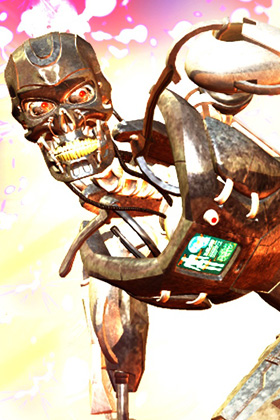
    robot-280-2Trying to make machines think and learn like humans is called cognitive computing.

    In 1955, American computer ­scientist John McCarthy defined artificial intelligence as “the science and engineering of making intelligent machines”, but there are questions about this definition and they centre on the word “intelligence”.

    Humans are very good at making decisions, even though the data may be ambiguous; we are much better than machines. For example, a human baby can recognise a face or an object, remember it and know that it is distinct from the objects around it. Meanwhile, millions of dollars are being spent to make computers do something that a child learns before it can walk.

    On the other hand, a machine can do multiple complex mathematical computations simultaneously, in under a second, something which is far beyond the reach of any human. So what “intelligent” is for a machine and what “intelligent” is for a human are two separate things.

    But there is also a difference between a machine that can have more information than a human, and a machine that can learn. Deep Blue, IBM’s chess-playing supercomputer capable of processing more than 200m chess moves a second, beat former world chess champion Gary Kasparov twice (although on the second occasion in 1997, Kasparov claimed that IBM had cheated and demanded a rematch). Deep Blue, like many other AI systems, uses a database of human knowledge, and then algorithms to optimise its moves.

    Blondie24, on the other hand, is a checkers-playing computer developed by American David Fogel. This programme taught itself how to win at checkers – by playing against itself and seeing what worked and what didn’t, rather than relying on human expertise.

    Is there a future in which this checkers-playing machine morphs into the evil overlord of science fiction?

    “Machines are already able to process vast amounts of information very quickly,” says Tommie Meyer, director of the Centre for Artificial Intelligence Research, jointly funded by the University of KwaZulu-Natal and the Council for Industrial and Scientific Research’s Meraka Institute.

    “But [this processing is] at a level that is relatively superficial. Adding the ability to process all this information in a truly intelligent manner will result in machines that will be able to assist humans in making complex decisions.”

    Besides, overlord status requires sentient intent. University of Cape Town philosopher Jacques Rosseau says that malice against other creatures requires “not only intelligence, but also sentience and, more specifically, the ability to perceive pains and pleasures. Even the most intelligent AI might not be a person in the sentient and having those feelings which … [makes] it vanishingly unlikely that it would perceive us as a threat, seeing as it would not perceive itself to be something under threat from us”.

    robot-280The recurring message from the experts the Mail & Guardian spoke to is that computers are tools, increasingly “intelligent” ones. Watson, for example, has been deployed in the healthcare sector, with more information in its cloud-based “brain” than any human could hope for.

    Solomon Assefa, IBM Research Africa’s director for research strategy, says that the company’s drive is not actually about AI, but “IA, intelligence augmentation”.

    “How do we enhance our cognition?” he asks. “It’s not about machines copying what we do and having brains more powerful and better than ours.”

    The idea is that machines and robots help humans become better at what they do, Assefa says. History is littered with examples of machines helping humans improve their capabilities, from communications to flight. “That’s what we want to come up with when making the next [AI] technology, [a computer that can] solve logistical and optimisation questions. Computers provide us with objectivity, so we can make good decisions.”

    Perhaps the greatest concern for humans — under the guise of an apocalyptic hostile machine takeover — is ego, and the refusal to believe that a computer can perform activities, that were previously the dominion of humans, better than us. In a world run on far-reaching AI systems, “such a world could be far superior than the one we currently live in”, says Rosseau. “We make many mistakes — in healthcare, certainly when driving — and it’s simply ego that typically stands in the way of handling these tasks over to more reliable agents.”

    For Johan van Niekerk, an associate professor at Nelson Mandela Metropolitan University’s school of information and communication technology: “AI provides us with some powerful tools, [but] I don’t believe that humanity is ready for them.”

    The true danger, according to Van Niekerk, “lies in how much the gap between the employed and the unemployed will widen”. He cites the example of Google’s driverless cars. In December last year, four states in the US had passed legislation to allow driverless cars on their roads.

    “Self-driving cars are a wonderful technology that can really improve road safety, but what will we do with all those people who make a living driving cars and trucks?”

    The world has seen this before: as technologies replace humans, people lose their jobs. Unrest foments as metal succeeds flesh and bone.

    “Until we rethink our socioeconomic models, the increasing use of AI is simply contributing to the unemployment problems societies face today,” Van Niekerk says. “We cannot continue to reduce the need for humans without addressing the problem of how those humans are supposed to make a living.

    “A fundamental assumption [in the robots annihilate humans scenario] is that humans are not going to evolve, develop new skills that develop new opportunities. There will probably be a completely new job market that is suitable for humans. What’s the new set of economies going to look like?

    “We have been good at evolving over time,” he says, citing the industrial and agricultural revolutions. “We cannot ignore our ability to adapt and change.”  — (c) 2014 Mail & Guardian

    • Visit the Mail & Guardian Online, the smart news source


    David Fogel Deep Blue Elon Musk IBM Jacques Rosseau Johan van Niekerk John McCarthy Katherine Malan Solomon Assefa SpaceX Tesla Tommie Meyer
    Subscribe to TechCentral Subscribe to TechCentral
    Share. Facebook Twitter LinkedIn WhatsApp Telegram Email Copy Link
    Previous ArticleTelkom to face big challenge in fixed lines
    Next Article Telkom DSL penetration breaches 25%

    Related Posts

    Starlink satellite anomaly creates debris in rare orbital mishap

    Starlink satellite anomaly creates debris in rare orbital mishap

    19 December 2025
    Trump space order puts the moon back at centre of US, China rivalry - US President Donald Trump

    Trump space order puts the moon back at centre of US, China rivalry

    19 December 2025
    TechCentral's International Newsmakers of 2025

    TechCentral’s International Newsmakers of 2025

    17 December 2025
    Company News
    Why TechCentral is the most powerful platform for reaching IT decision makers

    Why TechCentral is the most powerful platform for reaching IT decision makers

    17 December 2025
    Business trends to watch in 2026 - Domains.co.za

    Business trends to watch in 2026

    17 December 2025
    MTN Zambia launches world's first 4G cloud smartphone solution - Huawei

    MTN Zambia launches world’s first 4G cloud smartphone solution

    17 December 2025
    Opinion
    Netflix, Warner Bros deal raises fresh headaches for MultiChoice - Duncan McLeod

    Netflix, Warner Bros deal raises fresh headaches for MultiChoice

    5 December 2025
    BIN scans, DDoS and the next cybercrime wave hitting South Africa's banks - Entersekt Gerhard Oosthuizen

    BIN scans, DDoS and the next cybercrime wave hitting South Africa’s banks

    3 December 2025
    Your data, your hardware: the DIY AI revolution is coming - Duncan McLeod

    Your data, your hardware: the DIY AI revolution is coming

    20 November 2025

    Subscribe to Updates

    Get the best South African technology news and analysis delivered to your e-mail inbox every morning.

    Latest Posts
    Digital authoritarianism grows as African states normalise internet blackouts

    Digital authoritarianism grows as African states normalise internet blackouts

    19 December 2025
    Starlink satellite anomaly creates debris in rare orbital mishap

    Starlink satellite anomaly creates debris in rare orbital mishap

    19 December 2025
    Trump space order puts the moon back at centre of US, China rivalry - US President Donald Trump

    Trump space order puts the moon back at centre of US, China rivalry

    19 December 2025
    TechCentral's South African Newsmakers of 2025

    TechCentral’s South African Newsmakers of 2025

    18 December 2025
    © 2009 - 2025 NewsCentral Media
    • Cookie policy (ZA)
    • TechCentral – privacy and Popia

    Type above and press Enter to search. Press Esc to cancel.

    Manage consent

    TechCentral uses cookies to enhance its offerings. Consenting to these technologies allows us to serve you better. Not consenting or withdrawing consent may adversely affect certain features and functions of the website.

    Functional Always active
    The technical storage or access is strictly necessary for the legitimate purpose of enabling the use of a specific service explicitly requested by the subscriber or user, or for the sole purpose of carrying out the transmission of a communication over an electronic communications network.
    Preferences
    The technical storage or access is necessary for the legitimate purpose of storing preferences that are not requested by the subscriber or user.
    Statistics
    The technical storage or access that is used exclusively for statistical purposes. The technical storage or access that is used exclusively for anonymous statistical purposes. Without a subpoena, voluntary compliance on the part of your Internet Service Provider, or additional records from a third party, information stored or retrieved for this purpose alone cannot usually be used to identify you.
    Marketing
    The technical storage or access is required to create user profiles to send advertising, or to track the user on a website or across several websites for similar marketing purposes.
    • Manage options
    • Manage services
    • Manage {vendor_count} vendors
    • Read more about these purposes
    View preferences
    • {title}
    • {title}
    • {title}