
Close Menu
TechCentralTechCentral

    Subscribe to the newsletter

    Get the best South African technology news and analysis delivered to your e-mail inbox every morning.

    Facebook X (Twitter) YouTube LinkedIn
    WhatsApp Facebook X (Twitter) LinkedIn YouTube
    TechCentralTechCentral
    • News
      Netflix, Warner Bros talks raise fresh headaches for MultiChoice

      Netflix, Warner Bros talks raise fresh headaches for MultiChoice

      5 December 2025
      Big Microsoft 365 price increases coming next year

      Big Microsoft price increases coming next year

      5 December 2025
      Vodacom to take control of Safaricom in R36-billion deal - Shameel Joosub

      Vodacom to take control of Safaricom in R36-billion deal

      4 December 2025
      Black Friday goes digital in South Africa as online spending surges to record high

      Black Friday goes digital in South Africa as online spending surges to record high

      4 December 2025
      BYD takes direct aim at Toyota with launch of sub-R500 000 Sealion 5 PHEV

      BYD takes direct aim at Toyota with launch of sub-R500 000 Sealion 5 PHEV

      4 December 2025
    • World
      Amazon and Google launch multi-cloud service for faster connectivity

      Amazon and Google launch multi-cloud service for faster connectivity

      1 December 2025
      Google makes final court plea to stop US breakup

      Google makes final court plea to stop US breakup

      21 November 2025
      Bezos unveils monster rocket: New Glenn 9x4 set to dwarf Saturn V

      Bezos unveils monster rocket: New Glenn 9×4 set to dwarf Saturn V

      21 November 2025
      Tech shares turbocharged by Nvidia's stellar earnings

      Tech shares turbocharged by stellar Nvidia earnings

      20 November 2025
      Config file blamed for Cloudflare meltdown that disrupted the web

      Config file blamed for Cloudflare meltdown that disrupted the web

      19 November 2025
    • In-depth
      Jensen Huang Nvidia

      So, will China really win the AI race?

      14 November 2025
      Valve's Linux console takes aim at Microsoft's gaming empire

      Valve’s Linux console takes aim at Microsoft’s gaming empire

      13 November 2025
      iOCO's extraordinary comeback plan - Rhys Summerton

      iOCO’s extraordinary comeback plan

      28 October 2025
      Why smart glasses keep failing - no, it's not the tech - Mark Zuckerberg

      Why smart glasses keep failing – it’s not the tech

      19 October 2025
      BYD to blanket South Africa with megawatt-scale EV charging network - Stella Li

      BYD to blanket South Africa with megawatt-scale EV charging network

      16 October 2025
    • TCS
      TCS+ | How Cloud on Demand helps partners thrive in the AWS ecosystem - Odwa Ndyaluvane and Xenia Rhode

      TCS+ | How Cloud On Demand helps partners thrive in the AWS ecosystem

      4 December 2025
      TCS | MTN Group CEO Ralph Mupita on competition, AI and the future of mobile

      TCS | Ralph Mupita on competition, AI and the future of mobile

      28 November 2025
      TCS | Dominic Cull on fixing South Africa's ICT policy bottlenecks

      TCS | Dominic Cull on fixing South Africa’s ICT policy bottlenecks

      21 November 2025
      TCS | BMW CEO Peter van Binsbergen on the future of South Africa's automotive industry

      TCS | BMW CEO Peter van Binsbergen on the future of South Africa’s automotive industry

      6 November 2025
      TCS | Why Altron is building an AI factory - Bongani Andy Mabaso

      TCS | Why Altron is building an AI factory in Johannesburg

      28 October 2025
    • Opinion
      Your data, your hardware: the DIY AI revolution is coming - Duncan McLeod

      Your data, your hardware: the DIY AI revolution is coming

      20 November 2025
      Zero Carbon Charge founder Joubert Roux

      The energy revolution South Africa can’t afford to miss

      20 November 2025
      It's time for a new approach to government IT spend in South Africa - Richard Firth

      It’s time for a new approach to government IT spend in South Africa

      19 November 2025
      How South Africa's broken Rica system fuels murder and mayhem - Farhad Khan

      How South Africa’s broken Rica system fuels murder and mayhem

      10 November 2025
      South Africa's AI data centre boom risks overloading a fragile grid - Paul Colmer

      South Africa’s AI data centre boom risks overloading a fragile grid

      30 October 2025
    • Company Hubs
      • Africa Data Centres
      • AfriGIS
      • Altron Digital Business
      • Altron Document Solutions
      • Altron Group
      • Arctic Wolf
      • AvertITD
      • Braintree
      • CallMiner
      • CambriLearn
      • CYBER1 Solutions
      • Digicloud Africa
      • Digimune
      • Domains.co.za
      • ESET
      • Euphoria Telecom
      • Incredible Business
      • iONLINE
      • IQbusiness
      • Iris Network Systems
      • LSD Open
      • NEC XON
      • Netstar
      • Network Platforms
      • Next DLP
      • Ovations
      • Paracon
      • Paratus
      • Q-KON
      • SevenC
      • SkyWire
      • Solid8 Technologies
      • Telit Cinterion
      • Tenable
      • Vertiv
      • Videri Digital
      • Vodacom Business
      • Wipro
      • Workday
      • XLink
    • Sections
      • AI and machine learning
      • Banking
      • Broadcasting and Media
      • Cloud services
      • Contact centres and CX
      • Cryptocurrencies
      • Education and skills
      • Electronics and hardware
      • Energy and sustainability
      • Enterprise software
      • Financial services
      • Information security
      • Internet and connectivity
      • Internet of Things
      • Investment
      • IT services
      • Lifestyle
      • Motoring
      • Public sector
      • Retail and e-commerce
      • Satellite communications
      • Science
      • SMEs and start-ups
      • Social media
      • Talent and leadership
      • Telecoms
    • Events
    • Advertise
    TechCentralTechCentral
    Home » Company News » DDoS and RDoS attacks: What’s happening and how to fight back

    DDoS and RDoS attacks: What’s happening and how to fight back

    By Obscure Technologies29 October 2019
    Twitter LinkedIn Facebook WhatsApp Email Telegram Copy Link
    News Alerts
    WhatsApp

    In the last week, Radware’s Emergency Response Team (ERT) has been tracking an emerging global ransom denial-of-service (RDoS) campaign from a group identifying itself as the Russian cyber-espionage group Fancy Bear.

    This campaign is similar to the one Radware reported on two years ago. This new group has been distributing extortion e-mails to financial institutions globally for the past week. As of this moment, victims are still receiving ransom notes.

    Background

    In mid-October 2019, Radware’s ERT began mitigating sample attacks launched by an RDoS group claiming to be Fancy Bear. The extortionists currently behind this campaign attempted to intimidate their victims by using the name of APT28 (Fancy Bear), an infamous cyber-espionage group.

    APT28 is a Russian-backed cyber-espionage group that is also known as Pawn Storm, Sofacy Group, Tsar Team and Fancy Bear and is notorious for international hacking related to influence and disinformation operations. RDoS attacks are not the modus operandi of Fancy Bears to date.

    Starting in October 2019, almost 2 years after the first major campaign leveraged the name, Fancy Bear began appearing on extortion letters again in a new RDoS campaign. This time, Fancy Bear is requesting two bitcoins, US$17 400 at the time of delivery, with the ransom increasing by one bitcoin every day without payment.
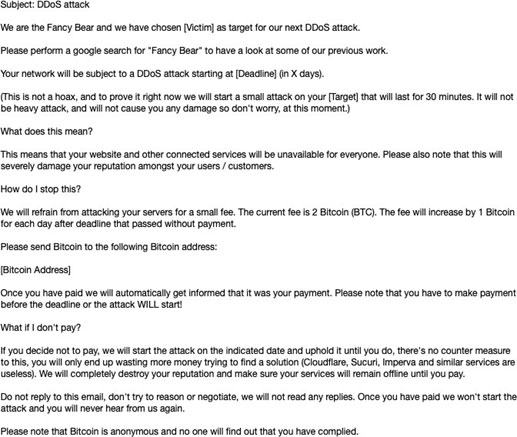
    Figure 1: 2019 Fancy Bear extortion letter (current)

    What is an RDoS campaign?

    RDoS campaigns are extortion-based distributed denial-of-service (DDoS) attacks motivated by monetary gain. Attacks typically start with the perpetrators sending a letter threatening to attack an organisation — rendering its business, operations or capability unavailable — unless a ransom is paid by the deadline. To validate the threat, attackers will often launch a sample attack on the victim’s network.

    This extortion method has grown in popularity every year since 2010 and typically comes in the form of a volumetric DDoS attack. The method was initially introduced by DD4BC and has been replicated by several groups over the years. RDoS group will typical accompany their ransom demand with a short “demo” attack.

    Prior RDoS groups were methodical and achieved high success rates. However, today many groups imitate prior tactics and techniques. They spread similar ransom threats using other group names as a form of intimidation with no intention (or limited capacity) of launching an attack.

    Targets

    Currently, the group claiming to be Fancy Bear is targeting a number of financial services organisations around the world. Attacks have been observed in South America, Africa, northern Europe and parts of Asia. In the note, the attackers list a specific IP address of the victim network and target it with a sample attack. The selection of the specific IP address shows that the attackers are researching targeted network for maximum impact. As of this moment, sample attacks range between 40Gbit/s and 60Gbit/s. No follow-up attacks have been observed.

    Attack methods

    Most of these DDoS-for-ransom groups that launch attacks are running their own botnet. However, some leverage publicly available stressers to conduct campaigns. When experiencing an RDoS attack from this type of group, expect 40Gbit/s to 60Gbit/s and multiple vectors of attacks simultaneously. A sample attack is likely to last anywhere between 15 minutes to a few hours. In the past, Radware’s ERT has mitigated follow-up attacks that have been persistent and lasted for days. Current attack vectors in this campaign include floods using the following protocols:

    • SSDP
    • NTP
    • DNS
    • CLDAP
    • WSD
    • ARMS
    • SYN
    • ICMP

    The group carrying out the recent wave of RDoS attacks under the name Fancy Bear are currently launching large-scale, multi-vector demo DDoS attacks when sending victims the ransom note. One of the more notable attack vectors from this campaign was the use of Web Service Dynamic Discovery (WSD) protocol, UDP/3702 for amplification. While this attack vector has been known since the beginning of the year, no one publicly spoke about it until the third quarter when details began to slowly emerge that bot-herders had employed a new attack vector into their amplification toolkit.

    Figure 2: WSD attack vector offered via DDoS-for-hire

    Another notable attack vector from this campaign is the newly discovered vector that allows attackers the ability to abuse Apple’s Remote Management Service (ARMS) to launch an amplified denial-of-service attack. By sending malicious datagrams to exposed ARMS services on UDP/3283, attackers could gain an amplification factor of 35.5 to 1.

    Dealing with a ransom letter

    Companies are advised not to pay an extortionist and seek professional assistance for mitigating RDoS attacks. Such a threat usually provokes the need for a scrubbing service, ACL/BGP reconfiguration, as well as the usual DDoS protection essentials to assure uptime and service-level agreements.

    Evaluation – is it real or fake?

    Although it is almost impossible to determine whether a ransom note comes from a competent, experienced hacker group or an amateur unit, some units emerged under the guise of notorious hacking crews. While these fake groups send e-mails nearly identical to real ransom letters, there are several indicators to distinguish between the two:

    1. The fake groups often request a different amount of money
    2. “Real” groups prove their competence; fake groups exclude the “demo” attack
    3. These groups do not have official accounts, websites or target lists
    4. When hackers launch real DDoS for ransom attacks, they normally target many companies under the same industry
    5. Look for suspicious indicators. Is this group known for DDoS attacks?
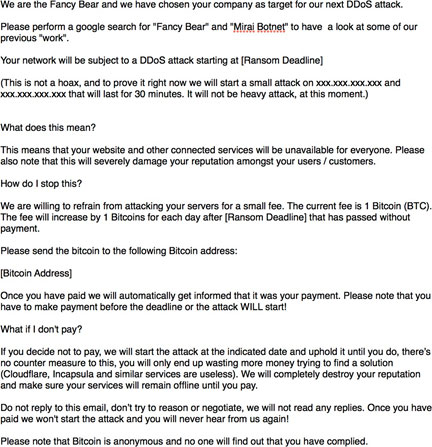
    Figure 3: 2017 Fancy Bear extortion letter

    Effective DDoS protection essentials

    • Real-time signature creation: Promptly protect from unknown threats and zero-day attacks. In this current campaign, Radware’s ERT has been able to mitigate all vectors of attacks from the Fancy Bear RDoS group.
    • Hybrid DDoS protection: On-premise and cloud DDoS protection for real-time DDoS attack prevention that also addresses high-volume attacks and protects from pipe saturation.
    • Behavioural-based detection: Quickly and accurately identify and block anomalies while allowing legitimate traffic through.
    • A cybersecurity emergency response plan: A dedicated emergency team of experts who have experience with Internet of things security and handling IoT outbreaks

    For further network and application protection measures, Radware urges companies to inspect and patch their network in order to defend against risks and threats. To know more about today’s attack vector landscape, understand the business impact of cyberattacks or learn more about emerging attack types and tools, visit DDoSWarriors.com.

    For more information on Radware’s security solutions, contact the Obscure team: e-mail [email protected] or visit the website at www.obscuretech.net.

    • This promoted content was paid for by the party concerned


    Fancy Bear Obscure Obscure Technologies Radware Radware ERT
    Subscribe to TechCentral Subscribe to TechCentral
    Share. Facebook Twitter LinkedIn WhatsApp Telegram Email Copy Link
    Previous ArticleiOCO: South Africa’s technology-agnostic ERP systems integrator
    Next Article Atlas Tower to sell South African tower assets for R2-billion

    Related Posts

    Alviva hikes dividend by 90% on blowout results

    28 September 2022

    Taking the ‘sh’ out of IT

    14 September 2022

    Chip crisis crimps Alviva Holdings’ revenue growth

    27 September 2021
    Company News
    Beat the summer heat with Samsung's WindFree air conditioners

    Beat the summer heat with Samsung’s WindFree air conditioners

    5 December 2025
    AI is not a technology problem - iqbusiness

    AI is not a technology problem – iqbusiness

    5 December 2025
    Telcos are sitting on a data gold mine - but few know what do with it - Phillip du Plessis

    Telcos are sitting on a data gold mine – but few know what do with it

    4 December 2025
    Opinion
    Your data, your hardware: the DIY AI revolution is coming - Duncan McLeod

    Your data, your hardware: the DIY AI revolution is coming

    20 November 2025
    Zero Carbon Charge founder Joubert Roux

    The energy revolution South Africa can’t afford to miss

    20 November 2025
    It's time for a new approach to government IT spend in South Africa - Richard Firth

    It’s time for a new approach to government IT spend in South Africa

    19 November 2025

    Subscribe to Updates

    Get the best South African technology news and analysis delivered to your e-mail inbox every morning.

    Latest Posts
    Beat the summer heat with Samsung's WindFree air conditioners

    Beat the summer heat with Samsung’s WindFree air conditioners

    5 December 2025
    Netflix, Warner Bros talks raise fresh headaches for MultiChoice

    Netflix, Warner Bros talks raise fresh headaches for MultiChoice

    5 December 2025
    Big Microsoft 365 price increases coming next year

    Big Microsoft price increases coming next year

    5 December 2025
    AI is not a technology problem - iqbusiness

    AI is not a technology problem – iqbusiness

    5 December 2025
    © 2009 - 2025 NewsCentral Media
    • Cookie policy (ZA)
    • TechCentral – privacy and Popia

    Type above and press Enter to search. Press Esc to cancel.

    Manage consent

    TechCentral uses cookies to enhance its offerings. Consenting to these technologies allows us to serve you better. Not consenting or withdrawing consent may adversely affect certain features and functions of the website.

    Functional Always active
    The technical storage or access is strictly necessary for the legitimate purpose of enabling the use of a specific service explicitly requested by the subscriber or user, or for the sole purpose of carrying out the transmission of a communication over an electronic communications network.
    Preferences
    The technical storage or access is necessary for the legitimate purpose of storing preferences that are not requested by the subscriber or user.
    Statistics
    The technical storage or access that is used exclusively for statistical purposes. The technical storage or access that is used exclusively for anonymous statistical purposes. Without a subpoena, voluntary compliance on the part of your Internet Service Provider, or additional records from a third party, information stored or retrieved for this purpose alone cannot usually be used to identify you.
    Marketing
    The technical storage or access is required to create user profiles to send advertising, or to track the user on a website or across several websites for similar marketing purposes.
    • Manage options
    • Manage services
    • Manage {vendor_count} vendors
    • Read more about these purposes
    View preferences
    • {title}
    • {title}
    • {title}