Close Menu
TechCentralTechCentral

    Subscribe to the newsletter

    Get the best South African technology news and analysis delivered to your e-mail inbox every morning.

    Facebook X (Twitter) YouTube LinkedIn
    WhatsApp Facebook X (Twitter) LinkedIn YouTube
    TechCentralTechCentral
    • News
      Vuyani Jarana: Mobile coverage masks a deeper broadband failure

      Vuyani Jarana: Mobile coverage masks a deeper broadband failure

      30 January 2026
      SABC Plus to flight Microsoft AI training videos

      SABC Plus to flight Microsoft AI training videos

      30 January 2026
      Fibre ducts

      Fibre industry consolidation in KZN

      30 January 2026
      Watts & Wheels S1E3: 'BYD's Corolla Cross challenger'

      Watts & Wheels S1E3: ‘BYD’s Corolla Cross challenger’

      30 January 2026
      What ordinary South Africans really think of AI

      What ordinary South Africans really think of AI

      30 January 2026
    • World
      Apple acquires audio AI start-up Q.ai

      Apple acquires audio AI start-up Q.ai

      30 January 2026
      SpaceX IPO may be largest in history

      SpaceX IPO may be largest in history

      28 January 2026
      Nvidia throws AI at the weather

      Nvidia throws AI at weather forecasting

      27 January 2026
      Debate erupts over value of in-flight Wi-Fi

      Debate erupts over value of in-flight Wi-Fi

      26 January 2026
      Intel takes another hit - Intel CEO Lip-Bu Tan. Laure Andrillon/Reuters

      Intel takes another hit

      23 January 2026
    • In-depth
      How liberalisation is rewiring South Africa's power sector

      How liberalisation is rewiring South Africa’s power sector

      21 January 2026
      The top-performing South African tech shares of 2025

      The top-performing South African tech shares of 2025

      12 January 2026
      Digital authoritarianism grows as African states normalise internet blackouts

      Digital authoritarianism grows as African states normalise internet blackouts

      19 December 2025
      TechCentral's South African Newsmakers of 2025

      TechCentral’s South African Newsmakers of 2025

      18 December 2025
      Black Friday goes digital in South Africa as online spending surges to record high

      Black Friday goes digital in South Africa as online spending surges to record high

      4 December 2025
    • TCS
      TCS+ | How Cloud On Demand is helping SA businesses succeed in the cloud - Xhenia Rhode, Dion Kalicharan

      TCS+ | Cloud On Demand and Consnet: inside a real-world AWS partner success story

      30 January 2026
      Watts & Wheels S1E3: 'BYD's Corolla Cross challenger'

      Watts & Wheels S1E2: ‘China attacks, BMW digs in, Toyota’s sublime supercar’

      23 January 2026

      TCS+ | Why cybersecurity is becoming a competitive advantage for SA businesses

      20 January 2026
      Watts & Wheels S1E3: 'BYD's Corolla Cross challenger'

      Watts & Wheels: S1E1 – ‘William, Prince of Wheels’

      8 January 2026
      TCS+ | Africa's digital transformation - unlocking AI through cloud and culture - Cliff de Wit Accelera Digital Group

      TCS+ | Cloud without culture won’t deliver AI: Accelera’s Cliff de Wit

      12 December 2025
    • Opinion
      South Africa's skills advantage is being overlooked at home - Richard Firth

      South Africa’s skills advantage is being overlooked at home

      29 January 2026
      Why Elon Musk's Starlink is a 'hard no' for me - Songezo Zibi

      Why Elon Musk’s Starlink is a ‘hard no’ for me

      26 January 2026
      South Africa's new fibre broadband battle - Duncan McLeod

      South Africa’s new fibre broadband battle

      20 January 2026
      AI moves from pilots to production in South African companies - Nazia Pillay SAP

      AI moves from pilots to production in South African companies

      20 January 2026
      South Africa's new fibre broadband battle - Duncan McLeod

      ANC’s attack on Solly Malatsi shows how BEE dogma trumps economic reality

      14 December 2025
    • Company Hubs
      • Africa Data Centres
      • AfriGIS
      • Altron Digital Business
      • Altron Document Solutions
      • Altron Group
      • Arctic Wolf
      • AvertITD
      • Braintree
      • CallMiner
      • CambriLearn
      • CYBER1 Solutions
      • Digicloud Africa
      • Digimune
      • Domains.co.za
      • ESET
      • Euphoria Telecom
      • Incredible Business
      • iONLINE
      • IQbusiness
      • Iris Network Systems
      • LSD Open
      • NEC XON
      • Netstar
      • Network Platforms
      • Next DLP
      • Ovations
      • Paracon
      • Paratus
      • Q-KON
      • SevenC
      • SkyWire
      • Solid8 Technologies
      • Telit Cinterion
      • Tenable
      • Vertiv
      • Videri Digital
      • Vodacom Business
      • Wipro
      • Workday
      • XLink
    • Sections
      • AI and machine learning
      • Banking
      • Broadcasting and Media
      • Cloud services
      • Contact centres and CX
      • Cryptocurrencies
      • Education and skills
      • Electronics and hardware
      • Energy and sustainability
      • Enterprise software
      • Financial services
      • Information security
      • Internet and connectivity
      • Internet of Things
      • Investment
      • IT services
      • Lifestyle
      • Motoring
      • Public sector
      • Retail and e-commerce
      • Satellite communications
      • Science
      • SMEs and start-ups
      • Social media
      • Talent and leadership
      • Telecoms
    • Events
    • Advertise
    TechCentralTechCentral
    Home » Opinion » Forget the developmental state, Mr President: unleash the private sector

    Forget the developmental state, Mr President: unleash the private sector

    By Duncan McLeod14 February 2022
    Twitter LinkedIn Facebook WhatsApp Email Telegram Copy Link
    News Alerts
    WhatsApp
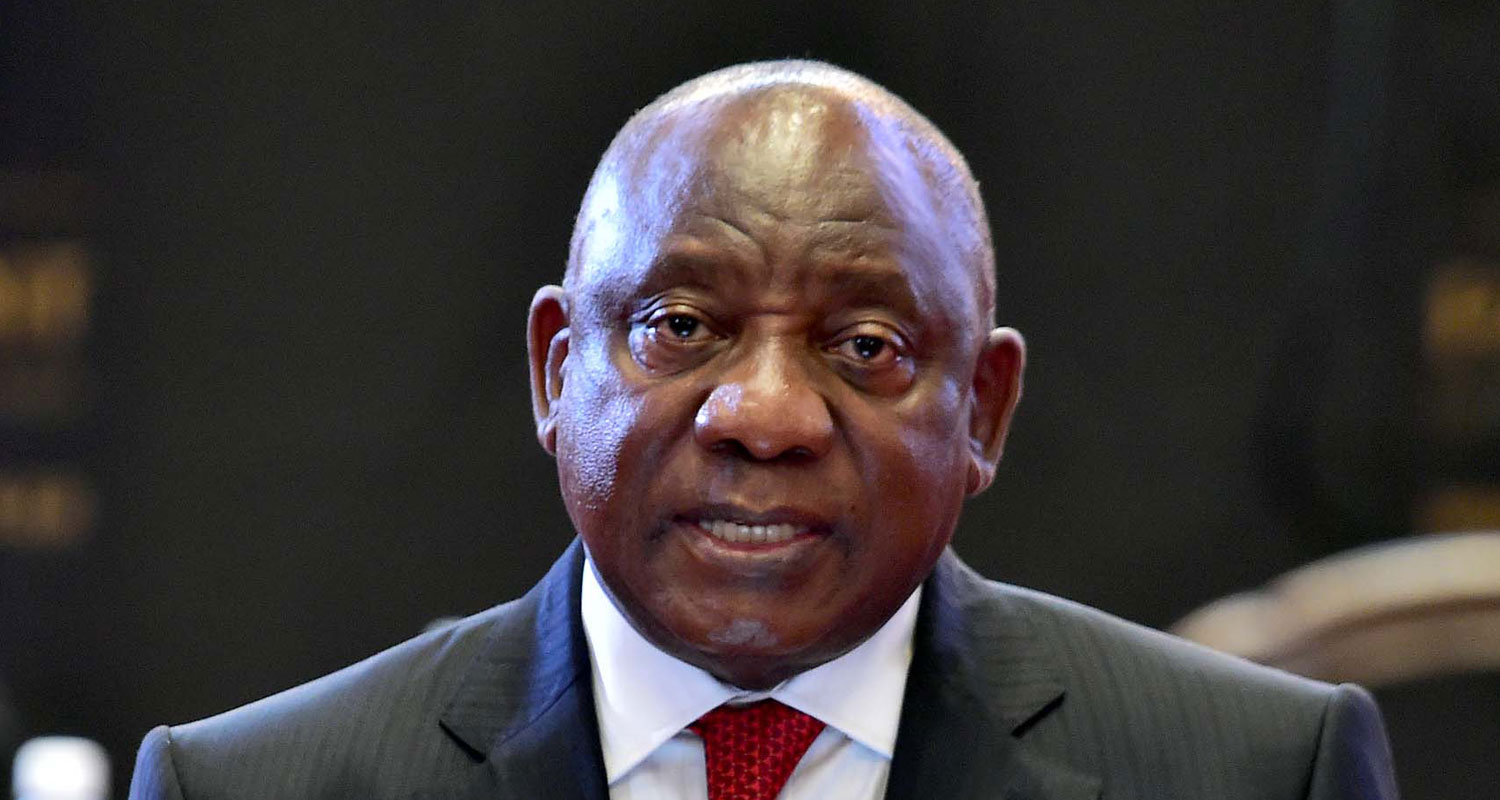
    President Cyril Ramaphosa addressing the nation in Cape Town last week. Image: GCIS

    In his weekly newsletter column on Monday, President Cyril Ramaphosa sets out to defend the ANC’s long-held policy of a “mixed economy” for South Africa, one where there is a big role for the state.

    In short, he advocates a large dollop of socialism and a fair degree of free-market capitalism. Sadly, the past 27 years have shown that this model does not achieve the desired outcome. Instead of enabling economic growth, the state (or socialist) part of the economy – state-owned enterprises – has basically failed. The experiment has not worked. And persisting with this idea of a mixed economy will not lead South Africa out of the morass it’s now in.

    Ramaphosa’s column is disappointing after he declared in his state of the nation address last week that “we all know that government doesn’t create jobs; businesses create jobs”. This, he added, “is the case, whether we like it or not, all over the world”. I cheered at my TV screen when he said that. At last, an admission by an ANC leader that the state does not create employment; it only creates the policies conducive to an environment in which job creation, by private enterprises, can happen.

    Read: Private sector alone won’t solve SA’s woes – Ramaphosa

    But it was too much to expect that this was a Damascene conversion by the president, that he had shrugged off the orthodoxy of his left-leaning party. The thrill, as brief as it was, was gone (with apologies to the Scottish band Texas).

    In his newsletter, Ramaphosa wrote that South Africa needs both a developmental state that “plays a vital role in economic and social transformation” and a “vibrant, expanding private sector that drives growth and employment”. I’d submit these are largely two mutually exclusive concepts, particularly in an emerging market like South Africa where it’s been shown public money is far too easily abused (at a grand scale) by kleptocrats.

    It is the “developmental state” that has led to the crippling rolling power cuts that have killed economic growth, destroyed jobs and made life much more difficult for ordinary South Africans. Politicians interfered in the running of Eskom, refusing to build new power stations when they were needed. The institution became bloated and it lost critical skills through cadre deployment. State capture and looting followed, enabled by corrupt ANC ministers. The same has happened across many SOEs: Transnet, Denel, the Passenger Rail Agency of South Africa, South African Airways, the SABC, the Post Office, PetroSA. The list is depressingly long.

    Fibre broadband … the telecommunications industry has demonstrated what is possible when government gets out of the way

    In 2020, then-finance minister Tito Mboweni told parliament that between 2000 and 2020, government had spent a staggering R187-billion bailing out SOEs. Is this Ramaphosa’s idea of the developmental state? Is it about pouring hundreds of billions of rand into dysfunctional SOEs instead of directing that money to projects that could really benefit the poor – the constituency the ANC claims to speak for? Where does this profligacy end?

    In many respects, South Africa is facing a similar crisis to the one that was tearing Britain apart in the late 1970s. Back then, the UK was also subjected to rolling electricity blackouts; the country’s towns and cities were a mess, refuse piled up in the streets as crippling strikes became commonplace; inflation soared to 25%. “Labour isn’t working,” the Conservative Party famously said in attack ads on the Labour Party before it won the 1979 election, with Margaret Thatcher as its leader.

    Thatcher is a divisive figure to this day. She took unpopular and difficult decisions aimed at fixing an economy wrecked by Labour. Britain, then very much a “mixed economy” (like South Africa is today) was broken. Thatcher transformed the UK into a modern, vibrant economy through an aggressive programme of privatising state-owned enterprises – starting with the sale of companies such as British Telecom, British Gas, British Aerospace and Jaguar. She faced down militant trade unions – and won. She saved Britain from itself. And the modern UK has much to thank her for.

    Toxic mix

    In many ways, the ANC of today is like the Labour Party of the 1970s: hanging on to discredited ideology, plugging away at the same state-led interventionism it’s been advocating for for the better part of three decades, always expecting a different outcome.

    There won’t be a different outcome.

    State-owned monopolies (like their private-sector counterparts, where they exist) will generally be inefficient, bloated and expensive. Add cadre deployment, corruption and state capture, and you have the sort of toxic mix that has so many of South Africa’s SOEs on their knees, begging for endless bailouts. Ramaphosa probably truly believes it’s possible to build a “capable state” in South Africa. His administration may even succeed at partially fixing companies like Eskom. But what of the next ANC administration?

    It won’t happen under the ANC (for ideological and other reasons), but what should happen in South Africa is we should study closely what Britain achieved under Thatcher in the 1980s. We should ditch the nonsense talk of “mixed economy” in favour of a robust programme of privatisation and economic liberalisation (with appropriate regulation).

    The telecommunications industry in South Africa shows what can be achieved – although the liberalisation of this sector happened despite the ANC and not because of it.

    When Altech – then part of JSE-listed technology group Altron – took former communications minister Ivy Matsepe-Casaburri to court to challenge her policy of “managed liberalisation” (code for protecting Telkom from competition), it succeeded in breaking Telkom’s monopoly over infrastructure. The impact is still being felt to this day:

    • It swiftly ended Telkom’s monopoly and its monopoly rent-seeking behaviour;
    • It led to the rapid deployment of fibre-to-the-home broadband infrastructure into homes and businesses across South Africa – now running to millions of homes and companies passed with next-generation technologies;
    • It resulted in plunging prices for broadband and other telecoms services; and
    • It led indirectly to the proliferation of data centres and cloud services, with billions of rand committed by private-sector players in recent years.

    The ANC tried to stop the liberalisation of the sector, but the courts weren’t having any of it. A huge debt of gratitude is owed by the ICT sector and by all South Africans to Altech – and its CEO at the time, Craig Venter – for having the guts to take on Matsepe-Casaburri and the Thabo Mbeki administration. Today, South Africa’s telecoms industry is vibrant and competitive as a direct result of Altech’s court victory.

    Other sectors have not been as fortunate. A vertically integrated state-owned electricity behemoth like Eskom is an anachronism in the 21st century. The energy crisis is forcing the ANC government, kicking and screaming, to partially liberalise the electricity sector – years (decades?) after it should have done so.

    But it’s not moving quickly enough – like in telecoms before the Altech judgment, the changes announced so far have all the hallmarks of “managed liberalisation”. To be fair, energy is a very different sector with vastly different dynamics, but perhaps there is another Craig Venter prepared to challenge the status quo and force the rapid change South Africa needs to get beyond this crisis.

    Of course, not every SOE or government function ought to be privatised – sometimes this is simply not practical

    Of course, not every SOE or government function ought to be privatised – sometimes this is simply not practical. I’m thinking here of the roads (those that aren’t tolled, anyway), water supply and the ports. But there are so many other SOEs that don’t need to be in state hands. A few examples in the ICT sector alone include Broadband Infraco, Sentech, the Post Office and Telkom (although partially privatised, government retains more than 40% of its equity for no obvious reason). Heck, even a big chunk of the SABC’s assets should be sold off to the highest bidders – the corporation hardly functions like a traditional public broadcaster, anyway.

    In his column, Ramaphosa says the way to revive South Africa’s fortunes is to create a “dynamic, fast-growing economy that is able to compete with the best in the world”. There, we do not disagree. But when he says that not only is a fast-growing private sector necessary to achieve this but also a “strong and capable developmental state”, we do not.

    Under the ANC, South Africa has not only not created a capable developmental state, it has created a state that in many respects is on the verge of collapse. As Vestact MD and acerbic commentator Paul Theron tweeted on Friday: “Ramaphosa wants to reboot the ‘capable state’. That’s like wanting to reboot the main reactor at Chernobyl.”  – © 2022 NewsCentral Media



    Cyril Ramaphosa Denel Duncan McLeod Eskom Ivy Matsepe-Casaburri Margaret Thatcher Paul Theron SABC Sentech Telkom Transnet Vestact
    WhatsApp YouTube Follow on Google News Add as preferred source on Google
    Share. Facebook Twitter LinkedIn WhatsApp Telegram Email Copy Link
    Previous ArticleFibre breaks knock out government websites
    Next Article EOH among firms Cape Town warns over contracts

    Related Posts

    Watts & Wheels S1E3: 'BYD's Corolla Cross challenger'

    Watts & Wheels S1E3: ‘BYD’s Corolla Cross challenger’

    30 January 2026
    BMW South Africa warns EV policy paralysis is stalling investment - Peter van Binsbergen

    BMW South Africa warns EV policy paralysis is stalling investment

    29 January 2026
    Outa warns homeowners against rushing to register rooftop solar

    Outa warns homeowners against rushing to register rooftop solar

    27 January 2026
    Company News
    Huawei turns 25 in South Africa, celebrates with major device discounts

    Huawei turns 25 in South Africa, celebrates with major device discounts

    30 January 2026
    Phishing has not disappeared, but it has grown up - KnowBe4

    Phishing has not disappeared, but it has grown up

    30 January 2026
    Smartphone affordability: South Africa's new economic divide - PayJoy

    Smartphone affordability: South Africa’s new economic divide

    29 January 2026
    Opinion
    South Africa's skills advantage is being overlooked at home - Richard Firth

    South Africa’s skills advantage is being overlooked at home

    29 January 2026
    Why Elon Musk's Starlink is a 'hard no' for me - Songezo Zibi

    Why Elon Musk’s Starlink is a ‘hard no’ for me

    26 January 2026
    South Africa's new fibre broadband battle - Duncan McLeod

    South Africa’s new fibre broadband battle

    20 January 2026

    Subscribe to Updates

    Get the best South African technology news and analysis delivered to your e-mail inbox every morning.

    Latest Posts
    Vuyani Jarana: Mobile coverage masks a deeper broadband failure

    Vuyani Jarana: Mobile coverage masks a deeper broadband failure

    30 January 2026
    TCS+ | How Cloud On Demand is helping SA businesses succeed in the cloud - Xhenia Rhode, Dion Kalicharan

    TCS+ | Cloud On Demand and Consnet: inside a real-world AWS partner success story

    30 January 2026
    Huawei turns 25 in South Africa, celebrates with major device discounts

    Huawei turns 25 in South Africa, celebrates with major device discounts

    30 January 2026
    SABC Plus to flight Microsoft AI training videos

    SABC Plus to flight Microsoft AI training videos

    30 January 2026
    © 2009 - 2026 NewsCentral Media
    • Cookie policy (ZA)
    • TechCentral – privacy and Popia

    Type above and press Enter to search. Press Esc to cancel.

    Manage consent

    TechCentral uses cookies to enhance its offerings. Consenting to these technologies allows us to serve you better. Not consenting or withdrawing consent may adversely affect certain features and functions of the website.

    Functional Always active
    The technical storage or access is strictly necessary for the legitimate purpose of enabling the use of a specific service explicitly requested by the subscriber or user, or for the sole purpose of carrying out the transmission of a communication over an electronic communications network.
    Preferences
    The technical storage or access is necessary for the legitimate purpose of storing preferences that are not requested by the subscriber or user.
    Statistics
    The technical storage or access that is used exclusively for statistical purposes. The technical storage or access that is used exclusively for anonymous statistical purposes. Without a subpoena, voluntary compliance on the part of your Internet Service Provider, or additional records from a third party, information stored or retrieved for this purpose alone cannot usually be used to identify you.
    Marketing
    The technical storage or access is required to create user profiles to send advertising, or to track the user on a website or across several websites for similar marketing purposes.
    • Manage options
    • Manage services
    • Manage {vendor_count} vendors
    • Read more about these purposes
    View preferences
    • {title}
    • {title}
    • {title}