
Close Menu
TechCentralTechCentral

    Subscribe to the newsletter

    Get the best South African technology news and analysis delivered to your e-mail inbox every morning.

    Facebook X (Twitter) YouTube LinkedIn
    WhatsApp Facebook X (Twitter) LinkedIn YouTube
    TechCentralTechCentral
    • News
      Big Microsoft 365 price increases coming next year

      Big Microsoft price increases coming next year

      5 December 2025
      Vodacom to take control of Safaricom in R36-billion deal - Shameel Joosub

      Vodacom to take control of Safaricom in R36-billion deal

      4 December 2025
      Black Friday goes digital in South Africa as online spending surges to record high

      Black Friday goes digital in South Africa as online spending surges to record high

      4 December 2025
      BYD takes direct aim at Toyota with launch of sub-R500 000 Sealion 5 PHEV

      BYD takes direct aim at Toyota with launch of sub-R500 000 Sealion 5 PHEV

      4 December 2025
      'Get it now': Takealot in new instant deliveries pilot

      ‘Get it now’: Takealot in new instant deliveries pilot

      4 December 2025
    • World
      Amazon and Google launch multi-cloud service for faster connectivity

      Amazon and Google launch multi-cloud service for faster connectivity

      1 December 2025
      Google makes final court plea to stop US breakup

      Google makes final court plea to stop US breakup

      21 November 2025
      Bezos unveils monster rocket: New Glenn 9x4 set to dwarf Saturn V

      Bezos unveils monster rocket: New Glenn 9×4 set to dwarf Saturn V

      21 November 2025
      Tech shares turbocharged by Nvidia's stellar earnings

      Tech shares turbocharged by stellar Nvidia earnings

      20 November 2025
      Config file blamed for Cloudflare meltdown that disrupted the web

      Config file blamed for Cloudflare meltdown that disrupted the web

      19 November 2025
    • In-depth
      Jensen Huang Nvidia

      So, will China really win the AI race?

      14 November 2025
      Valve's Linux console takes aim at Microsoft's gaming empire

      Valve’s Linux console takes aim at Microsoft’s gaming empire

      13 November 2025
      iOCO's extraordinary comeback plan - Rhys Summerton

      iOCO’s extraordinary comeback plan

      28 October 2025
      Why smart glasses keep failing - no, it's not the tech - Mark Zuckerberg

      Why smart glasses keep failing – it’s not the tech

      19 October 2025
      BYD to blanket South Africa with megawatt-scale EV charging network - Stella Li

      BYD to blanket South Africa with megawatt-scale EV charging network

      16 October 2025
    • TCS
      TCS+ | How Cloud on Demand helps partners thrive in the AWS ecosystem - Odwa Ndyaluvane and Xenia Rhode

      TCS+ | How Cloud On Demand helps partners thrive in the AWS ecosystem

      4 December 2025
      TCS | MTN Group CEO Ralph Mupita on competition, AI and the future of mobile

      TCS | Ralph Mupita on competition, AI and the future of mobile

      28 November 2025
      TCS | Dominic Cull on fixing South Africa's ICT policy bottlenecks

      TCS | Dominic Cull on fixing South Africa’s ICT policy bottlenecks

      21 November 2025
      TCS | BMW CEO Peter van Binsbergen on the future of South Africa's automotive industry

      TCS | BMW CEO Peter van Binsbergen on the future of South Africa’s automotive industry

      6 November 2025
      TCS | Why Altron is building an AI factory - Bongani Andy Mabaso

      TCS | Why Altron is building an AI factory in Johannesburg

      28 October 2025
    • Opinion
      Your data, your hardware: the DIY AI revolution is coming - Duncan McLeod

      Your data, your hardware: the DIY AI revolution is coming

      20 November 2025
      Zero Carbon Charge founder Joubert Roux

      The energy revolution South Africa can’t afford to miss

      20 November 2025
      It's time for a new approach to government IT spend in South Africa - Richard Firth

      It’s time for a new approach to government IT spend in South Africa

      19 November 2025
      How South Africa's broken Rica system fuels murder and mayhem - Farhad Khan

      How South Africa’s broken Rica system fuels murder and mayhem

      10 November 2025
      South Africa's AI data centre boom risks overloading a fragile grid - Paul Colmer

      South Africa’s AI data centre boom risks overloading a fragile grid

      30 October 2025
    • Company Hubs
      • Africa Data Centres
      • AfriGIS
      • Altron Digital Business
      • Altron Document Solutions
      • Altron Group
      • Arctic Wolf
      • AvertITD
      • Braintree
      • CallMiner
      • CambriLearn
      • CYBER1 Solutions
      • Digicloud Africa
      • Digimune
      • Domains.co.za
      • ESET
      • Euphoria Telecom
      • Incredible Business
      • iONLINE
      • IQbusiness
      • Iris Network Systems
      • LSD Open
      • NEC XON
      • Netstar
      • Network Platforms
      • Next DLP
      • Ovations
      • Paracon
      • Paratus
      • Q-KON
      • SevenC
      • SkyWire
      • Solid8 Technologies
      • Telit Cinterion
      • Tenable
      • Vertiv
      • Videri Digital
      • Vodacom Business
      • Wipro
      • Workday
      • XLink
    • Sections
      • AI and machine learning
      • Banking
      • Broadcasting and Media
      • Cloud services
      • Contact centres and CX
      • Cryptocurrencies
      • Education and skills
      • Electronics and hardware
      • Energy and sustainability
      • Enterprise software
      • Financial services
      • Information security
      • Internet and connectivity
      • Internet of Things
      • Investment
      • IT services
      • Lifestyle
      • Motoring
      • Public sector
      • Retail and e-commerce
      • Satellite communications
      • Science
      • SMEs and start-ups
      • Social media
      • Talent and leadership
      • Telecoms
    • Events
    • Advertise
    TechCentralTechCentral
    Home » In-depth » Inside SA’s ‘white spaces’ broadband trial

    Inside SA’s ‘white spaces’ broadband trial

    By Craig Wilson10 January 2013
    Twitter LinkedIn Facebook WhatsApp Email Telegram Copy Link
    News Alerts
    WhatsApp

    white-spaces-640

    A trial network which, if successfully concluded, could have a profound impact on the delivery of broadband services to South Africans will kick off in Cape Town in the next few weeks. The network will test the feasibility of using so-called television white-spaces spectrum to deliver wireless broadband cost-effectively to end users.

    The trial, which will consist of a base station located at the Tygerberg Hospital in Cape Town and involve 10 schools located within a 10km radius of the hospital, will go live in coming weeks. While the project could prove white-spaces spectrum as a feasible means of providing Internet connectivity, the testing process is hugely complex and not without its pitfalls.

    TV white spaces are the unused portions of radio frequency spectrum utilised in broadcasting. The unused portions act as buffers between stations to prevent interference. Database and clever “cognitive radio” techniques can be used to identify which portions of spectrum are available for providing wireless Internet access without interfering with TV broadcasts.

    The trial, which is supported by the Independent Communications Authority of South Africa (Icasa), is set to run for six months and is sponsored by Google. The US Internet giant is providing the massive computing power needed to calculate which portions of the radio frequency spectrum are unused.

    The trial is expected to provide schools with a download speed of 2,5Mbit/s. Those selected had to already have Internet access so that if they lost access to the white-spaces trials they would not be offline.

    Partners for the project include the Tertiary Education and Research Network of South Africa (better known as Tenet), the CSIR, the e-Schools Network, the Wireless Access Providers’ Association and equipment manufacturer Comsol Wireless Solutions.

    Icasa councillor William Stucke says the trial is due to go live in the next few weeks and is meant to serve a number of purposes. The first is to demonstrate that white spaces can provide Internet connectivity successfully. The second is to show that this can be done in a relatively interference-free manner. Thirdly, the trial will assess how to deal with interference, if it occurs, and what sort of regulatory approach should be taken to managing white-spaces spectrum.

    “There are a number of alternatives when it comes to licensing this kind of technology,” Stucke says. “These range from a standard heavy-duty, frequency coordinated licensing process on one extreme to a licence-exempt approach on the other, with a number of alternatives in between.”

    There are two technologies that can be used for white-spaces spectrum. The first involves the use of a geolocation database that records used spectrum, which the technology can then work around. The second is cognitive radio technology, which actively scans for available frequencies and is automatically adaptable. Neither deals with unregistered uses, such as wireless microphones. However, the partners in the project have agreed to update Icasa, Sentech, broadcasters and other parties on trial outcomes, including spectrum measurements and reported interference.

    “The problem is people have a rude habit of misusing the terminology to refer to looking at the database and doing a quick scan of the area as ‘cognitive radio’,” Stucke says. “Cognitive radio is more adaptive, and my understanding is that there is not, as yet, a commercially feasible cognitive radio solution available.”

    The trial will use the geolocation database method that, aside from requiring enormous data processing capabilities, presents other challenges.

    “One of the problems is the assumption there is accurate data,” Stucke explains. That is, the database has to be up to date and comprehensive. Companies like Sentech, the state-owned broadcasting signal distributor, have databases of which frequencies are in use and where but the latest versions of these aren’t always available. “Furthermore, just because a frequency is coordinated for use on a particular transmitter doesn’t mean it’s actually being used.”

    Stucke says there is a “significant state of flux” around radio frequency spectrum at the moment because of the ongoing digital terrestrial TV migration process. “Every time a new frequency is switched on there are new interference problems to deal with.”
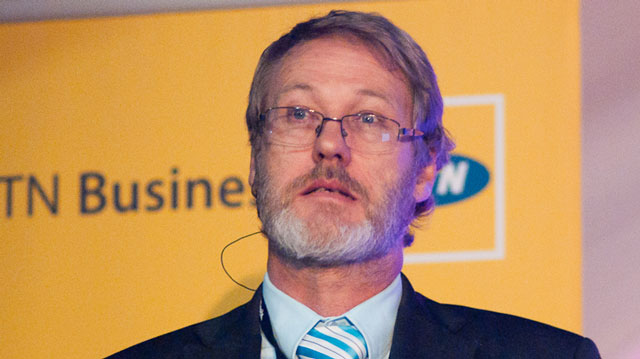
    Icasa councillor William Stucke
    Icasa councillor William Stucke

    For example, when digital broadcasting multiplex one (a multiplex is spectrum channel used for digital television) was switched on in Cape Town early last year using channel 50, DStv’s call centre received nearly 30 000 complaints from irate customers. This was because many DStv installers had used channel 50 for internal remodulation in order to distribute a signal from a dish to a number of offices or apartments in a single complex.

    Stucke says the installers were entirely within their rights to use channel 50 for internal use within a cable, but that the result was they experienced interference once digital multiplex one began using the same channel.

    “These are some of the little hiccups that one has to deal with along the way,” Stucke says, adding that this is the reason Icasa has insisted broadcasters be involved in the trial. “If they get complaints, they are able to know if this is the cause of the complaint and can deal with it accordingly.”

    Google’s involvement
    Rather than simply funding the process, Google is also operating the geolocation database and has carried out spectrum surveys at Tygerberg and some of the schools in the area. A spectrum survey has to be done and interference levels have to be tested before and after the trial in order to be able to assess its success and so that broadcasters can tell whether complaints received are related to the testing.

    Though the use of white-spaces spectrum is not yet common practice, existing radio technologies are used to harness it. Connectivity will be provided to schools using a technology such as Wi-Fi, WiMax or LTE. “The white-spaces concept revolves around finding available spectrum which can use a more conventional wireless technology,” Stucke says.

    It’s not yet clear which radio technology has been chosen. A Google spokesman says further information about the trial will be made available soon.

    Google is paying for the equipment, installation and drawing up of the frequency database. Icasa has stipulated that this database needs to be publicly accessible so that future interested parties don’t have to develop their own.

    The Wireless Access Providers’ Association, an industry body, is responsible for the hardware installation, and the e-School Network has helped coordinate with the schools that will participate in the trial.

    According to the requirements of the International Telecommunication Union, a geolocation database must include information on transmitters up to a thousand kilometres away that could lead to interference. Once a transmitter has been positioned and a suitable frequency from the database has been found — and checked — this information needs to be added to the database.

    The result is an enormous number-crunching exercise to model the transmissions from all of the transmitters that could cause interference, along with frequent updates concerning new transmitters. Topography and “clutter” — buildings and natural features that may impact transmissions — have to be taken into account.

    “Google is superbly well placed to do this,” says Stucke. “It has hundreds of thousands of computers it can pull together to do heavy-duty calculations.”

    The trial may also result in the best database of frequency usage in South Africa. “The last time the coordination for Sentech’s broadcast frequencies for the whole of South Africa was done was in 2000 because of the enormous amount of processing involved in this sort of modelling. Basically no one has the capability to do it, including Sentech and Icasa.”

    Though a fixed launch date for the trial network is yet to be confirmed officially, TechCentral understands that all of the necessary equipment has been installed. There is, however, no data moving over the network just yet.

    If the project succeeds, it could provide the regulator and government with another tool to provide Internet connectivity to outlying and underserviced areas. Moreover, it could mean the more efficient use of radio frequency spectrum, a finite and valuable resource the careful management of which is crucial if the country is to improve access to broadband.  — (c) 2013 NewsCentral Media

    • Top image: Rkelland/Flickr


    Comsol Comsol Wireless Solutions CSIR e-Schools Network Google Icasa Tenet Wapa William Stucke
    Subscribe to TechCentral Subscribe to TechCentral
    Share. Facebook Twitter LinkedIn WhatsApp Telegram Email Copy Link
    Previous ArticleCorporate shot in the arm for Windows Phone
    Next Article ZATS: Ep 240 – ‘CES FOMO’

    Related Posts

    What South Africans searched for most in 2025

    What South Africans searched for most in 2025, according to Google

    4 December 2025
    Amazon and Google launch multi-cloud service for faster connectivity

    Amazon and Google launch multi-cloud service for faster connectivity

    1 December 2025
    South Africa set for telecoms licensing reset - Icasa

    South Africa set for telecoms licensing reset

    28 November 2025
    Company News
    AI is not a technology problem - iqbusiness

    AI is not a technology problem – iqbusiness

    5 December 2025
    Telcos are sitting on a data gold mine - but few know what do with it - Phillip du Plessis

    Telcos are sitting on a data gold mine – but few know what do with it

    4 December 2025
    Unlock smarter computing with your surface Copilot+ PC

    Unlock smarter computing with your Surface Copilot+ PC

    4 December 2025
    Opinion
    Your data, your hardware: the DIY AI revolution is coming - Duncan McLeod

    Your data, your hardware: the DIY AI revolution is coming

    20 November 2025
    Zero Carbon Charge founder Joubert Roux

    The energy revolution South Africa can’t afford to miss

    20 November 2025
    It's time for a new approach to government IT spend in South Africa - Richard Firth

    It’s time for a new approach to government IT spend in South Africa

    19 November 2025

    Subscribe to Updates

    Get the best South African technology news and analysis delivered to your e-mail inbox every morning.

    Latest Posts
    Big Microsoft 365 price increases coming next year

    Big Microsoft price increases coming next year

    5 December 2025
    AI is not a technology problem - iqbusiness

    AI is not a technology problem – iqbusiness

    5 December 2025
    Vodacom to take control of Safaricom in R36-billion deal - Shameel Joosub

    Vodacom to take control of Safaricom in R36-billion deal

    4 December 2025
    Black Friday goes digital in South Africa as online spending surges to record high

    Black Friday goes digital in South Africa as online spending surges to record high

    4 December 2025
    © 2009 - 2025 NewsCentral Media
    • Cookie policy (ZA)
    • TechCentral – privacy and Popia

    Type above and press Enter to search. Press Esc to cancel.

    Manage consent

    TechCentral uses cookies to enhance its offerings. Consenting to these technologies allows us to serve you better. Not consenting or withdrawing consent may adversely affect certain features and functions of the website.

    Functional Always active
    The technical storage or access is strictly necessary for the legitimate purpose of enabling the use of a specific service explicitly requested by the subscriber or user, or for the sole purpose of carrying out the transmission of a communication over an electronic communications network.
    Preferences
    The technical storage or access is necessary for the legitimate purpose of storing preferences that are not requested by the subscriber or user.
    Statistics
    The technical storage or access that is used exclusively for statistical purposes. The technical storage or access that is used exclusively for anonymous statistical purposes. Without a subpoena, voluntary compliance on the part of your Internet Service Provider, or additional records from a third party, information stored or retrieved for this purpose alone cannot usually be used to identify you.
    Marketing
    The technical storage or access is required to create user profiles to send advertising, or to track the user on a website or across several websites for similar marketing purposes.
    • Manage options
    • Manage services
    • Manage {vendor_count} vendors
    • Read more about these purposes
    View preferences
    • {title}
    • {title}
    • {title}