Close Menu
TechCentralTechCentral

    Subscribe to the newsletter

    Get the best South African technology news and analysis delivered to your e-mail inbox every morning.

    Facebook X (Twitter) YouTube LinkedIn
    WhatsApp Facebook X (Twitter) LinkedIn YouTube
    TechCentralTechCentral
    • News
      Brics nations weigh joining up their fast payment rails

      Brics nations weigh joining up their fast payment rails

      11 August 2026
      The economist who thinks AI could double South Africa's growth rate

      The economist who thinks AI could double South Africa’s growth rate

      11 August 2026
      The quiet rewiring of the world's financial plumbing

      The quiet rewiring of the world’s financial plumbing

      11 August 2026
      New rand stablecoin market opens into a potential regulatory wall

      New rand stablecoin market opens into a potential regulatory wall

      10 August 2026
      Simon Dingle

      ‘South Africa has to abolish exchange control’

      10 August 2026
    • World
      Russia building its own Starlink - and faster than expected - Vadym Skibitskyi

      Russia building its own Starlink – and faster than expected

      11 August 2026
      Meta AI will now tell parents if their teen is in crisis

      Meta AI will now tell parents if their teen is in crisis

      17 July 2026
      IBM shares crash 25% as AI upends software spending - Arvind Krishna

      IBM shares crash 25% as AI upends software spending

      15 July 2026
      Jony Ive's first OpenAI device: an AI smart speaker - Jony Ive and Sam Altman

      Jony Ive’s first OpenAI device: an AI smart speaker

      15 July 2026
      Stripe, Advent in talks to buy PayPal for $53-billion

      Stripe, Advent in talks to buy PayPal for $53-billion

      15 July 2026
    • In-depth
      The plan to stop AI from breaking the world - Google DeepMind CEO Demis Hassabis. Image: John Sears

      The plan to stop AI from breaking the world

      16 July 2026
      The internet has a Strait of Hormuz problem

      The internet has a Strait of Hormuz problem

      15 July 2026
      AI boom sparks rally, frenzy and fear

      AI boom sparks rally, frenzy and fear

      11 June 2026
      Every plug-in hybrid on sale in South Africa, ranked by price - Lamborghini Temerario

      Every plug-in hybrid on sale in South Africa, ranked by price

      7 June 2026
      What Wi-Fi 8 will mean for wireless networks

      What Wi-Fi 8 will mean for wireless networks

      1 June 2026
    • TCS
      TCS+ | Specops' Darren James on continuous trust in an AI world

      TCS+ | Specops’ Darren James on continuous trust in an AI world

      7 August 2026
      TCS+ | How AI is turning hardware into a subscription service - Shane van der Merwe Merchant West

      TCS+ | How AI is turning hardware into a subscription service

      6 August 2026
      TCS+ | Why South African workers must become supervisors of digital labour - Accelera Digital Group Cliff de Wit

      TCS+ | Why South African workers must become supervisors of digital labour

      31 July 2026
      TCS | Rapid deployment rules can't work without municipalities: ACT - Nomvuyiso Batyi

      TCS | Icasa’s rules skip the real bottleneck: ACT

      30 July 2026
      TCS+ | iStore Business on why Apple makes sense for SMEs - Sudesh Pillay and Tamia Nontsikelelo

      TCS+ | iStore Business on why Apple makes sense for SMEs

      30 July 2026
    • Opinion
      The author, Jannie van Zyl

      Selling vapour is corporate suicide in slow motion

      16 July 2026
      Brazil's online gambling crackdown is a lesson for South Africa

      How Amazon outmanoeuvred Starlink in South Africa

      15 July 2026
      The Popia problem with agentic AI - Herman Haasbroek

      The Popia problem with agentic AI

      14 July 2026
      The author, Fanie van Rooyen

      South Africa can still catch the AI wave – here’s how

      7 July 2026
      The author, Fanie van Rooyen

      The AI utopia South Africa can’t afford

      1 July 2026
    • Company Hubs
      • 1Stream
      • Africa Data Centres
      • AfriGIS
      • Altron Digital Business
      • Altron Document Solutions
      • Altron Group
      • Arctic Wolf
      • Ascent Technology
      • AvertITD
      • BBD
      • Braintree
      • CallMiner
      • CambriLearn
      • CM Telecom
      • Contactable
      • CYBER1 Solutions
      • Digicloud Africa
      • Digimune
      • Domains.co.za
      • ESET
      • Euphoria Telecom
      • HOSTAFRICA
      • Incredible Business
      • iONLINE
      • IQbusiness
      • Iris Network Systems
      • Kaspersky
      • LSD Open
      • Mitel
      • NEC XON
      • Netstar
      • Network Platforms
      • Next DLP
      • Ovations
      • Paracon
      • Paratus
      • Q-KON
      • SevenC
      • SkyWire
      • Solid8 Technologies
      • Telit Cinterion
      • Telviva
      • Tenable
      • Vertiv
      • Videri Digital
      • Vodacom Business
      • Vox
      • Wipro
      • Workday
      • XLink
    • Sections
      • AI and machine learning
      • Banking
      • Broadcasting and Media
      • Cloud services
      • Contact centres and CX
      • Cryptocurrencies
      • Education and skills
      • Electronics and hardware
      • Energy and sustainability
      • Enterprise software
      • Financial services
      • HealthTech
      • Information security
      • Internet and connectivity
      • Internet of Things
      • Investment
      • IT services
      • Lifestyle
      • Policy and regulation
      • Public sector
      • Retail and e-commerce
      • Satellite communications
      • Science
      • SMEs and start-ups
      • Social media
      • Talent and leadership
      • Telecoms
      • Watts & Wheels
    • Events
    • Advertise
    TechCentralTechCentral
    Home » News » Knott-Craig cautious over rate cuts

    Knott-Craig cautious over rate cuts

    By Duncan McLeod7 October 2013
    Twitter LinkedIn Facebook WhatsApp Email Telegram Copy Link
    News Alerts
    WhatsApp
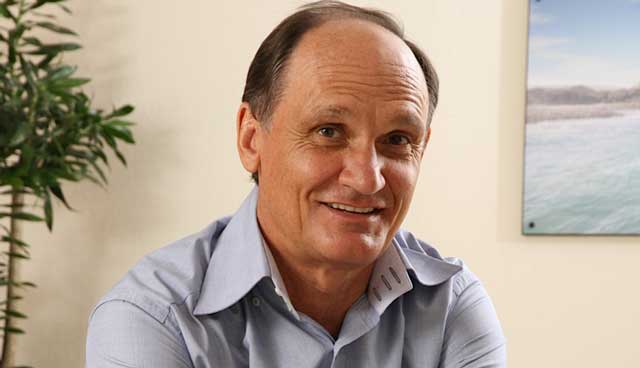
    Alan Knott-Craig
    Alan Knott-Craig

    Cell C CEO Alan Knott-Craig has cautiously welcomed the proposed cuts in wholesale call termination rates, announced by telecommunications regulator Icasa on Friday, saying that although he’d have “wished for a better outcome for Cell C”, the cuts will lead to a “more competitive and balanced” market.

    The cuts in the fees, which operators charge each other to carry calls between their networks, are expected to lead to further reductions in retail call costs for consumers after the new rates take effect from 1 March 2014. They are in draft form and may still change pending input from industry players — they are likely to face stiff opposition from MTN and Vodacom.

    In the draft regulations, Icasa has proposed introducing aggressive “asymmetry”, or wholesale price benefits, in call termination in a move that strongly disfavours MTN and Vodacom but which will give a boost to both Cell C and Telkom Mobile.

    Icasa wants mobile termination rates to drop by 50% next March, from 40c/minute now to just 20c/minute. The rate will then fall by a further 5c/minute in 2015 and 5c/minute in 2016, to reach 10c/minute.

    Under the draft regulations, Cell C and Telkom Mobile will enjoy asymmetry, as defined in the regulations, for a period of five years from 2014, even if their market share rises above 20%. Cell C’s market share is about 17%; Telkom Mobile’s is in the region of 1% to 2%.

    In 2014, the smaller operators will enjoy asymmetry of 95%, or 39c/minute, compared to the general rate of 20c/minute. That’s an increase from a 10% asymmetry advantage now and means that, from March, Vodacom and MTN will have to pay Cell C 39c/minute for calls to the smaller operator’s network, while Cell C will pay just 20c/minute for calls in the other direction.

    Asymmetry benefits apply to any operator with less than 20% market share and will expire in 2019. The asymmetry rate will fall to 33c/minute in 2015, 26c in 2016, 20c in 2017, 14c in 2018 and reach parity with the general rate of 10c in 2019. Thereafter, any company with less than 10% market share will enjoy a rate of 14c/minute, or a 40% price benefit, until such time as they have more than 10% of the market.

    “It is really encouraging to see Icasa work quickly and efficiently, favouring neither friend nor foe,” says Knott-Craig.

    “Although in actual terms (cents) the asymmetry is lower than what was hoped for, Icasa has been smart in providing asymmetry over a longer period with a relatively gentle glide path,” he adds.

    “On the other hand it has blasted the way open by drastically reducing the single largest cost factor in prices, namely the mobile termination rate which both Vodacom and MTN enjoy, noting that today these two operators control more than 90% of the mobile market revenue. Icasa has got that spot on.

    “Of all the players, Telkom wins hands down. And I do not begrudge them that,” Knott-Craig says. “They have played a major role in establishing the current healthy mobile industry. While my first instinct is to challenge Icasa, they have had to tread a fine line between under-reacting and over-reacting, and they have cleverly done what they needed to do to make it possible for the telecoms market in South Africa to gain a semblance of normality.

    “I would have wished for a better outcome for Cell C, but individual interests aside, the market will be a more competitive and balanced one with Icasa’s proposed draft regulations on termination rates.”

    But, says Knott-Craig, the draft regulations are only the “first regulatory step in normalising the South African telecoms space”.

    “There is much more to come, and the competition is going to be fierce,” he says. “Cell C needs more market share, and we will only gain that through aggressive pricing and good network quality.”

    Other operators are less keen to comment on the Icasa plan.

    A Vodacom spokesman says only: “We are studying the proposed changes and will comment in due course.”

    However, in Vodacom’s 2013 annual report, chairman Peter Moyo says: “Mobile termination rates have also been used by regulators to increase competition in the sector. Vodacom has been supportive of the reduction in the rates over the past three years and continues to work with Icasa on extending the downward glide path. The question is whether asymmetry, if granted, would be counterproductive and reduce the propensity to invest in networks. Asymmetry is typically applied to give new players a temporary boost, allowing them to become established. Once up and running, normal competitive rules resume.”

    Says Moyo in clear reference to Cell C: “Asymmetry effectively means that the incumbent operators subsidise the new operator, which only makes sense in that early phase. We have a situation in South Africa where networks have been in operation for over 10 years and we believe that these companies’ shareholders, rather than our customers, should pay for their network investment.”

    Telkom, meanwhile, says the current termination rates are “prejudicial” to the company and it “welcomes the review” of the regulations.

    Acting chief corporate service officer at MTN South Africa Fusi Mokeoena says his company will” closely examine the contents of the proposed regulations and analyse the potential regulatory and economic impact. Once MTN has reviewed the document, it will compile its response and file the required submission on the due date.”  — (c) 2013 NewsCentral Media

    • See also: Cell C handed call rates victory

    Follow TechCentral on Google News Add TechCentral as your preferred source on Google


    Alan Knott-Craig Cell C Icasa MTN Telkom Telkom Mobile Vodacom
    WhatsApp YouTube
    Share. Facebook Twitter LinkedIn WhatsApp Telegram Email Copy Link
    Previous ArticleTwitter takes flight
    Next Article SA’s videogame market sized up

    Related Posts

    Icasa promises business as usual through strike

    Icasa promises business as usual through strike

    5 August 2026
    Starlink wants to be your next mobile operator

    Starlink wants to be your next mobile operator

    5 August 2026
    South Africa's AI policy collapse shows up in World Bank report

    South Africa’s AI policy collapse shows up in World Bank report

    4 August 2026
    Company News
    The MSP of 2027 won't be defined by the size of its stack - Acronis

    The MSP of 2027 won’t be defined by the size of its stack

    11 August 2026
    African Bank signs on as GEC+Africa 2026 partner

    African Bank signs on as GEC+Africa 2026 partner

    7 August 2026
    What a cloud review reveals about how a company actually runs - LSD Open

    What a cloud review reveals about how a company actually runs

    6 August 2026
    Opinion
    The author, Jannie van Zyl

    Selling vapour is corporate suicide in slow motion

    16 July 2026
    Brazil's online gambling crackdown is a lesson for South Africa

    How Amazon outmanoeuvred Starlink in South Africa

    15 July 2026
    The Popia problem with agentic AI - Herman Haasbroek

    The Popia problem with agentic AI

    14 July 2026

    Subscribe to Updates

    Get the best South African technology news and analysis delivered to your e-mail inbox every morning.

    Latest Posts
    The MSP of 2027 won't be defined by the size of its stack - Acronis

    The MSP of 2027 won’t be defined by the size of its stack

    11 August 2026
    Brics nations weigh joining up their fast payment rails

    Brics nations weigh joining up their fast payment rails

    11 August 2026
    The economist who thinks AI could double South Africa's growth rate

    The economist who thinks AI could double South Africa’s growth rate

    11 August 2026
    The quiet rewiring of the world's financial plumbing

    The quiet rewiring of the world’s financial plumbing

    11 August 2026
    © 2009 - 2026 NewsCentral Media
    Built and maintained by Chronon
    • Cookie policy (ZA)
    • TechCentral – privacy and Popia

    Type above and press Enter to search. Press Esc to cancel.

    Manage consent

    TechCentral uses cookies to enhance its offerings. Consenting to these technologies allows us to serve you better. Not consenting or withdrawing consent may adversely affect certain features and functions of the website.

    Functional Always active
    The technical storage or access is strictly necessary for the legitimate purpose of enabling the use of a specific service explicitly requested by the subscriber or user, or for the sole purpose of carrying out the transmission of a communication over an electronic communications network.
    Preferences
    The technical storage or access is necessary for the legitimate purpose of storing preferences that are not requested by the subscriber or user.
    Statistics
    The technical storage or access that is used exclusively for statistical purposes. The technical storage or access that is used exclusively for anonymous statistical purposes. Without a subpoena, voluntary compliance on the part of your Internet Service Provider, or additional records from a third party, information stored or retrieved for this purpose alone cannot usually be used to identify you.
    Marketing
    The technical storage or access is required to create user profiles to send advertising, or to track the user on a website or across several websites for similar marketing purposes.
    • Manage options
    • Manage services
    • Manage {vendor_count} vendors
    • Read more about these purposes
    View preferences
    • {title}
    • {title}
    • {title}