Nvidia’s reported move to acquire Hugging Face for about US$12.9-billion (R207-billion) looks, at first glance, like a strange bet.
The target is a 10-year-old start-up with roughly $150-million in annual revenue that was last formally valued at $4.5-billion in a 2023 funding round. A near-triple markup for a company only now approaching profitability is not the kind of maths that usually excites a chip maker worth trillions.
But the deal, first reported by tech publication The Information and not yet signed or publicly confirmed by either company, makes sense the moment you stop thinking of Nvidia as a hardware business and start thinking of it as a company fighting to keep control of the entire AI stack. The likely play is not diversification for its own sake. It is defence.
For most of the current AI boom, Nvidia has enjoyed a near-monopoly, with estimates of its share of the AI chip market ranging from about 70% upwards, on the strength of its GPUs and its Cuda software layer, the programming environment that has locked developers into its hardware for close to two decades.
That position is now under sustained attack from the very companies that spend the most on Nvidia silicon:
- Google is deploying its seventh-generation Ironwood tensor processing units and, in October 2025, secured a commitment from Anthropic to use up to a million of its TPUs in a deal worth tens of billions of dollars.
- Amazon has deployed more than a million of its own Trainium chips.
- OpenAI is readying its own silicon with Broadcom and has separately struck an alliance with AMD.
- Microsoft has its Maia accelerators.
- Meta has its MTIA line.
The pattern is unmistakable. The frontier model labs and hyperscalers, Nvidia’s largest and most strategically important clients, are the same players building custom chips to escape it. Custom accelerators are expected to take close to 28% of the market in 2026, growing far faster than merchant GPU sales. The chip moat, on its own, is no longer enough.
‘Will run on Nvidia’
The picture is not one of customers walking away, though. On the same August earnings call at which Nvidia set out its investments in the AI ecosystem, it announced an expanded partnership with Amazon Web Services to deploy a further two million Nvidia GPUs, running from this quarter through to the second quarter of its 2029 financial year.
Amazon is simultaneously the company with more than a million of its own accelerators in the field and the company committing to two million more of Nvidia’s. Asked on that call how he squares investing in labs that are designing their own chips, CEO Jensen Huang said the company was building a platform rather than a single chip: “These companies will need to scale globally and will run on Nvidia.”
Nvidia’s answer has been to build a second moat next to Cuda, and it sits in software and open-weight models.
Read: Nvidia is buying the home of open-source AI
In December 2025, the company debuted its Nemotron 3 family of open models, releasing the weights on Hugging Face along with three trillion tokens of training data and a suite of developer tooling. “Open innovation is the foundation of AI progress,” Huang said at the launch. “With Nemotron, we’re transforming advanced AI into an open platform that gives developers the transparency and efficiency they need to build agentic systems at scale.” Nvidia is reported to be training a still larger, trillion-parameter open model to follow.
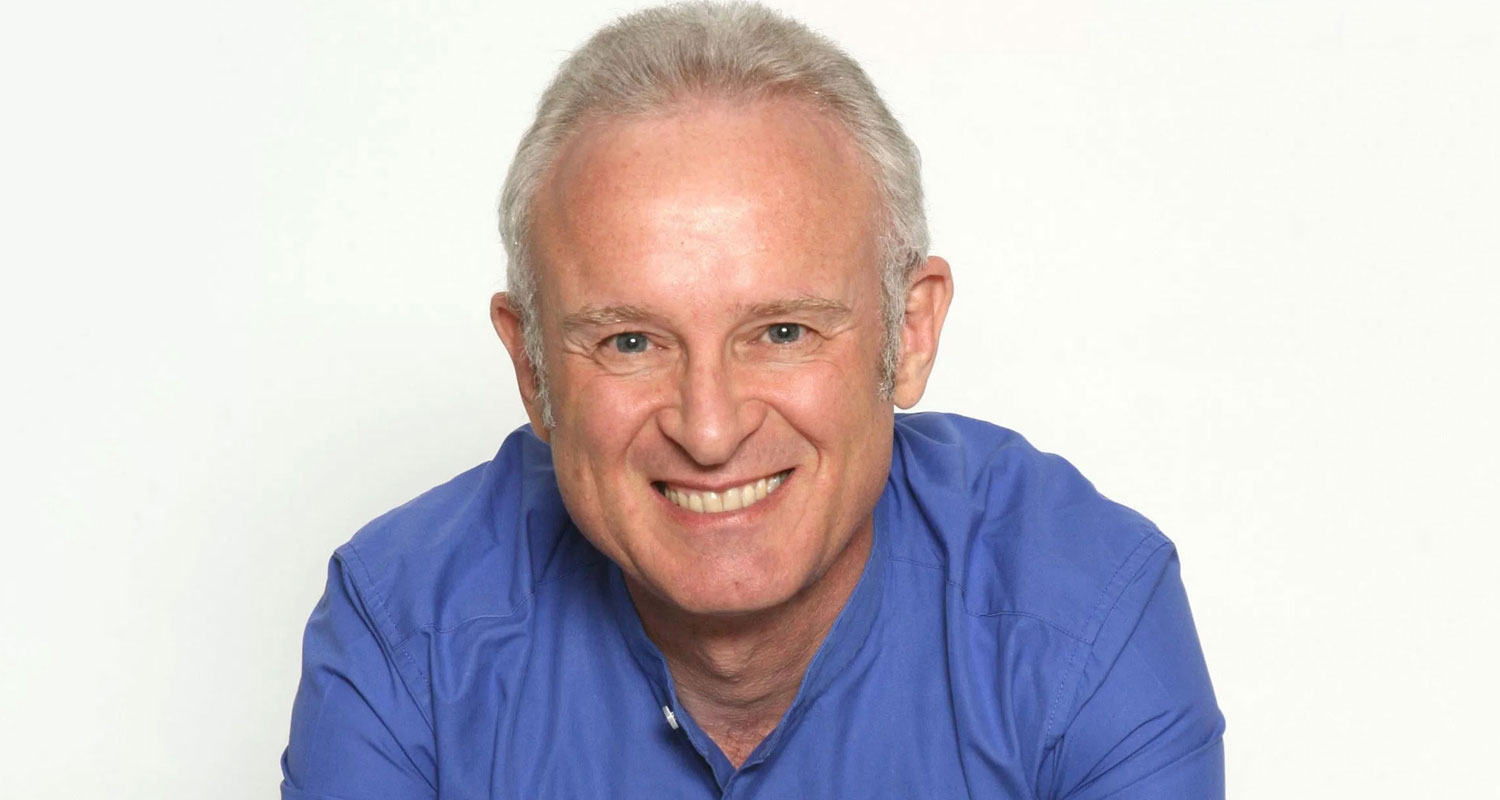
“The genius of open models for Nvidia is that free software can be spectacularly expensive to run,” says Arthur Goldstuck, founder of technology research firm World Wide Worx. “Every model that gets downloaded and deployed creates demand for computing power. Nvidia does not have to own the model to make money from it.” Where the frontier labs guard their weights as proprietary assets, Nvidia is giving models away to keep the ecosystem pointed at its chips.
Hugging Face is the missing piece. The platform hosts more than a million model repositories and has positioned itself as neutral ground, carrying models built for the hardware of Nvidia’s rivals, including Google, Amazon and Microsoft. Controlling that hub gives Nvidia influence over the distribution layer of open AI, the shop window through which most of the world discovers and deploys open models.
For Goldstuck, that is the real prize. “This is also about Nvidia buying the layer above the chip,” he says, pointing out that with its Cuda moat already in place the company “is not exactly desperate”. But Hugging Face “would give Nvidia direct influence in the space where developers test and distribute open models. As Google, Amazon and OpenAI push harder on their own chips, Nvidia wants to keep developers defaulting to Nvidia.”
The war chest that funds the bet
Nvidia can afford this long game because its core business is still throwing off extraordinary amounts of cash. On 26 August it reported revenue of $96.2-billion for the second quarter of its 2027 financial year, up 106% on a year earlier, and took the unusual step of issuing its first-ever year-ahead forecast: about 70% growth in fiscal 2028, which would push revenue towards $690-billion. Against numbers like those, a $12.9-billion acquisition is almost a rounding error.
That firepower is what lets Nvidia bankroll the ecosystem it depends on. On the same earnings call, chief financial officer Colette Kress said the company had invested nearly $50-billion in frontier AI labs, on top of credit guarantees including up to $105-billion backing a vast data centre campus in Ohio that will host Nvidia compute leased to OpenAI.
Critics call this circular financing: Nvidia funding the very demand it later books as chip sales. The company rejects the label. “We know some will call this circular financing. We see it differently,” Kress told analysts, arguing that the labs are growing faster than their balance sheets can support and that “Nvidia is needed to help power this flywheel”.
Huang put it more bluntly, dismissing the charge in an X post with a one-word “no”. Whichever reading is right, the Hugging Face move fits the same pattern: spend now to keep the world’s AI running on Nvidia.
This is where the opposition Nvidia is setting up becomes clear. Its biggest customers are moving towards proprietary systems on custom silicon. Nvidia is responding by pouring money into open, freely available models and now, reportedly, into the platform that distributes them. It is using openness as a competitive weapon against clients who are trying to close ranks around their own hardware.
Not without risk
The strategy is not without risk. Nvidia had already tried, and failed, to take a smaller position in Hugging Face, offering $500-million for a stake at a $7-billion valuation. Hugging Face turned it down; the Financial Times reported that co-founder Clément Delangue said the company rejected the investment to prevent any single investor from gaining too much power.
If Nvidia now owns Hugging Face outright, the obvious question is whether a platform that sells the world on hardware neutrality can stay neutral once it belongs to the largest hardware vendor of all. Developers who value Hugging Face precisely because it is not aligned with any chip maker may look elsewhere.
Goldstuck is more sanguine on that point, arguing there are precedents. “Microsoft managed to buy GitHub without destroying its usefulness as a neutral developer platform,” he says. “When I use GitHub, I don’t even think about the fact that it is owned by Microsoft.” If the deal goes through, he says, Nvidia “needs to pull off the same trick, but it is clearly doable”.
For now the deal remains a report rather than a signed transaction, and it could still fall through. But the direction of travel is not in doubt. Nvidia has spent 2026 walking a tightrope between the customers it depends on and the competitors those customers are becoming. Buying the open-source AI world is how it intends to stay standing when the chip monopoly finally cracks. – © 2026 NewsCentral Media
- Subscribe to TechCentral’s daily newsletter
- Get breaking news alerts on WhatsApp