Close Menu
TechCentralTechCentral

    Subscribe to the newsletter

    Get the best South African technology news and analysis delivered to your e-mail inbox every morning.

    Facebook X (Twitter) YouTube LinkedIn
    WhatsApp Facebook X (Twitter) LinkedIn YouTube
    TechCentralTechCentral
    • News
      Why stablecoins are booming in Africa - Yellow Card MD Lasbery Oludimu

      Why stablecoins are booming in Africa

      4 February 2026
      Prosus inks three-year AWS deal to scale AI across its global portfolio

      Prosus inks three-year AWS deal to scale AI across its global portfolio

      4 February 2026
      Vodacom's real growth story isn't mobile

      Vodacom’s real growth story isn’t mobile

      4 February 2026
      South African fintech Lula lands R340m to scale SME working capital - Trevor Gosling

      South African fintech Lula lands R340m to scale SME working capital

      4 February 2026
      Vodacom to take control of Safaricom in R36-billion deal - Shameel Joosub

      Vodacom leans on Africa growth as SA remains under pressure

      4 February 2026
    • World
      AI won't replace software, says Nvidia CEO amid market rout - Jensen Huang

      AI won’t replace software, says Nvidia CEO amid market rout

      4 February 2026
      Apple acquires audio AI start-up Q.ai

      Apple acquires audio AI start-up Q.ai

      30 January 2026
      SpaceX IPO may be largest in history

      SpaceX IPO may be largest in history

      28 January 2026
      Nvidia throws AI at the weather

      Nvidia throws AI at weather forecasting

      27 January 2026
      Debate erupts over value of in-flight Wi-Fi

      Debate erupts over value of in-flight Wi-Fi

      26 January 2026
    • In-depth
      How liberalisation is rewiring South Africa's power sector

      How liberalisation is rewiring South Africa’s power sector

      21 January 2026
      The top-performing South African tech shares of 2025

      The top-performing South African tech shares of 2025

      12 January 2026
      Digital authoritarianism grows as African states normalise internet blackouts

      Digital authoritarianism grows as African states normalise internet blackouts

      19 December 2025
      TechCentral's South African Newsmakers of 2025

      TechCentral’s South African Newsmakers of 2025

      18 December 2025
      Black Friday goes digital in South Africa as online spending surges to record high

      Black Friday goes digital in South Africa as online spending surges to record high

      4 December 2025
    • TCS
      TCS+ | How Cloud On Demand is helping SA businesses succeed in the cloud - Xhenia Rhode, Dion Kalicharan

      TCS+ | Cloud On Demand and Consnet: inside a real-world AWS partner success story

      30 January 2026
      Watts & Wheels S1E3: 'BYD's Corolla Cross challenger'

      Watts & Wheels S1E3: ‘BYD’s Corolla Cross challenger’

      30 January 2026
      Watts & Wheels S1E3: 'BYD's Corolla Cross challenger'

      Watts & Wheels S1E2: ‘China attacks, BMW digs in, Toyota’s sublime supercar’

      23 January 2026

      TCS+ | Why cybersecurity is becoming a competitive advantage for SA businesses

      20 January 2026
      Watts & Wheels S1E3: 'BYD's Corolla Cross challenger'

      Watts & Wheels: S1E1 – ‘William, Prince of Wheels’

      8 January 2026
    • Opinion
      South Africa's skills advantage is being overlooked at home - Richard Firth

      South Africa’s skills advantage is being overlooked at home

      29 January 2026
      Why Elon Musk's Starlink is a 'hard no' for me - Songezo Zibi

      Why Elon Musk’s Starlink is a ‘hard no’ for me

      26 January 2026
      South Africa's new fibre broadband battle - Duncan McLeod

      South Africa’s new fibre broadband battle

      20 January 2026
      AI moves from pilots to production in South African companies - Nazia Pillay SAP

      AI moves from pilots to production in South African companies

      20 January 2026
      South Africa's new fibre broadband battle - Duncan McLeod

      ANC’s attack on Solly Malatsi shows how BEE dogma trumps economic reality

      14 December 2025
    • Company Hubs
      • Africa Data Centres
      • AfriGIS
      • Altron Digital Business
      • Altron Document Solutions
      • Altron Group
      • Arctic Wolf
      • AvertITD
      • Braintree
      • CallMiner
      • CambriLearn
      • CYBER1 Solutions
      • Digicloud Africa
      • Digimune
      • Domains.co.za
      • ESET
      • Euphoria Telecom
      • Incredible Business
      • iONLINE
      • IQbusiness
      • Iris Network Systems
      • LSD Open
      • NEC XON
      • Netstar
      • Network Platforms
      • Next DLP
      • Ovations
      • Paracon
      • Paratus
      • Q-KON
      • SevenC
      • SkyWire
      • Solid8 Technologies
      • Telit Cinterion
      • Tenable
      • Vertiv
      • Videri Digital
      • Vodacom Business
      • Wipro
      • Workday
      • XLink
    • Sections
      • AI and machine learning
      • Banking
      • Broadcasting and Media
      • Cloud services
      • Contact centres and CX
      • Cryptocurrencies
      • Education and skills
      • Electronics and hardware
      • Energy and sustainability
      • Enterprise software
      • Financial services
      • Information security
      • Internet and connectivity
      • Internet of Things
      • Investment
      • IT services
      • Lifestyle
      • Motoring
      • Public sector
      • Retail and e-commerce
      • Satellite communications
      • Science
      • SMEs and start-ups
      • Social media
      • Talent and leadership
      • Telecoms
    • Events
    • Advertise
    TechCentralTechCentral
    Home » Sections » Motoring » Self-driving cars: 5 reasons they still aren’t on our roads

    Self-driving cars: 5 reasons they still aren’t on our roads

    By The Conversation14 August 2020
    Twitter LinkedIn Facebook WhatsApp Email Telegram Copy Link
    News Alerts
    WhatsApp
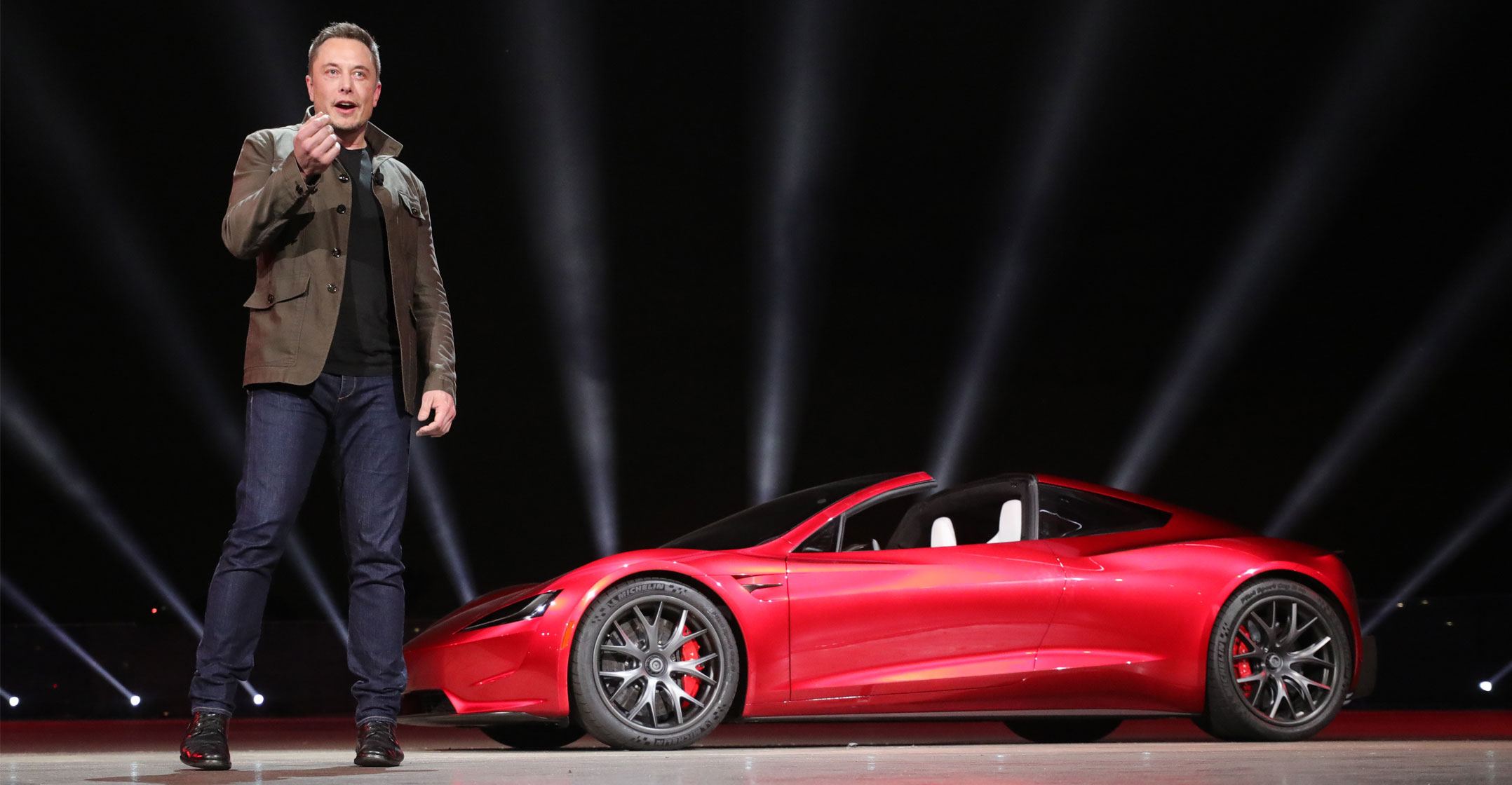
    Tesla Elon Musk on stage with the Tesla Roadster in a file photograph

    Elon Musk thinks Tesla will have fully autonomous cars ready by the end of 2020. “There are no fundamental challenges remaining,” he said recently. “There are many small problems. And then there’s the challenge of solving all those small problems and putting the whole system together.”

    While the technology to enable a car to complete a journey without human input (what the industry calls “level 5 autonomy”) might be advancing rapidly, producing a vehicle that can do so safely and legally is another matter.
    There are indeed still fundamental challenges to the safe introduction of fully autonomous cars, and we have to overcome them before we see these vehicles on our roads. Here are five of the biggest remaining obstacles.

    1. Sensors

    Autonomous cars use a broad set of sensors to “see” the environment around them, helping to detect objects such as pedestrians, other vehicles and road signs. Cameras help the car to view objects. Lidar uses lasers to measure the distance between objects and the vehicle. Radar detects objects and tracks their speed and direction.

    These sensors all feed data back to the car’s control system or computer to help it make decisions about where to steer or when to brake. A fully autonomous car needs a set of sensors that accurately detect objects, distance, speed and so on under all conditions and environments, without a human needing to intervene.

    Lousy weather, heavy traffic and roads signs with graffiti on them can all negatively impact the accuracy of sensing capability. Radar, which Tesla uses, is less susceptible to adverse weather conditions, but challenges remain in ensuring that the chosen sensors used in a fully autonomous car can detect all objects with the required level of certainty for them to be safe.

    To enable truly autonomous cars, these sensors must work in all weather conditions anywhere on the planet, from Alaska to Zanzibar and in congested cities such as Cairo and Hanoi. Accidents with Tesla’s current (only level 2) “Autopilot”, including one in July 2020 hitting parked vehicles, show the company has a big gap to overcome to produce such a global, all-weather capability.

    2. Machine learning

    Most autonomous vehicles will use artificial intelligence and machine learning to process the data that comes from its sensors and to help make the decisions about its next actions. These algorithms will help identify the objects detected by the sensors and classify them, according to the system’s training, as a pedestrian, a streetlight, and so on. The car will then use this information to help decide whether the car needs to take action, such as braking or swerving, to avoid a detected object.

    In the future, machines will be able to do this detection and classification more efficiently than a human driver can. But at the moment there is no widely accepted and agreed basis for ensuring that the machine-learning algorithms used in the cars are safe. We do not have agreement across the industry, or across standardisation bodies, on how machine learning should be trained, tested or validated.
    3. The open road

    Once an autonomous car is on the road, it will continue to learn. It will drive on new roads, detect objects it hasn’t come across in its training, and be subject to software updates.

    How can we ensure that the system continues to be just as safe as its previous version? We need to be able to show that any new learning is safe and that the system doesn’t forget previously safe behaviours, something the industry has yet to reach agreement on.

    4. Regulation

    Sufficient standards and regulations for a whole autonomous system do not exist — in any industry. Current standards for the safety of existing vehicles assume the presence of a human driver to take over in an emergency.

    For self-driving cars, there are emerging regulations for particular functions, such as for automated lane keeping systems. There is also an international standard for autonomous systems that includes autonomous vehicles, which sets relevant requirements but does not solve the problems of sensors, machine learning and operational learning introduced above — although it may in time.

    Without recognised regulations and standards, no self-driving car, whether considered to be safe or not, will make it on to the open road.

    5. Social acceptability

    There have been numerous high-profile accidents involving Tesla’s current automated cars, as well as with other automated and autonomous vehicles. Social acceptability is not just an issue for those wishing to buy a self-driving car, but also for others sharing the road with them.

    The public needs to be involved in decisions about the introduction and adoption of self-driving vehicles. Without this, we risk the rejection of this technology.

    The first three of these challenges must be solved to help us overcome the latter two. There is, of course, a race to be the first company to introduce a fully self-driving car. But without collaboration on how we make the car safe, provide evidence of that safety, and work with regulators and the public to get a “stamp of approval”, these cars will remain on the test track for years to come.

    Unpalatable as it may be to entrepreneurs such as Musk, the road to getting autonomous vehicles approved is through lengthy collaboration on these hard problems around safety, assurance, regulation and acceptance.The Conversation

    • Written by John McDermid, director, Assuring Autonomy International Programme, University of York
    • This article is republished from The Conversation under a Creative Commons licence


    Elon Musk Tesla top
    WhatsApp YouTube Follow on Google News Add as preferred source on Google
    Share. Facebook Twitter LinkedIn WhatsApp Telegram Email Copy Link
    Previous ArticleGame makers give Apple the antitrust grilling lawmakers didn’t
    Next Article Jumia sees rivalry from start-ups keen to tap Africa online sales

    Related Posts

    SpaceX acquires xAI in record-breaking deal

    SpaceX acquires xAI in record-breaking deal

    3 February 2026
    Starlink updates privacy policy to allow consumer data to train AI

    Privacy alarm as SpaceX opens Starlink user data to AI models

    2 February 2026
    A single Musk super-company may be taking shape - Elon Musk

    A single Musk super-company may be taking shape

    30 January 2026
    Company News
    Most business owners don't worry about IT, until they have to - Graeme Millar SevenC

    Most business owners don’t worry about IT – until they have to

    4 February 2026
    Why cloud projects fail - and how three days can fix it - LSD Open

    Why cloud projects fail – and how three days can fix this

    4 February 2026
    Zero downtime, 12 months: XLink raises the bar for mission-critical networks

    Zero downtime, 12 months: XLink raises the bar for mission-critical networks

    4 February 2026
    Opinion
    South Africa's skills advantage is being overlooked at home - Richard Firth

    South Africa’s skills advantage is being overlooked at home

    29 January 2026
    Why Elon Musk's Starlink is a 'hard no' for me - Songezo Zibi

    Why Elon Musk’s Starlink is a ‘hard no’ for me

    26 January 2026
    South Africa's new fibre broadband battle - Duncan McLeod

    South Africa’s new fibre broadband battle

    20 January 2026

    Subscribe to Updates

    Get the best South African technology news and analysis delivered to your e-mail inbox every morning.

    Latest Posts
    Most business owners don't worry about IT, until they have to - Graeme Millar SevenC

    Most business owners don’t worry about IT – until they have to

    4 February 2026
    Why cloud projects fail - and how three days can fix it - LSD Open

    Why cloud projects fail – and how three days can fix this

    4 February 2026
    Why stablecoins are booming in Africa - Yellow Card MD Lasbery Oludimu

    Why stablecoins are booming in Africa

    4 February 2026
    Zero downtime, 12 months: XLink raises the bar for mission-critical networks

    Zero downtime, 12 months: XLink raises the bar for mission-critical networks

    4 February 2026
    © 2009 - 2026 NewsCentral Media
    • Cookie policy (ZA)
    • TechCentral – privacy and Popia

    Type above and press Enter to search. Press Esc to cancel.

    Manage consent

    TechCentral uses cookies to enhance its offerings. Consenting to these technologies allows us to serve you better. Not consenting or withdrawing consent may adversely affect certain features and functions of the website.

    Functional Always active
    The technical storage or access is strictly necessary for the legitimate purpose of enabling the use of a specific service explicitly requested by the subscriber or user, or for the sole purpose of carrying out the transmission of a communication over an electronic communications network.
    Preferences
    The technical storage or access is necessary for the legitimate purpose of storing preferences that are not requested by the subscriber or user.
    Statistics
    The technical storage or access that is used exclusively for statistical purposes. The technical storage or access that is used exclusively for anonymous statistical purposes. Without a subpoena, voluntary compliance on the part of your Internet Service Provider, or additional records from a third party, information stored or retrieved for this purpose alone cannot usually be used to identify you.
    Marketing
    The technical storage or access is required to create user profiles to send advertising, or to track the user on a website or across several websites for similar marketing purposes.
    • Manage options
    • Manage services
    • Manage {vendor_count} vendors
    • Read more about these purposes
    View preferences
    • {title}
    • {title}
    • {title}