Close Menu
TechCentralTechCentral

    Subscribe to the newsletter

    Get the best South African technology news and analysis delivered to your e-mail inbox every morning.

    Facebook X (Twitter) YouTube LinkedIn
    WhatsApp Facebook X (Twitter) LinkedIn YouTube
    TechCentralTechCentral
    • News
      Perfect storm for South African tech buyers

      Perfect storm for South African tech buyers

      23 March 2026
      GoMetro to launch electric minibus taxis on Cape Town routes from October - Justin Coetzee

      GoMetro puts a date on its electric minibus taxi launch

      23 March 2026
      Meet the CIO | HealthBridge CTO Anton Fatti on the future of digital health

      Meet the CIO | HealthBridge CTO Anton Fatti on the future of digital health

      23 March 2026
      Open banking is growing in South Africa - but not for everyone

      Open banking is growing in South Africa – but not for everyone

      23 March 2026
      Cape Town BNPL start-up Happy Pay raises R86-million in seed funding

      Cape Town BNPL start-up Happy Pay raises R86-million in seed funding

      23 March 2026
    • World
      It's official: ads are coming to ChatGPT

      It’s official: ads are coming to ChatGPT

      23 March 2026
      Mystery Chinese AI model revealed to be Xiaomi's

      Mystery Chinese AI model revealed to be Xiaomi’s

      19 March 2026
      A mystery AI model has developers buzzing

      A mystery AI model has developers buzzing

      18 March 2026
      Samsung's trifold gamble ends in retreat

      Samsung’s trifold gamble ends in retreat

      17 March 2026
      Nvidia targets $1-trillion in AI chip sales as inference demand surges - Jensen Huang

      Nvidia targets $1-trillion in AI chip sales as inference demand surges

      17 March 2026
    • In-depth
      The last generation of coders

      The last generation of coders

      18 February 2026
      Sentech is in dire straits

      Sentech is in dire straits

      10 February 2026
      How liberalisation is rewiring South Africa's power sector

      How liberalisation is rewiring South Africa’s power sector

      21 January 2026
      The top-performing South African tech shares of 2025

      The top-performing South African tech shares of 2025

      12 January 2026
      Digital authoritarianism grows as African states normalise internet blackouts

      Digital authoritarianism grows as African states normalise internet blackouts

      19 December 2025
    • TCS
      TCS+ | Arctic Wolf unpacks the evolving threat landscape for SA businesses - Clare Loveridge and Jason Oehley

      TCS+ | Arctic Wolf unpacks the evolving threat landscape for SA businesses

      19 March 2026
      TCS+ | Vox Kiwi: a wireless solution promising a fibre-like experience - Theo van Zyl

      TCS+ | Vox Kiwi: a wireless solution promising a fibre-like experience

      13 March 2026
      TCS+ | Flipping the narrative on AI in the Global South - Josefin Rosén

      TCS+ | Flipping the narrative on AI in the Global South

      13 March 2026
      TCS | Sink or swim? Antony Makins on how AI is rewriting the rules of work

      TCS | Sink or swim? Antony Makins on how AI is rewriting the rules of work

      5 March 2026
      TCS+ | Bolt ups the ante on platform safety - Simo Kalajdzic

      TCS+ | Bolt ups the ante on platform safety

      4 March 2026
    • Opinion
      South Africa's energy future hinges on getting wheeling right - Aishah Gire

      South Africa’s energy future hinges on getting wheeling right

      10 March 2026
      Hold the doom: the case for a South African comeback - Duncan McLeod

      Apple just dropped a bomb on the Windows world

      5 March 2026
      VC's centre of gravity is shifting - and South Africa is in the frame - Alison Collier

      VC’s centre of gravity is shifting – and South Africa is in the frame

      3 March 2026
      Hold the doom: the case for a South African comeback - Duncan McLeod

      Hold the doom: the case for a South African comeback

      26 February 2026
      The AI fraud crisis your bank is not ready for - Andries Maritz

      The AI fraud crisis your bank is not ready for

      18 February 2026
    • Company Hubs
      • 1Stream
      • Africa Data Centres
      • AfriGIS
      • Altron Digital Business
      • Altron Document Solutions
      • Altron Group
      • Arctic Wolf
      • Ascent Technology
      • AvertITD
      • Braintree
      • CallMiner
      • CambriLearn
      • CYBER1 Solutions
      • Digicloud Africa
      • Digimune
      • Domains.co.za
      • ESET
      • Euphoria Telecom
      • HOSTAFRICA
      • Incredible Business
      • iONLINE
      • IQbusiness
      • Iris Network Systems
      • LSD Open
      • Mitel
      • NEC XON
      • Netstar
      • Network Platforms
      • Next DLP
      • Ovations
      • Paracon
      • Paratus
      • Q-KON
      • SevenC
      • SkyWire
      • Solid8 Technologies
      • Telit Cinterion
      • Tenable
      • Vertiv
      • Videri Digital
      • Vodacom Business
      • Wipro
      • Workday
      • XLink
    • Sections
      • AI and machine learning
      • Banking
      • Broadcasting and Media
      • Cloud services
      • Contact centres and CX
      • Cryptocurrencies
      • Education and skills
      • Electronics and hardware
      • Energy and sustainability
      • Enterprise software
      • Financial services
      • HealthTech
      • Information security
      • Internet and connectivity
      • Internet of Things
      • Investment
      • IT services
      • Lifestyle
      • Motoring
      • Policy and regulation
      • Public sector
      • Retail and e-commerce
      • Satellite communications
      • Science
      • SMEs and start-ups
      • Social media
      • Talent and leadership
      • Telecoms
    • Events
    • Advertise
    TechCentralTechCentral
    Home » Sections » Investment » Shareholders find their voice on executive pay, including at MTN

    Shareholders find their voice on executive pay, including at MTN

    By Hilton Tarrant16 January 2019
    Twitter LinkedIn Facebook WhatsApp Email Telegram Copy Link
    News Alerts
    WhatsApp

    Shareholders at an unprecedented number of JSE Top 40 companies have, in the past year, voted against remuneration policies and/or their implementation. These are non-binding advisory votes tabled at annual general meetings. Under JSE regulations (and King IV), the companies then have to engage dissenting shareholders in a formal manner and thereafter provide feedback to the market (via the stock exchange news service).

    The six companies, all in the top 20 largest by market capitalisation, have seen significant shareholder resistance to remuneration, particularly incentive schemes. It must be noted that these are all very large companies, with diverse shareholder bases, where voting on pay cannot easily be lobbied for by activist investors.

    Naspers

    While ordinary (N) shareholders in Naspers have in recent years voted overwhelmingly against executive remuneration, the group has, by virtue of its dual-class share structure, managed to ensure that pay-related resolutions passed at AGMs. Until last year, the company did not disclose the voting results separately. At the August 2018 AGM, holders of the N shares voted 56.96% against the policy and 47.76% against its implementation. When grouping the shares, these resolutions managed to pass by 83.72% and 86.35%, respectively.

    The company, therefore, does not have to formally engage shareholders on pay but did publish written comments about remuneration after the meeting, saying the group aims “to be fair and responsible in our approach and align executive pay with shareholder value creation. We pay to attract and retain the best global tech talent because it is vital for our long-term success — these are the people who create great customer experiences that ultimately lead to shareholder returns. We also pay for performance and value creation — with bigger rewards for the highest contributions.”

    It noted that since the last AGM, it had made a number of changes, including:

    • “Changing the composition of the remuneration committee, strengthening its global orientation and technology exposure;
    • Improving our disclosure to show more clearly the connection between business strategy, operational results, pay design and pay outcomes;
    • Introducing claw-backs on both short-term and longer-term incentives for the CEO and all his executive direct reports, and implementing a shareholding requirement for the CEO; and
    • We announced a few months back that we would go to the market to purchase Naspers shares to cover the settlement of employee longer-term incentives so that shareholders would not experience dilution as a result of these programmes.”

    Naspers added that it noted “the improvement in voting in respect of the remuneration policy and the majority of the N shareholders voting in favour of the implementation thereof. We have listened to and have incorporated a number of ideas on remuneration from our shareholders in the past 12 months which further align our interests. These are steps on a long journey and we will continue to engage with our shareholders on these matters as we acknowledge there is more we can do.”

    FirstRand Group

    At FirstRand, the JSE’s largest banking group by market value, both resolutions on remuneration failed with votes of 74.2% for the policy itself and 74.39% for its implementation at the group’s November AGM. This is the first time, certainly in recent years, that shareholders have voted against the bank’s pay plan.

    In an announcement to the market in early January, FirstRand says it “believes that executive remuneration must align with shareholder value creation and believes that the group’s key performance measure, net income after cost of capital, ensures that the link between pay and performance is a direct one”.

    It has invited shareholders to “directly raise concerns or recommendations” with the group chairman, Roger Jardine, and the chairman of the group remuneration committee, Grant Gelink, on a conference call at the end of this month.

    Sanlam

    At Sanlam’s June 2018 AGM, 28.48% of shareholders who voted did so against its remuneration implementation report (71.52% in favour). A further 1.1% abstained. Its policy received votes of 94.67% in favour.

    It asked for written feedback from shareholders, but noted at the end of the month that it “did not receive any concerns/queries from dissenting shareholders”.

    It added that shareholders “may have acted on the recommendation of (proxy advisory firm) ISS (Institutional Shareholder Services) to vote against the company’s 2017 remuneration implementation report” and said it had “obtained a copy of the report issued by ISS setting out the concerns and engaged directly with them regarding these concerns”.

    It also said that management would “make recommendations to the Sanlam group human resources and remuneration committee (Sanlam GHRRC) to be considered at its next Sanlam GHRRC meeting. Sanlam will also disclose in its 2018 remuneration report the nature and steps taken to address concerns raised by the ISS”.
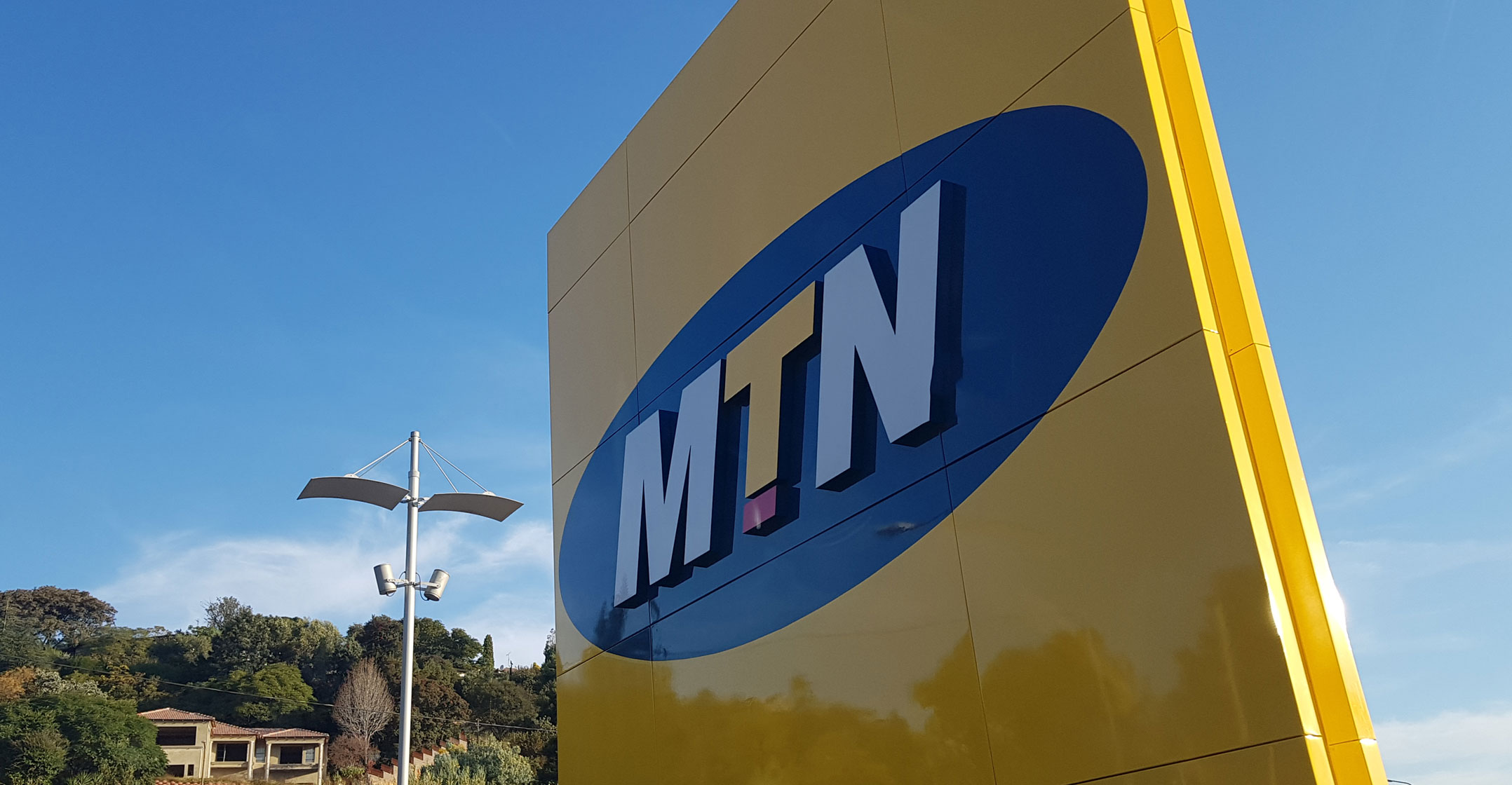
    MTN Group

    MTN has faced criticism from shareholders on remuneration for a number of years. In 2016, only 67.81% of shareholders voted in favour of (what it termed) its “remuneration philosophy (policy)”. In 2017, when then-executive chairman Phuthuma Nhleko was paid R68-million, that number had declined to 62.64%. Last year, 93.8% of shareholders voted in favour of the policy, while only 68.17% voted in favour of its implementation. In all three years, a higher-than-average number of shareholders abstained from voting on the resolutions in question. Last year was the first time MTN offered shareholders two votes: one on the policy and one on its implementation.

    It said two shareholders “collectively holding approximately 0.001% of the issued share capital of the company (on behalf of its clients) in MTN” participated in the scheduled follow-up telephone conference on remuneration.

    While the “participating shareholders raised certain concerns regarding the Company’s disclosure of the implementation of the remuneration policy”, MTN said it “provided appropriate explanations to the participating shareholders”.

    It also undertook to “formally table the above-mentioned areas of concern at its next remuneration committee meeting for consideration” as well as “disclose in its 2018 financial year end integrated report the nature of, and steps taken to address concerns raised by the shareholders”.

    Absa Group

    Just more than 52% of then Barclays Africa Group shareholders voted in favour of the bank’s remuneration policy at last year’s AGM, with 47.36% opposing it. While voting on the policy fared better, this barely passed with 76.48% in favour. In May, I noted that “a vote of just 52.6% in favour of the group’s implementation of its remuneration is damning, considering that Barclays plc holds 14.9% of votes and would’ve almost certainly have voted yes”.

    It said a total of 14 shareholders holding about 5% of the group participated in the July teleconference with group chair Wendy Lucas-Bull and remuneration committee chair Paul O’Flaherty.

    “The shareholders posed questions and raised concerns regarding certain aspects of our disclosure relating to long-term incentive plan awards and about the application of Capital Requirements Directive IV to our senior executives”.

    The group “committed to disclose in our 2018 financial year-end integrated report the steps taken to address the concerns raised”.

    Shoprite Holdings

    In excess of 40% of Shoprite shareholders voted against the group’s remuneration policy as well as its implementation at the AGM in October (42.61% and 40.01%, respectively). In 2017, there were also not enough votes to pass these two non-binding resolutions, but around 70% of shareholders were in favour (versus around 60% last year).

    It provided feedback on the engagement with shareholders in 2017, saying that five shareholders “holding approximately 18% of voteable shares in Shoprite Holdings” participated.

    The group says they “raised five areas of concern in relation to Shoprite Holdings’ remuneration policy and its implementation” and that it provided “appropriate explanations” on these. It undertook to formally table these concerns for consideration at its next remuneration committee meeting.

    Last year, it said simply in November that it invited “those shareholders who voted against the remuneration policy and the implementation of the remuneration policy” to “forward their concerns/questions” to the company secretary. It said, “meetings will be arranged with individual dissenting shareholders to discuss their concerns/questions”.

    Shoprite has provided no further update to the market regarding this engagement.

    • This article was originally published on Moneyweb and is used here with permission

    Follow TechCentral on Google News Add TechCentral as your preferred source on Google


    Absa FirstRand MTN Naspers Phuthuma Nhleko Sanlam Shoprite top
    WhatsApp YouTube
    Share. Facebook Twitter LinkedIn WhatsApp Telegram Email Copy Link
    Previous ArticleVO₂max: the gold standard for measuring fitness explained
    Next Article Backspace: ‘Zimbabwe unplugged’

    Related Posts

    MTN and Vodacom dwarf South Africa's listed tech sector

    MTN and Vodacom dwarf South Africa’s listed tech sector

    20 March 2026
    How a WhatsApp bundle exposed a fault line in SA mobile

    How a WhatsApp bundle exposed a fault line in SA mobile

    19 March 2026
    Iran

    MTN’s Iran problem: can’t stay, can’t leave

    17 March 2026
    Company News
    AnyDesk - high-performance remote access built for the modern enterprise

    AnyDesk – high-performance remote access built for the modern enterprise

    23 March 2026

    How South African executives can crack the AI ROI code

    20 March 2026
    Africa's first Nvidia RTX Pro GPU servers have landed

    Africa’s first Nvidia RTX Pro GPU servers have landed

    19 March 2026
    Opinion
    South Africa's energy future hinges on getting wheeling right - Aishah Gire

    South Africa’s energy future hinges on getting wheeling right

    10 March 2026
    Hold the doom: the case for a South African comeback - Duncan McLeod

    Apple just dropped a bomb on the Windows world

    5 March 2026
    VC's centre of gravity is shifting - and South Africa is in the frame - Alison Collier

    VC’s centre of gravity is shifting – and South Africa is in the frame

    3 March 2026

    Subscribe to Updates

    Get the best South African technology news and analysis delivered to your e-mail inbox every morning.

    Latest Posts
    Perfect storm for South African tech buyers

    Perfect storm for South African tech buyers

    23 March 2026
    GoMetro to launch electric minibus taxis on Cape Town routes from October - Justin Coetzee

    GoMetro puts a date on its electric minibus taxi launch

    23 March 2026
    Meet the CIO | HealthBridge CTO Anton Fatti on the future of digital health

    Meet the CIO | HealthBridge CTO Anton Fatti on the future of digital health

    23 March 2026
    Open banking is growing in South Africa - but not for everyone

    Open banking is growing in South Africa – but not for everyone

    23 March 2026
    © 2009 - 2026 NewsCentral Media
    • Cookie policy (ZA)
    • TechCentral – privacy and Popia

    Type above and press Enter to search. Press Esc to cancel.

    Manage consent

    TechCentral uses cookies to enhance its offerings. Consenting to these technologies allows us to serve you better. Not consenting or withdrawing consent may adversely affect certain features and functions of the website.

    Functional Always active
    The technical storage or access is strictly necessary for the legitimate purpose of enabling the use of a specific service explicitly requested by the subscriber or user, or for the sole purpose of carrying out the transmission of a communication over an electronic communications network.
    Preferences
    The technical storage or access is necessary for the legitimate purpose of storing preferences that are not requested by the subscriber or user.
    Statistics
    The technical storage or access that is used exclusively for statistical purposes. The technical storage or access that is used exclusively for anonymous statistical purposes. Without a subpoena, voluntary compliance on the part of your Internet Service Provider, or additional records from a third party, information stored or retrieved for this purpose alone cannot usually be used to identify you.
    Marketing
    The technical storage or access is required to create user profiles to send advertising, or to track the user on a website or across several websites for similar marketing purposes.
    • Manage options
    • Manage services
    • Manage {vendor_count} vendors
    • Read more about these purposes
    View preferences
    • {title}
    • {title}
    • {title}