Close Menu
TechCentralTechCentral

    Subscribe to the newsletter

    Get the best South African technology news and analysis delivered to your e-mail inbox every morning.

    Facebook X (Twitter) YouTube LinkedIn
    WhatsApp Facebook X (Twitter) LinkedIn YouTube
    TechCentralTechCentral
    • News
      Cell C cleans up its balance sheet but faces tough trading reality

      Cell C cleans up its balance sheet but faces tough trading reality

      13 February 2026
      MVNO business shines in Cell C's first post-listing results - Jorges Mendes

      MVNO business shines in Cell C’s first post-listing results

      13 February 2026
      Ramaphosa presses ahead with Eskom break-up - Cyril Ramaphosa

      Ramaphosa presses ahead with Eskom break-up

      13 February 2026
      The key technology takeaways from Ramaphosa's 2026 Sona - Cyril Ramaphosa

      The key technology takeaways from Ramaphosa’s 2026 Sona

      13 February 2026
      Toyota SA CEO: NEV inaction will cost South Africa its motoring industry - Andrew Kirby

      Toyota SA CEO: NEV inaction will cost South Africa its motoring industry

      12 February 2026
    • World
      Russia bans WhatsApp

      Russia bans WhatsApp

      12 February 2026
      EU regulators take aim at WhatsApp

      EU regulators take aim at WhatsApp

      9 February 2026
      Musk hits brakes on Mars mission

      Musk hits brakes on Mars mission

      9 February 2026
      Crypto firm accidentally sends R700-billion in bitcoin to its users

      Crypto firm accidentally sends R700-billion in bitcoin to its users

      8 February 2026
      AI won't replace software, says Nvidia CEO amid market rout - Jensen Huang

      AI won’t replace software, says Nvidia CEO amid market rout

      4 February 2026
    • In-depth
      How liberalisation is rewiring South Africa's power sector

      How liberalisation is rewiring South Africa’s power sector

      21 January 2026
      The top-performing South African tech shares of 2025

      The top-performing South African tech shares of 2025

      12 January 2026
      Digital authoritarianism grows as African states normalise internet blackouts

      Digital authoritarianism grows as African states normalise internet blackouts

      19 December 2025
      TechCentral's South African Newsmakers of 2025

      TechCentral’s South African Newsmakers of 2025

      18 December 2025
      Black Friday goes digital in South Africa as online spending surges to record high

      Black Friday goes digital in South Africa as online spending surges to record high

      4 December 2025
    • TCS
      Watts & Wheels S1E4: 'We drive an electric Uber'

      Watts & Wheels S1E4: ‘We drive an electric Uber’

      10 February 2026
      TCS+ | How Cloud On Demand is helping SA businesses succeed in the cloud - Xhenia Rhode, Dion Kalicharan

      TCS+ | Cloud On Demand and Consnet: inside a real-world AWS partner success story

      30 January 2026
      Watts & Wheels S1E4: 'We drive an electric Uber'

      Watts & Wheels S1E3: ‘BYD’s Corolla Cross challenger’

      30 January 2026
      Watts & Wheels S1E4: 'We drive an electric Uber'

      Watts & Wheels S1E2: ‘China attacks, BMW digs in, Toyota’s sublime supercar’

      23 January 2026

      TCS+ | Why cybersecurity is becoming a competitive advantage for SA businesses

      20 January 2026
    • Opinion
      A million reasons monopolies don't work - Duncan McLeod

      A million reasons monopolies don’t work

      10 February 2026
      Eskom unbundling U-turn threatens to undo hard-won electricity gains - Busi Mavuso

      Eskom unbundling U-turn threatens to undo hard-won electricity gains

      9 February 2026
      South Africa's skills advantage is being overlooked at home - Richard Firth

      South Africa’s skills advantage is being overlooked at home

      29 January 2026
      Why Elon Musk's Starlink is a 'hard no' for me - Songezo Zibi

      Why Elon Musk’s Starlink is a ‘hard no’ for me

      26 January 2026
      A million reasons monopolies don't work - Duncan McLeod

      South Africa’s new fibre broadband battle

      20 January 2026
    • Company Hubs
      • Africa Data Centres
      • AfriGIS
      • Altron Digital Business
      • Altron Document Solutions
      • Altron Group
      • Arctic Wolf
      • AvertITD
      • Braintree
      • CallMiner
      • CambriLearn
      • CYBER1 Solutions
      • Digicloud Africa
      • Digimune
      • Domains.co.za
      • ESET
      • Euphoria Telecom
      • Incredible Business
      • iONLINE
      • IQbusiness
      • Iris Network Systems
      • LSD Open
      • Mitel
      • NEC XON
      • Netstar
      • Network Platforms
      • Next DLP
      • Ovations
      • Paracon
      • Paratus
      • Q-KON
      • SevenC
      • SkyWire
      • Solid8 Technologies
      • Telit Cinterion
      • Tenable
      • Vertiv
      • Videri Digital
      • Vodacom Business
      • Wipro
      • Workday
      • XLink
    • Sections
      • AI and machine learning
      • Banking
      • Broadcasting and Media
      • Cloud services
      • Contact centres and CX
      • Cryptocurrencies
      • Education and skills
      • Electronics and hardware
      • Energy and sustainability
      • Enterprise software
      • Financial services
      • Information security
      • Internet and connectivity
      • Internet of Things
      • Investment
      • IT services
      • Lifestyle
      • Motoring
      • Public sector
      • Retail and e-commerce
      • Satellite communications
      • Science
      • SMEs and start-ups
      • Social media
      • Talent and leadership
      • Telecoms
    • Events
    • Advertise
    TechCentralTechCentral
    Home » Sections » Energy and sustainability » Solar power is dirt cheap and about to get even more powerful

    Solar power is dirt cheap and about to get even more powerful

    By Agency Staff6 July 2021
    Twitter LinkedIn Facebook WhatsApp Email Telegram Copy Link
    News Alerts
    WhatsApp

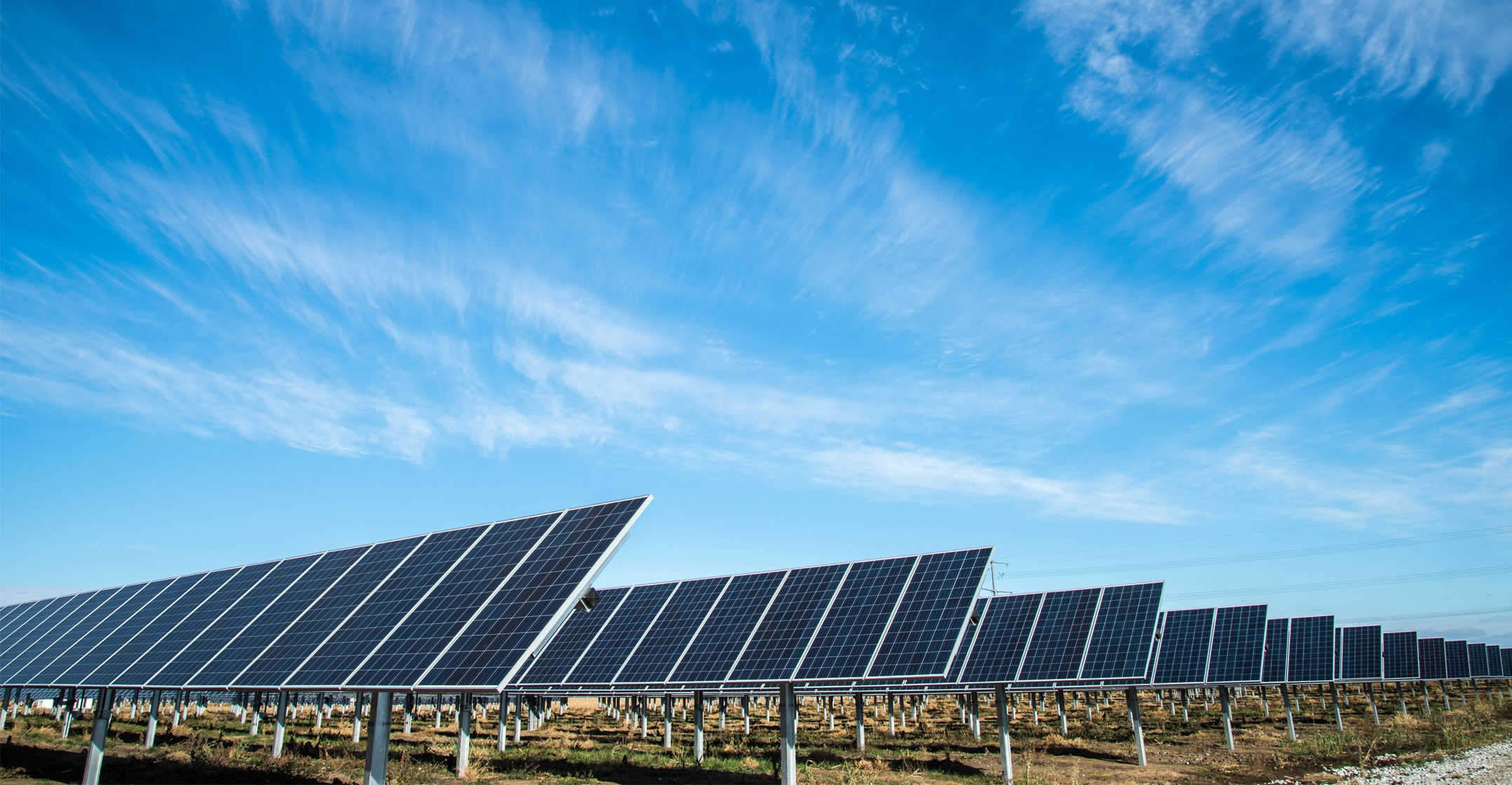
    The solar industry has spent decades slashing the cost of generating electricity direct from the sun. Now it’s focusing on making panels even more powerful.

    With savings in equipment manufacturing hitting a plateau, and more recently pressured by rising prices of raw materials, producers are stepping up work on advances in technology — building better components and employing increasingly sophisticated designs to generate more electricity from the same-sized solar farms.

    “The first 20 years in the 21st century saw huge reductions in module prices, but the speed of the reduction started to level off noticeably in the past two years,” said Xiaojing Sun, global solar research leader at Wood Mackenzie. “Fortunately, new technologies will create further cost-of-electricity reductions.”

    A push for more powerful solar equipment underscores how further cost reductions remain essential to advance the shift away from fossil fuels

    A push for more powerful solar equipment underscores how further cost reductions remain essential to advance the shift away from fossil fuels. While grid-sized solar farms are now typically cheaper than even the most advanced coal or gas-fired plants, additional savings will be required to pair clean energy sources with the expensive storage technology that’s needed for around-the-clock carbon-free power.

    Bigger factories, the use of automation and more efficient production methods have delivered economies of scale, lower labour costs and less material waste for the solar sector. The average cost of a solar panel dropped by 90% from 2010 to 2020.

    Crucial

    Boosting power generation per panel means developers can deliver the same amount of electricity from a smaller-sized operation. That’s potentially crucial as costs of land, construction, engineering and other equipment haven’t fallen in the same way as panel prices.

    It can even make sense to pay a premium for more advanced technology. “We’re seeing people willing to pay a higher price for a higher wattage module that lets them produce more power and make more money off their land,” said Jenny Chase, lead solar researcher at BloombergNEF.

    Higher-powered systems are already arriving. Through much of the past decade, most solar panels produced a maximum of about 400W of electricity. In early 2020, companies began selling 500W panels, and in June, China-based Risen Energy introduced a 700W model.
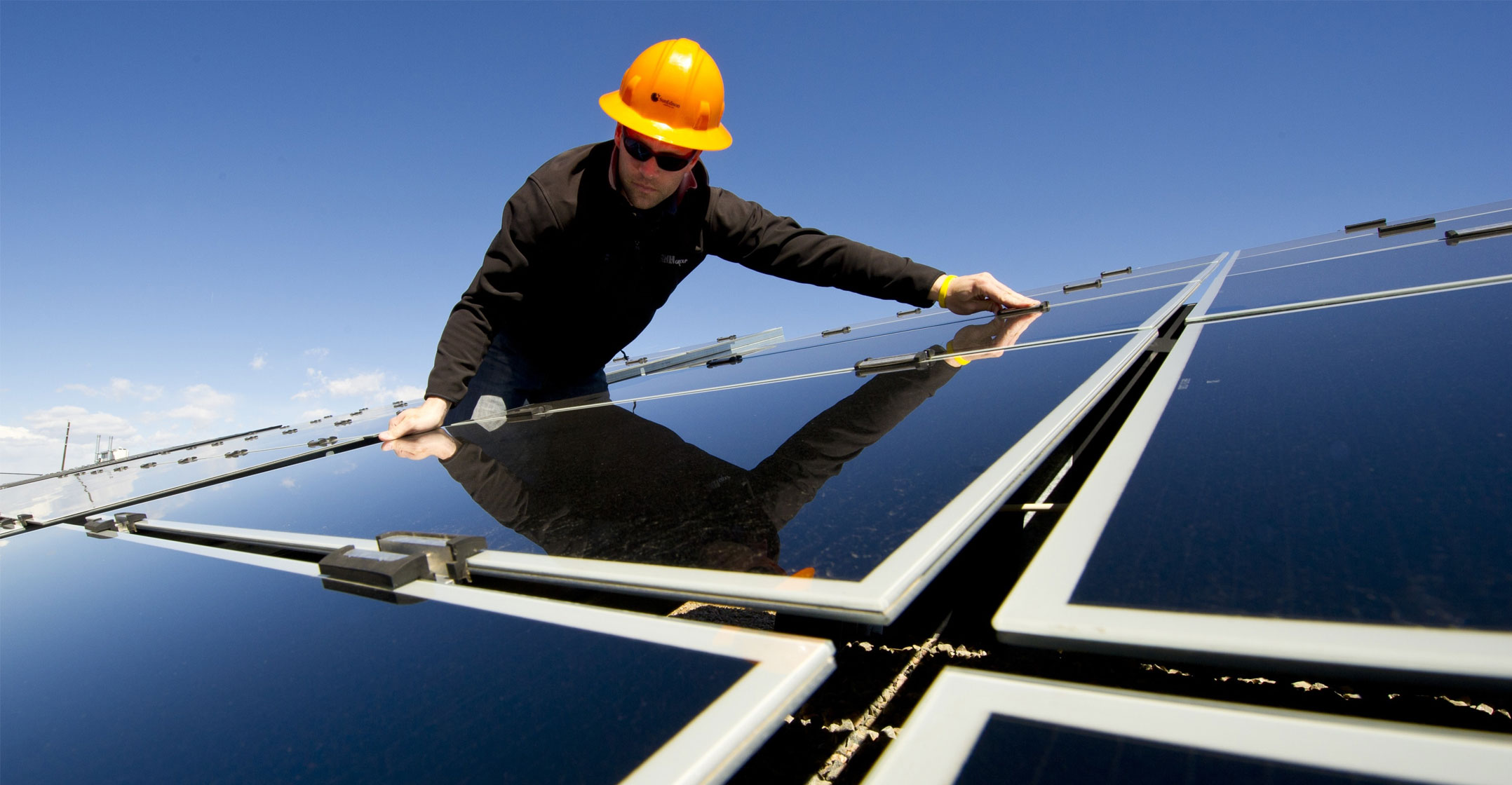
    Here are some of the ways that solar companies are super-charging panels:

    Perovskite

    While many current developments involve tweaks to existing technologies, perovskite promises a genuine breakthrough. Thinner and more transparent than polysilicon, the material that’s traditionally used, perovskite could eventually be layered on top of existing solar panels to boost efficiency, or be integrated with glass to make building windows that also generate power.

    “We will be able to take solar power to the next level,” said Kim Dohyung, principal researcher on a perovskite project team at Korea Electric Power, one of several companies experimenting with the material. “Ultimately, this new technology will enable us to make a huge contribution in lowering greenhouse gas emissions.”

    Adoption of perovskite has previously been challenged by costs and technical issues that prevented commercial-scale production. There are now signs that’s changing: Wuxi UtmoLight Technology in May announced plans to start a pilot line by October with mass production beginning in 2023.

    Bi-facial panels

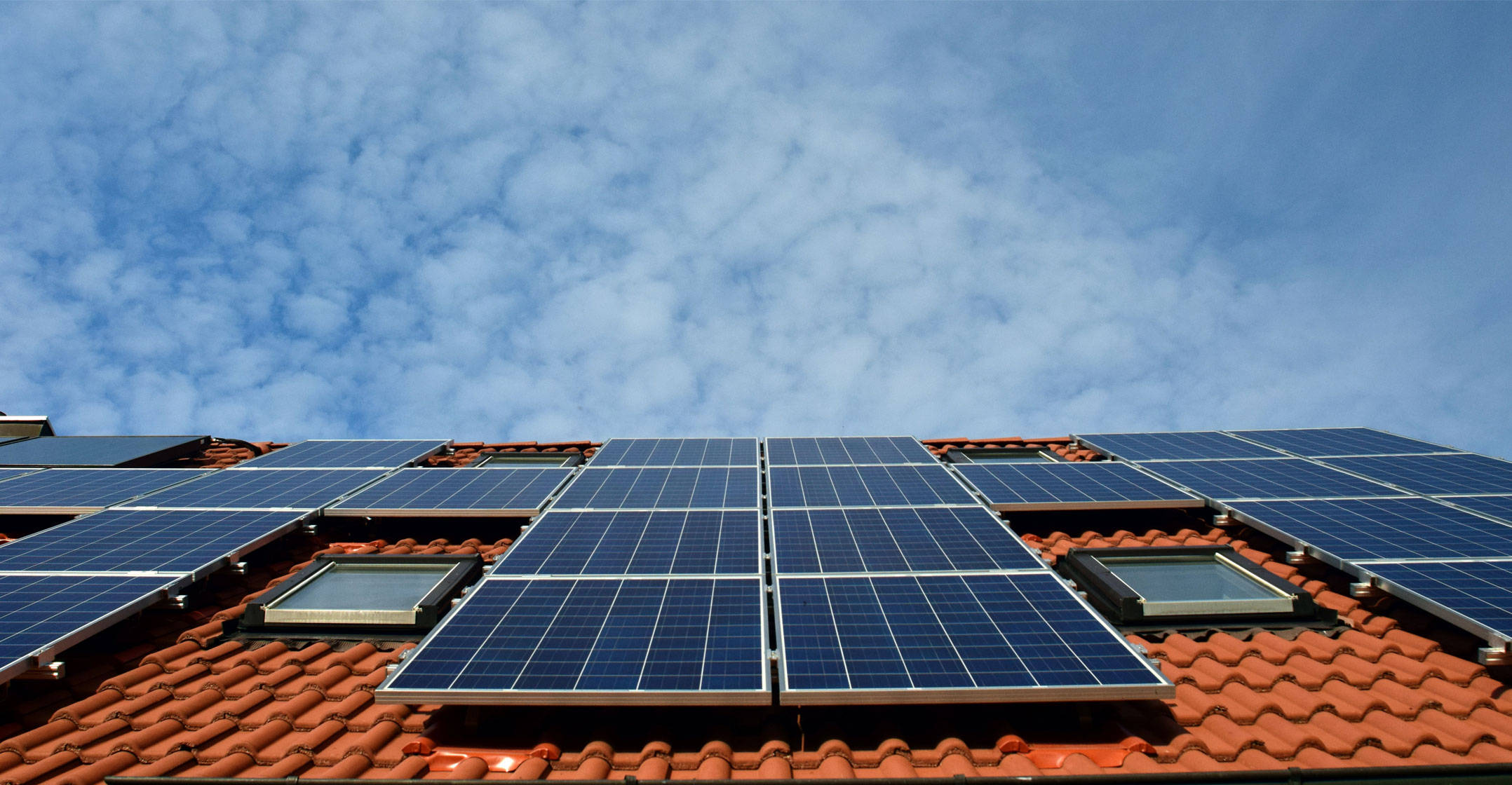
    Solar panels typically get their power from the side that faces the sun, but can also make use of the small amount of light that reflects back off the ground. Bi-facial panels started to gain in popularity in 2019, with producers seeking to capture the extra increments of electricity by replacing opaque backing material with specialist glass.

    The trend caught solar glass suppliers off-guard and briefly caused prices for the material to soar. Late last year, China loosened regulations around glass manufacturing capacity, and that should prepare the ground for more widespread adoption of the two-sided solar technology.
    Doped polysilicon

    Another change that can deliver an increase in power is shifting from positively charged silicon material for solar panels to negatively charged, or n-type, products.

    N-type material is made by doping polysilicon with a small amount of an element with an extra electron like phosphorous. It’s more expensive, but can be as much as 3.5% more powerful than the material that currently dominates. The products are expected to begin taking market share in 2024 and be the dominant material by 2028, according to PV-Tech.

    In the solar supply chain, ultra-refined polysilicon is shaped into rectangular ingots, which are in turn sliced into ultra-thin squares known as wafers. Those wafers are wired into cells and pieced together to form solar panels.

    Bigger wafers, better cells

    For most of the 2010s, the standard solar wafer was a 156mm square of polysilicon, about the size of the front of a CD case. Now, companies are making the squares bigger to boost efficiency and reduce manufacturing costs. Producers are pushing 182mm and 210mm wafers, and the larger sizes will grow from about 19% of the market share this year to more than half by 2023, according to Wood Mackenzie’s Sun.

    The factories that wire wafers into cells — which convert electrons excited by photons of light into electricity — are adding new capacity for designs like heterojunction or tunnel‐oxide passivated contact cells. While more expensive to make, those structures allow the electrons to keep bouncing around for longer, increasing the amount of power they generate.  — Reported by Dan Murtaugh, (c) 2021 Bloomberg LP



    top
    WhatsApp YouTube Follow on Google News Add as preferred source on Google
    Share. Facebook Twitter LinkedIn WhatsApp Telegram Email Copy Link
    Previous ArticlePentagon scraps $10-billion Microsoft cloud contract
    Next Article Gauteng government ‘accidently paid Microsoft $21m instead of R21m’

    Related Posts

    18GW in unplanned breakdowns cripple Eskom

    2 November 2021

    Nersa kicks the Karpowership can down the road

    13 September 2021

    If you think South African load shedding is bad, try Zimbabwe’s

    13 September 2021
    Company News
    Cell C delivers maiden results with growth momentum, financial flexibility - Jorges Mendes

    Cell C delivers maiden results with growth momentum, financial flexibility

    13 February 2026
    Start-up king joins Paratus Rwanda - Innocent Mutimura

    Start-up king joins Paratus Rwanda

    13 February 2026
    How NEC XON tackled identity risk for a major telco - Michael de Neuilly Rice

    How NEC XON tackled identity risk for a major telco

    11 February 2026
    Opinion
    A million reasons monopolies don't work - Duncan McLeod

    A million reasons monopolies don’t work

    10 February 2026
    Eskom unbundling U-turn threatens to undo hard-won electricity gains - Busi Mavuso

    Eskom unbundling U-turn threatens to undo hard-won electricity gains

    9 February 2026
    South Africa's skills advantage is being overlooked at home - Richard Firth

    South Africa’s skills advantage is being overlooked at home

    29 January 2026

    Subscribe to Updates

    Get the best South African technology news and analysis delivered to your e-mail inbox every morning.

    Latest Posts
    Cell C cleans up its balance sheet but faces tough trading reality

    Cell C cleans up its balance sheet but faces tough trading reality

    13 February 2026
    MVNO business shines in Cell C's first post-listing results - Jorges Mendes

    MVNO business shines in Cell C’s first post-listing results

    13 February 2026
    Ramaphosa presses ahead with Eskom break-up - Cyril Ramaphosa

    Ramaphosa presses ahead with Eskom break-up

    13 February 2026
    The key technology takeaways from Ramaphosa's 2026 Sona - Cyril Ramaphosa

    The key technology takeaways from Ramaphosa’s 2026 Sona

    13 February 2026
    © 2009 - 2026 NewsCentral Media
    • Cookie policy (ZA)
    • TechCentral – privacy and Popia

    Type above and press Enter to search. Press Esc to cancel.

    Manage consent

    TechCentral uses cookies to enhance its offerings. Consenting to these technologies allows us to serve you better. Not consenting or withdrawing consent may adversely affect certain features and functions of the website.

    Functional Always active
    The technical storage or access is strictly necessary for the legitimate purpose of enabling the use of a specific service explicitly requested by the subscriber or user, or for the sole purpose of carrying out the transmission of a communication over an electronic communications network.
    Preferences
    The technical storage or access is necessary for the legitimate purpose of storing preferences that are not requested by the subscriber or user.
    Statistics
    The technical storage or access that is used exclusively for statistical purposes. The technical storage or access that is used exclusively for anonymous statistical purposes. Without a subpoena, voluntary compliance on the part of your Internet Service Provider, or additional records from a third party, information stored or retrieved for this purpose alone cannot usually be used to identify you.
    Marketing
    The technical storage or access is required to create user profiles to send advertising, or to track the user on a website or across several websites for similar marketing purposes.
    • Manage options
    • Manage services
    • Manage {vendor_count} vendors
    • Read more about these purposes
    View preferences
    • {title}
    • {title}
    • {title}