


Close Menu
TechCentralTechCentral

    Subscribe to the newsletter

    Get the best South African technology news and analysis delivered to your e-mail inbox every morning.

    Facebook X (Twitter) YouTube LinkedIn
    WhatsApp Facebook X (Twitter) LinkedIn YouTube
    TechCentralTechCentral
    • News
      Vuyani Jarana: Mobile coverage masks a deeper broadband failure

      Vuyani Jarana: Mobile coverage masks a deeper broadband failure

      30 January 2026
      SABC Plus to flight Microsoft AI training videos

      SABC Plus to flight Microsoft AI training videos

      30 January 2026
      Fibre ducts

      Fibre industry consolidation in KZN

      30 January 2026
      Watts & Wheels S1E3: 'BYD's Corolla Cross challenger'

      Watts & Wheels S1E3: ‘BYD’s Corolla Cross challenger’

      30 January 2026
      What ordinary South Africans really think of AI

      What ordinary South Africans really think of AI

      30 January 2026
    • World
      Apple acquires audio AI start-up Q.ai

      Apple acquires audio AI start-up Q.ai

      30 January 2026
      SpaceX IPO may be largest in history

      SpaceX IPO may be largest in history

      28 January 2026
      Nvidia throws AI at the weather

      Nvidia throws AI at weather forecasting

      27 January 2026
      Debate erupts over value of in-flight Wi-Fi

      Debate erupts over value of in-flight Wi-Fi

      26 January 2026
      Intel takes another hit - Intel CEO Lip-Bu Tan. Laure Andrillon/Reuters

      Intel takes another hit

      23 January 2026
    • In-depth
      How liberalisation is rewiring South Africa's power sector

      How liberalisation is rewiring South Africa’s power sector

      21 January 2026
      The top-performing South African tech shares of 2025

      The top-performing South African tech shares of 2025

      12 January 2026
      Digital authoritarianism grows as African states normalise internet blackouts

      Digital authoritarianism grows as African states normalise internet blackouts

      19 December 2025
      TechCentral's South African Newsmakers of 2025

      TechCentral’s South African Newsmakers of 2025

      18 December 2025
      Black Friday goes digital in South Africa as online spending surges to record high

      Black Friday goes digital in South Africa as online spending surges to record high

      4 December 2025
    • TCS
      TCS+ | How Cloud On Demand is helping SA businesses succeed in the cloud - Xhenia Rhode, Dion Kalicharan

      TCS+ | Cloud On Demand and Consnet: inside a real-world AWS partner success story

      30 January 2026
      Watts & Wheels S1E3: 'BYD's Corolla Cross challenger'

      Watts & Wheels S1E2: ‘China attacks, BMW digs in, Toyota’s sublime supercar’

      23 January 2026

      TCS+ | Why cybersecurity is becoming a competitive advantage for SA businesses

      20 January 2026
      Watts & Wheels S1E3: 'BYD's Corolla Cross challenger'

      Watts & Wheels: S1E1 – ‘William, Prince of Wheels’

      8 January 2026
      TCS+ | Africa's digital transformation - unlocking AI through cloud and culture - Cliff de Wit Accelera Digital Group

      TCS+ | Cloud without culture won’t deliver AI: Accelera’s Cliff de Wit

      12 December 2025
    • Opinion
      South Africa's skills advantage is being overlooked at home - Richard Firth

      South Africa’s skills advantage is being overlooked at home

      29 January 2026
      Why Elon Musk's Starlink is a 'hard no' for me - Songezo Zibi

      Why Elon Musk’s Starlink is a ‘hard no’ for me

      26 January 2026
      South Africa's new fibre broadband battle - Duncan McLeod

      South Africa’s new fibre broadband battle

      20 January 2026
      AI moves from pilots to production in South African companies - Nazia Pillay SAP

      AI moves from pilots to production in South African companies

      20 January 2026
      South Africa's new fibre broadband battle - Duncan McLeod

      ANC’s attack on Solly Malatsi shows how BEE dogma trumps economic reality

      14 December 2025
    • Company Hubs
      • Africa Data Centres
      • AfriGIS
      • Altron Digital Business
      • Altron Document Solutions
      • Altron Group
      • Arctic Wolf
      • AvertITD
      • Braintree
      • CallMiner
      • CambriLearn
      • CYBER1 Solutions
      • Digicloud Africa
      • Digimune
      • Domains.co.za
      • ESET
      • Euphoria Telecom
      • Incredible Business
      • iONLINE
      • IQbusiness
      • Iris Network Systems
      • LSD Open
      • NEC XON
      • Netstar
      • Network Platforms
      • Next DLP
      • Ovations
      • Paracon
      • Paratus
      • Q-KON
      • SevenC
      • SkyWire
      • Solid8 Technologies
      • Telit Cinterion
      • Tenable
      • Vertiv
      • Videri Digital
      • Vodacom Business
      • Wipro
      • Workday
      • XLink
    • Sections
      • AI and machine learning
      • Banking
      • Broadcasting and Media
      • Cloud services
      • Contact centres and CX
      • Cryptocurrencies
      • Education and skills
      • Electronics and hardware
      • Energy and sustainability
      • Enterprise software
      • Financial services
      • Information security
      • Internet and connectivity
      • Internet of Things
      • Investment
      • IT services
      • Lifestyle
      • Motoring
      • Public sector
      • Retail and e-commerce
      • Satellite communications
      • Science
      • SMEs and start-ups
      • Social media
      • Talent and leadership
      • Telecoms
    • Events
    • Advertise
    TechCentralTechCentral
    Home » Sections » Telecoms » Telkom is not a spent force – yet

    Telkom is not a spent force – yet

    But the former telecommunications monopoly faces huge challenges if it hopes to remain a significant market player.
    By Sandra Laurence9 June 2023
    Twitter LinkedIn Facebook WhatsApp Email Telegram Copy Link
    News Alerts
    WhatsApp

    Former telecommunications monopoly Telkom, which until about 15 years ago had a stranglehold over the sector in South Africa, faces huge challenges if it hopes to remain a significant market player.

    Rapidly growing demand for data services such as video streaming and cloud-based business applications is making further significant investment essential for telecoms companies, including Telkom.

    The problem is that although the company has an extensive fibre network, most South Africans rely on wireless rather than fixed lines to connect to the internet. Telkom Mobile has grown into a sizeable operation (placed third in the market behind Vodacom and MTN, but ahead of Cell C), but is going up against rivals with deeper pockets (Vodacom and MTN) in rolling out 5G.

    Telkom announced in February that it would let go up to 15% of its employees to cut costs

    Also, Telkom must deal with handicaps it inherited by starting life as 100% state owned – one of these being that it has many more employees than MTN or Vodacom relative to the revenue it generates.

    As a result, Telkom announced in February that it would let go up to 15% of its employees to cut costs, blaming tough market conditions. It also announced a cost-saving drive to increase profits impacted by rolling power cuts and high working capital requirements.

    It said it aims to cut costs “over the next six to 18 months and return to a blended group Ebitda margin of more than 25%”. (Ebitda, a measure of operating profit, is an acronym for earnings before interest, tax, depreciation and amortisation.)

    A top-rated telecoms analyst, who is precluded from being quoted in the media due to company policy, believes a key indicator to watch when Telkom publishes its annual results for the 12 months ended 31 March 2023 next Tuesday is the operating outlook and the company’s plans to conserve or generate cash flow after the planned job cuts have been completed.

    Impairment shock

    Last month, Telkom warned shareholders that its board was considering an impairment in respect of the group’s cash-generating units – Openserve, Telkom Consumer, Gyro and BCX – of about R13-billion (excluding tax effects).

    Telkom will also take a big hit to earnings due to the impairment charge. Reported Heps will be as much as 105% lower, Telkom warned. Basic earnings per share, or Beps, will fall by as much as 485% to a loss of around R20/share.

    “The asset impairment is non-cash, so while somewhat negative, it is not really that relevant to the outlook,” the telecoms analyst said. “Tied to the cash-flow outlook would be plans to reduce net debt to below the company’s guidance of 1.5 times net debt to Ebitda – in other words, balance sheet stability is key.”

    Though Telkom’s annual results will disappoint – the recent profit warning sent the shares tumbling – they should be seen in the context of the company having to reinvent itself from being a fixed-line monopoly that could dictate prices to the market, to a full-service telecoms operator trying to hold its own in a competitive market.

    Its mobile operation, for instance, has well over 18 million subscribers, despite being launched 16 years after MTN and Vodacom’s 1994 debut. It has even overtaken the previously third-placed Cell C. Telkom at one stage had entertained buying Cell C, but those talks went nowhere.
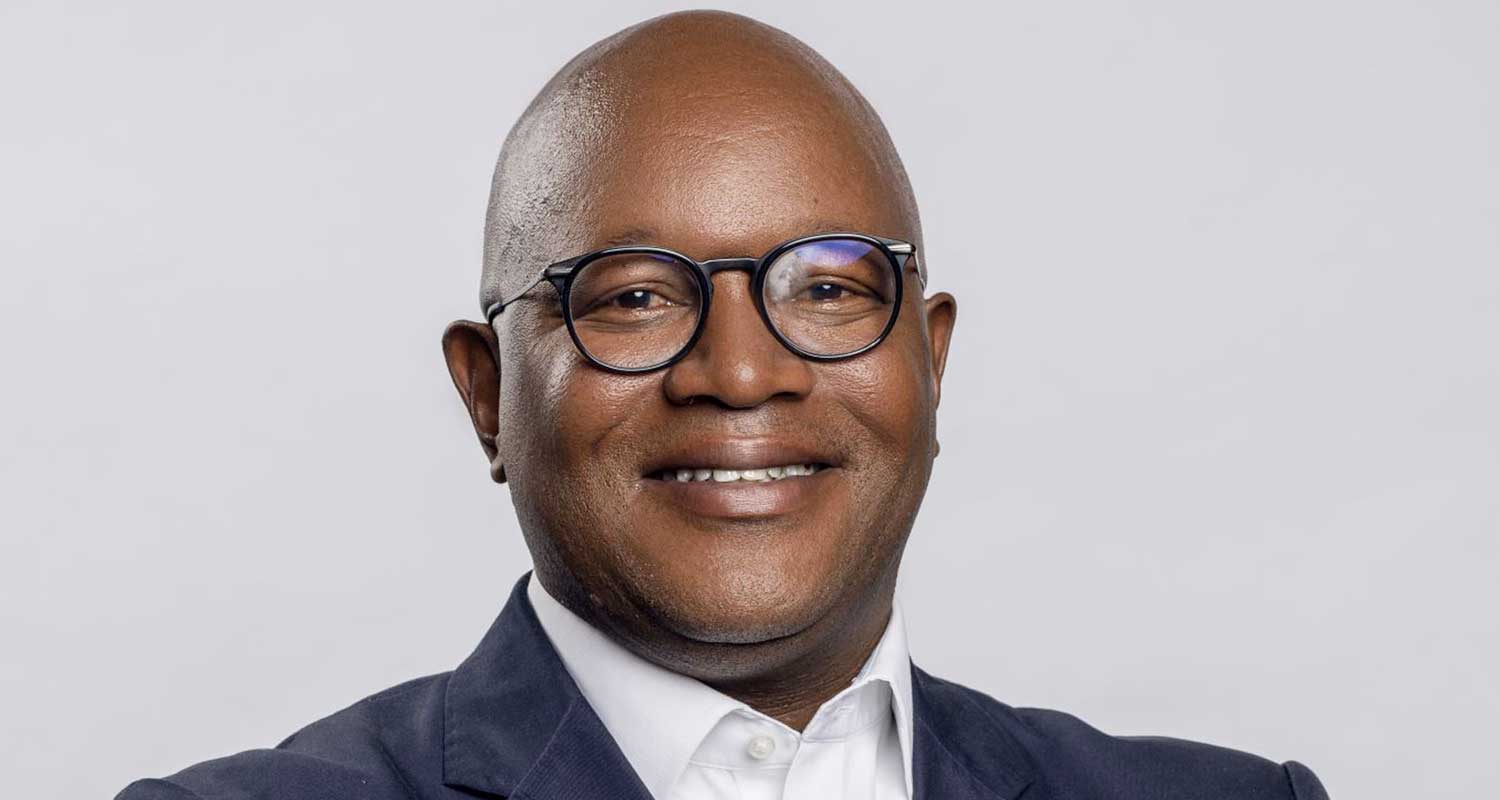
    Telkom CEO Serame Taukobong

    Cell C’s largest shareholder, Blue Label Telecoms, has since led a recapitalisation of the mobile operator’s balance sheet. Cell C also exited the wireless infrastructure business after realising it didn’t have the scale or capital resources to compete in network spending with its bigger rivals.

    Could Telkom soon find itself in the same boat?

    The weakness of its balance sheet compared to its rivals leaves it at a disadvantage in a difficult economy and given the expensive complications that come with dealing with South Africa’s rolling blackouts.

    The concern is that Telkom could easily become a minor player in a market it once dominated. Africa Analysis business development director Dobek Pater told TechCentral that one of the major problems is that for several years there has been little strategic consistency.

    “Telkom’s struggles have resulted from both internal and external factors. A lack of consecutive and clear strategy means it has been oscillating between different strategies over the past several years, particularly under [former CEO] Sipho Maseko; focusing one year on fibre (and Openserve), another year on Telkom Mobile, then back to fibre, etc. The lack of clear focus and persistent pursuit of defined goals has resulted in Telkom not gaining much of an advantage in any specific area of the telecoms market,” he said.

    A lack of consecutive and clear strategy means it has been oscillating between different strategies

    Changing mobile market dynamics also played a part, he said. “Telkom Mobile used to focus on price competition and the offer of good packages to attract customers and grow its subscriber base. It still does that, but the market has changed, with prices of mobile services (both voice and data) continuously declining. It has become more difficult for Telkom to compete on price, particularly given that it also roams on the larger mobile networks (MTN and Vodacom) in parts of the country.”

    The wholesale infrastructure environment has also become more competitive. Newer operators have been building infrastructure, providing downstream retail service providers with greater choice of wholesale products. This makes it more difficult for Telkom to compete.

    Pater said growth in the IT market, including cloud services, means business customers have a greater choice available to them from both domestic and foreign providers. This has made life more difficult for BCX, Telkom’s IT services subsidiary, which it acquired in 2015 for R2.7-billion in cash.

    Under pressure

    Asked whether there is much left to salvage at Telkom, Pater said there are elements of Telkom that continue to present good value:

    • Its Openserve and telecoms network infrastructure (mainly fibre) – the most extensive in the country;
    • Telkom Mobile – here the value lies mainly with the spectrum Telkom holds;
    • Swiftnet – the passive infrastructure (towers, excluding radio masts) may be of value as mobile/wireless infrastructure must be densified, especially with the deployment of high-frequency 5G networks;
    • Telkom property management company Gyro’s telephone exchanges and data centres may be valuable as the demand for cloud server space grows. This would depend on the state of these facilities and how much upgrading needs to be done; and
    • BCX still has an excellent corporate customer portfolio, with extensive relationships in this segment of the market.

    Telkom warned recently that its free cash flow is under severe pressure due to the impact of “front-loaded investment in working capital”. The subsidisation of smartphones and other devices, designed to grow Telkom’s contract user base, is putting huge pressure on company margins and cash generation as it fights to retain and grow market share in mobile.

    “The working capital investment in mobile handsets and the post-paid cost of sales are immediate costs, with corresponding revenues recognised over 24-36 months and therefore do not immediately offset the upfront costs associated with growing our post-paid subscriber base,” Telkom said in February.

    Equities analyst Irnest Kaplan said although Telkom is facing challenging circumstances, the company – which is still 40.5% directly held by the South African government – is “not going to disappear” because “lots of big businesses still rely on it and it has lots of good things going for it”.

    Its assets are also valuable, Kaplan said: its extensive fibre network can’t be replicated easily, which is highly attractive.

    Dobek Pater

    “But fixed-line operators are slowly in decline; they’re having to defend what they have. Its mobile business is doing well, but Telkom’s small and it’s competing against big spenders like MTN, which is all over Africa, and Vodacom, which is spending huge amounts on capex,” he said.

    In their most recent full-year results, South Africa’s top three telecoms operators spent the following sums on network investments and other capital expenditure:

    • Vodacom spent R11.2-billion, a record amount in one year (to end-March 2023);
    • MTN spent R8.8-billion (to end-December 2022); and
    • Telkom spent R6.5-billion (excluding BCX, Gyro and Trudon), but only R2.8-billion was spent on its mobile network, with much of the rest (R2.1-billion) going to fibre.

    “It’s not the end of Telkom. What will be interesting is to chart its path from here,” said Kaplan.

    One person who is clearly bullish about the company’s prospect is former CEO Maseko, who is backing a possible bid to buy 35% of its equity. Maseko’s consortium includes his investment fund, Afrifund, and Mauritius-based Axian Telecom.  – © 2023 NewsCentral Media

    • TechCentral will provide full coverage of Telkom’s annual results next Tuesday, including an interview with group CEO Serame Taukobong



    Africa Analysis Axian Telecom BCX Cell C Dobek Pater Gyro Irnest Kaplan MTN MTN South Africa Openserve Serame Taukobong Sipho Maseko Swiftnet Telkom Vodacom Vodacom South Africa
    WhatsApp YouTube Follow on Google News Add as preferred source on Google
    Share. Facebook Twitter LinkedIn WhatsApp Telegram Email Copy Link
    Previous ArticleThere’s another big winner in the AI frenzy
    Next Article Zoom Fibre helps bridge the digital divide in South Africa

    Related Posts

    Vuyani Jarana: Mobile coverage masks a deeper broadband failure

    Vuyani Jarana: Mobile coverage masks a deeper broadband failure

    30 January 2026
    Mobile operators face tougher rules on data and billing

    Mobile operators face tougher rules on data and billing

    26 January 2026
    South Africa's new fibre broadband battle - Duncan McLeod

    South Africa’s new fibre broadband battle

    20 January 2026
    Company News
    Huawei turns 25 in South Africa, celebrates with major device discounts

    Huawei turns 25 in South Africa, celebrates with major device discounts

    30 January 2026
    Phishing has not disappeared, but it has grown up - KnowBe4

    Phishing has not disappeared, but it has grown up

    30 January 2026
    Smartphone affordability: South Africa's new economic divide - PayJoy

    Smartphone affordability: South Africa’s new economic divide

    29 January 2026
    Opinion
    South Africa's skills advantage is being overlooked at home - Richard Firth

    South Africa’s skills advantage is being overlooked at home

    29 January 2026
    Why Elon Musk's Starlink is a 'hard no' for me - Songezo Zibi

    Why Elon Musk’s Starlink is a ‘hard no’ for me

    26 January 2026
    South Africa's new fibre broadband battle - Duncan McLeod

    South Africa’s new fibre broadband battle

    20 January 2026

    Subscribe to Updates

    Get the best South African technology news and analysis delivered to your e-mail inbox every morning.

    Latest Posts
    Vuyani Jarana: Mobile coverage masks a deeper broadband failure

    Vuyani Jarana: Mobile coverage masks a deeper broadband failure

    30 January 2026
    TCS+ | How Cloud On Demand is helping SA businesses succeed in the cloud - Xhenia Rhode, Dion Kalicharan

    TCS+ | Cloud On Demand and Consnet: inside a real-world AWS partner success story

    30 January 2026
    Huawei turns 25 in South Africa, celebrates with major device discounts

    Huawei turns 25 in South Africa, celebrates with major device discounts

    30 January 2026
    SABC Plus to flight Microsoft AI training videos

    SABC Plus to flight Microsoft AI training videos

    30 January 2026
    © 2009 - 2026 NewsCentral Media
    • Cookie policy (ZA)
    • TechCentral – privacy and Popia

    Type above and press Enter to search. Press Esc to cancel.

    Manage consent

    TechCentral uses cookies to enhance its offerings. Consenting to these technologies allows us to serve you better. Not consenting or withdrawing consent may adversely affect certain features and functions of the website.

    Functional Always active
    The technical storage or access is strictly necessary for the legitimate purpose of enabling the use of a specific service explicitly requested by the subscriber or user, or for the sole purpose of carrying out the transmission of a communication over an electronic communications network.
    Preferences
    The technical storage or access is necessary for the legitimate purpose of storing preferences that are not requested by the subscriber or user.
    Statistics
    The technical storage or access that is used exclusively for statistical purposes. The technical storage or access that is used exclusively for anonymous statistical purposes. Without a subpoena, voluntary compliance on the part of your Internet Service Provider, or additional records from a third party, information stored or retrieved for this purpose alone cannot usually be used to identify you.
    Marketing
    The technical storage or access is required to create user profiles to send advertising, or to track the user on a website or across several websites for similar marketing purposes.
    • Manage options
    • Manage services
    • Manage {vendor_count} vendors
    • Read more about these purposes
    View preferences
    • {title}
    • {title}
    • {title}