Close Menu
TechCentralTechCentral

    Subscribe to the newsletter

    Get the best South African technology news and analysis delivered to your e-mail inbox every morning.

    Facebook X (Twitter) YouTube LinkedIn
    WhatsApp Facebook X (Twitter) LinkedIn YouTube
    TechCentralTechCentral
    • News
      Nvidia is buying the home of open-source AI Hugging Face

      Nvidia is buying the home of open-source AI

      27 August 2026
      The hole in the law above the Karoo

      The hole in the law above the Karoo

      26 August 2026
      Blu Label says MTN is coming for its Capitec business - Brett Levy

      Blu Label says MTN is coming for its Capitec business

      26 August 2026
      Nvidia's top AI chips are coming to a Centurion data centre

      Nvidia’s top AI chips are coming to a Centurion data centre

      26 August 2026
      A major industry is turning its back on Eskom

      A major industry is turning its back on Eskom

      26 August 2026
    • World
      AI-generated music banned from Australian charts

      AI-generated music banned from Australian charts

      26 August 2026
      Traders brace for a R4.5-trillion swing in Nvidia's value

      Traders brace for a R4.5-trillion swing in Nvidia’s value

      25 August 2026
      Russia building its own Starlink - and faster than expected - Vadym Skibitskyi

      Russia building its own Starlink – and faster than expected

      11 August 2026
      Meta AI will now tell parents if their teen is in crisis

      Meta AI will now tell parents if their teen is in crisis

      17 July 2026
      IBM shares crash 25% as AI upends software spending - Arvind Krishna

      IBM shares crash 25% as AI upends software spending

      15 July 2026
    • In-depth
      Google DeepMind CEO Demis Hassabis. Image: John Sears

      The plan to stop AI from breaking the world

      16 July 2026
      The internet has a Strait of Hormuz problem

      The internet has a Strait of Hormuz problem

      15 July 2026
      AI boom sparks rally, frenzy and fear

      AI boom sparks rally, frenzy and fear

      11 June 2026
      Every plug-in hybrid on sale in South Africa, ranked by price - Lamborghini Temerario

      Every plug-in hybrid on sale in South Africa, ranked by price

      7 June 2026
      What Wi-Fi 8 will mean for wireless networks

      What Wi-Fi 8 will mean for wireless networks

      1 June 2026
    • TCS
      Watts & Wheels S1E8: 'Tesla lands in Africa, just not here'

      Watts & Wheels S1E8: ‘Tesla lands in Africa, just not here’

      24 August 2026
      Meet the CIO | Discovery's Derek Wilcocks on AI, guardrails and growth

      Meet the CIO | Derek Wilcocks on how AI personalised Vitality

      13 August 2026
      TCS | Money just became native to the internet - Steven Boykey Sidley

      TCS | Money just became native to the internet – Steven Boykey Sidley

      12 August 2026
      TCS+ | Specops' Darren James on continuous trust in an AI world

      TCS+ | Specops’ Darren James on continuous trust in an AI world

      7 August 2026
      TCS+ | How AI is turning hardware into a subscription service - Shane van der Merwe Merchant West

      TCS+ | How AI is turning hardware into a subscription service

      6 August 2026
    • Opinion
      The fragile joint in the Capitec machine - Pambos Soteriades

      The R197-billion market the banks can’t reach

      25 August 2026
      South African tech's compounding debt problem - Jannie van Zyl

      Management consulting as we know it is over

      21 August 2026
      South African tech's compounding debt problem - Jannie van Zyl

      The most dangerous customer is the quiet one

      10 August 2026
      South African tech's compounding debt problem - Jannie van Zyl

      South African tech’s compounding debt problem

      29 July 2026
      The fragile joint in the Capitec machine - Pambos Soteriades

      Best network, worst vibes: the puzzle of SA telecoms

      20 July 2026
    • Company Hubs
      • 1Stream
      • Africa Data Centres
      • AfriGIS
      • Altron Digital Business
      • Altron Document Solutions
      • Altron Group
      • Arctic Wolf
      • Ascent Technology
      • AvertITD
      • BBD
      • Braintree
      • CallMiner
      • CambriLearn
      • CM Telecom
      • Contactable
      • CYBER1 Solutions
      • Digicloud Africa
      • Digimune
      • Domains.co.za
      • ESET
      • Euphoria Telecom
      • HOSTAFRICA
      • Incredible Business
      • iONLINE
      • IQbusiness
      • Iris Network Systems
      • Kaspersky
      • LSD Open
      • Mitel
      • NEC XON
      • Netstar
      • Network Platforms
      • Next DLP
      • Ovations
      • Paracon
      • Paratus
      • Q-KON
      • SevenC
      • SkyWire
      • Solid8 Technologies
      • Telit Cinterion
      • Telviva
      • Tenable
      • Vertiv
      • Videri Digital
      • Vodacom Business
      • Vox
      • Wipro
      • Workday
      • XLink
    • Sections
      • AI and machine learning
      • Banking
      • Broadcasting and Media
      • Cloud services
      • Contact centres and CX
      • Cryptocurrencies
      • Education and skills
      • Electronics and hardware
      • Energy and sustainability
      • Enterprise software
      • Financial services
      • HealthTech
      • Information security
      • Internet and connectivity
      • Internet of Things
      • Investment
      • IT services
      • Lifestyle
      • Policy and regulation
      • Public sector
      • Retail and e-commerce
      • Satellite communications
      • Science
      • SMEs and start-ups
      • Social media
      • Talent and leadership
      • Telecoms
      • Watts & Wheels
    • Events
    • Advertise
    TechCentralTechCentral
    Home » Sections » Investment » Trying to kill Chinese tech only makes it stronger

    Trying to kill Chinese tech only makes it stronger

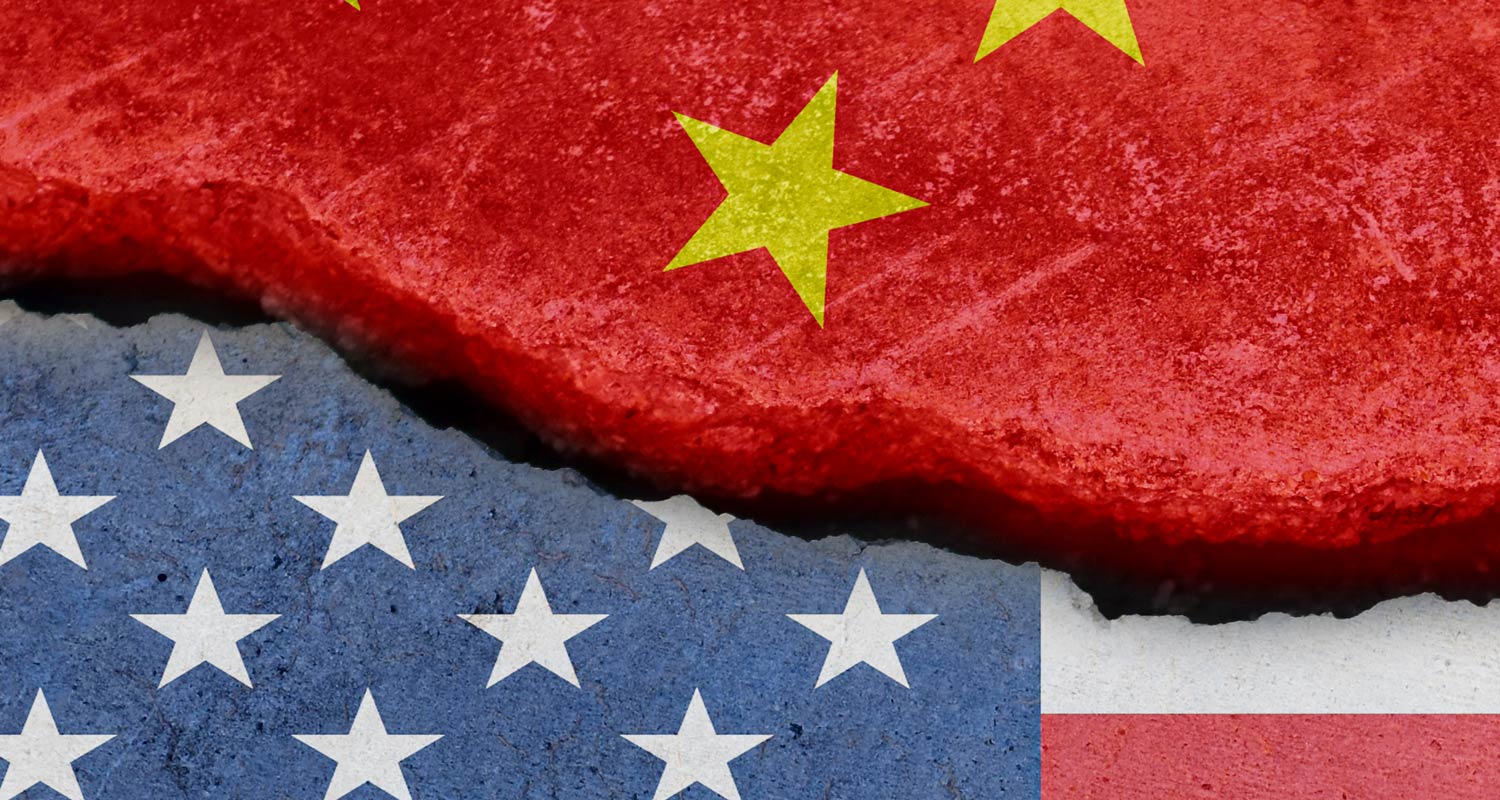
    In trying to block China’s climb up the ladder of technological sophistication, the US may inadvertently be giving its rival a hand up.
    By Agency Staff4 July 2024
    Twitter LinkedIn Facebook WhatsApp Email Telegram Copy Link
    News Alerts
    WhatsApp

    Trying to kill Chinese tech only makes it strongerIn trying to block China’s climb up the ladder of technological sophistication, the US may inadvertently be giving its rival a hand up.

    Consider a speech made by Premier Li Qiang at last week’s World Economic Forum in the port city of Dalian east of Beijing.

    “We need to confront the growth predicament of the world economy,” he said, citing the International Monetary Fund’s forecast that global output is heading toward its slowest growth pace in decades. China’s own deceleration may be one of the biggest contributing factors to this shift: the IMF’s predictions show almost all of the slowdown happening in emerging markets rather than rich countries.

    The current malaise appears to come from the waning of the third Industrial Revolution in IT

    What’s significant is the solution Li pitched. The current malaise appears to come from the waning of the third Industrial Revolution in IT, he argued, making it all the more urgent that the world lean into clean energy, artificial intelligence and biotech to spark a fourth one.

    That prescription is on a collision course with the technological trade war over semiconductors, solar panels, electric vehicles and lithium-ion batteries that’s currently brewing between the US and China. The more that Washington tries to slow down China’s technological advances, the harder China is likely to push to move forward.

    We’re already seeing real-world policy implications. Asked afterwards what measures the government was taking to address the slowdown, he pointed to “cash-for-clunkers” plans to upgrade old equipment and machinery, as well as China’s lavish incentives for research and development spending.

    Significant

    This investment is genuine and significant. The C¥500-billion (R1.3-trillion) facility that the People’s Bank of China established in April to encourage lenders to make more loans to upgrade equipment, on top of an identical C¥200-billion facility in 2022, leave that programme not much smaller than what the PBOC has dedicated to bailing out the housing market, which currently amounts to about C¥1.08-trillion.

    Since last year, companies that invest in research and development can also deduct twice the sum they spent from their tax bills, a potent incentive. R&D spending rose 8.1% in 2023, accounting for about 2.6% of GDP, according to government statistics.

    Read next: In China, Huawei is giving Nvidia a run for its money

    Despite all this backing, China is still firmly in second place. Its C¥3.3-trillion of R&D last year was not much more than half the US$885.6-billion that came out of the US in 2022, the latest year for which data is available. That ratio has held pretty constant for several years. Given the support for R&D in the Inflation Reduction Act, it’s possible that America’s lead over China is, if anything, widening.

    What’s clear, however, is that China is now able to get a phenomenal bang for its buck with this spending. At the same Dalian conference, Contemporary Amperex Technology founder Zeng Yuqun was boasting of upcoming products from the world’s biggest maker of lithium-ion batteries. These include a pack that could move a car 600km and be charged in 10 minutes, made without costly nickel and cobalt; another that holds about twice as much energy into each kilogram as conventional cells, and could potentially be used for small aircraft; and one based on abundant sodium rather than relatively scarce lithium.
    Visiting China and the US recently for the first time in five years, I found it hard to miss the technological advances that have been made. EVs appear to be as common in second-tier cities such as Dalian and Chengdu as they are in first-tier Shanghai. Even petrol-powered vehicles often seem futuristic in terms of designs and interiors, thanks to a car fleet that has still been growing, and so is less than half as old as those in the US and Europe. China may not quite have made it to the World Bank’s club of high-income countries yet, but it’s clear that it’s barely a sliver away.

    There are fundamental national security reasons behind Washington’s determination to prevent China from catching up on semiconductors and artificial intelligence. That’s understandable, given the geopolitical tensions between the two nations. But in raising levies against clean technology it’s simply closing the US market to the fruits of the genuine innovation that has taken place.

    Put an animal in a tough, hard-to-survive environment, and natural selection will turn it into a ruthless predator

    The economic slowdown and persistent inflation that we are witnessing worldwide is the result of a global economy that’s trading less with itself as tariff barriers rise. That’s not going to halt Beijing’s push for technological advancement. If anything, it’s going to accelerate it. If China’s exports weren’t facing such a difficult environment, the government wouldn’t have to push so hard on investment as an alternative lever of growth.

    Put an animal in a tough, hard-to-survive environment, and natural selection will turn it into a ruthless predator. Give it easy circumstances, and it evolves instead into prey. By trying to hamper China’s technological rise, America is only making it more powerful.  — David Fickling, (c) 2024 Bloomberg LP

    Read next: China is winning the gen AI patents arms race

    Follow TechCentral on Google News Add TechCentral as your preferred source on Google


    WhatsApp YouTube
    Share. Facebook Twitter LinkedIn WhatsApp Telegram Email Copy Link
    Previous ArticleBig opportunity for tech channel to become trusted advisors: Sage study
    Next Article LG sees EV battery breakthrough by 2028

    Related Posts

    Nvidia is buying the home of open-source AI Hugging Face

    Nvidia is buying the home of open-source AI

    27 August 2026
    The hole in the law above the Karoo

    The hole in the law above the Karoo

    26 August 2026
    Blu Label says MTN is coming for its Capitec business - Brett Levy

    Blu Label says MTN is coming for its Capitec business

    26 August 2026
    Company News
    What African and EU firms must know about data residency - BBD Software

    What African and EU firms must know about data residency

    26 August 2026
    We changed offices. Our internet didn't get the memo - Vox ISP

    We changed offices. Our internet didn’t get the memo

    26 August 2026
    Saviynt launches Zuma, its enterprise AI identity security platform - Solid8 Technologies

    Saviynt launches Zuma, its enterprise AI identity security platform

    26 August 2026
    Opinion
    The fragile joint in the Capitec machine - Pambos Soteriades

    The R197-billion market the banks can’t reach

    25 August 2026
    South African tech's compounding debt problem - Jannie van Zyl

    Management consulting as we know it is over

    21 August 2026
    South African tech's compounding debt problem - Jannie van Zyl

    The most dangerous customer is the quiet one

    10 August 2026

    Subscribe to Updates

    Get the best South African technology news and analysis delivered to your e-mail inbox every morning.

    Latest Posts
    Nvidia is buying the home of open-source AI Hugging Face

    Nvidia is buying the home of open-source AI

    27 August 2026
    The hole in the law above the Karoo

    The hole in the law above the Karoo

    26 August 2026
    Blu Label says MTN is coming for its Capitec business - Brett Levy

    Blu Label says MTN is coming for its Capitec business

    26 August 2026
    Nvidia's top AI chips are coming to a Centurion data centre

    Nvidia’s top AI chips are coming to a Centurion data centre

    26 August 2026
    © 2009 - 2026 NewsCentral Media
    Built and maintained by Chronon
    • Cookie policy (ZA)
    • TechCentral – privacy and Popia

    Type above and press Enter to search. Press Esc to cancel.

    Manage consent

    TechCentral uses cookies to enhance its offerings. Consenting to these technologies allows us to serve you better. Not consenting or withdrawing consent may adversely affect certain features and functions of the website.

    Functional Always active
    The technical storage or access is strictly necessary for the legitimate purpose of enabling the use of a specific service explicitly requested by the subscriber or user, or for the sole purpose of carrying out the transmission of a communication over an electronic communications network.
    Preferences
    The technical storage or access is necessary for the legitimate purpose of storing preferences that are not requested by the subscriber or user.
    Statistics
    The technical storage or access that is used exclusively for statistical purposes. The technical storage or access that is used exclusively for anonymous statistical purposes. Without a subpoena, voluntary compliance on the part of your Internet Service Provider, or additional records from a third party, information stored or retrieved for this purpose alone cannot usually be used to identify you.
    Marketing
    The technical storage or access is required to create user profiles to send advertising, or to track the user on a website or across several websites for similar marketing purposes.
    • Manage options
    • Manage services
    • Manage {vendor_count} vendors
    • Read more about these purposes
    View preferences
    • {title}
    • {title}
    • {title}