Close Menu
TechCentralTechCentral

    Subscribe to the newsletter

    Get the best South African technology news and analysis delivered to your e-mail inbox every morning.

    Facebook X (Twitter) YouTube LinkedIn
    WhatsApp Facebook X (Twitter) LinkedIn YouTube
    TechCentralTechCentral
    • News
      South Africa's AI policy is a bureaucrat's dream - Solly Malatsi

      South Africa’s draft AI policy is a bureaucrat’s dream

      10 April 2026
      Big Tech is going nuclear

      Big Tech is going nuclear

      10 April 2026
      5G expected to reshape South Africa's wireless broadband market

      5G expected to reshape South Africa’s wireless broadband market

      10 April 2026
      Warning that South Africa's digital competitiveness is in retreat

      Warning that South Africa’s digital competitiveness is in retreat

      10 April 2026
      South Africa's biggest banks are lining up behind Optasia - Salvador Anglada

      South Africa’s biggest banks are lining up behind Optasia

      10 April 2026
    • World
      Anthropic mulls building its own AI chips

      Anthropic mulls building its own AI chips

      10 April 2026
      DeepSeek V4 to run on Huawei silicon as China builds its own AI stack

      DeepSeek V4 to run on Huawei silicon as China builds its own AI stack

      4 April 2026
      Amazon in talks to buy satellite operator Globalstar

      Amazon in talks to buy satellite operator Globalstar

      2 April 2026

      Apple plans to open Siri to rival AI services

      27 March 2026
      It's official: ads are coming to ChatGPT

      It’s official: ads are coming to ChatGPT

      23 March 2026
    • In-depth
      Africa switches on as Europe dims the lights

      Africa switches on as Europe dims the lights

      9 April 2026
      The biggest untapped EV market on Earth is hiding in plain sight

      The biggest untapped EV market on Earth is hiding in plain sight

      1 April 2026
      The R18-billion tech giant hiding in plain sight - Jens Montanana

      The R16-billion tech giant hiding in plain sight

      26 March 2026
      The last generation of coders

      The last generation of coders

      18 February 2026
      Sentech is in dire straits

      Sentech is in dire straits

      10 February 2026
    • TCS
      TCS+ | Vodacom Business moves to crack the SME tech gap - Andrew Fulton, Sannesh Beharie

      TCS+ | Vodacom Business moves to crack the SME tech gap

      7 April 2026
      TCS | MTN's Divysh Joshi on the strategy behind Pi - Divyesh Joshi

      TCS | MTN’s Divyesh Joshi on the strategy behind Pi

      1 April 2026
      Anoosh Rooplal

      TCS | Anoosh Rooplal on the Post Office’s last stand

      27 March 2026
      Meet the CIO | HealthBridge CTO Anton Fatti on the future of digital health

      Meet the CIO | Healthbridge CTO Anton Fatti on the future of digital health

      23 March 2026
      TCS+ | Arctic Wolf unpacks the evolving threat landscape for SA businesses - Clare Loveridge and Jason Oehley

      TCS+ | Arctic Wolf unpacks the evolving threat landscape for SA businesses

      19 March 2026
    • Opinion
      The conflict of interest at the heart of PayShap's slow adoption - Cheslyn Jacobs

      The conflict of interest at the heart of PayShap’s slow adoption

      26 March 2026
      South Africa's energy future hinges on getting wheeling right - Aishah Gire

      South Africa’s energy future hinges on getting wheeling right

      10 March 2026
      Hold the doom: the case for a South African comeback - Duncan McLeod

      Apple just dropped a bomb on the Windows world

      5 March 2026
      R230-million in the bag for Endeavor's third Harvest Fund - Alison Collier

      VC’s centre of gravity is shifting – and South Africa is in the frame

      3 March 2026
      Hold the doom: the case for a South African comeback - Duncan McLeod

      Hold the doom: the case for a South African comeback

      26 February 2026
    • Company Hubs
      • 1Stream
      • Africa Data Centres
      • AfriGIS
      • Altron Digital Business
      • Altron Document Solutions
      • Altron Group
      • Arctic Wolf
      • Ascent Technology
      • AvertITD
      • BBD
      • Braintree
      • CallMiner
      • CambriLearn
      • CYBER1 Solutions
      • Digicloud Africa
      • Digimune
      • Domains.co.za
      • ESET
      • Euphoria Telecom
      • HOSTAFRICA
      • Incredible Business
      • iONLINE
      • IQbusiness
      • Iris Network Systems
      • Kaspersky
      • LSD Open
      • Mitel
      • NEC XON
      • Netstar
      • Network Platforms
      • Next DLP
      • Ovations
      • Paracon
      • Paratus
      • Q-KON
      • SevenC
      • SkyWire
      • Solid8 Technologies
      • Telit Cinterion
      • Telviva
      • Tenable
      • Vertiv
      • Videri Digital
      • Vodacom Business
      • Wipro
      • Workday
      • XLink
    • Sections
      • AI and machine learning
      • Banking
      • Broadcasting and Media
      • Cloud services
      • Contact centres and CX
      • Cryptocurrencies
      • Education and skills
      • Electronics and hardware
      • Energy and sustainability
      • Enterprise software
      • Financial services
      • HealthTech
      • Information security
      • Internet and connectivity
      • Internet of Things
      • Investment
      • IT services
      • Lifestyle
      • Motoring
      • Policy and regulation
      • Public sector
      • Retail and e-commerce
      • Satellite communications
      • Science
      • SMEs and start-ups
      • Social media
      • Talent and leadership
      • Telecoms
    • Events
    • Advertise
    TechCentralTechCentral
    Home » In-depth » Why Uber must stop acting like a conqueror

    Why Uber must stop acting like a conqueror

    By Leonid Bershidsky2 October 2017
    Twitter LinkedIn Facebook WhatsApp Email Telegram Copy Link
    News Alerts
    WhatsApp
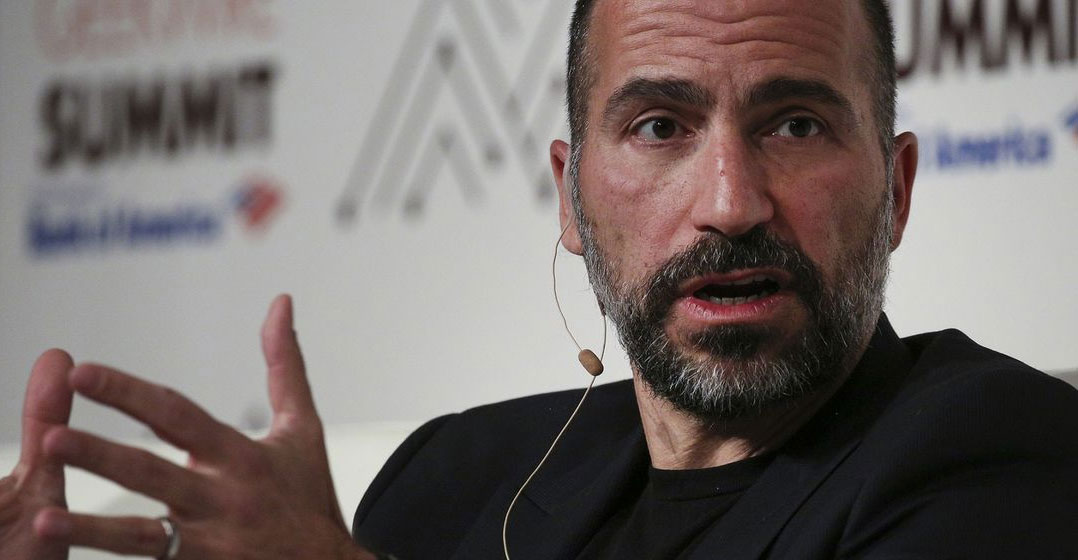
    Dara Khosrowshahi

    With the British prime minister calling London’s refusal to extend Uber’s license “disproportionate”, and Uber’s chief executive heading to London to talk to regulators, a compromise is in the offing. But it shouldn’t give Uber a false sense of security: isolated regulatory demands are not its biggest problem.

    Viewed in isolation, each of Uber’s setbacks this year triggered a disproportionate response. Neither a toxic work culture, nor unequal gender representation, nor any of the specific legal or business issues that dragged down the ride-hailing company was lethal.

    Nor was any of these problems likely beyond former CEO Travis Kalanick’s ability to fix or sweep under the rug, as he’d done for years.

    That all of the crises broke out at once was the result of an emotional backlash against the company’s arrogant push for global dominance

    That all of the crises broke out at once was the result of an emotional backlash against the company’s arrogant push for global dominance. Something akin to this backlash is also beginning to catch up with Facebook and Google. They’ve done nothing in particular terribly wrong, it’s just the general perception of large, uncaring, overly powerful corporations running on unchecked ambition.

    TfL, the London traffic authority, has a list of specific problems Uber has failed to solve: the way it reports criminal incidents and does medical and background checks on its drivers. It can all be pretty easily fixed, especially with CEO Dara Khosrowshahi’s personal involvement. Prime Minister Theresa May wants to move on because the Uber case contradicts her party’s claims that Brexit Britain will be open for business. London Mayor Sadiq Khan has nothing to gain politically from banning Uber but everything from being seen to make it comply with rules. Khosrowshahi has nothing to gain by not cooperating — that’s why he’s coming to London.

    New trouble

    But even if his talks succeed — as everyone wants them to — new trouble will almost immediately crop up for Uber in the UK and everywhere else it operates. It’s not well liked, and it’s fair game for politicians, regulators and judges who don’t like it, as well as for the many drivers and customers who have had a bad experience with it.

    This requires a big, unconventional trust-building campaign. Unfortunately, Khosrowshahi appears to have an incomplete understanding of the problem’s emotional nature.

    In a letter to staff after the London ban, he wrote, correctly, that “there is a high cost to a bad reputation” and “it really matters what people think of us”. But he also added he didn’t believe the company “did everything that is being said about us in London today” and promised Uber wouldn’t abandon its principles, meaning that it would “vigorously appeal TfL’s decision”. Despite Khosrowshahi’s public apology to Londoners, these lines must have raised red flags with mayor Khan, who has little respect for Uber’s “principles”: He’s described their implementation as “unfair pressure” on the TfL and “aggressive threats about taking us to court and all the rest of it”.

    That’s part of Uber’s reputation problem; Khan’s reaction to the perceived pressure is emotional, and even if Uber fixes its specific problems with the TfL after fighting it at every step, that emotion will remain. Khosrowshahi is right to try dissolving the bad blood with apologies and promises of change, but Kalanick used to do that, too. PR methods won’t work, as they didn’t at the end of Kalanick’s tenure; perfunctory nods to social respionsibility — the wheelchair-accessible vehicles and “Clean Air Plan” Khosrowshahi mentioned in his letter of apology — won’t do the trick either.

    Uber should declare, openly and publicly, that its first impulse will be, from now on, to follow rules rather than challenge them

    Overcoming its bad reputation requires from Uber a series of surprising, disarming moves.

    For starters, it needs to start asking rather than demanding; rather than pursue its “vigorous appeals”, it should politely request a little time to meet TfL requirements. Uber should declare, openly and publicly, that its first impulse will be, from now on, to follow rules rather than challenge them. The fierce resistance has already made clear it won’t take over the world by sheer aggression, so why keep provoking it?

    But simply playing deliberately from a position of weakness won’t be enough. On its own, it’ll just let regulators bite off the whole arm, not just the proffered finger. In order to gain trust, and to guard against bureaucratic nitpicking, Uber needs to be proactive and do things it doesn’t strictly have to do.

    Avoiding VAT

    In London, the company books its rides through a Dutch subsidiary, which allows it to avoid the UK’s 20% value-added tax. A TfL official apparently raised the issue during the licensing discussion, though the transport authority has no tax-related powers. Uber could voluntarily abandon the practice. It could also voluntarily offer its drivers some benefits of employment, such as paid leave or a minimum wage guarantee, in recognition that though they are technically self-employed, the ride-hailing company dictates how they must work once they log into the Uber app. Uber’s fares are about 35% lower than those of London’s black cabs; assuming these fares are sustainable and not just a case of temporary dumping to gain market share, Uber can afford to make such gestures and still remain competitive.

    It’s not enough for Khosrowshahi to act nicer than Kalanick. He needs to put his money (okay, Uber investors’ money) where his mouth is and show clearly and unequivocally that the company is changing, that it’s putting fairness ahead of aggression on its priority list. There’s no way to make the bad reputation go away on the cheap.  — (c) 2017 Bloomberg LP

    Follow TechCentral on Google News Add TechCentral as your preferred source on Google


    Dara Khosrowshahi Leonid Bershidsky Sadiq Khan Theresa May top Travis Kalanick Uber
    WhatsApp YouTube
    Share. Facebook Twitter LinkedIn WhatsApp Telegram Email Copy Link
    Previous ArticleChatbots: whole lotta hype
    Next Article Backspace: ‘Rocket ships’

    Related Posts

    Uber commits R5-billion to South Africa amid licensing woes - Deepesh Thomas

    Uber commits R5-billion to South Africa amid licensing woes

    31 March 2026
    South African tech start-ups that sold big on the world stage

    South African tech start-ups that sold big on the world stage

    3 February 2026
    Why South Africa should extend the e-hailing compliance deadline

    Why South Africa should extend the e-hailing compliance deadline

    7 January 2026
    Company News
    Vertiv AI Innovation Roadshow returns to Africa as virtual event

    Vertiv AI Innovation Roadshow returns to Africa as virtual event

    10 April 2026
    What South African parents look for in an online school - CambriLearn

    What South African parents look for in an online school

    9 April 2026
    Modernising legacy systems - without the downtime - BBD Software

    Modernising legacy systems – without the downtime

    9 April 2026
    Opinion
    The conflict of interest at the heart of PayShap's slow adoption - Cheslyn Jacobs

    The conflict of interest at the heart of PayShap’s slow adoption

    26 March 2026
    South Africa's energy future hinges on getting wheeling right - Aishah Gire

    South Africa’s energy future hinges on getting wheeling right

    10 March 2026
    Hold the doom: the case for a South African comeback - Duncan McLeod

    Apple just dropped a bomb on the Windows world

    5 March 2026

    Subscribe to Updates

    Get the best South African technology news and analysis delivered to your e-mail inbox every morning.

    Latest Posts
    South Africa's AI policy is a bureaucrat's dream - Solly Malatsi

    South Africa’s draft AI policy is a bureaucrat’s dream

    10 April 2026
    Big Tech is going nuclear

    Big Tech is going nuclear

    10 April 2026
    5G expected to reshape South Africa's wireless broadband market

    5G expected to reshape South Africa’s wireless broadband market

    10 April 2026
    Warning that South Africa's digital competitiveness is in retreat

    Warning that South Africa’s digital competitiveness is in retreat

    10 April 2026
    © 2009 - 2026 NewsCentral Media
    • Cookie policy (ZA)
    • TechCentral – privacy and Popia

    Type above and press Enter to search. Press Esc to cancel.

    Manage consent

    TechCentral uses cookies to enhance its offerings. Consenting to these technologies allows us to serve you better. Not consenting or withdrawing consent may adversely affect certain features and functions of the website.

    Functional Always active
    The technical storage or access is strictly necessary for the legitimate purpose of enabling the use of a specific service explicitly requested by the subscriber or user, or for the sole purpose of carrying out the transmission of a communication over an electronic communications network.
    Preferences
    The technical storage or access is necessary for the legitimate purpose of storing preferences that are not requested by the subscriber or user.
    Statistics
    The technical storage or access that is used exclusively for statistical purposes. The technical storage or access that is used exclusively for anonymous statistical purposes. Without a subpoena, voluntary compliance on the part of your Internet Service Provider, or additional records from a third party, information stored or retrieved for this purpose alone cannot usually be used to identify you.
    Marketing
    The technical storage or access is required to create user profiles to send advertising, or to track the user on a website or across several websites for similar marketing purposes.
    • Manage options
    • Manage services
    • Manage {vendor_count} vendors
    • Read more about these purposes
    View preferences
    • {title}
    • {title}
    • {title}