Close Menu
TechCentralTechCentral

    Subscribe to the newsletter

    Get the best South African technology news and analysis delivered to your e-mail inbox every morning.

    Facebook X (Twitter) YouTube LinkedIn
    WhatsApp Facebook X (Twitter) LinkedIn YouTube
    TechCentralTechCentral
    • News
      Africa's most popular phones have a tracking problem

      Africa’s most popular phones have a tracking problem

      24 July 2026
      Vodacom taps UJ, AWS to build its AI talent pipeline - Vodacom Group CEO Shameel Joosub

      Vodacom taps UJ, AWS to build its AI talent pipeline

      24 July 2026
      Intel is back in the game - Intel CEO Lip-Bu Tan. Laure Andrillon/Reuters

      Intel is back in the game

      24 July 2026
      Fat bonuses at Telkom despite group missing own targets - Serame Taukobong

      Fat bonuses at Telkom despite group missing own targets

      23 July 2026
      Massive changes coming to Amazon Prime Video - Jeff Bezos

      Massive changes coming to Amazon Prime Video

      23 July 2026
    • World
      Meta AI will now tell parents if their teen is in crisis

      Meta AI will now tell parents if their teen is in crisis

      17 July 2026
      IBM shares crash 25% as AI upends software spending - Arvind Krishna

      IBM shares crash 25% as AI upends software spending

      15 July 2026
      Jony Ive's first OpenAI device: an AI smart speaker - Jony Ive and Sam Altman

      Jony Ive’s first OpenAI device: an AI smart speaker

      15 July 2026
      Stripe, Advent in talks to buy PayPal for $53-billion

      Stripe, Advent in talks to buy PayPal for $53-billion

      15 July 2026
      Memory crisis sends smartphone market into steep decline

      Memory crisis sends smartphone market into steep decline

      13 July 2026
    • In-depth
      The plan to stop AI from breaking the world - Google DeepMind CEO Demis Hassabis. Image: John Sears

      The plan to stop AI from breaking the world

      16 July 2026
      The internet has a Strait of Hormuz problem

      The internet has a Strait of Hormuz problem

      15 July 2026
      AI boom sparks rally, frenzy and fear

      AI boom sparks rally, frenzy and fear

      11 June 2026
      Every plug-in hybrid on sale in South Africa, ranked by price - Lamborghini Temerario

      Every plug-in hybrid on sale in South Africa, ranked by price

      7 June 2026
      What Wi-Fi 8 will mean for wireless networks

      What Wi-Fi 8 will mean for wireless networks

      1 June 2026
    • TCS
      TCS | How Optasia lends billions to people banks can't see - Salvador Anglada

      TCS | How Optasia lends billions to people banks can’t see

      23 July 2026
      The rands-and-cents case for electric trucks - William Kelly Watts & Wheels with Wills

      The rands-and-cents case for electric trucks

      20 July 2026
      Watts & Wheels S1E7: 'Ferrari's EV breaks the internet'

      Watts & Wheels S1E7: ‘Ferrari’s EV breaks the internet’

      8 July 2026
      TCS | Pick n Pay's Enrico Ferigolli on Penny, the AI that shops for you

      TCS | Pick n Pay’s Enrico Ferigolli on Penny, the AI that shops for you

      2 July 2026
      TCS+ | How Tracker is turning vehicle data into business strategy - Silvia Schollenberger

      TCS+ | How Tracker is turning vehicle data into business strategy

      1 July 2026
    • Opinion
      Selling vapour is corporate suicide in slow motion - Jannie van Zyl

      Selling vapour is corporate suicide in slow motion

      16 July 2026
      Brazil's online gambling crackdown is a lesson for South Africa

      How Amazon outmanoeuvred Starlink in South Africa

      15 July 2026
      The Popia problem with agentic AI - Herman Haasbroek

      The Popia problem with agentic AI

      14 July 2026
      The author, Fanie van Rooyen

      South Africa can still catch the AI wave – here’s how

      7 July 2026
      The author, Fanie van Rooyen

      The AI utopia South Africa can’t afford

      1 July 2026
    • Company Hubs
      • 1Stream
      • Africa Data Centres
      • AfriGIS
      • Altron Digital Business
      • Altron Document Solutions
      • Altron Group
      • Arctic Wolf
      • Ascent Technology
      • AvertITD
      • BBD
      • Braintree
      • CallMiner
      • CambriLearn
      • CM Telecom
      • Contactable
      • CYBER1 Solutions
      • Digicloud Africa
      • Digimune
      • Domains.co.za
      • ESET
      • Euphoria Telecom
      • HOSTAFRICA
      • Incredible Business
      • iONLINE
      • IQbusiness
      • Iris Network Systems
      • Kaspersky
      • LSD Open
      • Mitel
      • NEC XON
      • Netstar
      • Network Platforms
      • Next DLP
      • Ovations
      • Paracon
      • Paratus
      • Q-KON
      • SevenC
      • SkyWire
      • Solid8 Technologies
      • Telit Cinterion
      • Telviva
      • Tenable
      • Vertiv
      • Videri Digital
      • Vodacom Business
      • Vox
      • Wipro
      • Workday
      • XLink
    • Sections
      • AI and machine learning
      • Banking
      • Broadcasting and Media
      • Cloud services
      • Contact centres and CX
      • Cryptocurrencies
      • Education and skills
      • Electronics and hardware
      • Energy and sustainability
      • Enterprise software
      • Financial services
      • HealthTech
      • Information security
      • Internet and connectivity
      • Internet of Things
      • Investment
      • IT services
      • Lifestyle
      • Policy and regulation
      • Public sector
      • Retail and e-commerce
      • Satellite communications
      • Science
      • SMEs and start-ups
      • Social media
      • Talent and leadership
      • Telecoms
      • Watts & Wheels
    • Events
    • Advertise
    TechCentralTechCentral
    Home » Opinion » Shameel Joosub » Why Neotel deal must happen

    Why Neotel deal must happen

    By Duncan McLeod14 January 2015
    Twitter LinkedIn Facebook WhatsApp Email Telegram Copy Link
    News Alerts
    WhatsApp

    shameel-joosub-180Public hearings hosted by telecommunications regulator Icasa are due to commence later this week to discuss Vodacom’s acquisition of Neotel. The final decision will have far-reaching consequences, with the potential either to accelerate or inhibit the roll-out of high-speed fibre connectivity and next-generation mobile services in South Africa. It’s therefore important that the parties involved focus on the positive impact this transaction would bring to the consumer and to the country as a whole.

    It might help to start with the basics of the transaction in question. In May last year, Vodacom announced it had reached an agreement to purchase 100% of Neotel for an enterprise value of R7bn. On the face of it, that sounds a lot like a big company buying out a smaller competitor, which can’t be good for competition or the consumer. Right? Well, no.

    Vodacom primarily supplies mobile services to consumers, while Neotel’s bread and butter is supplying fixed-line connectivity to businesses. The key thing that both companies have in common is a network of fibre-optic transmission cables — in Vodacom’s case the fibre connects our mobile base stations, and in Neotel’s case the fibre connects businesses.

    Combining these two companies allows Vodacom to focus on getting fibre connections to more homes and businesses. The end result will be an acceleration of the roll-out of fibre-to-the-home (FTTH) and fibre-to-the-business (FTTB) solutions. This is exactly what government has highlighted as one of its key objectives for national broadband in South Africa. Furthermore, the combined entity would also be able to supply enhanced business services which would provide a strong contender to the incumbent, Telkom.

    This transaction would be good for competition, good for businesses, good for the consumer and, crucially, would support government in its goal to get South Africa connected with high-speed broadband. So why are there objections to the deal?

    Some of the objections raised thus far are interesting in that they highlight that by acquiring Neotel, Vodacom will be able to roll out next-generation mobile services faster than would otherwise be possible. It was even conceded in a competitor’s submission to the regulator that due to this transaction “consumers will benefit from the earlier and cheaper availability of 4G/LTE in South Africa”.

    Rather than focusing on the benefit to consumers, opposition to the deal is based on a concern that by combining Vodacom and Neotel and accelerating the roll-out of next-generation services, this would give Vodacom a first-mover advantage. I don’t want to dwell on negative issues because there is far too much to talk about in relation to this deal that is good for South Africa, but I would like to tackle this one point. The implication of this is that no one operator can progress unless all operators are ready to progress equally and that the whole industry moves in lock-step. Imagine that applied to the airline industry — no airline would be allowed to fly Airbus A380 jets to Johannesburg unless they all did. This view will put the consumer last, not first.

    Coming back to the logic behind the deal, Neotel is a good company with great people, but it needs considerable investment to be a serious competitor in the fixed-line business. It was this understanding which caused the owners of Neotel to run a sale process.

    Vodacom was successful in that sale process because it is willing to pay the purchase price, confident in achieving synergies, and because it realises the potential of being able to play a meaningful role in fixed-line communications.

    On top of this, by stepping up to the plate and pledging to put significant investment into Neotel, Vodacom is doing something that no other company has offered to do. By combining these companies and increasing investment, we’ll be able to accelerate the roll-out of fibre-based broadband services to customers. Yes, those services will compete with those offered by other companies and yes this will over time drive down the cost to communicate which is perhaps why there is opposition to the deal, but that can only be a positive for the consumer.
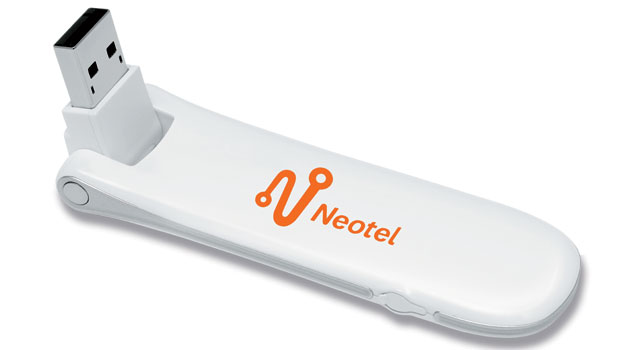
    Vodacom has tendered R7bn to buy Neotel
    Vodacom has tendered R7bn to buy Neotel

    More importantly, this deal talks to the competitiveness of the nation as a whole. In a recent report by the GSMA, mobile data usage in sub-Saharan Africa was predicted to go from under 40 petabytes per month (1PB is a million gigabytes) in 2013 to approaching 800PB per month in 2019. That’s a 20-fold increase in data usage over just six years. While mobile data usage is booming, fixed line connections are a major bottleneck. To catch up with developed economies we need to take fixed broadband penetration in South Africa from the current level of approximately 7% of all households to around 75%, which is the case in the US, Japan and major European economies. It’ll take investment running into tens of billions of rand to close this gap. Vodacom has clearly demonstrated that it is willing and able to put major investment into South Africa, spending in the region of R8,5bn in our current financial year and looking to spend a similar amount next year. Once approved, we can get on with investing meaningfully in Neotel as well. With this in mind, we don’t think that it’s an exaggeration to say that this transaction is crucial to the future competitiveness of the nation, as businesses and ultimately jobs will migrate to whichever countries are able to offer the best infrastructure.

    On the subject of South Africa’s competitiveness, Kenyan mobile operator Safaricom announced in December the launch of commercial LTE-Advanced services that can deliver speeds of up to 300Mbit/s. What this means is that Kenya has true 4G mobile services with the potential to operate at speeds many times that of the fastest LTE services in South Africa. The irony is that South Africa could have been there first. We announced in November that we’d completed the investment programme to upgrade all of our base station radio equipment to “4G ready”, and the only thing that is holding us back is access to spectrum. It’s clear that as a company and as an industry we need to keep moving if we’re going to keep up with the pace of technological change.

    Pulling it all together, Vodacom is simply asking that it is allowed to see through the acquisition of Neotel in order to roll out services and increase competition in the sector. The simple fact is that if the transaction is approved, our ambition would be to roll out more than a million fibre connections within a reasonable timeframe. That’s more than the number of old-technology ADSL lines that the incumbent fixed-line operator has managed to deliver in the last 20 years.

    Government has set a goal of delivering 50% broadband coverage in all households by 2020 and 100% by 2030. The decision flowing from Icasa’s hearings this week will have a concrete impact on whether we are able to play our part in helping achieve this, and in so doing have an impact on the competitiveness of our country as a whole.

    • Shameel Joosub is group CEO of Vodacom
    • This column was first published in Business Day

    Follow TechCentral on Google News Add TechCentral as your preferred source on Google


    Icasa Neotel Shameel Joosub Vodacom
    WhatsApp YouTube
    Share. Facebook Twitter LinkedIn WhatsApp Telegram Email Copy Link
    Previous ArticlePaperless schools to boost economy: Ramaphosa
    Next Article Thursday release for e-tolls report

    Related Posts

    Vodacom taps UJ, AWS to build its AI talent pipeline - Vodacom Group CEO Shameel Joosub

    Vodacom taps UJ, AWS to build its AI talent pipeline

    24 July 2026
    Best network, worst vibes: the puzzle of SA telecoms

    Best network, worst vibes: the puzzle of SA telecoms

    20 July 2026
    Brazil's online gambling crackdown is a lesson for South Africa

    How Amazon outmanoeuvred Starlink in South Africa

    15 July 2026
    Company News
    Why Europe is turning to South Africa for cross-border innovation - BBD Software

    Why Europe is turning to South Africa for cross-border innovation

    24 July 2026
    Green dashboards, stalled change: the CIO's blind spot - Change Logic Marchant van den Heever

    Green dashboards, stalled change: the CIO’s blind spot

    24 July 2026
    Why Africa's cloud needs more than one path - Africa Data Centres

    Why Africa’s cloud needs more than one path

    23 July 2026
    Opinion
    Selling vapour is corporate suicide in slow motion - Jannie van Zyl

    Selling vapour is corporate suicide in slow motion

    16 July 2026
    Brazil's online gambling crackdown is a lesson for South Africa

    How Amazon outmanoeuvred Starlink in South Africa

    15 July 2026
    The Popia problem with agentic AI - Herman Haasbroek

    The Popia problem with agentic AI

    14 July 2026

    Subscribe to Updates

    Get the best South African technology news and analysis delivered to your e-mail inbox every morning.

    Latest Posts
    Africa's most popular phones have a tracking problem

    Africa’s most popular phones have a tracking problem

    24 July 2026
    Vodacom taps UJ, AWS to build its AI talent pipeline - Vodacom Group CEO Shameel Joosub

    Vodacom taps UJ, AWS to build its AI talent pipeline

    24 July 2026
    Intel is back in the game - Intel CEO Lip-Bu Tan. Laure Andrillon/Reuters

    Intel is back in the game

    24 July 2026
    Why Europe is turning to South Africa for cross-border innovation - BBD Software

    Why Europe is turning to South Africa for cross-border innovation

    24 July 2026
    © 2009 - 2026 NewsCentral Media
    Built and maintained by Chronon
    • Cookie policy (ZA)
    • TechCentral – privacy and Popia

    Type above and press Enter to search. Press Esc to cancel.

    Manage consent

    TechCentral uses cookies to enhance its offerings. Consenting to these technologies allows us to serve you better. Not consenting or withdrawing consent may adversely affect certain features and functions of the website.

    Functional Always active
    The technical storage or access is strictly necessary for the legitimate purpose of enabling the use of a specific service explicitly requested by the subscriber or user, or for the sole purpose of carrying out the transmission of a communication over an electronic communications network.
    Preferences
    The technical storage or access is necessary for the legitimate purpose of storing preferences that are not requested by the subscriber or user.
    Statistics
    The technical storage or access that is used exclusively for statistical purposes. The technical storage or access that is used exclusively for anonymous statistical purposes. Without a subpoena, voluntary compliance on the part of your Internet Service Provider, or additional records from a third party, information stored or retrieved for this purpose alone cannot usually be used to identify you.
    Marketing
    The technical storage or access is required to create user profiles to send advertising, or to track the user on a website or across several websites for similar marketing purposes.
    • Manage options
    • Manage services
    • Manage {vendor_count} vendors
    • Read more about these purposes
    View preferences
    • {title}
    • {title}
    • {title}