Close Menu
TechCentralTechCentral

    Subscribe to the newsletter

    Get the best South African technology news and analysis delivered to your e-mail inbox every morning.

    Facebook X (Twitter) YouTube LinkedIn
    WhatsApp Facebook X (Twitter) LinkedIn YouTube
    TechCentralTechCentral
    • News
      Telecoms industry backs Malatsi policy directive, warns on execution - ACT CEO Nomvuyiso Batyi

      Telecoms industry backs Malatsi policy directive, warns on execution

      17 December 2025
      TechCentral's International Newsmakers of 2025

      TechCentral’s International Newsmakers of 2025

      17 December 2025
      Warner Bros slams the door on Paramount

      Warner Bros slams the door on Paramount

      17 December 2025
      Airtel to roll out Starlink direct-to-cell across Africa

      Airtel to roll out Starlink direct-to-cell across Africa

      17 December 2025
      Presidency backs Solly Malatsi in BEE reform fight - Cyril Ramaphosa

      Presidency backs Solly Malatsi in BEE reform fight

      15 December 2025
    • World
      X moves to block bid to revive Twitter brand

      X moves to block bid to revive Twitter brand

      17 December 2025
      Oracle’s AI ambitions face scrutiny on earnings miss

      Oracle’s AI ambitions face scrutiny on earnings miss

      11 December 2025
      China will get Nvidia H200 chips - but not without paying Washington first

      China will get Nvidia H200 chips – but not without paying Washington first

      9 December 2025
      IBM reportedly close to $11-billion deal to buy Confluent - Arvind Krishna

      IBM reportedly close to $11-billion deal to buy Confluent

      8 December 2025
      Amazon and Google launch multi-cloud service for faster connectivity

      Amazon and Google launch multi-cloud service for faster connectivity

      1 December 2025
    • In-depth
      Black Friday goes digital in South Africa as online spending surges to record high

      Black Friday goes digital in South Africa as online spending surges to record high

      4 December 2025
      Canal+ plays hardball - and DStv viewers feel the pain

      Canal+ plays hardball – and DStv viewers feel the pain

      3 December 2025
      Jensen Huang Nvidia

      So, will China really win the AI race?

      14 November 2025
      Valve's Linux console takes aim at Microsoft's gaming empire

      Valve’s Linux console takes aim at Microsoft’s gaming empire

      13 November 2025
      iOCO's extraordinary comeback plan - Rhys Summerton

      iOCO’s extraordinary comeback plan

      28 October 2025
    • TCS
      TCS+ | Africa's digital transformation - unlocking AI through cloud and culture - Cliff de Wit Accelera Digital Group

      TCS+ | Cloud without culture won’t deliver AI: Accelera’s Cliff de Wit

      12 December 2025
      TCS+ | How Cloud on Demand helps partners thrive in the AWS ecosystem - Odwa Ndyaluvane and Xenia Rhode

      TCS+ | How Cloud On Demand helps partners thrive in the AWS ecosystem

      4 December 2025
      TCS | MTN Group CEO Ralph Mupita on competition, AI and the future of mobile

      TCS | Ralph Mupita on competition, AI and the future of mobile

      28 November 2025
      TCS | Dominic Cull on fixing South Africa's ICT policy bottlenecks

      TCS | Dominic Cull on fixing South Africa’s ICT policy bottlenecks

      21 November 2025
      TCS | BMW CEO Peter van Binsbergen on the future of South Africa's automotive industry

      TCS | BMW CEO Peter van Binsbergen on the future of South Africa’s automotive industry

      6 November 2025
    • Opinion
      Netflix, Warner Bros deal raises fresh headaches for MultiChoice - Duncan McLeod

      Netflix, Warner Bros deal raises fresh headaches for MultiChoice

      5 December 2025
      BIN scans, DDoS and the next cybercrime wave hitting South Africa's banks - Entersekt Gerhard Oosthuizen

      BIN scans, DDoS and the next cybercrime wave hitting South Africa’s banks

      3 December 2025
      Your data, your hardware: the DIY AI revolution is coming - Duncan McLeod

      Your data, your hardware: the DIY AI revolution is coming

      20 November 2025
      Zero Carbon Charge founder Joubert Roux

      The energy revolution South Africa can’t afford to miss

      20 November 2025
      It's time for a new approach to government IT spend in South Africa - Richard Firth

      It’s time for a new approach to government IT spend in South Africa

      19 November 2025
    • Company Hubs
      • Africa Data Centres
      • AfriGIS
      • Altron Digital Business
      • Altron Document Solutions
      • Altron Group
      • Arctic Wolf
      • AvertITD
      • Braintree
      • CallMiner
      • CambriLearn
      • CYBER1 Solutions
      • Digicloud Africa
      • Digimune
      • Domains.co.za
      • ESET
      • Euphoria Telecom
      • Incredible Business
      • iONLINE
      • IQbusiness
      • Iris Network Systems
      • LSD Open
      • NEC XON
      • Netstar
      • Network Platforms
      • Next DLP
      • Ovations
      • Paracon
      • Paratus
      • Q-KON
      • SevenC
      • SkyWire
      • Solid8 Technologies
      • Telit Cinterion
      • Tenable
      • Vertiv
      • Videri Digital
      • Vodacom Business
      • Wipro
      • Workday
      • XLink
    • Sections
      • AI and machine learning
      • Banking
      • Broadcasting and Media
      • Cloud services
      • Contact centres and CX
      • Cryptocurrencies
      • Education and skills
      • Electronics and hardware
      • Energy and sustainability
      • Enterprise software
      • Financial services
      • Information security
      • Internet and connectivity
      • Internet of Things
      • Investment
      • IT services
      • Lifestyle
      • Motoring
      • Public sector
      • Retail and e-commerce
      • Satellite communications
      • Science
      • SMEs and start-ups
      • Social media
      • Talent and leadership
      • Telecoms
    • Events
    • Advertise
    TechCentralTechCentral
    Home » Sections » Energy and sustainability » Why restructuring Eskom won’t end the blackouts

    Why restructuring Eskom won’t end the blackouts

    By The Conversation29 March 2019
    Twitter LinkedIn Facebook WhatsApp Email Telegram Copy Link
    News Alerts
    WhatsApp

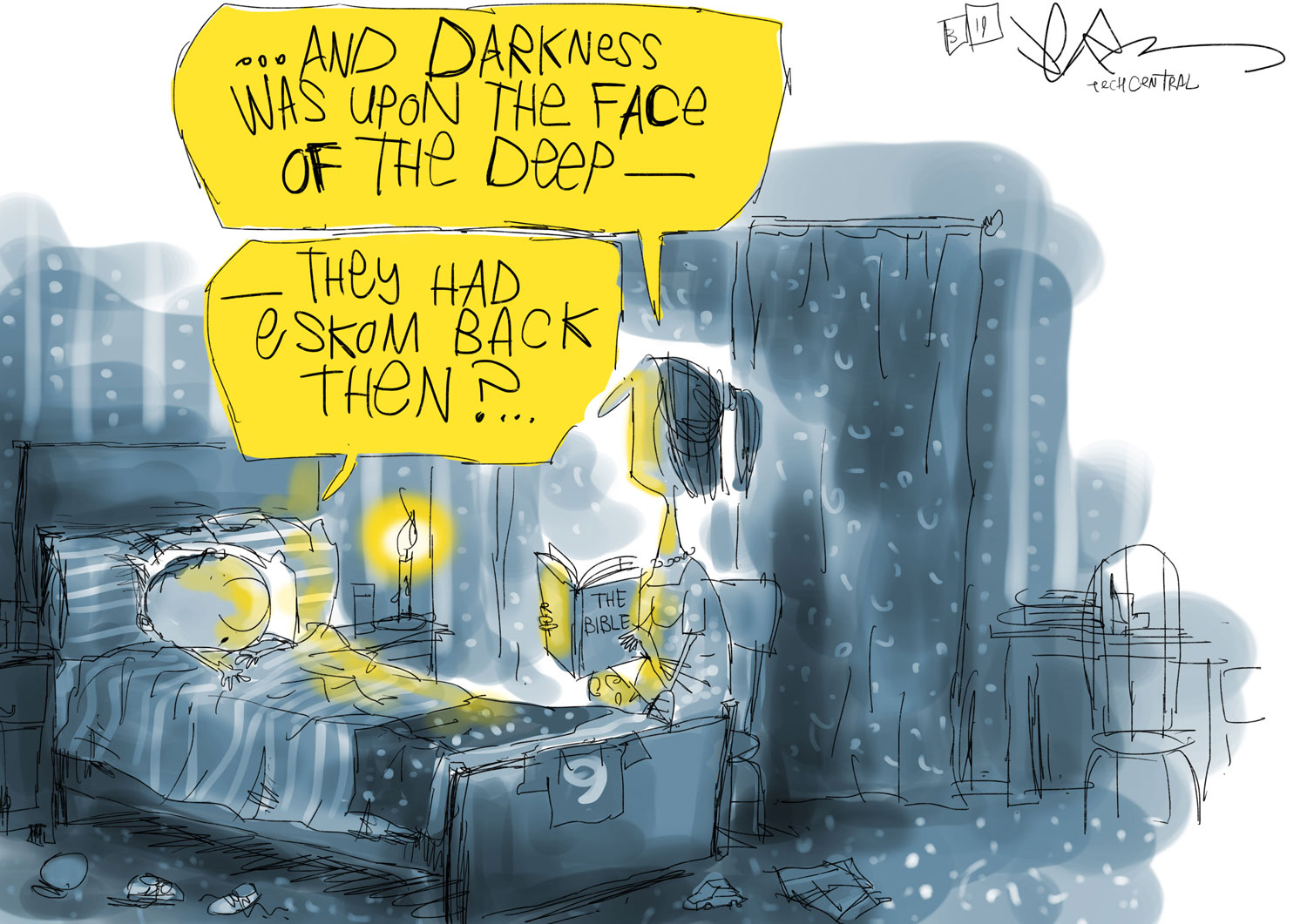
    Recent power cuts and the announcement that South Africa’s power utility Eskom will be receiving R23-billion (about US$1.5-billion) a year in government support for the foreseeable future are symptomatic of operational and financial crises at the utility.

    The conventional wisdom is that a major restructuring will address the crisis. But this is misleading. Defensible justifications for the restructuring are mostly about Eskom’s future problems, not its current ones. And there’s a risk that restructuring could exacerbate some of the underlying causes of the crisis.

    The crisis itself is a function of a complex set of factors. These include an inappropriate tariff regime in the 1980s and 1990s, policy indecision in the post-apartheid era, bad infrastructure planning and poor project and human resource management. There’s also been large-scale corruption and a failure in government’s implementation of the oversight model for state-owned entities — as well as problems with the model itself.

    The conventional wisdom is that a major restructuring will address the crisis. But this is misleading

    Two basic cases are being made for restructuring the 96-year old utility. The first is that, by formally splitting Eskom into managerially and financially autonomous components, it will be possible to improve management, better understand the source of existing problems, attract private investors and address corruption.

    The second is that restructuring would facilitate a greater role for renewable energy generation driven by privately funded generation projects. Eskom’s roles as generator, buyer and distributor of electricity would be separated to stop the utility’s generation interests from distorting its purchase and distribution decisions.

    Flawed

    Both cases are flawed. Eskom’s management and financial problems won’t necessarily go away simply by splitting it into three components. Any managerial benefits of separation can be overshadowed by difficulties in getting autonomous components to interact in a way that promotes the public interest, while private investors will not take on the unattractively debt-ridden components.

    And the case based on renewables has more to do with the need for South Africa to have a more appropriate energy mix that doesn’t rely so heavily on coal. It has little to do with Eskom’s underlying malaise. Renewables are on the table because of technological change and mass deployment of renewable energy internationally that has decreased costs, along with the need to meet climate change commitments.

    President Cyril Ramaphosa and finance ninister Tito Mboweni have set out two main proposals to fix the utility.
    The first is a major injection of funds. Mboweni announced that national treasury will provide Eskom with R23-billion in cash a year for between three and 10 years. This is in addition to financial support in 2015 that exceeded R150-billion in costs to the state. The financial support will largely be funded by reducing other government expenditure as well as an increase in borrowing.

    The second major announcement was that the power utility will be split into three components: generation, transmission and distribution.

    Financial support, although highly undesirable, has become unavoidable. The necessity of the restructuring, however, is questionable and it carries large risks.

    The nature and extent of the risks in the case of Eskom’s unbundling require a detailed analysis. The current narrative gives them too little attention

    Breaking Eskom up into three parts is touted to improve information about operations and finances, and to reduce inefficiencies. In addition, some argue that it would help attract direct private sector financing.

    These claims are dubious. For instance, the claim about private sector financing rests on the assumption that private investors will get a guarantee of future tariffs or revenues. But a guarantee would also facilitate Eskom borrowing from financial markets itself. And the obstacle to such a provision is partly regulatory and partly that it would create a large contingent liability for the state.

    Similarly, private investors will only get involved where Eskom is expected to be profitable in the future. That means that the cost and debt overhangs from the country’s two biggest coal-fired power stations, Medupi and Kusile, will remain the problem of government and citizens.

    Successes and failures

    A great deal has been written about the restructuring of state-owned enterprises. There have been both successes and failures. International experience across many industries shows that while separation can have a positive effect, it can also lead to breakdown of communication and information flows, distortion of incentives relative to the public interest, decline in operational indicators and excessive profits for private participants.

    A prominent example is the privatisation of passenger rail in the UK. What followed was a deterioration in services and subsequent, large government bailouts.

    The nature and extent of the risks in the case of Eskom’s unbundling require a detailed analysis. The current narrative gives them too little attention.

    Those pushing renewable energy as the panacea are, in my view, downplaying the downsides and playing up the benefits — suggesting, for example, that it’s a costless solution. But it’s not.

    Decentralised renewable power generation by firms and households is rarely entirely “off grid”. When the sun doesn’t shine, electricity is drawn from the grid. But revenues from the sale of this electricity aren’t enough to fund the costs of the underlying generation and transmission infrastructure.

    Other countries have got round the problem by introducing a high “grid connection fee”. This hasn’t been given much attention in South African commentary.

    Adding renewable capacity does not remove the costs already incurred for new coal-fired power stations

    And while some have led the public to believe renewable energy will ameliorate Eskom’s operational crisis, they fail to mention that it could exacerbate the utility’s financial crisis. Adding renewable capacity does not remove the costs already incurred for new coal-fired power stations. And decentralised generation reduces Eskom’s revenues.

    There are other reasons to gradually expand South Africa’s renewable energy capacity. That is certainly better than pursuing a nuclear power option. But obscuring its downsides will lead to dangerously inaccurate beliefs about what is actually a very limited role for renewables in addressing the current crisis.

    It would have been preferable if the dangers of restructuring Eskom had been properly considered before the president and finance minister made their statements. But given that the path appears to be set, it is paramount that policymakers and the public be awake to its complexities and risks.The Conversation

    • Written by Seán Mfundza Muller, senior lecturer in economics and research associate at the Public and Environmental Economics Research Centre, University of Johannesburg
    • This article is republished from The Conversation under a Creative Commons licence

    Cyril Ramaphosa Eskom Seán Mfundza Muller Tito Mboweni top
    Subscribe to TechCentral Subscribe to TechCentral
    Share. Facebook Twitter LinkedIn WhatsApp Telegram Email Copy Link
    Previous ArticleHow 5G will transform the way we live and work
    Next Article MTN to hike price of some contract plans

    Related Posts

    Presidency backs Solly Malatsi in BEE reform fight - Cyril Ramaphosa

    Presidency backs Solly Malatsi in BEE reform fight

    15 December 2025
    Ramokgopa bullish on energy outlook as new projects get green light - Kgosientsho Ramokgopa

    Ramokgopa bullish on energy outlook as new projects get green light

    15 December 2025
    ANC's attack on Solly Malatsi shows how BEE dogma trumps economic reality

    ANC’s attack on Solly Malatsi shows how BEE dogma trumps economic reality

    14 December 2025
    Company News
    Why TechCentral is the most powerful platform for reaching IT decision makers

    Why TechCentral is the most powerful platform for reaching IT decision makers

    17 December 2025
    Business trends to watch in 2026 - Domains.co.za

    Business trends to watch in 2026

    17 December 2025
    MTN Zambia launches world's first 4G cloud smartphone solution - Huawei

    MTN Zambia launches world’s first 4G cloud smartphone solution

    17 December 2025
    Opinion
    Netflix, Warner Bros deal raises fresh headaches for MultiChoice - Duncan McLeod

    Netflix, Warner Bros deal raises fresh headaches for MultiChoice

    5 December 2025
    BIN scans, DDoS and the next cybercrime wave hitting South Africa's banks - Entersekt Gerhard Oosthuizen

    BIN scans, DDoS and the next cybercrime wave hitting South Africa’s banks

    3 December 2025
    Your data, your hardware: the DIY AI revolution is coming - Duncan McLeod

    Your data, your hardware: the DIY AI revolution is coming

    20 November 2025

    Subscribe to Updates

    Get the best South African technology news and analysis delivered to your e-mail inbox every morning.

    Latest Posts
    Telecoms industry backs Malatsi policy directive, warns on execution - ACT CEO Nomvuyiso Batyi

    Telecoms industry backs Malatsi policy directive, warns on execution

    17 December 2025
    TechCentral's International Newsmakers of 2025

    TechCentral’s International Newsmakers of 2025

    17 December 2025
    Warner Bros slams the door on Paramount

    Warner Bros slams the door on Paramount

    17 December 2025
    Why TechCentral is the most powerful platform for reaching IT decision makers

    Why TechCentral is the most powerful platform for reaching IT decision makers

    17 December 2025
    © 2009 - 2025 NewsCentral Media
    • Cookie policy (ZA)
    • TechCentral – privacy and Popia

    Type above and press Enter to search. Press Esc to cancel.

    Manage consent

    TechCentral uses cookies to enhance its offerings. Consenting to these technologies allows us to serve you better. Not consenting or withdrawing consent may adversely affect certain features and functions of the website.

    Functional Always active
    The technical storage or access is strictly necessary for the legitimate purpose of enabling the use of a specific service explicitly requested by the subscriber or user, or for the sole purpose of carrying out the transmission of a communication over an electronic communications network.
    Preferences
    The technical storage or access is necessary for the legitimate purpose of storing preferences that are not requested by the subscriber or user.
    Statistics
    The technical storage or access that is used exclusively for statistical purposes. The technical storage or access that is used exclusively for anonymous statistical purposes. Without a subpoena, voluntary compliance on the part of your Internet Service Provider, or additional records from a third party, information stored or retrieved for this purpose alone cannot usually be used to identify you.
    Marketing
    The technical storage or access is required to create user profiles to send advertising, or to track the user on a website or across several websites for similar marketing purposes.
    • Manage options
    • Manage services
    • Manage {vendor_count} vendors
    • Read more about these purposes
    View preferences
    • {title}
    • {title}
    • {title}