
Close Menu
TechCentralTechCentral

    Subscribe to the newsletter

    Get the best South African technology news and analysis delivered to your e-mail inbox every morning.

    Facebook X (Twitter) YouTube LinkedIn
    WhatsApp Facebook X (Twitter) LinkedIn YouTube
    TechCentralTechCentral
    • News
      Digital authoritarianism grows as African states normalise internet blackouts

      Digital authoritarianism grows as African states normalise internet blackouts

      19 December 2025
      Starlink satellite anomaly creates debris in rare orbital mishap

      Starlink satellite anomaly creates debris in rare orbital mishap

      19 December 2025
      TechCentral's South African Newsmakers of 2025

      TechCentral’s South African Newsmakers of 2025

      18 December 2025
      Malatsi buries Post Office's long-dead monopoly

      Malatsi buries Post Office monopoly the market ignored

      18 December 2025
      China races to crack EUV as chip war with the West intensifies

      China races to crack EUV lithography as chip war with the West intensifies

      18 December 2025
    • World
      Trump space order puts the moon back at centre of US, China rivalry - US President Donald Trump

      Trump space order puts the moon back at centre of US, China rivalry

      19 December 2025
      Warner Bros slams the door on Paramount

      Warner Bros slams the door on Paramount

      17 December 2025
      X moves to block bid to revive Twitter brand

      X moves to block bid to revive Twitter brand

      17 December 2025
      Oracle’s AI ambitions face scrutiny on earnings miss

      Oracle’s AI ambitions face scrutiny on earnings miss

      11 December 2025
      China will get Nvidia H200 chips - but not without paying Washington first

      China will get Nvidia H200 chips – but not without paying Washington first

      9 December 2025
    • In-depth
      Black Friday goes digital in South Africa as online spending surges to record high

      Black Friday goes digital in South Africa as online spending surges to record high

      4 December 2025
      Canal+ plays hardball - and DStv viewers feel the pain

      Canal+ plays hardball – and DStv viewers feel the pain

      3 December 2025
      Jensen Huang Nvidia

      So, will China really win the AI race?

      14 November 2025
      Valve's Linux console takes aim at Microsoft's gaming empire

      Valve’s Linux console takes aim at Microsoft’s gaming empire

      13 November 2025
      iOCO's extraordinary comeback plan - Rhys Summerton

      iOCO’s extraordinary comeback plan

      28 October 2025
    • TCS
      TCS+ | Africa's digital transformation - unlocking AI through cloud and culture - Cliff de Wit Accelera Digital Group

      TCS+ | Cloud without culture won’t deliver AI: Accelera’s Cliff de Wit

      12 December 2025
      TCS+ | How Cloud on Demand helps partners thrive in the AWS ecosystem - Odwa Ndyaluvane and Xenia Rhode

      TCS+ | How Cloud On Demand helps partners thrive in the AWS ecosystem

      4 December 2025
      TCS | MTN Group CEO Ralph Mupita on competition, AI and the future of mobile

      TCS | Ralph Mupita on competition, AI and the future of mobile

      28 November 2025
      TCS | Dominic Cull on fixing South Africa's ICT policy bottlenecks

      TCS | Dominic Cull on fixing South Africa’s ICT policy bottlenecks

      21 November 2025
      TCS | BMW CEO Peter van Binsbergen on the future of South Africa's automotive industry

      TCS | BMW CEO Peter van Binsbergen on the future of South Africa’s automotive industry

      6 November 2025
    • Opinion
      Netflix, Warner Bros deal raises fresh headaches for MultiChoice - Duncan McLeod

      Netflix, Warner Bros deal raises fresh headaches for MultiChoice

      5 December 2025
      BIN scans, DDoS and the next cybercrime wave hitting South Africa's banks - Entersekt Gerhard Oosthuizen

      BIN scans, DDoS and the next cybercrime wave hitting South Africa’s banks

      3 December 2025
      Your data, your hardware: the DIY AI revolution is coming - Duncan McLeod

      Your data, your hardware: the DIY AI revolution is coming

      20 November 2025
      Zero Carbon Charge founder Joubert Roux

      The energy revolution South Africa can’t afford to miss

      20 November 2025
      It's time for a new approach to government IT spend in South Africa - Richard Firth

      It’s time for a new approach to government IT spend in South Africa

      19 November 2025
    • Company Hubs
      • Africa Data Centres
      • AfriGIS
      • Altron Digital Business
      • Altron Document Solutions
      • Altron Group
      • Arctic Wolf
      • AvertITD
      • Braintree
      • CallMiner
      • CambriLearn
      • CYBER1 Solutions
      • Digicloud Africa
      • Digimune
      • Domains.co.za
      • ESET
      • Euphoria Telecom
      • Incredible Business
      • iONLINE
      • IQbusiness
      • Iris Network Systems
      • LSD Open
      • NEC XON
      • Netstar
      • Network Platforms
      • Next DLP
      • Ovations
      • Paracon
      • Paratus
      • Q-KON
      • SevenC
      • SkyWire
      • Solid8 Technologies
      • Telit Cinterion
      • Tenable
      • Vertiv
      • Videri Digital
      • Vodacom Business
      • Wipro
      • Workday
      • XLink
    • Sections
      • AI and machine learning
      • Banking
      • Broadcasting and Media
      • Cloud services
      • Contact centres and CX
      • Cryptocurrencies
      • Education and skills
      • Electronics and hardware
      • Energy and sustainability
      • Enterprise software
      • Financial services
      • Information security
      • Internet and connectivity
      • Internet of Things
      • Investment
      • IT services
      • Lifestyle
      • Motoring
      • Public sector
      • Retail and e-commerce
      • Satellite communications
      • Science
      • SMEs and start-ups
      • Social media
      • Talent and leadership
      • Telecoms
    • Events
    • Advertise
    TechCentralTechCentral
    Home » Editor's pick » How Apple lost China to homegrown rivals

    How Apple lost China to homegrown rivals

    By Agency Staff23 November 2016
    Twitter LinkedIn Facebook WhatsApp Email Telegram Copy Link
    News Alerts
    WhatsApp
    Oppo's R9 plus retails for a fraction of the iPhone
    Oppo’s high-end R9 plus retails for a fraction of the iPhone

    Two years ago, Oppo and Vivo couldn’t crack the top five in China’s smartphone market. Now they outrank everyone after elbowing Apple aside, thanks to people like Cheng Xiaoning.

    Cheng runs a thriving electronics store in the rural town of Miaoxia, tapping into her WeChat social media account to promote the brands that pay the biggest commission, and in her case that’s Oppo and Vivo. While such payments start at about 40 yuan (US$6; R84), they escalate for more expensive handsets and reach almost 200 yuan for Oppo’s high-end smartphones.

    “That’s why I like to introduce the Oppo R9 Plus to potential customers,” she said. “Business has been perfect, actually never been better.”

    Cheng and tens of thousands of like-minded boosters form the vanguard of the pair’s charge against Apple and Samsung Electronics. Working with the local stores that dominate sales in China’s far-flung provinces, Oppo and Vivo came out of nowhere to upend the industry order and squeeze out former local darling Xiaomi. Their labels graced one out of every three smartphones sold within China in the third quarter, while the iPhone’s market share at 7% stood at its lowest in almost three years.

    Oppo and Vivo trace their origins to reclusive billionaire Duan Yong Ping and employ similar strategies. That includes harnessing the spending power of rural customers away from top-tier cities such as Beijing and Shanghai. It’s where Apple’s vulnerable given the iPhone’s lofty price tag. They eschewed e-commerce to instead court the stores where three-quarters of smartphone sales take place. Apple has been more reluctant to relinquish the retail experience to local free-agents, who sometimes charge brands for in-store displays and posters.

    “Oppo and Vivo are willing to share their profit with local sales. The reward was an extremely active and loyal nationwide sales network,” said Jin Di, an IDC analyst based in Beijing. While they declined to detail their subsidy program, she estimates the two were the top spenders in the past year. “They’re doing something different — they do local marketing.”

    It’s unclear how Apple can reclaim lost ground in the interim. Previous attempts to drift down-market fizzled as local users shunned seemingly inferior devices

    China had for years driven Apple’s and Samsung’s growth. The US company generated almost $59bn of sales from the region in fiscal 2015, which was more than double the level just two years earlier. During that time its shares surged more than 60%. At its peak, Greater China yielded almost 30% of its revenue and Apple was neck-and-neck with Xiaomi for the mantle of market leader as users clamoured for the larger iPhone 6 models. Even as the domestic economy began to sputter, CEO Tim Cook spent a good chunk of an earnings call last year talking up the country’s promise, saying Apple’s investing there “for the decades ahead”.

    Then the country’s slowdown and regulatory tangles took their toll. Authorities intervened, blocking iTunes Movies and iBooks, ending a period of near-unimpeded growth in the country. But perhaps most crucial was the ascendancy of cheaper but just-as-good local alternatives. Oppo and Vivo’s gains have come mainly at the expense of lower-tier names thus far, but if they climb further into the premium segment, the US company will need an answer. Some think the 10th anniversary iPhone due in 2017 could deliver.

    “Apple needs to offer something cutting edge to appeal to maturing Chinese smartphone users,” Counterpoint Research director Neil Shah wrote. Oppo and Vivo can use the time until then to cement their positions, he said.
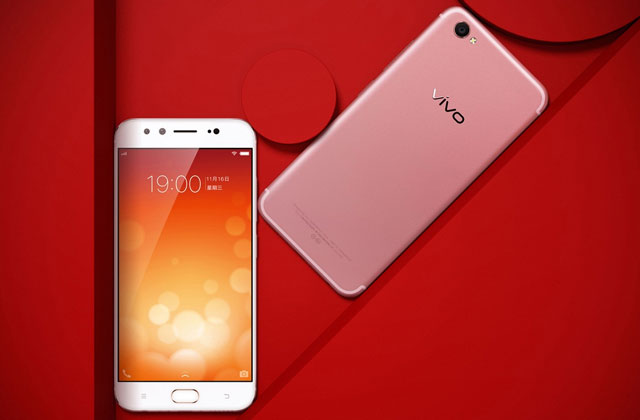
    Vivo's Xplay6
    Vivo’s Xplay6

    Together, Oppo and Vivo shipped about 40m smartphones in the third quarter, about 34% of devices sold in the world’s biggest market, according to IDC. In 2012, their combined share was about 2,5%. iPhone shipments plunged more than a third to 8,2m during the period — less than half of Vivo’s. Samsung, which once led the market, now settles for roughly 5%, according to Counterpoint.

    As Apple has faltered in China, Cook has stepped up his courtship of decision-makers. He visited the country several times this year, unveiled plans for research centers in Beijing and Shenzhen, and invested $1bn in Uber rival Didi Chuxing. Cook said on his last earnings call he remains confident of a return to growth this quarter.

    Samsung declined to comment for this story, while Apple didn’t respond to requests for comment.

    It’s unclear how Apple can reclaim lost ground in the interim. Previous attempts to drift down-market — with the iPhone 5c and SE, for instance — fizzled as local users shunned seemingly inferior devices. Apple doesn’t run a vibrant online social community for users the way some of its local rivals do. And competing on price will jeopardise the industry’s fattest profit margins.

    While Xiaomi shot to international prominence with flash online promotions, that success has been concentrated in densely packed cities

    Oppo and Vivo pack high-end specs into a phone that sells for a fraction of its rival’s in China, where iPhone 7s start at 5 388 yuan ($784; R11 000). Consider the Oppo R9 plus: for 2 999 yuan, buyers get an aluminum body, 6-inch display, 16-megapixel camera and a battery that claims 19 hours of calls, photo and Web browsing. Vivo’s high-end Xplay6, with a price tag of 4 498 yuan, also undercuts Apple.

    “Both companies invested heavily in marketing,” said Nicole Peng, Asia Pacific research director at consultancy Canalys. Oppo and Vivo have a strong grip on the middle market for phones from $200 to $500, she said. “Their offline channel strategy paid off.”

    The man who’s clobbering Apple started out low on the tech spectrum. Duan made his fortune selling DVD players, telephones and game consoles similar to Nintendo’s. Bubugao Communication Equipment Co, the parent of Vivo, emerged from a restructuring in 1999 that split his company. The billionaire later teamed with long-time colleague Tony Chen and others to found what came to be known as Guangdong Oppo Electronics Co.

    While Duan has kept a low profile since moving to the US in 2001, he occasionally makes his way into the spotlight. In 2006, he bid a then-record $620 100 to have lunch with Warren Buffett. Oppo’s first smartphone came in 2011, when it unveiled a device with a BlackBerry-like keyboard. The same year, Bubugao created the business that would become Vivo.

    Tim Cook (image: Mike Deerkoski)
    Tim Cook (image: Mike Deerkoski)

    Today, Vivo touts its cameras and Oppo focuses on rapid-charging and battery life. But their offline strategies remain the same: mobilising tens of thousands of private shop owners. Oppo said it sells its products through roughly 240 000 privately owned stores as of June — six times the global count of McDonald’s. Vivo manages about half that, said Jin. Oppo, which doesn’t disclose sales figures, said about 90% of its phones were sold offline.

    While Xiaomi shot to international prominence with flash online promotions, that success has been concentrated in densely packed cities. That doesn’t work so well in the countryside, where novice buyers want advice and demonstrations. By cultivating a physical network, Oppo and Vivo are building a platform difficult to replicate in the short run.

    Apple, in contrast, has fewer than 40 stores across the mainland, most of which are in large cities. While its retail network is lauded for helping weave an aura of exclusivity and chic around its higher-priced gadgets, Chinese consumers — particularly in smaller, poorer cities — value access to someone local who can work out kinks. That sort of after-sales support is in itself a powerful marketing tool, IDC’s Jin said.

    For now, neither Oppo nor Vivo appear overly concerned with the world’s most valuable company. Their executives say they’ll stick to their winning strategies, while exploring ways to keep pushing the smartphone envelope.

    “We have to keep our minds clear in the fast-changing market,” said Allen Wu, Oppo’s vice-president in charge of sales. “All we need to do is to keep our heads down and make the correct moves.”

    To Vivo, that means targeting younger users with higher-performance devices. “Camera and music will be our key focuses in the future. We are seeing greater customer expectations out of these two areas,” company vice-president Ni Xudong said.

    That message resonates with the likes of Chen Siyu, an accountant who uses her Vivo phone at least four hours a day to chat with friends, watch videos and apply for jobs.

    “I chose Vivo because of its design and photographing capability,” said the 26-year-old who lives in the town of Pu’tian in Fujian. “It is not expensive and doesn’t slow down after longtime use like many Android phones do.”  — (c) 2016 Bloomberg LP



    Apple OPPO Samsung Tim Cook Vivo Xiaomi
    Subscribe to TechCentral Subscribe to TechCentral
    Share. Facebook Twitter LinkedIn WhatsApp Telegram Email Copy Link
    Previous ArticleSA rates likely to be kept steady
    Next Article Jo’burg no longer Africa’s biggest Uber city

    Related Posts

    The best seat in the house? It's behind your Samsung Galaxy smartphone

    The best seat in the house? It’s behind your Samsung Galaxy smartphone

    9 December 2025
    Samsung Galaxy Tab A11: a smarter, sharper companion for work and play

    Samsung Galaxy Tab A11: a smarter, sharper companion for work and play

    8 December 2025
    Beat the summer heat with Samsung's WindFree air conditioners

    Beat the summer heat with Samsung’s WindFree air conditioners

    5 December 2025
    Company News
    Why TechCentral is the most powerful platform for reaching IT decision makers

    Why TechCentral is the most powerful platform for reaching IT decision makers

    17 December 2025
    Business trends to watch in 2026 - Domains.co.za

    Business trends to watch in 2026

    17 December 2025
    MTN Zambia launches world's first 4G cloud smartphone solution - Huawei

    MTN Zambia launches world’s first 4G cloud smartphone solution

    17 December 2025
    Opinion
    Netflix, Warner Bros deal raises fresh headaches for MultiChoice - Duncan McLeod

    Netflix, Warner Bros deal raises fresh headaches for MultiChoice

    5 December 2025
    BIN scans, DDoS and the next cybercrime wave hitting South Africa's banks - Entersekt Gerhard Oosthuizen

    BIN scans, DDoS and the next cybercrime wave hitting South Africa’s banks

    3 December 2025
    Your data, your hardware: the DIY AI revolution is coming - Duncan McLeod

    Your data, your hardware: the DIY AI revolution is coming

    20 November 2025

    Subscribe to Updates

    Get the best South African technology news and analysis delivered to your e-mail inbox every morning.

    Latest Posts
    Digital authoritarianism grows as African states normalise internet blackouts

    Digital authoritarianism grows as African states normalise internet blackouts

    19 December 2025
    Starlink satellite anomaly creates debris in rare orbital mishap

    Starlink satellite anomaly creates debris in rare orbital mishap

    19 December 2025
    Trump space order puts the moon back at centre of US, China rivalry - US President Donald Trump

    Trump space order puts the moon back at centre of US, China rivalry

    19 December 2025
    TechCentral's South African Newsmakers of 2025

    TechCentral’s South African Newsmakers of 2025

    18 December 2025
    © 2009 - 2025 NewsCentral Media
    • Cookie policy (ZA)
    • TechCentral – privacy and Popia

    Type above and press Enter to search. Press Esc to cancel.

    Manage consent

    TechCentral uses cookies to enhance its offerings. Consenting to these technologies allows us to serve you better. Not consenting or withdrawing consent may adversely affect certain features and functions of the website.

    Functional Always active
    The technical storage or access is strictly necessary for the legitimate purpose of enabling the use of a specific service explicitly requested by the subscriber or user, or for the sole purpose of carrying out the transmission of a communication over an electronic communications network.
    Preferences
    The technical storage or access is necessary for the legitimate purpose of storing preferences that are not requested by the subscriber or user.
    Statistics
    The technical storage or access that is used exclusively for statistical purposes. The technical storage or access that is used exclusively for anonymous statistical purposes. Without a subpoena, voluntary compliance on the part of your Internet Service Provider, or additional records from a third party, information stored or retrieved for this purpose alone cannot usually be used to identify you.
    Marketing
    The technical storage or access is required to create user profiles to send advertising, or to track the user on a website or across several websites for similar marketing purposes.
    • Manage options
    • Manage services
    • Manage {vendor_count} vendors
    • Read more about these purposes
    View preferences
    • {title}
    • {title}
    • {title}