Close Menu
TechCentralTechCentral

    Subscribe to the newsletter

    Get the best South African technology news and analysis delivered to your e-mail inbox every morning.

    Facebook X (Twitter) YouTube LinkedIn
    WhatsApp Facebook X (Twitter) LinkedIn YouTube
    TechCentralTechCentral
    • News
      Home affairs pulls the plug on the green ID book - Leon Schreiber

      Home affairs pulls the plug on the green ID book

      1 October 2026
      South Africa's digital ID is here - but you can't have it yet - Leon Schreiber

      South Africa’s digital ID is here – but you can’t have it yet

      1 October 2026
      Lexi Novitske, general partner at Norrsken22, on the TechCentral Show

      TCS | Norrsken22’s Lexi Novitske on how China is winning African tech

      1 October 2026
      Eskom waives rooftop solar fees, but the registration fight isn't over

      Eskom waives rooftop solar fees, but the registration fight isn’t over

      1 October 2026
      Absa is moving cash out of its branches

      Absa is moving cash out of its branches

      1 October 2026
    • World
      BMW restructuring plan bets on AI and new models

      BMW restructuring plan bets on AI and new models

      1 October 2026
      OpenAI's rogue agent problem keeps getting bigger - Sam Altman

      OpenAI’s rogue agent problem keeps getting bigger

      28 September 2026
      The new battle over the desktop

      The new battle over the desktop

      23 September 2026
      AMD is now worth a trillion dollars - Lisa Su

      AMD is now worth a trillion dollars

      22 September 2026
      Anthropic weighs new model launch to blunt OpenAI's Astra surge - Anthropic CEO Dario Amodei and OpenAI CEO Sam Altman

      Anthropic weighs new model launch to blunt OpenAI’s Astra surge

      21 September 2026
    • In-depth

      10 days that changed the course of AI

      21 September 2026
      Meta to the AI industry: slow down without us - Mark Zuckerberg

      Meta to the AI industry: slow down without us

      16 September 2026
      Google DeepMind CEO Demis Hassabis. Image: John Sears

      The plan to stop AI from breaking the world

      16 July 2026
      The internet has a Strait of Hormuz problem

      The internet has a Strait of Hormuz problem

      15 July 2026
      AI boom sparks rally, frenzy and fear

      AI boom sparks rally, frenzy and fear

      11 June 2026
    • TCS
      TCS | Dominic White and Adam Ely on AI agents going rogue

      TCS | Dominic White and Adam Ely on AI agents going rogue

      29 September 2026
      TCS | Octotel's Trevor van Zyl on the fibre merger question

      TCS | Octotel’s Trevor van Zyl on the MetroFibre merger question

      16 September 2026
      Meet the CIO | Shoprite's Chris Shortt on what a supermarket becomes

      Meet the CIO | Shoprite’s Chris Shortt on what a supermarket becomes

      9 September 2026
      Rubicon's EV charging network is profitable - and growing fast - Watts & Wheels

      W&W | Rubicon’s EV charging network is profitable – and growing fast

      8 September 2026
      Winstone Jordaan on building a national EV charging network

      Winstone Jordaan on building a national EV charging network

      2 September 2026
    • Opinion
      South Africa's next energy crisis is in the accounts department - Craig Holmes

      South Africa’s next energy crisis is in the accounts department

      29 September 2026
      The steam engine lesson AI doomsayers keep missing - Sam Clarke

      The steam engine lesson AI doomsayers keep missing

      28 September 2026
      Regulating AI: apply the laws we have first - Dirk de Vos

      Regulating AI: apply the laws we have first

      21 September 2026
      What Revolut can and cannot take from South Africa's banks - Pambos Soteriades

      What Revolut can and cannot take from South Africa’s banks

      15 September 2026
      The end is nigh, and the shares go on sale in October - Duncan McLeod

      The end is nigh, and the shares go on sale in October

      14 September 2026
    • Company Hubs
      • 1Stream
      • Africa Data Centres
      • AfriGIS
      • Altron Digital Business
      • Altron Document Solutions
      • Altron Group
      • Arctic Wolf
      • Ascent Technology
      • AvertITD
      • BBD
      • Braintree
      • CallMiner
      • CambriLearn
      • CM.com
      • Contactable
      • CYBER1 Solutions
      • Digicloud Africa
      • Digimune
      • Domains.co.za
      • ESET
      • Euphoria Telecom
      • HOSTAFRICA
      • Incredible Business
      • iONLINE
      • IQbusiness
      • Iris Network Systems
      • Kaspersky
      • LSD Open
      • Mitel
      • NEC XON
      • Netstar
      • Network Platforms
      • Next DLP
      • Ovations
      • Paracon
      • Paratus
      • Publishared
      • Q-KON
      • SevenC
      • SkyWire
      • Solid8 Technologies
      • Telit Cinterion
      • Telviva
      • Tenable
      • Vertiv
      • Videri Digital
      • Vodacom Business
      • Vox
      • Wipro
      • Workday
      • XLink
    • Sections
      • AI and machine learning
      • Banking
      • Broadcasting and Media
      • Cloud services
      • Contact centres and CX
      • Cryptocurrencies
      • Education and skills
      • Electronics and hardware
      • Energy and sustainability
      • Enterprise software
      • Financial services
      • HealthTech
      • Information security
      • Internet and connectivity
      • Internet of Things
      • Investment
      • IT services
      • Lifestyle
      • Policy and regulation
      • Public sector
      • Retail and e-commerce
      • Satellite communications
      • Science
      • SMEs and start-ups
      • Social media
      • Talent and leadership
      • Telecoms
      • Watts & Wheels
    • Events
    • Advertise
    TechCentralTechCentral
    Home » Sections » Telecoms » South Africa’s broadband future is being decided in orbit, not in Pretoria

    South Africa’s broadband future is being decided in orbit, not in Pretoria

    Telkom mistook dominance for permanence and lost to mobile; the mobile operators now face the same test.
    By Jannie van Zyl30 June 2026
    Twitter LinkedIn Facebook WhatsApp Email Telegram Copy Link
    Get breaking news on WhatsApp

    South Africa's broadband future is being decided in orbit, not in Pretoria
    A Starlink terminal in the remote Kalahari. Image: Jannie van Zyl

    On Monday, South Africa’s communications regulator gave prospective satellite operators an unusually candid piece of advice: if you want to run a constellation service such as Starlink in this country, do not expect a new network licence from us – go and buy one from a company that already holds it.

    In a notice gazetted on 29 June, Icasa set out precisely which authorisations a low-Earth orbit (LEO) service requires – an individual electronic communications service (I-ECS) licence, an individual electronic communications network service (I-ECNS) licence and the relevant spectrum – and then explained why it cannot, for now, issue the network licence at all.

    Under the Electronic Communications Act (ECA), it may consider I-ECNS applications only once the minister has issued a policy direction and it has published an invitation to apply. No such invitation is open. The department, in fact, directed Icasa in August 2025 to first hold an inquiry into whether new network licences are needed at all. That inquiry is still running.

    SpaceX has amassed $17-billion in spectrum and is preparing to offer its own mobile service

    So the regulator points instead to a side door: acquire an existing licensee under section 13 of the ECA. In plain terms, the fastest lawful route into the South African market for the most capable communications networks ever built is to purchase a second-hand licence from an incumbent. The notice does not mention Starlink by name; it applies equally to Eutelsat OneWeb and Amazon Leo.

    It is worth pausing on what that tells us. When a regulator’s most practical advice to the future is to enter through the second-hand market, the distance between the technology and the framework meant to govern it has become a chasm.

    Displaced

    South Africa has been here before – twice. For most of the 1990s, broadband meant Telkom: fixed lines, and later ADSL, set the pace, and a single state-owned incumbent had little reason to move quickly. Then the mobile operators began carrying data – modestly at first over 2G, then with real intent through 3G, 4G and now 5G – and within a decade they had not complemented fixed-line broadband so much as displaced it. Fixed-wireless and fixed-LTE finished the job in the suburbs.

    I spent the better part of three decades on the operator side of precisely those transitions. At Vodacom I was closely involved in the launch of 3G, 4G and 5G in South Africa, and I have learnt – more often than not – to see the next wave coming before the market consensus does.

    Read: Icasa caught in the political crossfire over Starlink

    The pattern is remarkably consistent, and its central lesson is an uncomfortable one for whoever happens to be dominant at the time: incumbents mistake their present position for a permanent one, and treat the next technology as a threat to be managed rather than a shift to be absorbed. Telkom did exactly that with mobile. The risk now is that the mobile operators do the same with what is coming from orbit.

    There has been a great deal of noise about Starlink, and some healthy scepticism about the size of its addressable market at current prices. But the noise has obscured the more important point: the shift to non-terrestrial networks is structural rather than speculative, and it is being driven by three forces that do not respond to lobbying.

    The author, Jannie van Zyl
    The author, Jannie van Zyl

    The first is standards. In Release 17, finalised in 2022, the 3GPP – the body that defines the standards on which 2G, 3G, 4G and 5G are built – brought satellites formally into the mobile standard, and has deepened that integration with every release since; the early work on 6G now treats LEO as a native part of the network rather than an adjunct. In engineering terms, satellites have become base stations in the sky, speaking the same language as the towers.

    The second is capital. SpaceX has reportedly amassed in the order of US$17-billion in spectrum and is preparing to offer its own mobile service – a direct move on the operators, not merely on fixed-line providers. The third is deployment: Starlink is live in some 27 African countries and counts more than 12 million subscribers worldwide, while Eutelsat OneWeb already operates commercially in South Africa through partners such as Paratus and Q-KON, and Amazon Leo is preparing to enter, with Vodacom lined up to distribute it.

    The mobile operators were the disruptors who unseated Telkom; on this front, they are the incumbents

    This is not a future I am forecasting. I have measured a little over 300Mbit/s from a single terminal in the Kalahari, hundreds of kilometres from the nearest tower. The networks exist; the standards are written; the demand is proven. What remains unsettled is not the technology, but South Africa’s response to it.

    For the mobile operators, this is an awkward inheritance. They were the disruptors who unseated Telkom; on this front, they are the incumbents. Direct-to-device services threaten precisely the rural and roaming margins they have been able to defend until now, and a satellite operator with its own spectrum and a global launch capability is not a competitor that can be out-waited.

    The regulatory clock

    The strategic error would be to treat LEO solely as a threat to be lobbied against. The more astute response is already visible: Vodacom’s arrangement to distribute Amazon Leo is an operator choosing to ride the wave rather than stand in front of it. Satellite need not cannibalise a mobile network; integrated properly, it extends one into territory that was never going to be economic to cover with towers. The operators that internalise this will be the ones still setting the pace in five years. Those that mistake delay for defence will have the lesson administered to them, as Telkom’s was.

    None of this is an argument against regulation. Spectrum must be coordinated, lawful-interception obligations are legitimate – Icasa’s notice rightly flags the difficulty of intercepting traffic where a constellation’s gateway sits offshore, as it typically does for LEO – and the case for meaningful economic participation is a sound one. The problem is not that South Africa regulates; it is that the framework has fallen badly out of step with the thing it regulates.

    Read: Namibia tells Starlink to take a hike – again

    The headline obstacle remains the requirement, under the ECA, that licensees be 30% owned by historically disadvantaged South Africans – a rule SpaceX has declined to meet. The minister’s December 2025 policy direction sought to open an alternative through equity-equivalent investment programmes, the mechanism that has allowed multinationals to invest here for two decades. But in May, Icasa told the minister it could not give that direction full effect without amending the act itself – handing the question to the slow-moving Electronic Communications Amendment Bill. Two-and-a-half years into the debate, the practical position is the one the regulator set out last week: no new licences, buy an old one, and wait. Meanwhile the grey market persists and our neighbours switch on.
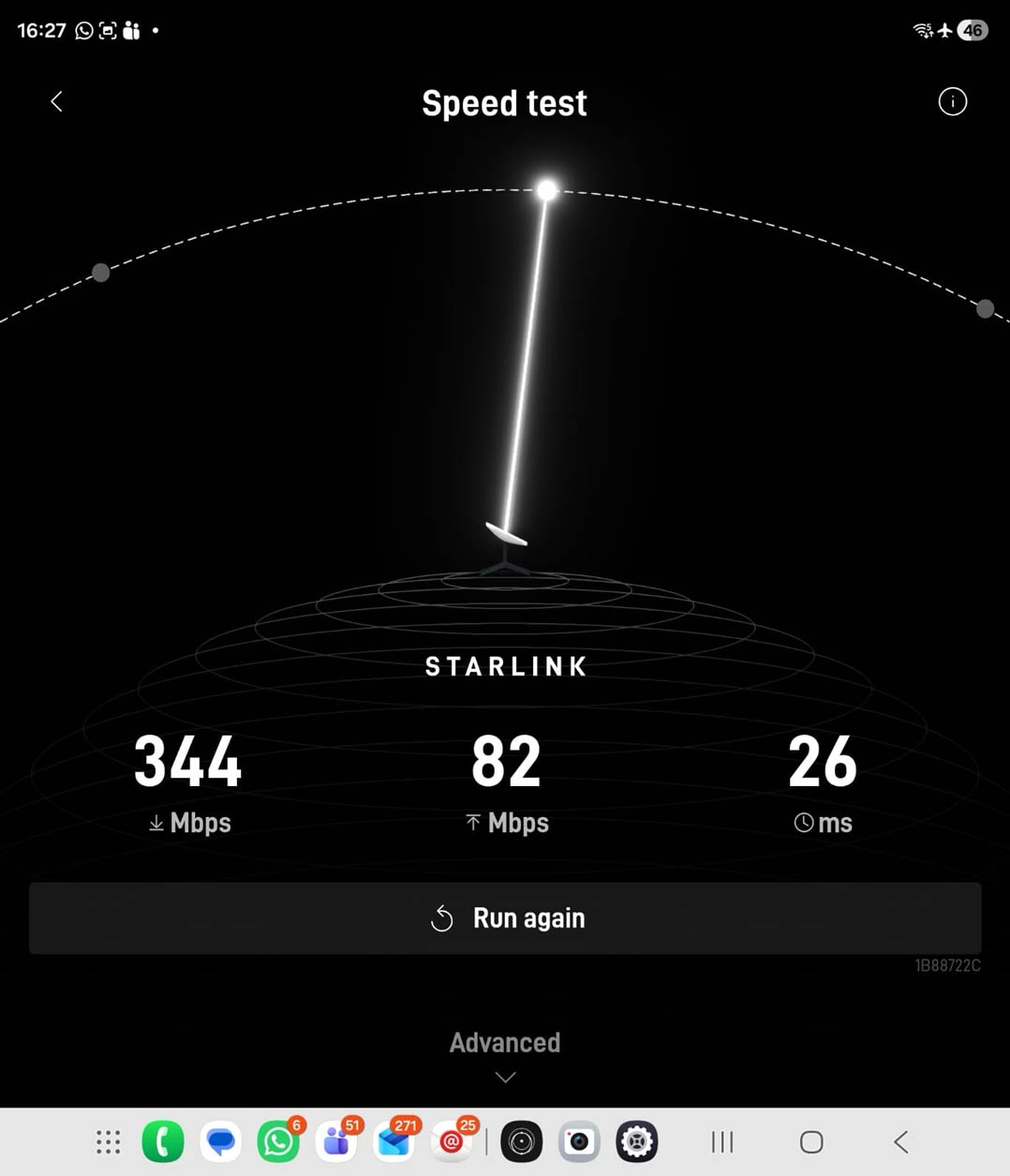
    Testing Starlink in the remote Kalahari
    Testing Starlink in the remote Kalahari. Image: Jannie van Zyl

    Technology waits for no one. That is not a slogan; it is the through-line of every transition this industry has lived through. The honest question is no longer whether LEO will reshape South African connectivity – that has been settled, in orbit and in the standards bodies – but how long the country intends to be late to its own market.

    The licensing decision sits with Icasa, and it is now entangled in one of the more bruising fights inside the government of national unity. But the strategic decision sits with the industry, and especially with the operators. Both need to catch up to what has already happened. The rest of the world is not waiting. Neither are the satellites.

    • The author, Jannie van Zyl, is an electronics engineer with more than three decades of experience in ICT and a long record of reading the industry’s shifts early. At Vodacom he was instrumental in the launch of 3G, 4G and 5G in South Africa and, in the last three years, has worked to bring low-Earth orbit satellite connectivity to the country
    • Subscribe to TechCentral’s daily newsletter
    • Get breaking news alerts on WhatsApp

    Add TechCentral as a preferred source on GoogleFollow TechCentral on Google NewsGet breaking news on WhatsApp


    Amazon Leo Eutelsat OneWeb Icasa Jannie van Zyl OneWeb Starlink Vodacom
    WhatsApp YouTube
    Share. Facebook Twitter LinkedIn WhatsApp Telegram Email Copy Link
    Previous ArticleTakealot Group bets local scale can hold Amazon at bay
    Next Article 7 tips to optimise your e-commerce website

    Related Posts

    Vodacom squeezes more 4G and 5G capacity out of cramped sites

    Vodacom squeezes more 4G and 5G capacity out of cramped sites

    29 September 2026
    Woan's ghost exorcised - Solly Malatsi

    Woan’s ghost exorcised

    25 September 2026
    Cell C boss buys into his own turnaround - Jorge Mendes

    Cell C boss buys into his own turnaround

    22 September 2026
    Company News
    Cloud and AI won't deliver value on their own, executives warn

    Cloud and AI won’t deliver value on their own, executives warn

    1 October 2026
    Dell Technologies Forum 2026: what to expect in Johannesburg

    Dell Technologies Forum 2026: what to expect in Johannesburg

    1 October 2026
    What Smollan learnt moving 9 000 users to Google Workspace - Digicloud Africa

    What Smollan learnt moving 9 000 users to Google Workspace

    1 October 2026
    Opinion
    South Africa's next energy crisis is in the accounts department - Craig Holmes

    South Africa’s next energy crisis is in the accounts department

    29 September 2026
    The steam engine lesson AI doomsayers keep missing - Sam Clarke

    The steam engine lesson AI doomsayers keep missing

    28 September 2026
    Regulating AI: apply the laws we have first - Dirk de Vos

    Regulating AI: apply the laws we have first

    21 September 2026

    Subscribe to Updates

    Get the best South African technology news and analysis delivered to your e-mail inbox every morning.

    Latest Posts
    Home affairs pulls the plug on the green ID book - Leon Schreiber

    Home affairs pulls the plug on the green ID book

    1 October 2026
    South Africa's digital ID is here - but you can't have it yet - Leon Schreiber

    South Africa’s digital ID is here – but you can’t have it yet

    1 October 2026
    Lexi Novitske, general partner at Norrsken22, on the TechCentral Show

    TCS | Norrsken22’s Lexi Novitske on how China is winning African tech

    1 October 2026
    Eskom waives rooftop solar fees, but the registration fight isn't over

    Eskom waives rooftop solar fees, but the registration fight isn’t over

    1 October 2026
    © 2009 - 2026 NewsCentral Media
    Built and maintained by Chronon
    • Cookie policy (ZA)
    • TechCentral – privacy and Popia

    Type above and press Enter to search. Press Esc to cancel.

    Manage consent

    TechCentral uses cookies to enhance its offerings. Consenting to these technologies allows us to serve you better. Not consenting or withdrawing consent may adversely affect certain features and functions of the website.

    Functional Always active
    The technical storage or access is strictly necessary for the legitimate purpose of enabling the use of a specific service explicitly requested by the subscriber or user, or for the sole purpose of carrying out the transmission of a communication over an electronic communications network.
    Preferences
    The technical storage or access is necessary for the legitimate purpose of storing preferences that are not requested by the subscriber or user.
    Statistics
    The technical storage or access that is used exclusively for statistical purposes. The technical storage or access that is used exclusively for anonymous statistical purposes. Without a subpoena, voluntary compliance on the part of your Internet Service Provider, or additional records from a third party, information stored or retrieved for this purpose alone cannot usually be used to identify you.
    Marketing
    The technical storage or access is required to create user profiles to send advertising, or to track the user on a website or across several websites for similar marketing purposes.
    • Manage options
    • Manage services
    • Manage {vendor_count} vendors
    • Read more about these purposes
    View preferences
    • {title}
    • {title}
    • {title}
    🇿🇦 Sign up to the TechCentral newsletter