
Close Menu
TechCentralTechCentral

    Subscribe to the newsletter

    Get the best South African technology news and analysis delivered to your e-mail inbox every morning.

    Facebook X (Twitter) YouTube LinkedIn
    WhatsApp Facebook X (Twitter) LinkedIn YouTube
    TechCentralTechCentral
    • News
      Malatsi withdraws AI policy after fictitious sources scandal - Solly Malatsi

      Malatsi withdraws AI policy after fictitious sources scandal

      26 April 2026
      How AI could quietly hollow out South Africa's job market

      How AI could quietly hollow out South Africa’s job market

      26 April 2026
      SpaceX bets the rocket farm on AI

      SpaceX bets the rocket farm on AI

      26 April 2026
      Withdraw AI policy, Malatsi told as fake citations row grows - Solly Malatsi

      Withdraw AI policy, Malatsi told, as fake citations row grows

      26 April 2026
      The remarkable turnaround at Intel

      The remarkable turnaround at Intel

      26 April 2026
    • World
      More organic compounds detected on Mars - Nasa Curiosity rover

      More organic compounds detected on Mars

      21 April 2026
      Adobe bets on AI agents to fend off cheaper rivals

      Adobe bets on AI agents to fend off cheaper rivals

      16 April 2026
      Google poised to lose ad crown to Meta

      Google poised to lose ad crown to Meta

      14 April 2026
      Grand Theft Data - hackers hit Rockstar Games - Grand Theft Auto

      Grand Theft Data – hackers hit Rockstar Games

      14 April 2026
      UK PM Keir Starmer declares war on doomscrolling

      UK PM Keir Starmer declares war on doomscrolling

      13 April 2026
    • In-depth
      Africa switches on as Europe dims the lights

      Africa switches on as Europe dims the lights

      9 April 2026
      The biggest untapped EV market on Earth is hiding in plain sight

      The biggest untapped EV market on Earth is hiding in plain sight

      1 April 2026
      The R18-billion tech giant hiding in plain sight - Jens Montanana

      The R16-billion tech giant hiding in plain sight

      26 March 2026
      The last generation of coders

      The last generation of coders

      18 February 2026
      Sentech is in dire straits

      Sentech is in dire straits

      10 February 2026
    • TCS

      TCS+ | ‘The ISP for ISPs’: Vox’s shift to wholesale aggregator

      20 April 2026
      TCS | Werner Lindemann on how AI is rewriting the infosec rulebook

      TCS | Werner Lindemann on how AI is rewriting the infosec rulebook

      15 April 2026
      TCS | Donovan Marsh on AI and the future of filmmaking

      TCS | Donovan Marsh on AI and the future of filmmaking

      7 April 2026
      TCS+ | Vodacom Business moves to crack the SME tech gap - Andrew Fulton, Sannesh Beharie

      TCS+ | Vodacom Business moves to crack the SME tech gap

      7 April 2026
      TCS | MTN's Divysh Joshi on the strategy behind Pi - Divyesh Joshi

      TCS | MTN’s Divyesh Joshi on the strategy behind Pi

      1 April 2026
    • Opinion
      The conflict of interest at the heart of PayShap's slow adoption - Cheslyn Jacobs

      The conflict of interest at the heart of PayShap’s slow adoption

      26 March 2026
      South Africa's energy future hinges on getting wheeling right - Aishah Gire

      South Africa’s energy future hinges on getting wheeling right

      10 March 2026
      Hold the doom: the case for a South African comeback - Duncan McLeod

      Apple just dropped a bomb on the Windows world

      5 March 2026
      R230-million in the bag for Endeavor's third Harvest Fund - Alison Collier

      VC’s centre of gravity is shifting – and South Africa is in the frame

      3 March 2026
      Hold the doom: the case for a South African comeback - Duncan McLeod

      Hold the doom: the case for a South African comeback

      26 February 2026
    • Company Hubs
      • 1Stream
      • Africa Data Centres
      • AfriGIS
      • Altron Digital Business
      • Altron Document Solutions
      • Altron Group
      • Arctic Wolf
      • Ascent Technology
      • AvertITD
      • BBD
      • Braintree
      • CallMiner
      • CambriLearn
      • CYBER1 Solutions
      • Digicloud Africa
      • Digimune
      • Domains.co.za
      • ESET
      • Euphoria Telecom
      • HOSTAFRICA
      • Incredible Business
      • iONLINE
      • IQbusiness
      • Iris Network Systems
      • Kaspersky
      • LSD Open
      • Mitel
      • NEC XON
      • Netstar
      • Network Platforms
      • Next DLP
      • Ovations
      • Paracon
      • Paratus
      • Q-KON
      • SevenC
      • SkyWire
      • Solid8 Technologies
      • Telit Cinterion
      • Telviva
      • Tenable
      • Vertiv
      • Videri Digital
      • Vodacom Business
      • Wipro
      • Workday
      • XLink
    • Sections
      • AI and machine learning
      • Banking
      • Broadcasting and Media
      • Cloud services
      • Contact centres and CX
      • Cryptocurrencies
      • Education and skills
      • Electronics and hardware
      • Energy and sustainability
      • Enterprise software
      • Financial services
      • HealthTech
      • Information security
      • Internet and connectivity
      • Internet of Things
      • Investment
      • IT services
      • Lifestyle
      • Motoring
      • Policy and regulation
      • Public sector
      • Retail and e-commerce
      • Satellite communications
      • Science
      • SMEs and start-ups
      • Social media
      • Talent and leadership
      • Telecoms
    • Events
    • Advertise
    TechCentralTechCentral
    Home » World » Apple, Google put aside hostilities in rare partnership to fight Covid-19

    Apple, Google put aside hostilities in rare partnership to fight Covid-19

    By Mark Gurman11 April 2020
    Twitter LinkedIn Facebook WhatsApp Email Telegram Copy Link
    News Alerts
    WhatsApp

    Apple and Google have unveiled a rare partnership to add technology to their smartphone platforms that will alert users if they have come into contact with a person with Covid-19. People must opt in to the system, but it has the potential to monitor about a third of the world’s population.

    The technology, known as contact-tracing, is designed to curb the spread of the novel coronavirus by telling users they should quarantine or isolate themselves after contact with an infected individual.

    The Silicon Valley rivals said on Friday that they are building the technology into their iOS and Android operating systems in two steps. In mid-May, the companies will add the ability for iPhones and Android phones to exchange anonymous information wirelessly via apps run by public health authorities. The companies will also release frameworks for public health apps to manage the functionality.

    The Silicon Valley rivals are building the technology into their iOS and Android operating systems in two steps

    This means that if a user tests positive for Covid-19, and adds that data to their public health app, users who they came into close proximity with over the previous several days will be notified of their contact. This period could be 14 days, but health agencies can set the time range.

    The second step takes longer. In the coming months, both companies will add the technology directly into their operating systems so this contact-tracing software works without having to download an app. Users must opt in, but this approach means many more people can be included. Apple’s iOS and Google’s Android have about three billion users between them, over a third of the world’s population.

    Vicious tailspin

    The pandemic has killed more than 100 000 and infected 1.63 million people. Governments have ordered millions to stay home, sending the global economy into a vicious tailspin. Pressure is building to relax these measures and get the world back to work. Contact-tracing is a key part of this because it can help authorities contain a potential resurgence of the virus as people resume regular activities.

    Still, this technology is controversial because it involves sharing sensitive health information from billions of people via mobile devices that are constantly broadcasting their location. Some politicians and regulators have been warning that citizens’ privacy should be protected.

    “We caution that actions taken to contain spreading of coronavirus must also preserve the right to privacy held by each and every American,” members of the House Freedom Caucus, a group of conservative Republicans in the US house of representatives, wrote in a letter to US President Donald Trump. “Google’s colossal stores of data on daily movements of Americans, coupled with the might of local, state and federal governments is an alarming prospect.”
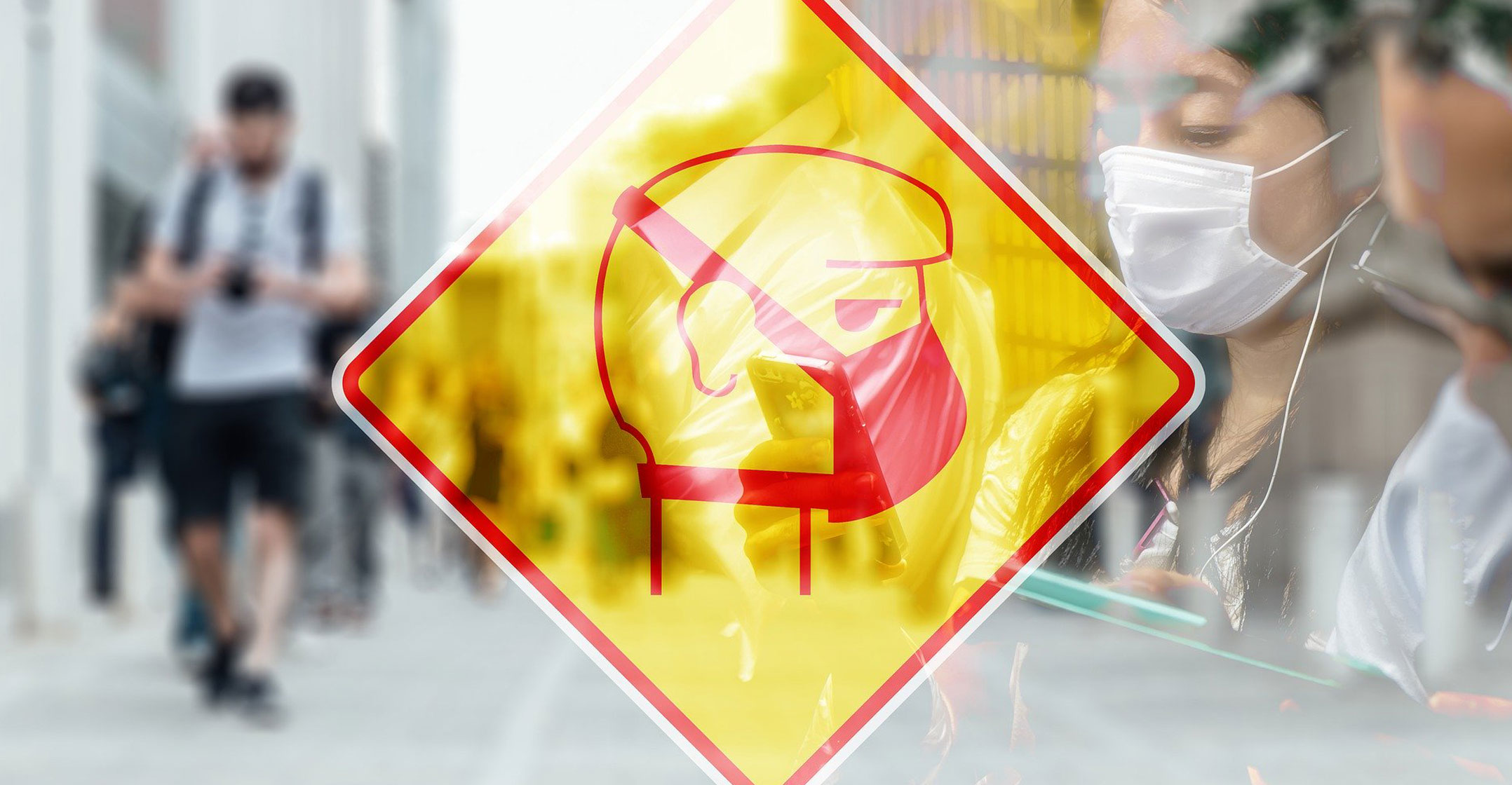
    Apple and Google stressed on Friday that their system preserves users’ privacy. Consent is required and location data is not collected. The technology also won’t notify users who they came into contact with, or where that happened. The companies said they can’t see this data either, and noted that the whole system can be shut down when needed.

    Aside from privacy and trust concerns, challenges include the availability of widespread and free testing to complement the app, as well as access to mobile phones and other wireless devices, according to the American Civil Liberties Union.

    “We must be realistic that such contact tracing methods are likely to exclude many vulnerable members of society who lack access to technology and are already being disproportionately impacted by the pandemic,” Jennifer Granick, ACLU’s surveillance and cybersecurity counsel, said in a statement.

    Apple and Google believe there has never been a more important moment to work together to solve one of the world’s most pressing problems

    For Apple and Google, such a close partnership between these longtime rivals is extremely rare. The technology giants have competed in smartphone operating systems, app stores, media services and voice-recognition technology for years — while trading barbs over the privacy of each others’ platforms. However, both companies have been under pressure to use their prodigious resources to help fight the pandemic.

    “All of us at Apple and Google believe there has never been a more important moment to work together to solve one of the world’s most pressing problems,” the companies said in a joint statement.

    Their system uses Bluetooth, a standard way for most mobile devices to communicate with each other. Apple and Google shared a theoretical example to explain how it works.

    Privacy

    Two people meet to chat for a few minutes, and in the background via Bluetooth their smartphones exchange anonymous identifiers to register that they have been in contact. These digital keys change every 15 minutes or so and remain on these people’s devices to preserve privacy.

    Several days later, one of these individuals is diagnosed with Covid-19. The person enters the results into a health-agency app on their phone. The system then asks for this user’s consent. If granted, the person’s smartphone sends a record of the other mobile devices that have been in close proximity during the previous days. This information is temporarily stored in a remote computer server for about 14 days.

    Google launched an information website in March, while Apple has released its own screening tools for iPhone users

    Meanwhile, the other person’s phone checks the server periodically to see if any identifier keys have been associated with a positive Covid-19 diagnosis. The phone downloads all positive keys and matches it anonymously to the key belonging to the individual from the original meeting days earlier. This sends a notification to the other person’s phone with information from health agencies about how to quarantine or self-isolate.

    The contact-tracing technology isn’t the first step against Covid-19 for either company. Google launched an information website in March, while Apple has released its own screening tools for iPhone users. Apple has also donated over 20 million masks to health-care workers and has designed face shields, and Verily, a unit of Google parent Alphabet, is running virus-testing sites in some parts of California.

    Other organisations are also working on contact-tracing. Researchers at the Massachusetts Institute of Technology earlier this week announced plans for a similar system. Some countries and third-party developers have also tried implementing contact-tracing on phones, but they have faced privacy and connectivity issues that the new system is designed to avoid.  — Reported with assistance from Billy House, (c) 2020 Bloomberg LP

    Follow TechCentral on Google News Add TechCentral as your preferred source on Google


    Apple Google top
    WhatsApp YouTube
    Share. Facebook Twitter LinkedIn WhatsApp Telegram Email Copy Link
    Previous ArticleIcasa receives three dozen applications for temporary spectrum
    Next Article Apple, Google partnership is significant news in Covid-19 fight

    Related Posts

    SpaceX bets the rocket farm on AI

    SpaceX bets the rocket farm on AI

    26 April 2026
    Middle-class South Africa is ditching streaming for AI

    Middle-class South Africa is ditching streaming for AI

    23 April 2026
    The AI agent race is on - and Google wants to win it - Sundar Pichai

    The AI agent race is on – and Google wants to win it

    22 April 2026
    Company News
    Cybersecurity in the age of AI: why speed and trust now define resilience - iqbusiness

    Cybersecurity in the AI age: speed and trust define resilience

    24 April 2026
    Security by design is the channel's strongest pitch - Othelo Vieira

    Security by design is the channel’s strongest pitch

    23 April 2026
    Your brand is invisible to the AI that's choosing your competitor - Michelle Losco

    Your brand is invisible to the AI that’s choosing your competitor

    23 April 2026
    Opinion
    The conflict of interest at the heart of PayShap's slow adoption - Cheslyn Jacobs

    The conflict of interest at the heart of PayShap’s slow adoption

    26 March 2026
    South Africa's energy future hinges on getting wheeling right - Aishah Gire

    South Africa’s energy future hinges on getting wheeling right

    10 March 2026
    Hold the doom: the case for a South African comeback - Duncan McLeod

    Apple just dropped a bomb on the Windows world

    5 March 2026

    Subscribe to Updates

    Get the best South African technology news and analysis delivered to your e-mail inbox every morning.

    Latest Posts
    Malatsi withdraws AI policy after fictitious sources scandal - Solly Malatsi

    Malatsi withdraws AI policy after fictitious sources scandal

    26 April 2026
    How AI could quietly hollow out South Africa's job market

    How AI could quietly hollow out South Africa’s job market

    26 April 2026
    SpaceX bets the rocket farm on AI

    SpaceX bets the rocket farm on AI

    26 April 2026
    Withdraw AI policy, Malatsi told as fake citations row grows - Solly Malatsi

    Withdraw AI policy, Malatsi told, as fake citations row grows

    26 April 2026
    © 2009 - 2026 NewsCentral Media
    • Cookie policy (ZA)
    • TechCentral – privacy and Popia

    Type above and press Enter to search. Press Esc to cancel.

    Manage consent

    TechCentral uses cookies to enhance its offerings. Consenting to these technologies allows us to serve you better. Not consenting or withdrawing consent may adversely affect certain features and functions of the website.

    Functional Always active
    The technical storage or access is strictly necessary for the legitimate purpose of enabling the use of a specific service explicitly requested by the subscriber or user, or for the sole purpose of carrying out the transmission of a communication over an electronic communications network.
    Preferences
    The technical storage or access is necessary for the legitimate purpose of storing preferences that are not requested by the subscriber or user.
    Statistics
    The technical storage or access that is used exclusively for statistical purposes. The technical storage or access that is used exclusively for anonymous statistical purposes. Without a subpoena, voluntary compliance on the part of your Internet Service Provider, or additional records from a third party, information stored or retrieved for this purpose alone cannot usually be used to identify you.
    Marketing
    The technical storage or access is required to create user profiles to send advertising, or to track the user on a website or across several websites for similar marketing purposes.
    • Manage options
    • Manage services
    • Manage {vendor_count} vendors
    • Read more about these purposes
    View preferences
    • {title}
    • {title}
    • {title}