Close Menu
TechCentralTechCentral

    Subscribe to the newsletter

    Get the best South African technology news and analysis delivered to your e-mail inbox every morning.

    Facebook X (Twitter) YouTube LinkedIn
    WhatsApp Facebook X (Twitter) LinkedIn YouTube
    TechCentralTechCentral
    • News
      Eskom fixed the fleet and the customers left

      Eskom fixed the fleet and the customers left

      7 August 2026
      DStv chops channels as Canal+ leans harder on sport

      DStv chops channels as Canal+ leans harder on sport

      7 August 2026
      Starlink LEO rival gaining momentum

      Starlink LEO rival gaining momentum

      7 August 2026
      ByteDance goes big - very big - on AI

      ByteDance goes big – very big – on AI

      7 August 2026
      ICT is becoming the centre of gravity at Reunert - Anthonie de Beer and Rob Godlonton

      ICT is becoming the centre of gravity at Reunert

      6 August 2026
    • World
      Meta AI will now tell parents if their teen is in crisis

      Meta AI will now tell parents if their teen is in crisis

      17 July 2026
      IBM shares crash 25% as AI upends software spending - Arvind Krishna

      IBM shares crash 25% as AI upends software spending

      15 July 2026
      Jony Ive's first OpenAI device: an AI smart speaker - Jony Ive and Sam Altman

      Jony Ive’s first OpenAI device: an AI smart speaker

      15 July 2026
      Stripe, Advent in talks to buy PayPal for $53-billion

      Stripe, Advent in talks to buy PayPal for $53-billion

      15 July 2026
      Memory crisis sends smartphone market into steep decline

      Memory crisis sends smartphone market into steep decline

      13 July 2026
    • In-depth
      The plan to stop AI from breaking the world - Google DeepMind CEO Demis Hassabis. Image: John Sears

      The plan to stop AI from breaking the world

      16 July 2026
      The internet has a Strait of Hormuz problem

      The internet has a Strait of Hormuz problem

      15 July 2026
      AI boom sparks rally, frenzy and fear

      AI boom sparks rally, frenzy and fear

      11 June 2026
      Every plug-in hybrid on sale in South Africa, ranked by price - Lamborghini Temerario

      Every plug-in hybrid on sale in South Africa, ranked by price

      7 June 2026
      What Wi-Fi 8 will mean for wireless networks

      What Wi-Fi 8 will mean for wireless networks

      1 June 2026
    • TCS
      TCS+ | Specops' Darren James on continuous trust in an AI world

      TCS+ | Specops’ Darren James on continuous trust in an AI world

      7 August 2026
      TCS+ | How AI is turning hardware into a subscription service - Shane van der Merwe Merchant West

      TCS+ | How AI is turning hardware into a subscription service

      6 August 2026
      TCS+ | Why South African workers must become supervisors of digital labour - Accelera Digital Group Cliff de Wit

      TCS+ | Why South African workers must become supervisors of digital labour

      31 July 2026
      TCS | Rapid deployment rules can't work without municipalities: ACT - Nomvuyiso Batyi

      TCS | Icasa’s rules skip the real bottleneck: ACT

      30 July 2026
      TCS+ | iStore Business on why Apple makes sense for SMEs - Sudesh Pillay and Tamia Nontsikelelo

      TCS+ | iStore Business on why Apple makes sense for SMEs

      30 July 2026
    • Opinion
      The author, Jannie van Zyl

      Selling vapour is corporate suicide in slow motion

      16 July 2026
      Brazil's online gambling crackdown is a lesson for South Africa

      How Amazon outmanoeuvred Starlink in South Africa

      15 July 2026
      The Popia problem with agentic AI - Herman Haasbroek

      The Popia problem with agentic AI

      14 July 2026
      The author, Fanie van Rooyen

      South Africa can still catch the AI wave – here’s how

      7 July 2026
      The author, Fanie van Rooyen

      The AI utopia South Africa can’t afford

      1 July 2026
    • Company Hubs
      • 1Stream
      • Africa Data Centres
      • AfriGIS
      • Altron Digital Business
      • Altron Document Solutions
      • Altron Group
      • Arctic Wolf
      • Ascent Technology
      • AvertITD
      • BBD
      • Braintree
      • CallMiner
      • CambriLearn
      • CM Telecom
      • Contactable
      • CYBER1 Solutions
      • Digicloud Africa
      • Digimune
      • Domains.co.za
      • ESET
      • Euphoria Telecom
      • HOSTAFRICA
      • Incredible Business
      • iONLINE
      • IQbusiness
      • Iris Network Systems
      • Kaspersky
      • LSD Open
      • Mitel
      • NEC XON
      • Netstar
      • Network Platforms
      • Next DLP
      • Ovations
      • Paracon
      • Paratus
      • Q-KON
      • SevenC
      • SkyWire
      • Solid8 Technologies
      • Telit Cinterion
      • Telviva
      • Tenable
      • Vertiv
      • Videri Digital
      • Vodacom Business
      • Vox
      • Wipro
      • Workday
      • XLink
    • Sections
      • AI and machine learning
      • Banking
      • Broadcasting and Media
      • Cloud services
      • Contact centres and CX
      • Cryptocurrencies
      • Education and skills
      • Electronics and hardware
      • Energy and sustainability
      • Enterprise software
      • Financial services
      • HealthTech
      • Information security
      • Internet and connectivity
      • Internet of Things
      • Investment
      • IT services
      • Lifestyle
      • Policy and regulation
      • Public sector
      • Retail and e-commerce
      • Satellite communications
      • Science
      • SMEs and start-ups
      • Social media
      • Talent and leadership
      • Telecoms
      • Watts & Wheels
    • Events
    • Advertise
    TechCentralTechCentral
    Home » In-depth » Brian Armstrong on the future of Telkom

    Brian Armstrong on the future of Telkom

    By Editor1 September 2011
    Twitter LinkedIn Facebook WhatsApp Email Telegram Copy Link
    News Alerts
    WhatsApp
    Brian Armstrong

    Telkom on Thursday took the wraps off its plans to compete with Vodacom and MTN in the business mobile market and to launch converged fixed and mobile solutions to business customers.

    TechCentral editor Duncan McLeod spoke to Telkom Business MD Brian Armstrong about Telkom’s changing approach to the market, its plans to compete in the cloud computing space and the regulatory minefield it has to navigate. This is an edited transcript of the interview.

    Duncan McLeod: It appears from this outside observer that Telkom has become a lot more aggressive when it comes to competition in recent months. It’s almost as if the company has suddenly realised it’s operating in a much more competitive market. What changed?

    Brian Armstrong: Yes, the market is competitive and we realised for us to lead and thrive and to return to growth we have to respond to a dynamically changing market.

    Customers give you very direct feedback and in the last few years we’ve made the transition from having subscribers to having customers. It’s an important mind shift because now customers are always right, whereas in the old telco world subscribers had to take what they got and if they didn’t like it they could [take a hike].

    I think the culture of the company has changed. Telkom Mobile and 8ta and the people who came in to drive the mobile business have brought in a fresh “can do, speed counts” attitude.

    There has also been an infusion of new leadership. There is an alignment of forces across the board that is creating the change.

    Telkom has always been a rational company. It’s filled with technocrats, and one thing about technocrats is when they see things change and the evidence is there that it’s unavoidable, they’ll change.

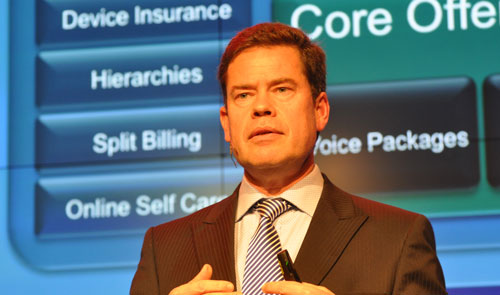
    DM: You’re pushing this idea of fixed-mobile convergence and having one operator supporting business customers for all their needs. Are SA companies ready for that? Do they want it or would they rather play the operators off against each other to try and get the best deal?

    Click image for larger version

    BA: It’s a bit of both. The future is converged. In future, people won’t think about communications from a fixed perspective or a mobile perspective. They will simply communicate by whichever means suits them at the time. The underpinning mechanism will be irrelevant to them. That’s true for voice and data services.

    Sooner or later, and we believe sooner, companies will start saying we need to get our services from one place, we need to start positioning ourselves for this converged world and we need to start looking for products and service providers that will take us to this future.

    DM: Several years ago, Telkom tried unsuccessfully to buy Business Connexion, the IT services company? You’re now talking about being a big player in cloud computing. Does Telkom again need to consider buying an IT services player?

    BA: The cloud is really important to us. It was after the Business Connexion story that we decided to launch [data centre operator] Cybernest. The approach to Cybernest has largely been an organic one.

    We do have some areas where we still need to develop our portfolio and, of course, you need to decide whether to build on what you have or buy. But before there is any speculation about Telkom being on the acquisition trail for an IT company, the answer is “no”. However, we are thinking about what we need to do to supplement our existing cloud computing capabilities to be leaders in the cloud in the medium to long term.

    DM: The IT services skills set is very different to the skills set that a telecoms operator has. Can you build that sort of business organically and to what extent do you want to get into that IT services market and compete with companies like Dimension Data and EOH?

    BA: IT services mean different things to different people. We don’t see ourselves playing in the high-end systems integration, systems consulting and application development markets. SA has some world-class players in those areas.

    What a telco has always done is “productionise” unit-delivery of communication services. It is possible for a telecoms company to very effectively productionise unit delivery of IT services, so I think cloud is different for telcos.

    We have a lot of work to develop the culture, the capabilities and capacity to deliver it, but it’s also different for IT companies, which have to move to more productionised environments.

    If you took a guy out of one of the IT companies and put them in an IT factory, it would be as much a culture shock for them as is would be for one of our guys. It’s hard for us for one reason and hard for existing players for almost the opposite reason, but both parties will need to move towards the new world of productionised unit-delivery of IT over a common infrastructure.
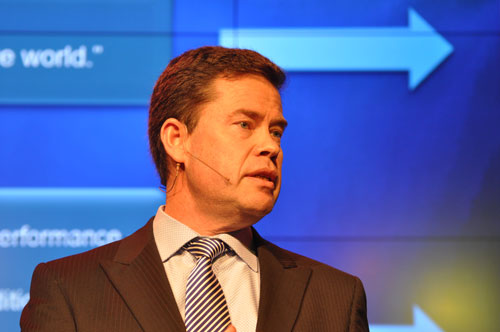
    Click image for larger version

    DM: Doesn’t this mean that in the long-term, telecoms operators and traditional IT services companies are going to merge, or will they remain separate entities well into the future?

    BA: There’s certainly a trend towards integration across the value chain. If you look internationally, there have been a lot of telcos partnering with, buying or being acquired by IT players.

    Telefonica has a partnership model when it comes to IT. Then there are others, like [Japan’s Nippon Telegraph & Telephone Corp] that bought Didata. BT had a different approach, with a lot of small acquisitions.

    If the product set is converging, there definitely has to be some change or convergence in the market structure that delivers that product set.

    DM: What percentage of the business mobile market are you hoping to attract over the next few years?

    BA: We won’t disclose exact market share targets. We aim to be a significant player. We do not see ourselves being a fringe player. We want to be big enough to provide some real leverage for our fixed-line business.

    DM: In the past, Telkom has had a number of run-ins with the competition authorities. Do you think there will challenges on that front when Telkom starts offering bundled fixed and mobile products?

    BA: We need to be very aware of the constraints we have to abide by in terms of significant market power on the fixed voice side. Regulation impacts us from a telco regulation perspective as well as a competition law perspective. We are very careful of contravening either of those.

    Obviously, from a mobile perspective, we don’t have significant market power — yet — and our competitors do, so it’s going to be interesting.

    In terms of the way we bundle fixed and mobile services, we need to be careful we don’t contravene any competition provisions and we act in a pro-competitive manner.

    • Subscribe to our free daily newsletter
    • Follow us on Twitter or on Facebook

    Follow TechCentral on Google News Add TechCentral as your preferred source on Google


    Brian Armstrong Dimension Data MTN Telkom Vodacom
    WhatsApp YouTube
    Share. Facebook Twitter LinkedIn WhatsApp Telegram Email Copy Link
    Previous ArticleWhy social media should matter to business
    Next Article High-level event to tackle key issues

    Related Posts

    Starlink wants to be your next mobile operator

    Starlink wants to be your next mobile operator

    5 August 2026
    Telkom's prepaid growth is running on credit - Serame Taukobong

    Telkom’s prepaid growth is running on credit

    3 August 2026
    MTN Nigeria's growth engine stalled in second quarter - Karl Toriola

    MTN Nigeria’s growth engine stalled in second quarter

    31 July 2026
    Company News
    African Bank signs on as GEC+Africa 2026 partner

    African Bank signs on as GEC+Africa 2026 partner

    7 August 2026
    What a cloud review reveals about how a company actually runs - LSD Open

    What a cloud review reveals about how a company actually runs

    6 August 2026
    Manufacturing from a garage is now a realistic business plan - MaxLaser

    Manufacturing from a garage is now a realistic business plan

    6 August 2026
    Opinion
    The author, Jannie van Zyl

    Selling vapour is corporate suicide in slow motion

    16 July 2026
    Brazil's online gambling crackdown is a lesson for South Africa

    How Amazon outmanoeuvred Starlink in South Africa

    15 July 2026
    The Popia problem with agentic AI - Herman Haasbroek

    The Popia problem with agentic AI

    14 July 2026

    Subscribe to Updates

    Get the best South African technology news and analysis delivered to your e-mail inbox every morning.

    Latest Posts
    Eskom fixed the fleet and the customers left

    Eskom fixed the fleet and the customers left

    7 August 2026
    DStv chops channels as Canal+ leans harder on sport

    DStv chops channels as Canal+ leans harder on sport

    7 August 2026
    TCS+ | Specops' Darren James on continuous trust in an AI world

    TCS+ | Specops’ Darren James on continuous trust in an AI world

    7 August 2026
    Starlink LEO rival gaining momentum

    Starlink LEO rival gaining momentum

    7 August 2026
    © 2009 - 2026 NewsCentral Media
    Built and maintained by Chronon
    • Cookie policy (ZA)
    • TechCentral – privacy and Popia

    Type above and press Enter to search. Press Esc to cancel.

    Manage consent

    TechCentral uses cookies to enhance its offerings. Consenting to these technologies allows us to serve you better. Not consenting or withdrawing consent may adversely affect certain features and functions of the website.

    Functional Always active
    The technical storage or access is strictly necessary for the legitimate purpose of enabling the use of a specific service explicitly requested by the subscriber or user, or for the sole purpose of carrying out the transmission of a communication over an electronic communications network.
    Preferences
    The technical storage or access is necessary for the legitimate purpose of storing preferences that are not requested by the subscriber or user.
    Statistics
    The technical storage or access that is used exclusively for statistical purposes. The technical storage or access that is used exclusively for anonymous statistical purposes. Without a subpoena, voluntary compliance on the part of your Internet Service Provider, or additional records from a third party, information stored or retrieved for this purpose alone cannot usually be used to identify you.
    Marketing
    The technical storage or access is required to create user profiles to send advertising, or to track the user on a website or across several websites for similar marketing purposes.
    • Manage options
    • Manage services
    • Manage {vendor_count} vendors
    • Read more about these purposes
    View preferences
    • {title}
    • {title}
    • {title}