
Close Menu
TechCentralTechCentral

    Subscribe to the newsletter

    Get the best South African technology news and analysis delivered to your e-mail inbox every morning.

    Facebook X (Twitter) YouTube LinkedIn
    WhatsApp Facebook X (Twitter) LinkedIn YouTube
    TechCentralTechCentral
    • News
      The quiet rewiring of the world's financial plumbing

      The quiet rewiring of the world’s financial plumbing

      11 August 2026
      New rand stablecoin market opens into a potential regulatory wall

      New rand stablecoin market opens into a potential regulatory wall

      10 August 2026
      Simon Dingle

      ‘South Africa has to abolish exchange control’

      10 August 2026
      The most dangerous customer is the quiet one - Jannie van Zyl

      The most dangerous customer is the quiet one

      10 August 2026
      Eskom fixed the fleet and the customers left

      Eskom fixed the fleet and the customers left

      7 August 2026
    • World
      Russia building its own Starlink - and faster than expected - Vadym Skibitskyi

      Russia building its own Starlink – and faster than expected

      11 August 2026
      Meta AI will now tell parents if their teen is in crisis

      Meta AI will now tell parents if their teen is in crisis

      17 July 2026
      IBM shares crash 25% as AI upends software spending - Arvind Krishna

      IBM shares crash 25% as AI upends software spending

      15 July 2026
      Jony Ive's first OpenAI device: an AI smart speaker - Jony Ive and Sam Altman

      Jony Ive’s first OpenAI device: an AI smart speaker

      15 July 2026
      Stripe, Advent in talks to buy PayPal for $53-billion

      Stripe, Advent in talks to buy PayPal for $53-billion

      15 July 2026
    • In-depth
      The plan to stop AI from breaking the world - Google DeepMind CEO Demis Hassabis. Image: John Sears

      The plan to stop AI from breaking the world

      16 July 2026
      The internet has a Strait of Hormuz problem

      The internet has a Strait of Hormuz problem

      15 July 2026
      AI boom sparks rally, frenzy and fear

      AI boom sparks rally, frenzy and fear

      11 June 2026
      Every plug-in hybrid on sale in South Africa, ranked by price - Lamborghini Temerario

      Every plug-in hybrid on sale in South Africa, ranked by price

      7 June 2026
      What Wi-Fi 8 will mean for wireless networks

      What Wi-Fi 8 will mean for wireless networks

      1 June 2026
    • TCS
      TCS+ | Specops' Darren James on continuous trust in an AI world

      TCS+ | Specops’ Darren James on continuous trust in an AI world

      7 August 2026
      TCS+ | How AI is turning hardware into a subscription service - Shane van der Merwe Merchant West

      TCS+ | How AI is turning hardware into a subscription service

      6 August 2026
      TCS+ | Why South African workers must become supervisors of digital labour - Accelera Digital Group Cliff de Wit

      TCS+ | Why South African workers must become supervisors of digital labour

      31 July 2026
      TCS | Rapid deployment rules can't work without municipalities: ACT - Nomvuyiso Batyi

      TCS | Icasa’s rules skip the real bottleneck: ACT

      30 July 2026
      TCS+ | iStore Business on why Apple makes sense for SMEs - Sudesh Pillay and Tamia Nontsikelelo

      TCS+ | iStore Business on why Apple makes sense for SMEs

      30 July 2026
    • Opinion
      The author, Jannie van Zyl

      Selling vapour is corporate suicide in slow motion

      16 July 2026
      Brazil's online gambling crackdown is a lesson for South Africa

      How Amazon outmanoeuvred Starlink in South Africa

      15 July 2026
      The Popia problem with agentic AI - Herman Haasbroek

      The Popia problem with agentic AI

      14 July 2026
      The author, Fanie van Rooyen

      South Africa can still catch the AI wave – here’s how

      7 July 2026
      The author, Fanie van Rooyen

      The AI utopia South Africa can’t afford

      1 July 2026
    • Company Hubs
      • 1Stream
      • Africa Data Centres
      • AfriGIS
      • Altron Digital Business
      • Altron Document Solutions
      • Altron Group
      • Arctic Wolf
      • Ascent Technology
      • AvertITD
      • BBD
      • Braintree
      • CallMiner
      • CambriLearn
      • CM Telecom
      • Contactable
      • CYBER1 Solutions
      • Digicloud Africa
      • Digimune
      • Domains.co.za
      • ESET
      • Euphoria Telecom
      • HOSTAFRICA
      • Incredible Business
      • iONLINE
      • IQbusiness
      • Iris Network Systems
      • Kaspersky
      • LSD Open
      • Mitel
      • NEC XON
      • Netstar
      • Network Platforms
      • Next DLP
      • Ovations
      • Paracon
      • Paratus
      • Q-KON
      • SevenC
      • SkyWire
      • Solid8 Technologies
      • Telit Cinterion
      • Telviva
      • Tenable
      • Vertiv
      • Videri Digital
      • Vodacom Business
      • Vox
      • Wipro
      • Workday
      • XLink
    • Sections
      • AI and machine learning
      • Banking
      • Broadcasting and Media
      • Cloud services
      • Contact centres and CX
      • Cryptocurrencies
      • Education and skills
      • Electronics and hardware
      • Energy and sustainability
      • Enterprise software
      • Financial services
      • HealthTech
      • Information security
      • Internet and connectivity
      • Internet of Things
      • Investment
      • IT services
      • Lifestyle
      • Policy and regulation
      • Public sector
      • Retail and e-commerce
      • Satellite communications
      • Science
      • SMEs and start-ups
      • Social media
      • Talent and leadership
      • Telecoms
      • Watts & Wheels
    • Events
    • Advertise
    TechCentralTechCentral
    Home » Opinion » Alistair Fairweather » Driving under the influence of technology

    Driving under the influence of technology

    By Alistair Fairweather18 January 2016
    Twitter LinkedIn Facebook WhatsApp Email Telegram Copy Link
    News Alerts
    WhatsApp

    alistair-fairweather-180Very soon — much sooner than you think — your car will drive itself. While you chat on the phone, work on your laptop, read or even sleep, your car will drive you wherever you need to go. In fact, in a decade or two, your car probably won’t even have a steering wheel or pedals.

    Self-driving cars may still sound like science fiction, but since September 2014, Google’s “autonomous vehicles” have driven more than 2m kilometres — the majority of them on public roads. These cars can stop at traffic lights, negotiate busy intersections during morning traffic and avoid obstacles (including other cars), all without any input from their human passengers.

    But surely this can’t be safe? Putting your life, or your family’s lives, at the mercy of some half-baked software sounds like madness. What if it miscalculates something and drives you head-on into a bus?

    And indeed, the software does sometimes fail. In a recent report to California’s department of motor vehicles, Google admitted that drivers of test vehicles were forced to take control 272 times over 678 929km.

    That sounds bad, right? On average, every 2 500km or so, a specially trained test driver had to take the wheel to avert disaster. Except that, actually, only 13 of those times would have resulted in “contact” with other vehicles, people or objects. Two of those objects were traffic cones, and only one was a person. So it’s really more like 60 000km per significant incident.

    Compared to the average rate of car accidents, even in a place like California, this is extremely low. The incident rate has also dropped sharply over the testing period as the software has learned and improved.

    But Google is painfully aware of how important it is to win the PR battle here. Most people are utterly convinced that they will do a better job of driving their car than any computer ever could. Self-driving cars need to be virtually faultless if they are to succeed. The weight of that prejudice will only be lifted once they have proved themselves in the wild.

    But the data does not lie. Over a million people die worldwide every year as a result of traffic accidents. Humans have been driving for more than 100 years and if anything appear to be getting worse at it. In just four years, Google’s cars have improved their ability to navigate tricky situations by 670%, going from an incident every 1 256km in early 2014 to one every 8 508km in late 2015.

    And Google is hardly the only company working on this technology. All of the world’s major motor manufacturers have projects in the pipeline. Elon Musk, the genius behind the Tesla Motor Corporation, is speaking confidently about having self-driving cars on the road within a decade.

    But why would we even want robot cars speeding around on our roads? Simple: by automating cars, we remove enormous amounts of friction from the whole system. Self-driving cars don’t speed or jump red lights. They don’t block intersections, or ride up people’s backsides.
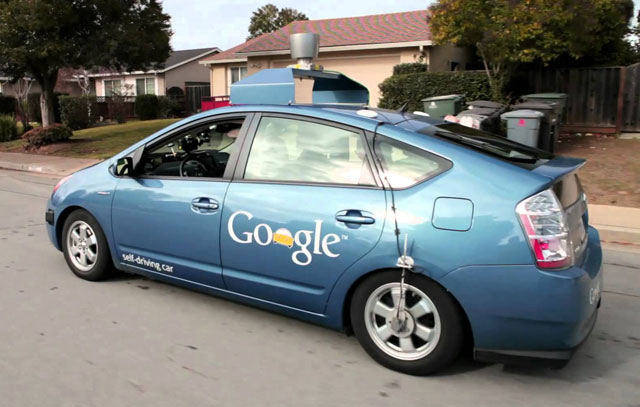
    A self-driving car prototype made by Google
    A self-driving car prototype made by Google

    Self-driving cars need far less space on the road, so the same highway can safely carry twice as many cars. And because they are connected to an intelligent network, they can help to regulate traffic.

    And above all, self-driving cars would free up humans to do something enjoyable or productive with the time spent commuting. Imagine being able to watch a movie on your way to your holiday at the coast, instead of staring grimly at the highway for seven or eight hours.

    Does this mean the end of all human-driven cars? Of course not. But they will become like horses are for us today. What was once a ubiquitous form of mass transportation will become a leisure activity.

    How long will all this take to happen? I estimate that within five years there will be a more than 100 000 self-driving cars on roads in the US. Within 10 years, that number will climb to over 5m. Within 20 years, they will outnumber ordinary cars on roads in both the US and Europe.

    The developing world will take longer to adopt and adapt to this trend, but within most of our lifetimes, self-driving cars will be the norm here as well. And if you disagree, remember the prosperous horse merchants of Manhattan who laughed at the “horseless carriage” and dismissed it as a fad.  — (c) 2015 NewsCentral Media

    Follow TechCentral on Google News Add TechCentral as your preferred source on Google


    Alistair Fairweather Google
    WhatsApp YouTube
    Share. Facebook Twitter LinkedIn WhatsApp Telegram Email Copy Link
    Previous ArticleEskom to plead for higher tariffs
    Next Article More home fibre for Jo’burg suburbs

    Related Posts

    Google's Gemini leadership team has left the building - Demis Hassabis

    Google’s Gemini leadership team has left the building

    6 August 2026
    Google Cloud, AI adoption gain momentum in Africa - Digicloud Africa

    Google Cloud, AI adoption gain momentum in Africa

    3 August 2026
    Africa's most popular phones have a tracking problem

    Africa’s most popular phones have a tracking problem

    24 July 2026
    Company News
    African Bank signs on as GEC+Africa 2026 partner

    African Bank signs on as GEC+Africa 2026 partner

    7 August 2026
    What a cloud review reveals about how a company actually runs - LSD Open

    What a cloud review reveals about how a company actually runs

    6 August 2026
    Manufacturing from a garage is now a realistic business plan - MaxLaser

    Manufacturing from a garage is now a realistic business plan

    6 August 2026
    Opinion
    The author, Jannie van Zyl

    Selling vapour is corporate suicide in slow motion

    16 July 2026
    Brazil's online gambling crackdown is a lesson for South Africa

    How Amazon outmanoeuvred Starlink in South Africa

    15 July 2026
    The Popia problem with agentic AI - Herman Haasbroek

    The Popia problem with agentic AI

    14 July 2026

    Subscribe to Updates

    Get the best South African technology news and analysis delivered to your e-mail inbox every morning.

    Latest Posts
    The quiet rewiring of the world's financial plumbing

    The quiet rewiring of the world’s financial plumbing

    11 August 2026
    Russia building its own Starlink - and faster than expected - Vadym Skibitskyi

    Russia building its own Starlink – and faster than expected

    11 August 2026
    New rand stablecoin market opens into a potential regulatory wall

    New rand stablecoin market opens into a potential regulatory wall

    10 August 2026
    Simon Dingle

    ‘South Africa has to abolish exchange control’

    10 August 2026
    © 2009 - 2026 NewsCentral Media
    Built and maintained by Chronon
    • Cookie policy (ZA)
    • TechCentral – privacy and Popia

    Type above and press Enter to search. Press Esc to cancel.

    Manage consent

    TechCentral uses cookies to enhance its offerings. Consenting to these technologies allows us to serve you better. Not consenting or withdrawing consent may adversely affect certain features and functions of the website.

    Functional Always active
    The technical storage or access is strictly necessary for the legitimate purpose of enabling the use of a specific service explicitly requested by the subscriber or user, or for the sole purpose of carrying out the transmission of a communication over an electronic communications network.
    Preferences
    The technical storage or access is necessary for the legitimate purpose of storing preferences that are not requested by the subscriber or user.
    Statistics
    The technical storage or access that is used exclusively for statistical purposes. The technical storage or access that is used exclusively for anonymous statistical purposes. Without a subpoena, voluntary compliance on the part of your Internet Service Provider, or additional records from a third party, information stored or retrieved for this purpose alone cannot usually be used to identify you.
    Marketing
    The technical storage or access is required to create user profiles to send advertising, or to track the user on a website or across several websites for similar marketing purposes.
    • Manage options
    • Manage services
    • Manage {vendor_count} vendors
    • Read more about these purposes
    View preferences
    • {title}
    • {title}
    • {title}