Close Menu
TechCentralTechCentral

    Subscribe to the newsletter

    Get the best South African technology news and analysis delivered to your e-mail inbox every morning.

    Facebook X (Twitter) YouTube LinkedIn
    WhatsApp Facebook X (Twitter) LinkedIn YouTube
    TechCentralTechCentral
    • News
      Musk hurls expletives at senior SA diplomat in Starlink row - Elon Musk, Clayson Monyela

      Musk hurls expletives at senior SA diplomat in Starlink row

      12 April 2026
      Wall Street strains to justify SpaceX's $1.75-trillion price tag

      Wall Street strains to justify SpaceX’s $1.75-trillion price tag

      12 April 2026
      Epic, must-watch 4K footage of the Artemis II launch

      Epic, must-watch 4K footage of the Artemis II launch

      12 April 2026
      Icasa moves to mandate national infrastructure database

      Icasa moves to mandate national infrastructure database

      12 April 2026
      South Africa's AI policy is a bureaucrat's dream - Solly Malatsi

      South Africa’s draft AI policy is a bureaucrat’s dream

      10 April 2026
    • World
      Big Tech is going nuclear

      Big Tech is going nuclear

      10 April 2026
      Software rout deepens as AI fears grip investors

      Software rout deepens as AI fears grip investors

      10 April 2026
      Anthropic mulls building its own AI chips

      Anthropic mulls building its own AI chips

      10 April 2026
      DeepSeek V4 to run on Huawei silicon as China builds its own AI stack

      DeepSeek V4 to run on Huawei silicon as China builds its own AI stack

      4 April 2026
      Amazon in talks to buy satellite operator Globalstar

      Amazon in talks to buy satellite operator Globalstar

      2 April 2026
    • In-depth
      Africa switches on as Europe dims the lights

      Africa switches on as Europe dims the lights

      9 April 2026
      The biggest untapped EV market on Earth is hiding in plain sight

      The biggest untapped EV market on Earth is hiding in plain sight

      1 April 2026
      The R18-billion tech giant hiding in plain sight - Jens Montanana

      The R16-billion tech giant hiding in plain sight

      26 March 2026
      The last generation of coders

      The last generation of coders

      18 February 2026
      Sentech is in dire straits

      Sentech is in dire straits

      10 February 2026
    • TCS
      TCS+ | Vodacom Business moves to crack the SME tech gap - Andrew Fulton, Sannesh Beharie

      TCS+ | Vodacom Business moves to crack the SME tech gap

      7 April 2026
      TCS | MTN's Divysh Joshi on the strategy behind Pi - Divyesh Joshi

      TCS | MTN’s Divyesh Joshi on the strategy behind Pi

      1 April 2026
      Anoosh Rooplal

      TCS | Anoosh Rooplal on the Post Office’s last stand

      27 March 2026
      Meet the CIO | HealthBridge CTO Anton Fatti on the future of digital health

      Meet the CIO | Healthbridge CTO Anton Fatti on the future of digital health

      23 March 2026
      TCS+ | Arctic Wolf unpacks the evolving threat landscape for SA businesses - Clare Loveridge and Jason Oehley

      TCS+ | Arctic Wolf unpacks the evolving threat landscape for SA businesses

      19 March 2026
    • Opinion
      The conflict of interest at the heart of PayShap's slow adoption - Cheslyn Jacobs

      The conflict of interest at the heart of PayShap’s slow adoption

      26 March 2026
      South Africa's energy future hinges on getting wheeling right - Aishah Gire

      South Africa’s energy future hinges on getting wheeling right

      10 March 2026
      Hold the doom: the case for a South African comeback - Duncan McLeod

      Apple just dropped a bomb on the Windows world

      5 March 2026
      R230-million in the bag for Endeavor's third Harvest Fund - Alison Collier

      VC’s centre of gravity is shifting – and South Africa is in the frame

      3 March 2026
      Hold the doom: the case for a South African comeback - Duncan McLeod

      Hold the doom: the case for a South African comeback

      26 February 2026
    • Company Hubs
      • 1Stream
      • Africa Data Centres
      • AfriGIS
      • Altron Digital Business
      • Altron Document Solutions
      • Altron Group
      • Arctic Wolf
      • Ascent Technology
      • AvertITD
      • BBD
      • Braintree
      • CallMiner
      • CambriLearn
      • CYBER1 Solutions
      • Digicloud Africa
      • Digimune
      • Domains.co.za
      • ESET
      • Euphoria Telecom
      • HOSTAFRICA
      • Incredible Business
      • iONLINE
      • IQbusiness
      • Iris Network Systems
      • Kaspersky
      • LSD Open
      • Mitel
      • NEC XON
      • Netstar
      • Network Platforms
      • Next DLP
      • Ovations
      • Paracon
      • Paratus
      • Q-KON
      • SevenC
      • SkyWire
      • Solid8 Technologies
      • Telit Cinterion
      • Telviva
      • Tenable
      • Vertiv
      • Videri Digital
      • Vodacom Business
      • Wipro
      • Workday
      • XLink
    • Sections
      • AI and machine learning
      • Banking
      • Broadcasting and Media
      • Cloud services
      • Contact centres and CX
      • Cryptocurrencies
      • Education and skills
      • Electronics and hardware
      • Energy and sustainability
      • Enterprise software
      • Financial services
      • HealthTech
      • Information security
      • Internet and connectivity
      • Internet of Things
      • Investment
      • IT services
      • Lifestyle
      • Motoring
      • Policy and regulation
      • Public sector
      • Retail and e-commerce
      • Satellite communications
      • Science
      • SMEs and start-ups
      • Social media
      • Talent and leadership
      • Telecoms
    • Events
    • Advertise
    TechCentralTechCentral
    Home » Sections » Energy and sustainability » Electricity crisis: what political parties say in their election manifestos

    Electricity crisis: what political parties say in their election manifestos

    Opposition parties’ fortunes will be boosted on election day if they offer credible and effective alternatives to load shedding.
    By Hartmut Winkler28 March 2024
    Twitter LinkedIn Facebook WhatsApp Email Telegram Copy Link
    News Alerts
    WhatsApp

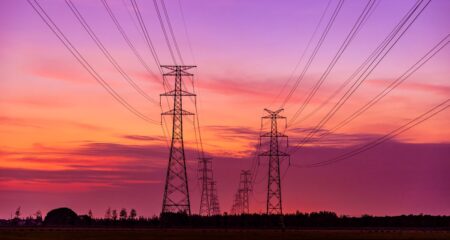
    South Africa is in the middle of a deep electricity crisis. In 2023, the public, many of whom are voters, experienced the worst loadshedding to date, losing power for an average of five hours a day.

    The power shortages were largely due to excessive breakdowns in the country’s coal power plant fleet, which generates over 80% of South Africa’s electricity, combined with delays in developing new generation capacity.

    The power crisis is a key election topic with national elections scheduled for 29 May. The ANC is tipped to lose its absolute majority in parliament. One reason for the ANC’s drop in support is that it did not act on early warnings that electricity supply would drop to critical levels. In recent times, the ANC led government tried to fix this by removing constraints to private electricity generation and appointing a dedicated electricity minister. But the situation had deteriorated beyond the point where these steps could fix the problem.

    What is also largely missing from the manifestos is an evaluation of the costs of rolling out new forms of energy

    Given the ANC government’s failure to end the energy crisis, opposition parties’ fortunes will be boosted on election day if they offer credible and effective alternatives to load shedding. However, despite confident-sounding sales pitches, there are neither quick nor cheap solutions, which are what the public is looking for.

    In the last general elections in 2019, the three parties that received the highest number of votes devoted an average of just 2% (measured in pages) of their election manifestos to electricity. These were the ANC, the Democratic Alliance and the Economic Freedom Fighters. In the current election campaign, the major parties have devoted up to 10% of their manifesto to this topic. They have covered the topics of electricity and incentive mechanisms, potential business or job generation spin-offs, and possible devolution and private investment options.

    However, none has put time frames to their electricity proposals. What is also largely missing from the manifestos is an evaluation of the costs of rolling out new forms of energy, which could lead to budget cuts in other areas like health and policing. There is also little indication that parties favour certain types of energy based on their cost and affordability.

    Unbundling

    This is a key theme of the manifestos. The DA and other parties that present themselves as “pro-business”, such as Action South Africa and Build One South Africa, believe that large scale privatisation of electricity will automatically lead to the end of power cuts. Their argument amounts to an ideological view that free market systems are more effective than state monopolies.

    The EFF is a firm advocate of nationalisation and wants to terminate existing contracts with private power producers. It proposes repairing coal-fired power plants and keeping them going for longer. But fixing some plants might be prohibitively expensive.

    Many parties favour unbundling the monopoly enjoyed by Eskom and devolving the electricity sector into smaller entities. This has already been initiated with the recent passing of the Electricity Regulation Amendment Bill, though some parties would like to stimulate competitiveness further.

    Read: South Africa’s next big energy challenge: a R390-billion grid upgrade

    This includes allowing municipalities more room to drive their own electricity generation. In its manifesto, the DA is canvassing on the basis of projects already initiated in municipalities that they govern – for example, Cape Town, where in line with international trends energy is fed into the grid by privately owned solar systems.

    President Cyril Ramaphosa and some advisory bodies have been quite enthusiastic about a boom in wind and solar energy. But Gwede Mantashe, the minister responsible for energy planning, has been a vocal promoter of coal, gas and nuclear power, while sounding sceptical of renewables. This standpoint is also reflected in his recently released and much-criticised draft Integrated Resource Plan for electricity.

    The ANC election manifesto is most closely aligned with the presidential vision. It highlights industrial growth and job opportunities linked to renewable power, such as developing a green hydrogen sector. There is only one short entry that states that the ruling party intends to “develop gas, nuclear and hydro power projects”.

    A smaller party that has its base in the Western Cape province, where solar and wind conditions are also favourable, is Good. Along with the DA, it favours the idea that new generating capacity should mainly come from wind and solar.

    While promoting a “mix” of energy sources, the EFF sees coal and nuclear as “core” energy generating technologies. Its very long manifesto goes as far as saying that the nuclear plant construction should be established in co-operation with Russia. This is a provocative position to take, given that former President Jacob Zuma made a failed bid when he was in office for a massive new nuclear build by Russia.

    If a coalition government takes power after the elections, the route out of the crisis could remain contested

    Another controversial technology specifically advocated by the EFF is so-called “clean” coal. This is produced when relatively costly technological improvements are made to a power plant that would partly lower, but not eliminate, carbon emissions.

    All the parties whose manifestos were examined for this article agree that small-scale domestic solar rooftop installations should be further promoted by the government. This followed a massive boom in 2023 that prevented even more extensive power cuts. Incentives to achieve this include subsidies, tax breaks and the opportunity for income generation through selling back excess electricity to the utility.

    If a coalition government takes power after the elections, the route out of the electricity crisis could remain contested. This will hamper speedy progress on larger new builds. However, the intensified rollout of domestic solar installations enjoys support across the board. This is perhaps where progress will be fastest.The Conversation

    • The author, Hartmut Winkler, is professor of physics, University of Johannesburg
    • This article is republished from The Conversation under a Creative Commons licence

    Get breaking news alerts from TechCentral on WhatsApp

    Follow TechCentral on Google News Add TechCentral as your preferred source on Google


    Eskom Hartmut Winkler
    WhatsApp YouTube
    Share. Facebook Twitter LinkedIn WhatsApp Telegram Email Copy Link
    Previous ArticleScientists chronicle the earliest stages of a supernova
    Next Article LG redefines home entertainment with two world firsts

    Related Posts

    Cape Town start-up powers six-month Netflix production with the sun

    Cape Town start-up powers six-month Netflix production with the sun

    7 April 2026
    Setback for South Africa's electricity market reform

    Setback for South Africa’s electricity market reform

    26 March 2026
    Eskom must build renewables or face extinction: Mteto Nyati

    Eskom must build renewables or face extinction: Mteto Nyati

    19 March 2026
    Company News
    Vertiv AI Innovation Roadshow returns to Africa as virtual event

    Vertiv AI Innovation Roadshow returns to Africa as virtual event

    10 April 2026
    What South African parents look for in an online school - CambriLearn

    What South African parents look for in an online school

    9 April 2026
    Modernising legacy systems - without the downtime - BBD Software

    Modernising legacy systems – without the downtime

    9 April 2026
    Opinion
    The conflict of interest at the heart of PayShap's slow adoption - Cheslyn Jacobs

    The conflict of interest at the heart of PayShap’s slow adoption

    26 March 2026
    South Africa's energy future hinges on getting wheeling right - Aishah Gire

    South Africa’s energy future hinges on getting wheeling right

    10 March 2026
    Hold the doom: the case for a South African comeback - Duncan McLeod

    Apple just dropped a bomb on the Windows world

    5 March 2026

    Subscribe to Updates

    Get the best South African technology news and analysis delivered to your e-mail inbox every morning.

    Latest Posts
    Musk hurls expletives at senior SA diplomat in Starlink row - Elon Musk, Clayson Monyela

    Musk hurls expletives at senior SA diplomat in Starlink row

    12 April 2026
    Wall Street strains to justify SpaceX's $1.75-trillion price tag

    Wall Street strains to justify SpaceX’s $1.75-trillion price tag

    12 April 2026
    Epic, must-watch 4K footage of the Artemis II launch

    Epic, must-watch 4K footage of the Artemis II launch

    12 April 2026
    Icasa moves to mandate national infrastructure database

    Icasa moves to mandate national infrastructure database

    12 April 2026
    © 2009 - 2026 NewsCentral Media
    • Cookie policy (ZA)
    • TechCentral – privacy and Popia

    Type above and press Enter to search. Press Esc to cancel.

    Manage consent

    TechCentral uses cookies to enhance its offerings. Consenting to these technologies allows us to serve you better. Not consenting or withdrawing consent may adversely affect certain features and functions of the website.

    Functional Always active
    The technical storage or access is strictly necessary for the legitimate purpose of enabling the use of a specific service explicitly requested by the subscriber or user, or for the sole purpose of carrying out the transmission of a communication over an electronic communications network.
    Preferences
    The technical storage or access is necessary for the legitimate purpose of storing preferences that are not requested by the subscriber or user.
    Statistics
    The technical storage or access that is used exclusively for statistical purposes. The technical storage or access that is used exclusively for anonymous statistical purposes. Without a subpoena, voluntary compliance on the part of your Internet Service Provider, or additional records from a third party, information stored or retrieved for this purpose alone cannot usually be used to identify you.
    Marketing
    The technical storage or access is required to create user profiles to send advertising, or to track the user on a website or across several websites for similar marketing purposes.
    • Manage options
    • Manage services
    • Manage {vendor_count} vendors
    • Read more about these purposes
    View preferences
    • {title}
    • {title}
    • {title}