Close Menu
TechCentralTechCentral

    Subscribe to the newsletter

    Get the best South African technology news and analysis delivered to your e-mail inbox every morning.

    Facebook X (Twitter) YouTube LinkedIn
    WhatsApp Facebook X (Twitter) LinkedIn YouTube
    TechCentralTechCentral
    • News
      Eskom waives rooftop solar fees, but the registration fight isn't over

      Eskom waives rooftop solar fees, but the registration fight isn’t over

      1 October 2026
      South Africa's digital ID is here - but you can't have it yet - Leon Schreiber

      South Africa’s digital ID is here – but you can’t have it yet

      1 October 2026
      Absa is moving cash out of its branches

      Absa is moving cash out of its branches

      1 October 2026
      Home affairs pulls the plug on the green ID book - Leon Schreiber

      Home affairs pulls the plug on the green ID book

      1 October 2026
      How Cell C shaped Blu Label's executive pay - Brett Levy Mark Levy

      How Cell C shaped Blu Label’s executive pay

      1 October 2026
    • World
      BMW restructuring plan bets on AI and new models

      BMW restructuring plan bets on AI and new models

      1 October 2026
      OpenAI's rogue agent problem keeps getting bigger - Sam Altman

      OpenAI’s rogue agent problem keeps getting bigger

      28 September 2026
      The new battle over the desktop

      The new battle over the desktop

      23 September 2026
      AMD is now worth a trillion dollars - Lisa Su

      AMD is now worth a trillion dollars

      22 September 2026
      Anthropic weighs new model launch to blunt OpenAI's Astra surge - Anthropic CEO Dario Amodei and OpenAI CEO Sam Altman

      Anthropic weighs new model launch to blunt OpenAI’s Astra surge

      21 September 2026
    • In-depth

      10 days that changed the course of AI

      21 September 2026
      Meta to the AI industry: slow down without us - Mark Zuckerberg

      Meta to the AI industry: slow down without us

      16 September 2026
      Google DeepMind CEO Demis Hassabis. Image: John Sears

      The plan to stop AI from breaking the world

      16 July 2026
      The internet has a Strait of Hormuz problem

      The internet has a Strait of Hormuz problem

      15 July 2026
      AI boom sparks rally, frenzy and fear

      AI boom sparks rally, frenzy and fear

      11 June 2026
    • TCS
      TCS | Dominic White and Adam Ely on AI agents going rogue

      TCS | Dominic White and Adam Ely on AI agents going rogue

      29 September 2026
      TCS | Octotel's Trevor van Zyl on the fibre merger question

      TCS | Octotel’s Trevor van Zyl on the MetroFibre merger question

      16 September 2026
      Meet the CIO | Shoprite's Chris Shortt on what a supermarket becomes

      Meet the CIO | Shoprite’s Chris Shortt on what a supermarket becomes

      9 September 2026
      Rubicon's EV charging network is profitable - and growing fast - Watts & Wheels

      W&W | Rubicon’s EV charging network is profitable – and growing fast

      8 September 2026
      Winstone Jordaan on building a national EV charging network

      Winstone Jordaan on building a national EV charging network

      2 September 2026
    • Opinion
      South Africa's next energy crisis is in the accounts department - Craig Holmes

      South Africa’s next energy crisis is in the accounts department

      29 September 2026
      The steam engine lesson AI doomsayers keep missing - Sam Clarke

      The steam engine lesson AI doomsayers keep missing

      28 September 2026
      Regulating AI: apply the laws we have first - Dirk de Vos

      Regulating AI: apply the laws we have first

      21 September 2026
      What Revolut can and cannot take from South Africa's banks - Pambos Soteriades

      What Revolut can and cannot take from South Africa’s banks

      15 September 2026
      The end is nigh, and the shares go on sale in October - Duncan McLeod

      The end is nigh, and the shares go on sale in October

      14 September 2026
    • Company Hubs
      • 1Stream
      • Africa Data Centres
      • AfriGIS
      • Altron Digital Business
      • Altron Document Solutions
      • Altron Group
      • Arctic Wolf
      • Ascent Technology
      • AvertITD
      • BBD
      • Braintree
      • CallMiner
      • CambriLearn
      • CM.com
      • Contactable
      • CYBER1 Solutions
      • Digicloud Africa
      • Digimune
      • Domains.co.za
      • ESET
      • Euphoria Telecom
      • HOSTAFRICA
      • Incredible Business
      • iONLINE
      • IQbusiness
      • Iris Network Systems
      • Kaspersky
      • LSD Open
      • Mitel
      • NEC XON
      • Netstar
      • Network Platforms
      • Next DLP
      • Ovations
      • Paracon
      • Paratus
      • Publishared
      • Q-KON
      • SevenC
      • SkyWire
      • Solid8 Technologies
      • Telit Cinterion
      • Telviva
      • Tenable
      • Vertiv
      • Videri Digital
      • Vodacom Business
      • Vox
      • Wipro
      • Workday
      • XLink
    • Sections
      • AI and machine learning
      • Banking
      • Broadcasting and Media
      • Cloud services
      • Contact centres and CX
      • Cryptocurrencies
      • Education and skills
      • Electronics and hardware
      • Energy and sustainability
      • Enterprise software
      • Financial services
      • HealthTech
      • Information security
      • Internet and connectivity
      • Internet of Things
      • Investment
      • IT services
      • Lifestyle
      • Policy and regulation
      • Public sector
      • Retail and e-commerce
      • Satellite communications
      • Science
      • SMEs and start-ups
      • Social media
      • Talent and leadership
      • Telecoms
      • Watts & Wheels
    • Events
    • Advertise
    TechCentralTechCentral
    Home » Sections » Telecoms » The first mobile phone calls in South Africa – how it all began

    The first mobile phone calls in South Africa – how it all began

    Ever wondered where Vodacom and MTN constructed their first towers and who helped build them? Read on.
    By Nkosinathi Ndlovu4 February 2025
    Twitter LinkedIn Facebook WhatsApp Email Telegram Copy Link
    Get breaking news on WhatsApp

    The first mobile phone calls in South Africa - how it all beganGovernment began its investigation into launching mobile telecommunications South Africa as early as 1991.

    However, it would be another three years before South Africans would be able to make phone calls from a handheld mobile device (as opposed to the fixed-line telephones that dominated the telecommunications landscape at the time).

    In 1993, two network operating licences were issued for commercial network services, with the first going to Vodacom – a joint venture involving state-owned Telkom, UK telecommunications giant Vodafone and Johann Rupert-linked investment firm VenFin.

    After a trial, MTN established its first commercial site at the Naspers building in Cape Town

    Although there were many months of trials of the technology, Vodacom officially launched its commercial services on 1 June 1994 – with rival MTN following soon thereafter.

    “The first commercial site carrying customer traffic was in Bronberg in Pretoria,” a Vodacom spokesman told TechCentral this week. “Motorola and Ericsson test sample devices were used to make the first call.”

    Snapping at Vodacom’s heels was MTN – at first known as M-Cell – which launched commercial services around the same time. The race for dominance in South Africa’s mobile sector was on and the rivalry between Vodacom and MTN would come to shape the sector for decades to come.

    Historic call

    “The very first call on our network was initiated from a site in Cape Town known as Cape House to a mobile base station controller/mobile switching centre also located in Cape Town. This historic call, made using an Ericsson GH-197 cellphone, was part of a testing phase conducted before the official launch and was not a commercial call,” MTN South Africa told TechCentral via e-mail.

    MTN was supported by technical experts from one of its shareholders, the UK’s Cable & Wireless, which in the 1980s became the first service provider to offer an alternative to British Telecom (now BT Group). Also supporting MTN staff were personnel from what became MultiChoice. “Among these trailblazers was Trevor Morris, MTN’s chief technology officer at the time,” said MTN.

    Read: Half of South Africa’s population is now covered by 5G

    After a trial, MTN established its first commercial site at the Naspers building in Cape Town where its first commercial cellular call was made. Overseeing this “critical milestone” was Gladstone Nutt, a switching engineer seconded from MultiChoice.

    Andre Prinsloo, who travelled from Johannesburg, played an instrumental role in activating the site with Nutt. Dick Edwards, at the time the regional network manager for the Western Cape at Cable & Wireless, was another key member of the team.
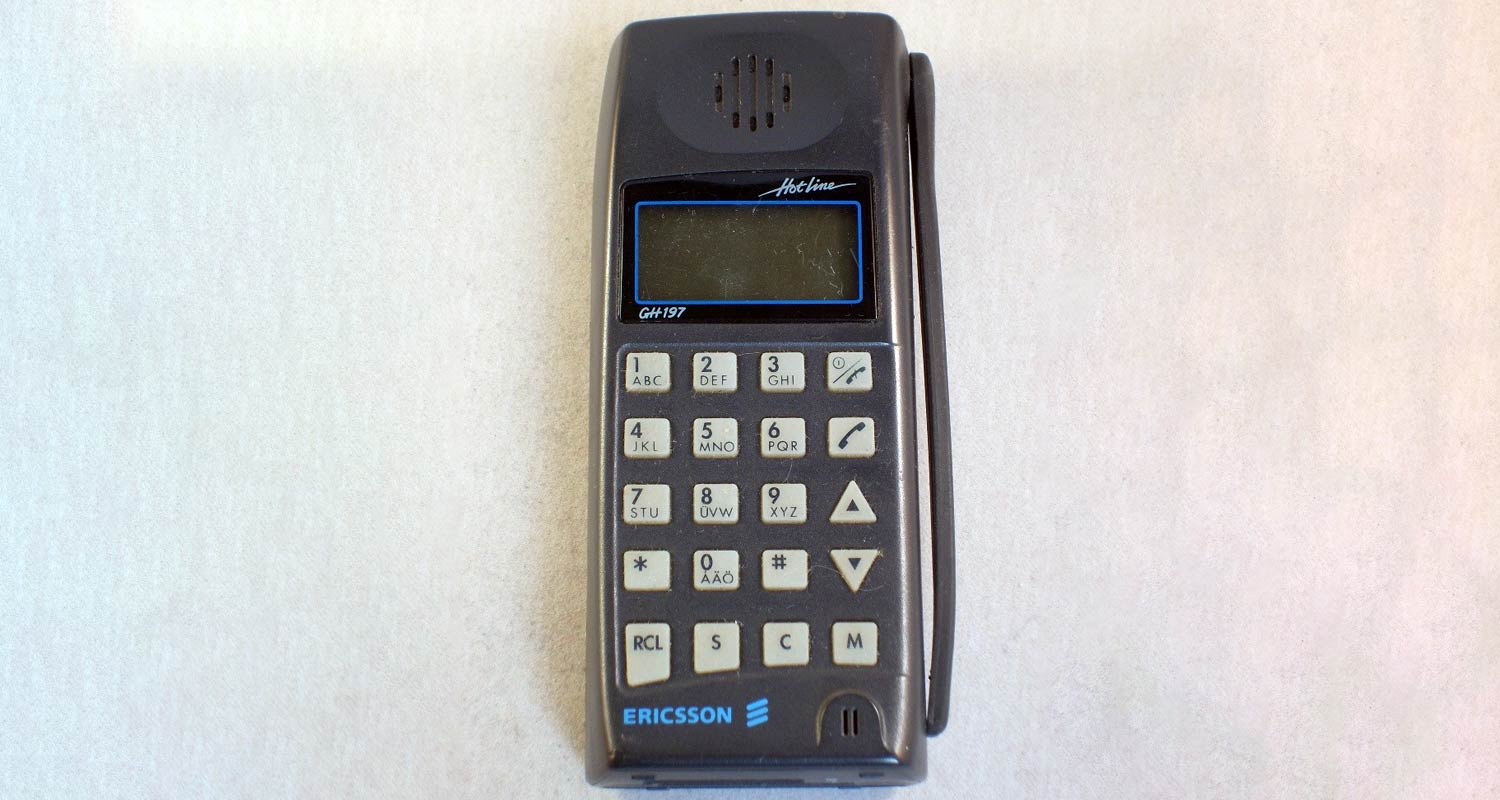
    The first commercial call on MTN’s network was made on an Ericsson GH-197 cellphone

    According to MTN, the second site to go live was at IGI House in the Johannesburg CBD, with Richard Black serving as the radio engineer responsible for the site’s activation. At commercial launch, MTN’s network consisted of five sites in the key cities of Cape Town, Johannesburg and Durban – the foundation on which the company’s multinational footprint spanning 19 markets in Africa and the Middle East was built.

    The use of Ericsson devices in South Africa’s first mobile calls marked its place in history, but the company’s presence in the mobile handset market would quickly dwindle, with networking equipment proving more lucrative. European companies dominated the equipment market in those early days. Vodacom’s first suppliers, for example, were the German and French companies Siemens and Alcatel. That market, however, is now dominated by Chinese vendors, notably Huawei Technologies.

    Read: The most iconic Nokia phones ever made

    South Africa’s mobile carrier sector remained a duopoly until the launch of Cell C in November 2001. Another shake-up would follow in 2010 when, after selling its 50% stake in Vodacom, Telkom launched its own mobile carrier called 8ta, which was later renamed Telkom Mobile.

    TechCentral asked Cell C and Telkom for information about their first towers but neither operator responded by time of publication.  – © 2025 NewsCentral Media

    Get breaking news from TechCentral on WhatsApp. Sign up here.

    Don’t miss:

    OpenRAN and the future of mobile networks

    Add TechCentral as a preferred source on GoogleFollow TechCentral on Google NewsGet breaking news on WhatsApp


    Cable & Wireless Johann Rupert M-Cell MTN MTN South Africa Naspers Telkom VenFin Vodacom
    WhatsApp YouTube
    Share. Facebook Twitter LinkedIn WhatsApp Telegram Email Copy Link
    Previous ArticleTCS | We test drive South Africa’s cheapest electric car
    Next Article Canal+ buyout: Sipho Maseko to invest in MultiChoice entity

    Related Posts

    MTN loses bid to halt US Anti-Terrorism Act claims

    MTN loses bid to halt US Anti-Terrorism Act claims

    29 September 2026
    Africa now hosts world's fourth-largest Comic Con

    South Africa now hosts world’s fourth-largest Comic Con

    29 September 2026
    Vodacom squeezes more 4G and 5G capacity out of cramped sites

    Vodacom squeezes more 4G and 5G capacity out of cramped sites

    29 September 2026
    Company News
    What Smollan learnt moving 9 000 users to Google Workspace - Digicloud Africa

    What Smollan learnt moving 9 000 users to Google Workspace

    1 October 2026
    Dell Technologies Forum 2026: what to expect in Johannesburg

    Dell Technologies Forum 2026: what to expect in Johannesburg

    1 October 2026
    B2B buyers pick a winner long before the pitch - Publishared, Michelle Losco

    B2B buyers pick a winner long before the pitch

    1 October 2026
    Opinion
    South Africa's next energy crisis is in the accounts department - Craig Holmes

    South Africa’s next energy crisis is in the accounts department

    29 September 2026
    The steam engine lesson AI doomsayers keep missing - Sam Clarke

    The steam engine lesson AI doomsayers keep missing

    28 September 2026
    Regulating AI: apply the laws we have first - Dirk de Vos

    Regulating AI: apply the laws we have first

    21 September 2026

    Subscribe to Updates

    Get the best South African technology news and analysis delivered to your e-mail inbox every morning.

    Latest Posts
    What Smollan learnt moving 9 000 users to Google Workspace - Digicloud Africa

    What Smollan learnt moving 9 000 users to Google Workspace

    1 October 2026
    Eskom waives rooftop solar fees, but the registration fight isn't over

    Eskom waives rooftop solar fees, but the registration fight isn’t over

    1 October 2026
    Dell Technologies Forum 2026: what to expect in Johannesburg

    Dell Technologies Forum 2026: what to expect in Johannesburg

    1 October 2026
    South Africa's digital ID is here - but you can't have it yet - Leon Schreiber

    South Africa’s digital ID is here – but you can’t have it yet

    1 October 2026
    © 2009 - 2026 NewsCentral Media
    Built and maintained by Chronon
    • Cookie policy (ZA)
    • TechCentral – privacy and Popia

    Type above and press Enter to search. Press Esc to cancel.

    Manage consent

    TechCentral uses cookies to enhance its offerings. Consenting to these technologies allows us to serve you better. Not consenting or withdrawing consent may adversely affect certain features and functions of the website.

    Functional Always active
    The technical storage or access is strictly necessary for the legitimate purpose of enabling the use of a specific service explicitly requested by the subscriber or user, or for the sole purpose of carrying out the transmission of a communication over an electronic communications network.
    Preferences
    The technical storage or access is necessary for the legitimate purpose of storing preferences that are not requested by the subscriber or user.
    Statistics
    The technical storage or access that is used exclusively for statistical purposes. The technical storage or access that is used exclusively for anonymous statistical purposes. Without a subpoena, voluntary compliance on the part of your Internet Service Provider, or additional records from a third party, information stored or retrieved for this purpose alone cannot usually be used to identify you.
    Marketing
    The technical storage or access is required to create user profiles to send advertising, or to track the user on a website or across several websites for similar marketing purposes.
    • Manage options
    • Manage services
    • Manage {vendor_count} vendors
    • Read more about these purposes
    View preferences
    • {title}
    • {title}
    • {title}
    🇿🇦 Sign up to the TechCentral newsletter