
Close Menu
TechCentralTechCentral

    Subscribe to the newsletter

    Get the best South African technology news and analysis delivered to your e-mail inbox every morning.

    Facebook X (Twitter) YouTube LinkedIn
    WhatsApp Facebook X (Twitter) LinkedIn YouTube
    TechCentralTechCentral
    • News
      Post Office on the brink of collapse

      Post Office on the brink of collapse

      13 March 2026
      New policy direction targets South Africa's municipal broadband logjam - Solly Malatsi

      New policy direction targets South Africa’s municipal broadband logjam

      13 March 2026
      How electronic warfare is threatening ships and their crews

      How electronic warfare is threatening ships and their crews

      13 March 2026
      Rand slumps for second week

      Rand slumps for second week

      13 March 2026
      Parliament opens nominations for Icasa council seats

      Parliament opens nominations for Icasa council seats

      13 March 2026
    • World
      Musk launches Macrohard in cheeky nod to Microsoft - Elon Musk

      Musk launches Macrohard in cheeky nod to Microsoft

      12 March 2026
      Europe is building an alternative to Microsoft Office

      Europe is building an alternative to Microsoft Office

      11 March 2026
      Microsoft bets on Anthropic as it loosens ties with OpenAI

      Microsoft bets on Anthropic as it loosens ties with OpenAI

      10 March 2026
      World hit by worst oil shock since the 1970s

      World hit by worst oil shock since the 1970s

      9 March 2026
      iStore prices MacBook Neo at R11 999 in South Africa

      Apple debuts MacBook Neo to challenge Windows PCs, Chromebooks

      5 March 2026
    • In-depth
      The last generation of coders

      The last generation of coders

      18 February 2026
      Sentech is in dire straits

      Sentech is in dire straits

      10 February 2026
      How liberalisation is rewiring South Africa's power sector

      How liberalisation is rewiring South Africa’s power sector

      21 January 2026
      The top-performing South African tech shares of 2025

      The top-performing South African tech shares of 2025

      12 January 2026
      Digital authoritarianism grows as African states normalise internet blackouts

      Digital authoritarianism grows as African states normalise internet blackouts

      19 December 2025
    • TCS
      TCS+ | Vox Kiwi: a wireless solution promising a fibre-like experience - Theo van Zyl

      TCS+ | Vox Kiwi: a wireless solution promising a fibre-like experience

      13 March 2026
      TCS+ | Flipping the narrative on AI in the Global South - Josefin Rosén

      TCS+ | Flipping the narrative on AI in the Global South

      13 March 2026
      TCS | Sink or swim? Antony Makins on how AI is rewriting the rules of work

      TCS | Sink or swim? Antony Makins on how AI is rewriting the rules of work

      5 March 2026
      TCS+ | Bolt ups the ante on platform safety - Simo Kalajdzic

      TCS+ | Bolt ups the ante on platform safety

      4 March 2026
      Watts & Wheels S1E4: 'We drive an electric Uber'

      Watts & Wheels S1E4: ‘We drive an electric Uber’

      10 February 2026
    • Opinion
      South Africa's energy future hinges on getting wheeling right - Aishah Gire

      South Africa’s energy future hinges on getting wheeling right

      10 March 2026
      Hold the doom: the case for a South African comeback - Duncan McLeod

      Apple just dropped a bomb on the Windows world

      5 March 2026
      VC's centre of gravity is shifting - and South Africa is in the frame - Alison Collier

      VC’s centre of gravity is shifting – and South Africa is in the frame

      3 March 2026
      Hold the doom: the case for a South African comeback - Duncan McLeod

      Hold the doom: the case for a South African comeback

      26 February 2026
      The AI fraud crisis your bank is not ready for - Andries Maritz

      The AI fraud crisis your bank is not ready for

      18 February 2026
    • Company Hubs
      • 1Stream
      • Africa Data Centres
      • AfriGIS
      • Altron Digital Business
      • Altron Document Solutions
      • Altron Group
      • Arctic Wolf
      • AvertITD
      • Braintree
      • CallMiner
      • CambriLearn
      • CYBER1 Solutions
      • Digicloud Africa
      • Digimune
      • Domains.co.za
      • ESET
      • Euphoria Telecom
      • HOSTAFRICA
      • Incredible Business
      • iONLINE
      • IQbusiness
      • Iris Network Systems
      • LSD Open
      • Mitel
      • NEC XON
      • Netstar
      • Network Platforms
      • Next DLP
      • Ovations
      • Paracon
      • Paratus
      • Q-KON
      • SevenC
      • SkyWire
      • Solid8 Technologies
      • Telit Cinterion
      • Tenable
      • Vertiv
      • Videri Digital
      • Vodacom Business
      • Wipro
      • Workday
      • XLink
    • Sections
      • AI and machine learning
      • Banking
      • Broadcasting and Media
      • Cloud services
      • Contact centres and CX
      • Cryptocurrencies
      • Education and skills
      • Electronics and hardware
      • Energy and sustainability
      • Enterprise software
      • Financial services
      • HealthTech
      • Information security
      • Internet and connectivity
      • Internet of Things
      • Investment
      • IT services
      • Lifestyle
      • Motoring
      • Policy and regulation
      • Public sector
      • Retail and e-commerce
      • Satellite communications
      • Science
      • SMEs and start-ups
      • Social media
      • Talent and leadership
      • Telecoms
    • Events
    • Advertise
    TechCentralTechCentral
    Home » In-depth » High drama as Zuma, Gordhan square off

    High drama as Zuma, Gordhan square off

    By The Conversation17 March 2016
    Twitter LinkedIn Facebook WhatsApp Email Telegram Copy Link
    News Alerts
    WhatsApp
    President Jacob Zuma
    President Jacob Zuma

    South Africa’s political landscape is shifting almost by the hour. The gloves are off in a power struggle that pits President Jacob Zuma against a group of reformers, led by finance minister Pravin Gordhan. It is a high-stakes drama that has profound, long-term implications for the country’s beleaguered economy at a time when the international rating agencies are circling, smelling blood.

    In a potentially seminal moment in this unfolding soap opera, deputy finance minister Mcebisi Jonas has issued an extraordinary public statement. In it he attests to the fact that a business group close to Zuma offered him the job of finance minister late last year.

    At the heart of the political economy that now surrounds Zuma, and which Gordhan has now set out his stall to confront, lies the Guptas — an expat Indian family with wide-ranging business interests spanning technology, mining, uranium and the media.

    Job offer

    Jonas’s statement said he was contacted by the Guptas and offered Nhlanhla Nene’s job after Zuma summarily dismissed the respected finance minister and replaced him with a rank non-entity, ANC backbencher David van Rooyen, on 9 December last year. The event was so shocking that local reporters and commentators now refer to it as “9/12”.

    Jonas says he declined the offer out of hand on the basis that only the president has the constitutional authority to appoint cabinet ministers.

    In response to Jonas’s statement, the Council for the Advancement of the South African Constitution, a constitutional rights advocacy group, noted that the revelation showed the extent to which South Africa’s constitutional project is under threat from a patronage network that has grown ever more insidious since Zuma came to power in 2009.

    But, to understand the significance of the moment, it is necessary to take at least two steps back, to understand the background and context to the latest dramatic developments.

    The context

    Like Brazil and Russia, South Africa’s ANC-led government has struggled to offer convincing evidence that it has not run out of ideas in the fight against structural economic constraints. These limit the prospects for the growth needed to reduce poverty and inequality.

    This growing gap between haves and have-nots threatens stability and adds to the sense of socioeconomic precariousness and racial unease that permeate the public discourse in Africa’s second-biggest economy.

    So, in recent years, the international investment community and other market analysts have looked on as South Africa dug itself ever deeper into a rut. What, they asked, might be the stick of dynamite that could propel it ahead of other emerging market economies?
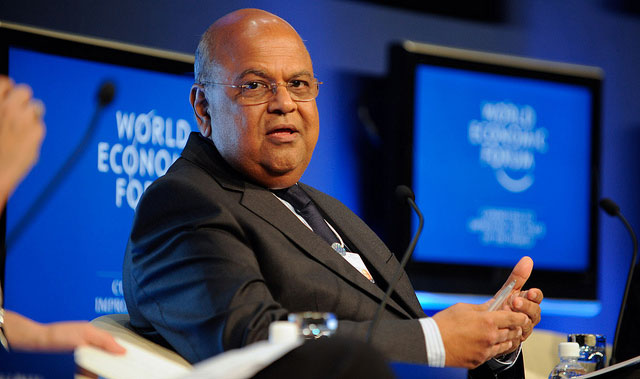
    Pravin Gordhan
    Pravin Gordhan

    The answer came, ironically, from Zuma himself. Regarded as a very large part of the problem because he has allowed himself to be captured by vested commercial interests, such as the Guptas, it was Zuma who dropped the bombshell on 9/12. The ripple effects will be felt for a long time to come.

    First, it woke up the “silent majority” within the ANC’s moderate middle and social democratic left. Asked on the evening of Nene’s dismissal what the ANC thought of the decision, ANC secretary-general Gwede Mantashe replied sullenly:

    The ANC has no comment because the ANC was not consulted.

    This was the first of a number of seminal, game-changing moments that have followed. Mantashe, a key powerbroker within the ruling party, and key to the organisational structures and power that will determine who succeeds Zuma, was furious. It was immediately apparent that Zuma had made an enormous political error of judgment.

    Never mind the reaction of the markets, which for the remaining two days of that tumultuous week battered the rand and South African bonds. Zuma had committed a cardinal sin. He had failed to consult with the fellow leaders of his own party. This error of judgment revealed just how desperate he was to please his benefactors and serve his own interests ahead of those of the country or his party.

    Nene had stood up to Zuma on a number of highly controversial issues. These included restructuring and governance of state-owned airline South African Airways and the procurement of nuclear power where Zuma or his relatives or friends, such as the Guptas, have vested interests that need protection.

    As a result, Nene was fired and replaced by a political weakling who would be beholden to Zuma and, apparently, the Guptas. On his first and — so it would turn out — only day in the national treasury, Van Rooyen turned up with two advisors in the pay of the Gupta family.
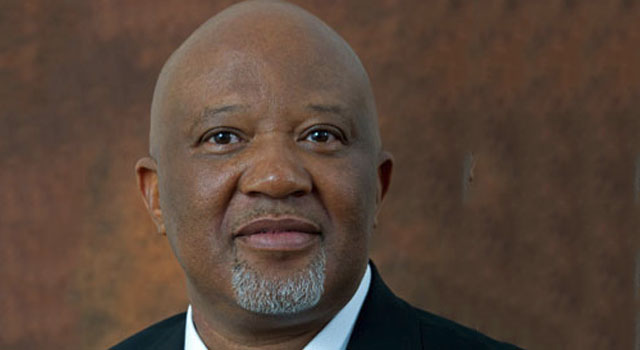
    Mcebisi Jonas
    Mcebisi Jonas

    Within four days, Zuma had been forced to replace van Rooyen with Gordhan, who served as finance minister during Zuma’s first administration between 2009 and 2014. Senior ANC leaders, such as Mantashe and the increasingly influential treasurer-general of the ANC, Zweli Mkhize, had made representations to Zuma and told him directly that what he had done was politically impossible.

    Thus, Gordhan returned to national treasury with far stronger political backing than previously. He is all but unsackable. Going into the new year, there was only one question in everyone’s mind: who runs the government, the president or finance minister?

    Treasury back at the helm

    Within minutes of Zuma’s state of the nation address on 11 February, the answer was clear: treasury was back at the helm.

    Gordhan’s budget speech that followed shortly afterwards was a political masterpiece. He managed to do enough to suggest that South Africa will avoid a rating agency downgrade to junk status — at least until December. He also offered glimpses of the sort of innovation now required to propel a stubbornly sluggish economy towards growth.

    It was also an act of political leadership. Gordhan drew a line in the sand. He made it clear that the governance of state-owned enterprises would be reformed and new rules brought in to prevent “predatory” attempts to capture state institutions for the purposes of self-enrichment.

    In response, Zuma resorted to type. He reignited an old investigation into a so-called “rogue” unit that was established by the South African Revenue Service while Gordhan was commissioner more than a decade ago. Using his loyal placemen at the revenue services and the Hawks — a specialist investigative unit within the police — Zuma has waged a proxy war against Gordhan for nearly a month now.

    Gordhan is up for the fight: that much is clear. He has refused to answer the 27 questions that the Hawks sent to him until he was ready to do so, refusing to be distracted from either his preparations for the budget nor his whirlwind roadshow in which he met investors, fund managers and market analysts in London, New York and Boston. This was clearly a blatant attempt to undermine his authority and reputation and weaken him.
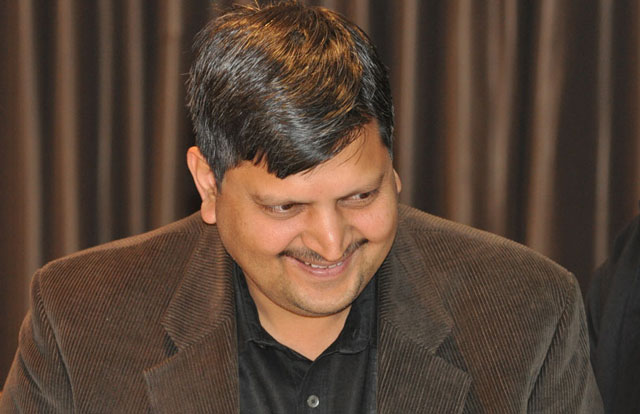
    Atul Gupta ... at the centre of the storm
    Atul Gupta … at the centre of the storm

    It is easy to understand why. Gordhan has emerged as the head of a reformist, progressive consortium within the government and the ANC that is determined to resurrect traditional ANC values and save the government from Zuma’s basest tendencies.

    In another seminal moment, when the Hawks leaked information about their investigation of Gordhan two days after the budget speech, Mantashe responded with unusual speed. He provided a public statement of unequivocal support for Gordhan, which further suggested that the balance of power was shifting away from Zuma.

    ANC is walking a tightrope

    But in this high-stakes game of chicken, both sides have to step carefully along the tightrope that lies ahead of them towards the ANC’s national conference at the end of 2017.

    Any misstep could lead to disaster. If Zuma refuses to give ground, Gordhan may have to resign or push harder, forcing Zuma into a corner where he may be forced to lash out — causing even more collateral damage.

    If Zuma pushes back too hard against Gordhan, or fires him, then Mantashe and Mkhize may have to lead a full revolt against Zuma that would lead to his recall. This is the fate that befell former President Thabo Mbeki in September 2008, when the ANC’s national executive committee ruthlessly decided that Mbeki should resign the presidency after a high court judgment suggested that he had interfered in the prosecution of Zuma himself.

    At last there are grounds for optimism that the drift and degradation that have been the hallmarks of Zuma’s years in office can be arrested.

    The charges against Zuma were suddenly dropped in March 2009, a month before he was elected president. This decision is currently before the courts. A decision against Zuma would be another wound in his side.

    With municipal elections to be held in the middle of the year, and ANC electoral hegemony likely to be challenged for the first time in important cities such as Johannesburg, Pretoria and Port Elizabeth, it may be that the ANC’s leadership will have to face the unpleasant prospect of removing Zuma ahead of the end of his term — as ANC president in 2017, and of the country in 2019.

    Zuma will fight to the very end. That much is clear. Jonas’s own act of principled leadership is a further milestone in a gripping political narrative and adds significantly to the case against Zuma.

    If Gordhan can prevail over Zuma, then the handbrake will be released. At last there are grounds for optimism that the drift and degradation that have been the hallmarks of Zuma’s years in office can be arrested, and that South African politics can enter a new phase — with far better prospects for governance and the economy.The Conversation

    • Richard Calland is associate professor in public law, University of Cape Town
    • This article was originally published on The Conversation

    Follow TechCentral on Google News Add TechCentral as your preferred source on Google


    Atul Gupta Des van Rooyen Gwede Mantashe Jacob Zuma Mcebisi Jonas Pravin Gordhan Richard Calland
    WhatsApp YouTube
    Share. Facebook Twitter LinkedIn WhatsApp Telegram Email Copy Link
    Previous ArticleHow Netflix is blocking VPNs
    Next Article SA’s most attractive tech employers ranked

    Related Posts

    Hold the doom: the case for a South African comeback - Duncan McLeod

    Hold the doom: the case for a South African comeback

    26 February 2026
    Copper is a foundational material used in the technology industry

    Why South Africa is missing the tech minerals boom

    22 January 2026
    Television at 50 | How the SABC lost its way - and what it must become

    Television at 50 | How the SABC lost its way – and what it must become

    5 January 2026
    Company News
    Households still under big pressure, Altron Fintech index shows

    Households still under big pressure, Altron Fintech index shows

    13 March 2026
    How AI is changing the way we work - Angela Ho, Obsidian Systems

    How AI is changing the way we work

    12 March 2026
    Domains.co.za introduces complete domain protection service

    Domains.co.za introduces complete domain protection service

    12 March 2026
    Opinion
    South Africa's energy future hinges on getting wheeling right - Aishah Gire

    South Africa’s energy future hinges on getting wheeling right

    10 March 2026
    Hold the doom: the case for a South African comeback - Duncan McLeod

    Apple just dropped a bomb on the Windows world

    5 March 2026
    VC's centre of gravity is shifting - and South Africa is in the frame - Alison Collier

    VC’s centre of gravity is shifting – and South Africa is in the frame

    3 March 2026

    Subscribe to Updates

    Get the best South African technology news and analysis delivered to your e-mail inbox every morning.

    Latest Posts
    Post Office on the brink of collapse

    Post Office on the brink of collapse

    13 March 2026
    New policy direction targets South Africa's municipal broadband logjam - Solly Malatsi

    New policy direction targets South Africa’s municipal broadband logjam

    13 March 2026
    How electronic warfare is threatening ships and their crews

    How electronic warfare is threatening ships and their crews

    13 March 2026
    Rand slumps for second week

    Rand slumps for second week

    13 March 2026
    © 2009 - 2026 NewsCentral Media
    • Cookie policy (ZA)
    • TechCentral – privacy and Popia

    Type above and press Enter to search. Press Esc to cancel.

    Manage consent

    TechCentral uses cookies to enhance its offerings. Consenting to these technologies allows us to serve you better. Not consenting or withdrawing consent may adversely affect certain features and functions of the website.

    Functional Always active
    The technical storage or access is strictly necessary for the legitimate purpose of enabling the use of a specific service explicitly requested by the subscriber or user, or for the sole purpose of carrying out the transmission of a communication over an electronic communications network.
    Preferences
    The technical storage or access is necessary for the legitimate purpose of storing preferences that are not requested by the subscriber or user.
    Statistics
    The technical storage or access that is used exclusively for statistical purposes. The technical storage or access that is used exclusively for anonymous statistical purposes. Without a subpoena, voluntary compliance on the part of your Internet Service Provider, or additional records from a third party, information stored or retrieved for this purpose alone cannot usually be used to identify you.
    Marketing
    The technical storage or access is required to create user profiles to send advertising, or to track the user on a website or across several websites for similar marketing purposes.
    • Manage options
    • Manage services
    • Manage {vendor_count} vendors
    • Read more about these purposes
    View preferences
    • {title}
    • {title}
    • {title}