Close Menu
TechCentralTechCentral

    Subscribe to the newsletter

    Get the best South African technology news and analysis delivered to your e-mail inbox every morning.

    Facebook X (Twitter) YouTube LinkedIn
    WhatsApp Facebook X (Twitter) LinkedIn YouTube
    TechCentralTechCentral
    • News
      What Wi-Fi 8 will mean for wireless networks

      What Wi-Fi 8 will mean for wireless networks

      1 June 2026
      The trap inside South Africa's banking MVNO boom

      The trap inside South Africa’s banking MVNO boom

      1 June 2026
      Diesel cuts ease pressure on data centres and delivery fleets

      Diesel price cuts ease pressure on data centres and delivery fleets

      1 June 2026
      Moody's flags risk in Eskom grid split

      Moody’s flags risk in Eskom grid split

      1 June 2026
      The smartphone market is in big trouble

      The smartphone market is in big trouble

      1 June 2026
    • World
      Nvidia's first CPUs to debut in Windows laptops this week

      Nvidia CPUs to debut in Windows laptops this week

      31 May 2026
      Watch: Bezos rocket erupts in fireball during ground test

      Watch: Bezos rocket erupts in fireball during ground test

      29 May 2026
      AI boom hands Samsung chip workers life-changing bonuses

      AI boom hands Samsung chip workers life-changing bonuses

      27 May 2026
      Luce lit: Ferrari unveils its first electric car

      Luce lit: Ferrari unveils its first electric car

      26 May 2026
      Huawei claims chip design breakthrough

      Huawei claims chip design breakthrough

      25 May 2026
    • In-depth
      Alfa's electric rebel - Alfa Romeo Junior Elettrica Veloce

      Alfa’s electric rebel

      29 April 2026
      Africa switches on as Europe dims the lights

      Africa switches on as Europe dims the lights

      9 April 2026
      The biggest untapped EV market on Earth is hiding in plain sight

      The biggest untapped EV market on Earth is hiding in plain sight

      1 April 2026
      AI, cybersecurity power standout year for Datatec - Jens Montanana

      The R16-billion tech giant hiding in plain sight

      26 March 2026
      The last generation of coders

      The last generation of coders

      18 February 2026
    • TCS
      TCS | Charge's R1.8-billion bet on an off-grid EV future - Charge chairman Joubert Roux

      TCS | Charge’s R1.8-billion bet on an off-grid EV future

      18 May 2026
      TCS+ | The Up&Up Group on the hidden cost of AI - Jason Harrison

      TCS+ | The Up&Up Group on the hidden cost of AI

      13 May 2026
      Michael Rossouw

      TCS+ | The retirement decision most South Africans get wrong

      6 May 2026
      TCS | The Cape Town start-up listening for TB with AI - Braden van Breda

      TCS | The Cape Town start-up listening for TB with AI

      4 May 2026

      TCS+ | ‘The ISP for ISPs’: Vox’s shift to wholesale aggregator

      20 April 2026
    • Opinion
      Treasury's crypto crackdown is a betrayal of Mandela's promise - Duncan McLeod

      Treasury’s crypto crackdown is a betrayal of Mandela’s promise

      22 May 2026
      South Africa is sleepwalking into another AI policy failure - Celeste Labuschagne

      South Africa is sleepwalking into another AI policy failure

      20 May 2026
      AI won't fix your culture - it will expose it - Jackie Kennedy

      AI won’t fix your culture – it will expose it

      19 May 2026
      Treasury's crypto crackdown is a betrayal of Mandela's promise - Duncan McLeod

      Free calls, dead voice and Shameel Joosub’s Spanish ghost

      22 April 2026
      The conflict of interest at the heart of PayShap's slow adoption - Cheslyn Jacobs

      The conflict of interest at the heart of PayShap’s slow adoption

      26 March 2026
    • Company Hubs
      • 1Stream
      • Africa Data Centres
      • AfriGIS
      • Altron Digital Business
      • Altron Document Solutions
      • Altron Group
      • Arctic Wolf
      • Ascent Technology
      • AvertITD
      • BBD
      • Braintree
      • CallMiner
      • CambriLearn
      • CM Telecom
      • Contactable
      • CYBER1 Solutions
      • Digicloud Africa
      • Digimune
      • Domains.co.za
      • ESET
      • Euphoria Telecom
      • HOSTAFRICA
      • Incredible Business
      • iONLINE
      • IQbusiness
      • Iris Network Systems
      • Kaspersky
      • LSD Open
      • Mitel
      • NEC XON
      • Netstar
      • Network Platforms
      • Next DLP
      • Ovations
      • Paracon
      • Paratus
      • Q-KON
      • SevenC
      • SkyWire
      • Solid8 Technologies
      • Telit Cinterion
      • Telviva
      • Tenable
      • Vertiv
      • Videri Digital
      • Vodacom Business
      • Wipro
      • Workday
      • XLink
    • Sections
      • AI and machine learning
      • Banking
      • Broadcasting and Media
      • Cloud services
      • Contact centres and CX
      • Cryptocurrencies
      • Education and skills
      • Electronics and hardware
      • Energy and sustainability
      • Enterprise software
      • Financial services
      • HealthTech
      • Information security
      • Internet and connectivity
      • Internet of Things
      • Investment
      • IT services
      • Lifestyle
      • Motoring
      • Policy and regulation
      • Public sector
      • Retail and e-commerce
      • Satellite communications
      • Science
      • SMEs and start-ups
      • Social media
      • Talent and leadership
      • Telecoms
    • Events
    • Advertise
    TechCentralTechCentral
    Home » Sections » Financial services » How alternative credit models can unlock South Africa’s hidden economy

    How alternative credit models can unlock South Africa’s hidden economy

    Promoted | M-KOPA data demonstrates digital access can kick-start equitable economic inclusion, with alternative credit models as the catalyst.
    By M-KOPA15 December 2025
    Twitter LinkedIn Facebook WhatsApp Email Telegram Copy Link
    News Alerts
    WhatsApp
    How alternative credit models can unlock South Africa's hidden economy - Cameron Kyle-Perumal M-KOPA South Africa
    The author, Cameron Kyle-Perumal, GM of M-KOPA South Africa and director of international strategy and growth for the group

    South Africa is home to one of the continent’s most sophisticated financial systems, yet 65% of respondents in a recent survey were declined credit by formal lenders, with rejection rates disproportionately concentrated among lower-income groups – forcing many to turn to informal sources.

    They are rejected not because they lack economic activity but because their income doesn’t conform to the narrow, inflexible definitions that traditional lenders rely on. Without formal employment or payslips, aspirations like paying school fees, improving a home or expanding a business remain painfully out of reach. In a nation where unemployment stood at 32.9% in early 2025, expanding meaningful digital and financial access is imperative.

    Structural challenges hamstring our economy

    Our financial system was built around stable salaries, formal jobs, bankable collateral and predictability – conditions that simply don’t match the way most South Africans earn. “Every Day Earners” – the traders, gig workers, informal entrepreneurs and microservice providers who keep households and communities functioning – operate outside the visibility of traditional assessment tools. Their earnings are variable, cash-based and undocumented. Their economic value is real but financially invisible.

    Yet these same earners are far from unproductive. Across the continent, access to a functional smartphone alone has been shown to increase household consumption – an income proxy – by over 20%. In South Africa, nearly two-thirds of low-income smartphone users say they use their devices directly to earn money. The link between digital access and income generation is now unmistakable: the smartphone has become the modern work tool, marketing channel and business ledger.

    The absence of fair credit has predictable effects: limited investment, constrained microenterprise growth and little capacity to absorb financial shocks. Nationwide studies consistently show that informal earners struggle to afford essentials, cannot cover unexpected expenses and have no cushion if income stops for even a month.
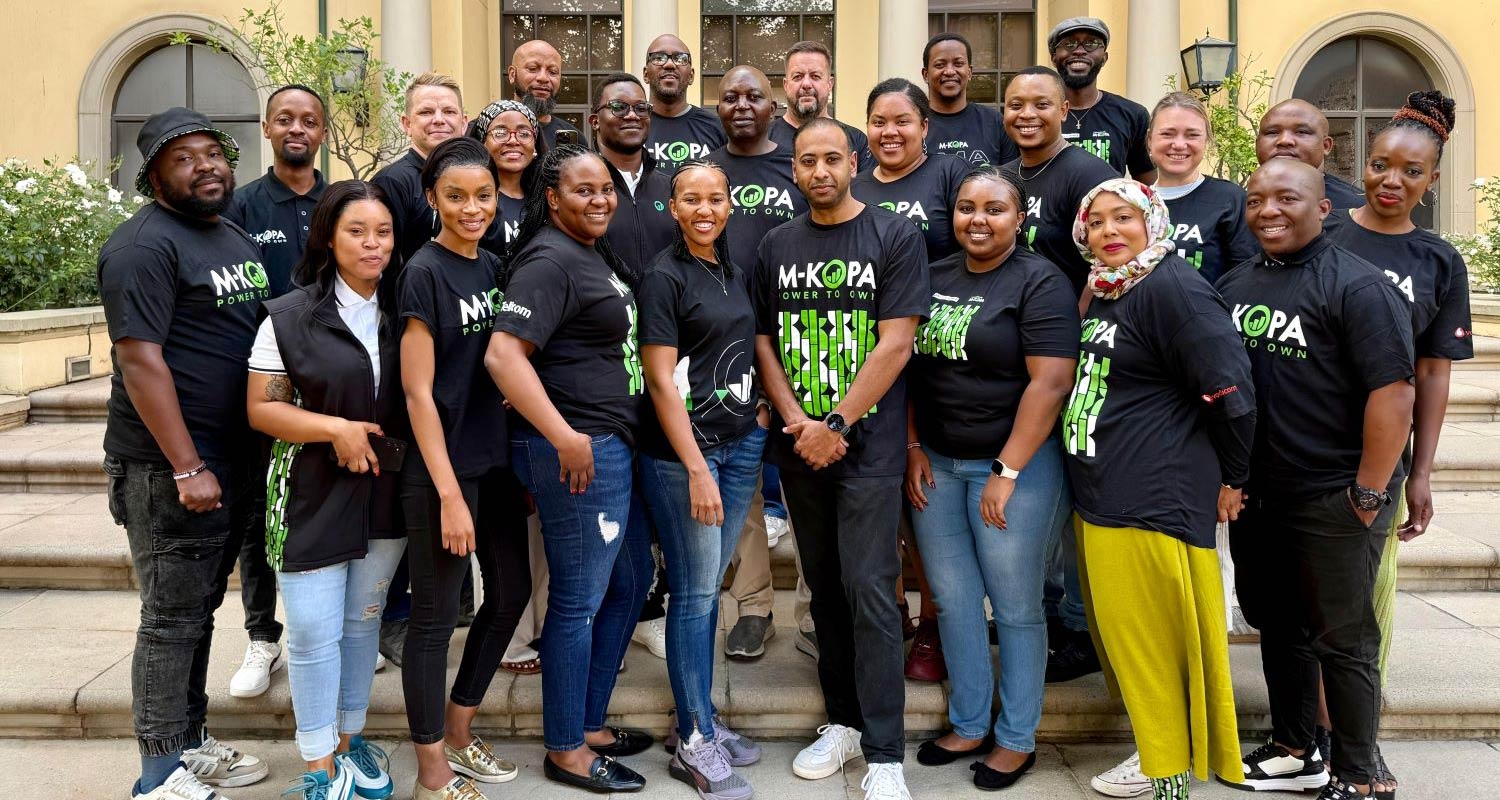
    The M-KOPA South Africa team
    The M-KOPA South Africa team

    Models based on real earning patterns

    Despite this, we can achieve a future where a panel beater in Chatsworth, a trader in Khayelitsha, a stylist in Mthatha or a gig worker in Gqeberha has the tools to earn, to build resilience and to participate fully in a digital economy.

    How? A growing wave of alternative credit models is gaining traction across emerging markets. These designs move away from collateral and payslips and instead align repayment schedules with daily income patterns. Some use AI-driven assessments that analyse millions of micropayments to build credit histories for previously “unscorable” customers.

    Evidence from M-KOPA’s customer base shows strong repayment reliability when credit products reflect the cash-flow realities of informal work. Transparency, data privacy and customer protection remain critical, but responsible alternative lending has begun to demonstrate that exclusion is a design flaw – not an inevitability.

    M-KOPA data demonstrates inclusion works

    M-KOPA’s experience across five African markets offers strong evidence that alternative credit models can be both inclusive and commercially sound. We have deployed more than US$2-billion in credit to over seven million customers, building one of the continent’s most extensive track records of lending to people without traditional collateral or credit histories.

    Customer sentiment data reinforces this reliability: 94% of our users say loan terms are fair and transparent, up from 91% last year, and 88% report that M-KOPA’s loans are easier to repay than those offered by other providers. Women, who are often disproportionately excluded from formal finance, also demonstrate strong performance, being 5% less likely to default than men. In South Africa, we have reached more than 100 000 customers, underscoring that the model can function effectively even in complex, highly varied economic environments.

    Several lessons emerge from our approach to inclusive credit. Most importantly, inclusion demonstrably works: 55% of our customers are accessing a product or service for the first time, and 43% of women are receiving their first formal loan, indicating how much latent demand has gone unmet by traditional lenders.

    phone user

    Flexibility is also essential. Customers can return products at any time, receive deposit refunds and face no penalties for paying on irregular days, which aligns repayment behaviour with the realities of variable income.

    These features help build the trust required for long-term engagement. As a result, 86% of customers report an improvement in their overall quality of life after joining the platform.

    Scale further demonstrates sustainability, with three million active customers across five markets participating in the model. And gender-intentional design remains a critical differentiator: in South Africa, women make up 49% of the customer base, the highest among all M-KOPA markets, showing what is possible when inclusion strategies are embedded from the outset rather than retrofitted later.

    Towards a national inclusion agenda

    If South Africa is serious about unlocking growth, digital and financial inclusion must become core components of economic policy, not peripheral development projects. A meaningful national strategy would need to include:

    • Regulatory frameworks that recognise informal income for creditworthiness.
    • Lower import taxes and mark-ups that keep smartphone prices artificially high.
    • Affordable data access and resilient connectivity infrastructure.
    • Local manufacturing investments to create skilled jobs and reduce device costs.
    • Gender-responsive policies embedded from the outset, not retrofitted after implementation.
    • Partnerships between telecommunications operators, insurers, fintechs, government and community organisations.

    This level of coordination is difficult, but the payoff is substantial: increased household resilience, reduced unemployment, stronger microenterprise productivity and broader tax participation. What is needed now is scale – and a shared national commitment to inclusive economic design.

    • The author, Cameron Kyle-Perumal, is GM of M-KOPA South Africa and director of international strategy and growth for the group
    • This promoted content was paid for by the party concerned

    Follow TechCentral on Google News Add TechCentral as your preferred source on Google


    Cameron Kyle-Perumal M-Kopa M-KOPA South Africa
    WhatsApp YouTube
    Share. Facebook Twitter LinkedIn WhatsApp Telegram Email Copy Link
    Previous ArticleICT BEE fight deepens as MK, EFF target Malatsi
    Next Article New Vox partner programme helps ISPs expand without the heavy lifting

    Related Posts

    The 48-month phone contract trap

    The 48-month phone contract trap

    6 May 2026
    M-KOPA's 2025 impact: women at the heart of digital inclusion

    M-KOPA’s 2025 impact: women at the heart of digital inclusion

    9 April 2026

    Africa, the continent of start-ups

    7 August 2014
    Company News
    iONLINE, Nodle expand crowdsourced IoT connectivity in South Africa

    iONLINE, Nodle expand crowdsourced IoT connectivity in South Africa

    1 June 2026
    Netstar to watch over every Comrades runner

    Netstar to watch over every Comrades runner

    1 June 2026
    What happens when your onboarding AI gets it wrong? - SprintHive

    What happens when your onboarding AI gets it wrong?

    1 June 2026
    Opinion
    Treasury's crypto crackdown is a betrayal of Mandela's promise - Duncan McLeod

    Treasury’s crypto crackdown is a betrayal of Mandela’s promise

    22 May 2026
    South Africa is sleepwalking into another AI policy failure - Celeste Labuschagne

    South Africa is sleepwalking into another AI policy failure

    20 May 2026
    AI won't fix your culture - it will expose it - Jackie Kennedy

    AI won’t fix your culture – it will expose it

    19 May 2026

    Subscribe to Updates

    Get the best South African technology news and analysis delivered to your e-mail inbox every morning.

    Latest Posts
    What Wi-Fi 8 will mean for wireless networks

    What Wi-Fi 8 will mean for wireless networks

    1 June 2026
    The trap inside South Africa's banking MVNO boom

    The trap inside South Africa’s banking MVNO boom

    1 June 2026
    Diesel cuts ease pressure on data centres and delivery fleets

    Diesel price cuts ease pressure on data centres and delivery fleets

    1 June 2026
    iONLINE, Nodle expand crowdsourced IoT connectivity in South Africa

    iONLINE, Nodle expand crowdsourced IoT connectivity in South Africa

    1 June 2026
    © 2009 - 2026 NewsCentral Media
    • Cookie policy (ZA)
    • TechCentral – privacy and Popia

    Type above and press Enter to search. Press Esc to cancel.

    Manage consent

    TechCentral uses cookies to enhance its offerings. Consenting to these technologies allows us to serve you better. Not consenting or withdrawing consent may adversely affect certain features and functions of the website.

    Functional Always active
    The technical storage or access is strictly necessary for the legitimate purpose of enabling the use of a specific service explicitly requested by the subscriber or user, or for the sole purpose of carrying out the transmission of a communication over an electronic communications network.
    Preferences
    The technical storage or access is necessary for the legitimate purpose of storing preferences that are not requested by the subscriber or user.
    Statistics
    The technical storage or access that is used exclusively for statistical purposes. The technical storage or access that is used exclusively for anonymous statistical purposes. Without a subpoena, voluntary compliance on the part of your Internet Service Provider, or additional records from a third party, information stored or retrieved for this purpose alone cannot usually be used to identify you.
    Marketing
    The technical storage or access is required to create user profiles to send advertising, or to track the user on a website or across several websites for similar marketing purposes.
    • Manage options
    • Manage services
    • Manage {vendor_count} vendors
    • Read more about these purposes
    View preferences
    • {title}
    • {title}
    • {title}