Close Menu
TechCentralTechCentral

    Subscribe to the newsletter

    Get the best South African technology news and analysis delivered to your e-mail inbox every morning.

    Facebook X (Twitter) YouTube LinkedIn
    WhatsApp Facebook X (Twitter) LinkedIn YouTube
    TechCentralTechCentral
    • News
      Netflix, Warner Bros talks raise fresh headaches for MultiChoice

      Netflix, Warner Bros talks raise fresh headaches for MultiChoice

      5 December 2025
      Big Microsoft 365 price increases coming next year

      Big Microsoft price increases coming next year

      5 December 2025
      Vodacom to take control of Safaricom in R36-billion deal - Shameel Joosub

      Vodacom to take control of Safaricom in R36-billion deal

      4 December 2025
      Black Friday goes digital in South Africa as online spending surges to record high

      Black Friday goes digital in South Africa as online spending surges to record high

      4 December 2025
      BYD takes direct aim at Toyota with launch of sub-R500 000 Sealion 5 PHEV

      BYD takes direct aim at Toyota with launch of sub-R500 000 Sealion 5 PHEV

      4 December 2025
    • World
      Amazon and Google launch multi-cloud service for faster connectivity

      Amazon and Google launch multi-cloud service for faster connectivity

      1 December 2025
      Google makes final court plea to stop US breakup

      Google makes final court plea to stop US breakup

      21 November 2025
      Bezos unveils monster rocket: New Glenn 9x4 set to dwarf Saturn V

      Bezos unveils monster rocket: New Glenn 9×4 set to dwarf Saturn V

      21 November 2025
      Tech shares turbocharged by Nvidia's stellar earnings

      Tech shares turbocharged by stellar Nvidia earnings

      20 November 2025
      Config file blamed for Cloudflare meltdown that disrupted the web

      Config file blamed for Cloudflare meltdown that disrupted the web

      19 November 2025
    • In-depth
      Jensen Huang Nvidia

      So, will China really win the AI race?

      14 November 2025
      Valve's Linux console takes aim at Microsoft's gaming empire

      Valve’s Linux console takes aim at Microsoft’s gaming empire

      13 November 2025
      iOCO's extraordinary comeback plan - Rhys Summerton

      iOCO’s extraordinary comeback plan

      28 October 2025
      Why smart glasses keep failing - no, it's not the tech - Mark Zuckerberg

      Why smart glasses keep failing – it’s not the tech

      19 October 2025
      BYD to blanket South Africa with megawatt-scale EV charging network - Stella Li

      BYD to blanket South Africa with megawatt-scale EV charging network

      16 October 2025
    • TCS
      TCS+ | How Cloud on Demand helps partners thrive in the AWS ecosystem - Odwa Ndyaluvane and Xenia Rhode

      TCS+ | How Cloud On Demand helps partners thrive in the AWS ecosystem

      4 December 2025
      TCS | MTN Group CEO Ralph Mupita on competition, AI and the future of mobile

      TCS | Ralph Mupita on competition, AI and the future of mobile

      28 November 2025
      TCS | Dominic Cull on fixing South Africa's ICT policy bottlenecks

      TCS | Dominic Cull on fixing South Africa’s ICT policy bottlenecks

      21 November 2025
      TCS | BMW CEO Peter van Binsbergen on the future of South Africa's automotive industry

      TCS | BMW CEO Peter van Binsbergen on the future of South Africa’s automotive industry

      6 November 2025
      TCS | Why Altron is building an AI factory - Bongani Andy Mabaso

      TCS | Why Altron is building an AI factory in Johannesburg

      28 October 2025
    • Opinion
      Your data, your hardware: the DIY AI revolution is coming - Duncan McLeod

      Your data, your hardware: the DIY AI revolution is coming

      20 November 2025
      Zero Carbon Charge founder Joubert Roux

      The energy revolution South Africa can’t afford to miss

      20 November 2025
      It's time for a new approach to government IT spend in South Africa - Richard Firth

      It’s time for a new approach to government IT spend in South Africa

      19 November 2025
      How South Africa's broken Rica system fuels murder and mayhem - Farhad Khan

      How South Africa’s broken Rica system fuels murder and mayhem

      10 November 2025
      South Africa's AI data centre boom risks overloading a fragile grid - Paul Colmer

      South Africa’s AI data centre boom risks overloading a fragile grid

      30 October 2025
    • Company Hubs
      • Africa Data Centres
      • AfriGIS
      • Altron Digital Business
      • Altron Document Solutions
      • Altron Group
      • Arctic Wolf
      • AvertITD
      • Braintree
      • CallMiner
      • CambriLearn
      • CYBER1 Solutions
      • Digicloud Africa
      • Digimune
      • Domains.co.za
      • ESET
      • Euphoria Telecom
      • Incredible Business
      • iONLINE
      • IQbusiness
      • Iris Network Systems
      • LSD Open
      • NEC XON
      • Netstar
      • Network Platforms
      • Next DLP
      • Ovations
      • Paracon
      • Paratus
      • Q-KON
      • SevenC
      • SkyWire
      • Solid8 Technologies
      • Telit Cinterion
      • Tenable
      • Vertiv
      • Videri Digital
      • Vodacom Business
      • Wipro
      • Workday
      • XLink
    • Sections
      • AI and machine learning
      • Banking
      • Broadcasting and Media
      • Cloud services
      • Contact centres and CX
      • Cryptocurrencies
      • Education and skills
      • Electronics and hardware
      • Energy and sustainability
      • Enterprise software
      • Financial services
      • Information security
      • Internet and connectivity
      • Internet of Things
      • Investment
      • IT services
      • Lifestyle
      • Motoring
      • Public sector
      • Retail and e-commerce
      • Satellite communications
      • Science
      • SMEs and start-ups
      • Social media
      • Talent and leadership
      • Telecoms
    • Events
    • Advertise
    TechCentralTechCentral
    Home » Sections » Energy and sustainability » How South Africa can consign load shedding to history

    How South Africa can consign load shedding to history

    By The Conversation12 November 2021
    Twitter LinkedIn Facebook WhatsApp Email Telegram Copy Link
    News Alerts
    WhatsApp

    The department of mineral resources & energy recently announced its choice of companies to build and operate a new “batch” of renewable energy projects. This is part of a programme in which the government invites private companies to compete for contracts to produce electricity and sell it to Eskom.

    In this most recent auction of contracts, known as “bid window 5”, 25 projects – 12 solar and 13 wind – totalling close to 2.6GW of capacity got the go-ahead. These projects are expected to come online in the next two to three years. The contracts last for 20 years.

    The power companies’ bids are scored mainly (90%) on the price at which they will sell electricity. The rest of the scoring (10%) is based on socioeconomic development criteria.

    The prices are now competitive with Eskom’s average cost of buying coal in the past financial year

    Bid window 5 marks the end of a long gap in procurement of renewable energy. South Africa started the procurement programme in 2011, and over the next four years awarded 102 renewable energy projects totalling more than 6.3GW. The programme was stopped in 2015 when Eskom’s leadership at the time refused to sign any more of these power purchase agreements.

    The bid window 5 results announcement signals a renewed commitment. Prices of awarded projects are extremely competitive – as low as 34.4c/kWh for onshore wind and 37.4c/kWh for solar PV. The average price for projects in the previous bid window was R1.03/kWh in April 2021 terms. The prices are now competitive with Eskom’s average cost of buying coal in the past financial year: 42c/kWh. And, of course, Eskom has the additional cost of running coal plants.

    Thus, it is now theoretically cheaper for Eskom to buy renewable energy from independent power producers than to run its more expensive coal power stations.

    Cost competitive

    The problem is that the power system is severely constrained, and needs much more capacity before this is a realistic option. One also needs more flexible resources on the grid to ensure reliability, and this adds to the costs.

    But I’ve been involved in research that shows renewable energy procurement programmes like this can secure projects that are built cost competitively – if well designed and implemented. This is so even in difficult investment contexts in the global south.

    My view is that South Africa’s renewable energy procurement programme has the potential to help restore energy security and eventually reduce power prices. This is despite some concerns that have been raised about the latest bid results. I will explain here why these issues aren’t reasons for concern.

    The concerns

    Three main concerns have emerged in response to the bid window 5:

    • The prices are too low to be realistic;
    • A few bidders will dominate the market; and
    • Tariffs for renewables can’t be compared with baseload tariffs.

    First, let’s consider the claim that “these prices are way too low. The projects will never be built at these costs.”

    While the announced prices are indeed around half of those of previous rounds, they aren’t unrealistic. Global renewable energy auctions have regularly delivered prices like these or even lower in the past two or three years. Examples can be found in Kazakhstan, Saudi Arabia, Portugal, Chile, Abu Dhabi, the US, Brazil and Uzbekistan. That’s of course without the additional requirements embedded in South Africa’s procurement programme – which push up capital and operating costs – but the point remains that these prices are feasible.

    South Africa also has one of the most onerous and expensive bidding programmes in the world. This is to guard against unrealistic bids being made. The country’s rate of successful bids that translate into projects is more than 95% – one of the best in the world.
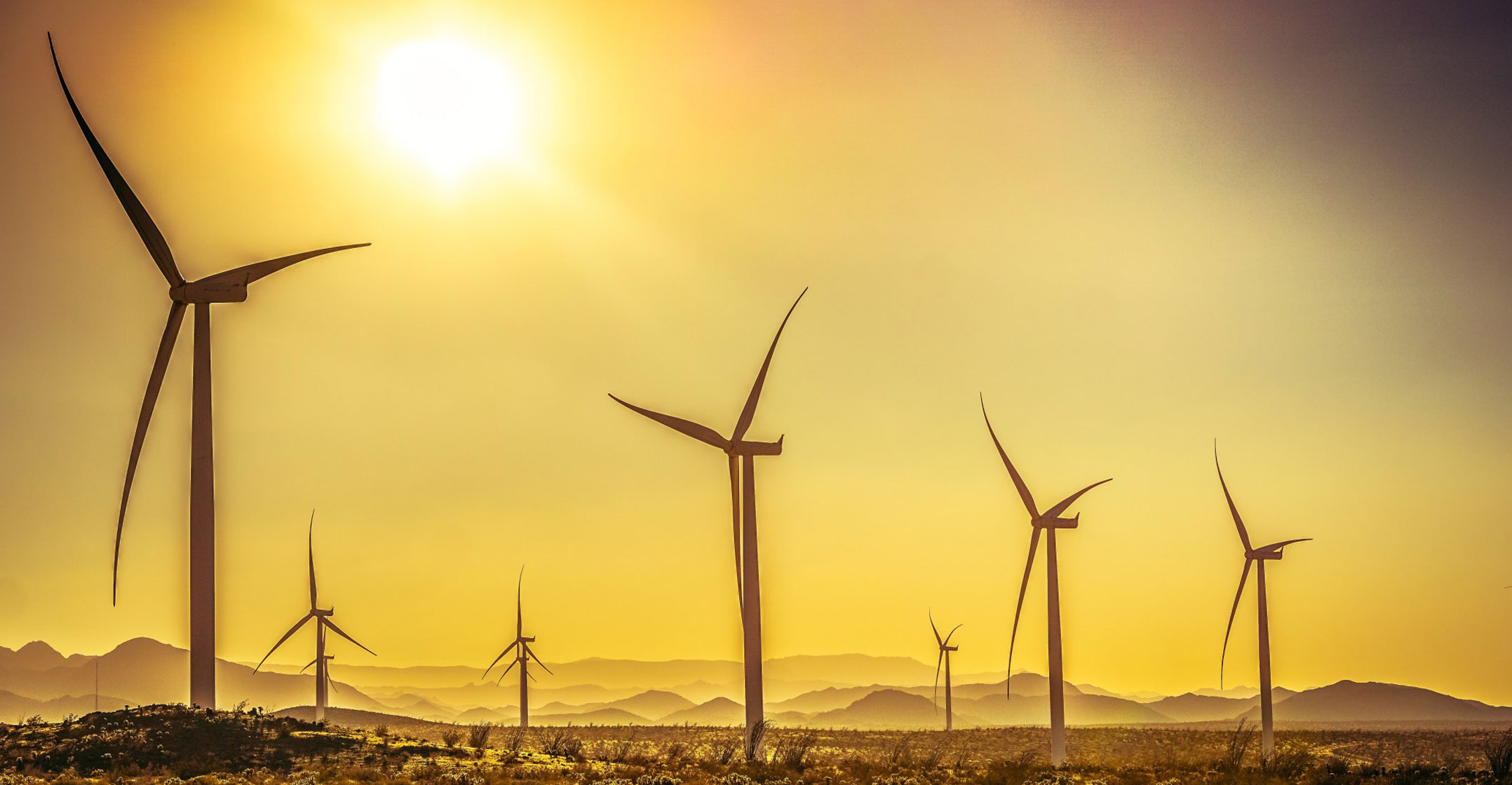
    In short, there’s no reason to believe that new projects will not reach commercial operation because of prices.

    Second, there’s the concern that “we are seeing projects awarded to fewer and fewer bidders. Soon the market will be dominated by only a handful of international companies.”

    While it’s true that a small number of winning bidders were awarded the lion’s share of projects in this latest auction, it’s not true that this has resulted in market domination. The fact is that competition has been fiercer in each consecutive bidding round, and no company has been able to dominate the market from one round to the next.

    A degree of market concentration is inevitable in a competitive bidding process such as South Africa’s. This is because the larger, more experienced bidders are able to use economies of scale, financial innovation, stronger negotiation positions with suppliers and contractors and vertical integration to reduce costs. In turn, they can offer more competitive tariffs. But a number of medium sized companies have also been successful.

    Ecosystem

    And lead bidders represent only one part of the project value chain. Over the years, an extensive ecosystem of service providers and suppliers has grown around these projects. In addition, lead bidders aren’t the only shareholders in these companies. South African shareholders, including black economic empowerment partners and community trusts, own 49.4%, on average, in these projects.

    A third claim is: “You can’t compare the tariffs of these intermittent renewables with that of ‘baseload’, like coal or nuclear.”

    Let’s address a few issues here. Renewable supply is variable – not intermittent. Power system operators have become good at forecasting when the sun won’t shine or the wind won’t blow. That means that the flexible supply to complement renewable energy can be predicted.

    Anyway, “baseload” is an outdated concept. It comes from highly centralised power systems where the cheapest electricity was produced by massive coal or nuclear plants that couldn’t be switched on or off quickly. Cheap renewables are challenging this paradigm. Future power systems will be dominated by these variable resources backed up by storage and flexible resources such as gas or hydropower.

    South Africa’s 2019 integrated resource plan is premised on supplying reliable power. Its least-cost scenarios all pick wind, solar PV plus a flexible resource to meet future power demand securely.

    Going forward

    There are other concerns around the country’s renewable energy independent power producers procurement programme auctions. Maximising and broadening local benefits is important for the wider acceptance of this programme, which cumulatively has resulted in R250-billion in investment. But concerns should be based on facts.

    The latest auction has resulted in great prices for consumers and the majority of these projects will be built. Although a small number of international companies are prominent, competition is still fierce. There’s a place for local partners and smart medium-sized companies.

    As these renewable energy auctions are rolled out, coupled with complementary flexible resources, the country can consign power cuts to history.The Conversation

    • This article was written by Wikus Kruger, researcher in renewable energy, University of Cape Town
    • This article is republished from The Conversation under a Creative Commons licence

    Eskom Wikus Kruger
    Subscribe to TechCentral Subscribe to TechCentral
    Share. Facebook Twitter LinkedIn WhatsApp Telegram Email Copy Link
    Previous ArticleEskom on track to split generation, transmission by end of 2021
    Next Article White House spurns Intel plan to boost chip production

    Related Posts

    Eskom targets 2027 approval for new 5.2GW nuclear facility

    Eskom targets 2027 approval for new 5.2GW nuclear facility

    2 December 2025
    Eskom profit surges 37% as load shedding virtually vanishes

    Eskom profit surges 37% as load shedding virtually vanishes

    28 November 2025
    Big step forward in opening South Africa's electricity market - NTCSA

    Big step forward in opening South Africa’s electricity market

    28 November 2025
    Company News
    Beat the summer heat with Samsung's WindFree air conditioners

    Beat the summer heat with Samsung’s WindFree air conditioners

    5 December 2025
    AI is not a technology problem - iqbusiness

    AI is not a technology problem – iqbusiness

    5 December 2025
    Telcos are sitting on a data gold mine - but few know what do with it - Phillip du Plessis

    Telcos are sitting on a data gold mine – but few know what do with it

    4 December 2025
    Opinion
    Your data, your hardware: the DIY AI revolution is coming - Duncan McLeod

    Your data, your hardware: the DIY AI revolution is coming

    20 November 2025
    Zero Carbon Charge founder Joubert Roux

    The energy revolution South Africa can’t afford to miss

    20 November 2025
    It's time for a new approach to government IT spend in South Africa - Richard Firth

    It’s time for a new approach to government IT spend in South Africa

    19 November 2025

    Subscribe to Updates

    Get the best South African technology news and analysis delivered to your e-mail inbox every morning.

    Latest Posts
    Beat the summer heat with Samsung's WindFree air conditioners

    Beat the summer heat with Samsung’s WindFree air conditioners

    5 December 2025
    Netflix, Warner Bros talks raise fresh headaches for MultiChoice

    Netflix, Warner Bros talks raise fresh headaches for MultiChoice

    5 December 2025
    Big Microsoft 365 price increases coming next year

    Big Microsoft price increases coming next year

    5 December 2025
    AI is not a technology problem - iqbusiness

    AI is not a technology problem – iqbusiness

    5 December 2025
    © 2009 - 2025 NewsCentral Media
    • Cookie policy (ZA)
    • TechCentral – privacy and Popia

    Type above and press Enter to search. Press Esc to cancel.

    Manage consent

    TechCentral uses cookies to enhance its offerings. Consenting to these technologies allows us to serve you better. Not consenting or withdrawing consent may adversely affect certain features and functions of the website.

    Functional Always active
    The technical storage or access is strictly necessary for the legitimate purpose of enabling the use of a specific service explicitly requested by the subscriber or user, or for the sole purpose of carrying out the transmission of a communication over an electronic communications network.
    Preferences
    The technical storage or access is necessary for the legitimate purpose of storing preferences that are not requested by the subscriber or user.
    Statistics
    The technical storage or access that is used exclusively for statistical purposes. The technical storage or access that is used exclusively for anonymous statistical purposes. Without a subpoena, voluntary compliance on the part of your Internet Service Provider, or additional records from a third party, information stored or retrieved for this purpose alone cannot usually be used to identify you.
    Marketing
    The technical storage or access is required to create user profiles to send advertising, or to track the user on a website or across several websites for similar marketing purposes.
    • Manage options
    • Manage services
    • Manage {vendor_count} vendors
    • Read more about these purposes
    View preferences
    • {title}
    • {title}
    • {title}