Close Menu
TechCentralTechCentral

    Subscribe to the newsletter

    Get the best South African technology news and analysis delivered to your e-mail inbox every morning.

    Facebook X (Twitter) YouTube LinkedIn
    WhatsApp Facebook X (Twitter) LinkedIn YouTube
    TechCentralTechCentral
    • News
      South Africa to get a new national 5G broadband network - Iain Stevenson

      South Africa to get a new national 5G broadband network

      20 August 2026
      How Comsol turned 60MHz into a national 5G bet - Iain Stevenson

      How Comsol turned 60MHz into a national 5G bet

      20 August 2026
      South Africa's AI neutrality has not yet been tested - Solly Malatsi

      South Africa’s AI neutrality has not yet been tested

      20 August 2026
      Bitcoin roars back to life after Trump pushes Clarity Act - DOnald Trump

      Bitcoin roars back to life after Trump pushes Clarity Act

      20 August 2026
      Humanoid robots poised for their 'ChatGPT moment'

      Humanoid robots poised for their ‘ChatGPT moment’

      20 August 2026
    • World
      Russia building its own Starlink - and faster than expected - Vadym Skibitskyi

      Russia building its own Starlink – and faster than expected

      11 August 2026
      Meta AI will now tell parents if their teen is in crisis

      Meta AI will now tell parents if their teen is in crisis

      17 July 2026
      IBM shares crash 25% as AI upends software spending - Arvind Krishna

      IBM shares crash 25% as AI upends software spending

      15 July 2026
      Jony Ive's first OpenAI device: an AI smart speaker - Jony Ive and Sam Altman

      Jony Ive’s first OpenAI device: an AI smart speaker

      15 July 2026
      Stripe, Advent in talks to buy PayPal for $53-billion

      Stripe, Advent in talks to buy PayPal for $53-billion

      15 July 2026
    • In-depth
      Google DeepMind CEO Demis Hassabis. Image: John Sears

      The plan to stop AI from breaking the world

      16 July 2026
      The internet has a Strait of Hormuz problem

      The internet has a Strait of Hormuz problem

      15 July 2026
      AI boom sparks rally, frenzy and fear

      AI boom sparks rally, frenzy and fear

      11 June 2026
      Every plug-in hybrid on sale in South Africa, ranked by price - Lamborghini Temerario

      Every plug-in hybrid on sale in South Africa, ranked by price

      7 June 2026
      What Wi-Fi 8 will mean for wireless networks

      What Wi-Fi 8 will mean for wireless networks

      1 June 2026
    • TCS
      Meet the CIO | Discovery's Derek Wilcocks on AI, guardrails and growth

      Meet the CIO | Derek Wilcocks on how AI personalised Vitality

      13 August 2026
      TCS | Money just became native to the internet - Steven Boykey Sidley

      TCS | Money just became native to the internet – Steven Boykey Sidley

      12 August 2026
      TCS+ | Specops' Darren James on continuous trust in an AI world

      TCS+ | Specops’ Darren James on continuous trust in an AI world

      7 August 2026
      TCS+ | How AI is turning hardware into a subscription service - Shane van der Merwe Merchant West

      TCS+ | How AI is turning hardware into a subscription service

      6 August 2026
      TCS+ | Why South African workers must become supervisors of digital labour - Accelera Digital Group Cliff de Wit

      TCS+ | Why South African workers must become supervisors of digital labour

      31 July 2026
    • Opinion
      The author, Jannie van Zyl

      Selling vapour is corporate suicide in slow motion

      16 July 2026
      Brazil's online gambling crackdown is a lesson for South Africa

      How Amazon outmanoeuvred Starlink in South Africa

      15 July 2026
      The Popia problem with agentic AI - Herman Haasbroek

      The Popia problem with agentic AI

      14 July 2026
      The author, Fanie van Rooyen

      South Africa can still catch the AI wave – here’s how

      7 July 2026
      The author, Fanie van Rooyen

      The AI utopia South Africa can’t afford

      1 July 2026
    • Company Hubs
      • 1Stream
      • Africa Data Centres
      • AfriGIS
      • Altron Digital Business
      • Altron Document Solutions
      • Altron Group
      • Arctic Wolf
      • Ascent Technology
      • AvertITD
      • BBD
      • Braintree
      • CallMiner
      • CambriLearn
      • CM Telecom
      • Contactable
      • CYBER1 Solutions
      • Digicloud Africa
      • Digimune
      • Domains.co.za
      • ESET
      • Euphoria Telecom
      • HOSTAFRICA
      • Incredible Business
      • iONLINE
      • IQbusiness
      • Iris Network Systems
      • Kaspersky
      • LSD Open
      • Mitel
      • NEC XON
      • Netstar
      • Network Platforms
      • Next DLP
      • Ovations
      • Paracon
      • Paratus
      • Q-KON
      • SevenC
      • SkyWire
      • Solid8 Technologies
      • Telit Cinterion
      • Telviva
      • Tenable
      • Vertiv
      • Videri Digital
      • Vodacom Business
      • Vox
      • Wipro
      • Workday
      • XLink
    • Sections
      • AI and machine learning
      • Banking
      • Broadcasting and Media
      • Cloud services
      • Contact centres and CX
      • Cryptocurrencies
      • Education and skills
      • Electronics and hardware
      • Energy and sustainability
      • Enterprise software
      • Financial services
      • HealthTech
      • Information security
      • Internet and connectivity
      • Internet of Things
      • Investment
      • IT services
      • Lifestyle
      • Policy and regulation
      • Public sector
      • Retail and e-commerce
      • Satellite communications
      • Science
      • SMEs and start-ups
      • Social media
      • Talent and leadership
      • Telecoms
      • Watts & Wheels
    • Events
    • Advertise
    TechCentralTechCentral
    Home » In-depth » Intel’s chip security problem: what you need to know

    Intel’s chip security problem: what you need to know

    By Agency Staff4 January 2018
    Twitter LinkedIn Facebook WhatsApp Email Telegram Copy Link
    News Alerts
    WhatsApp

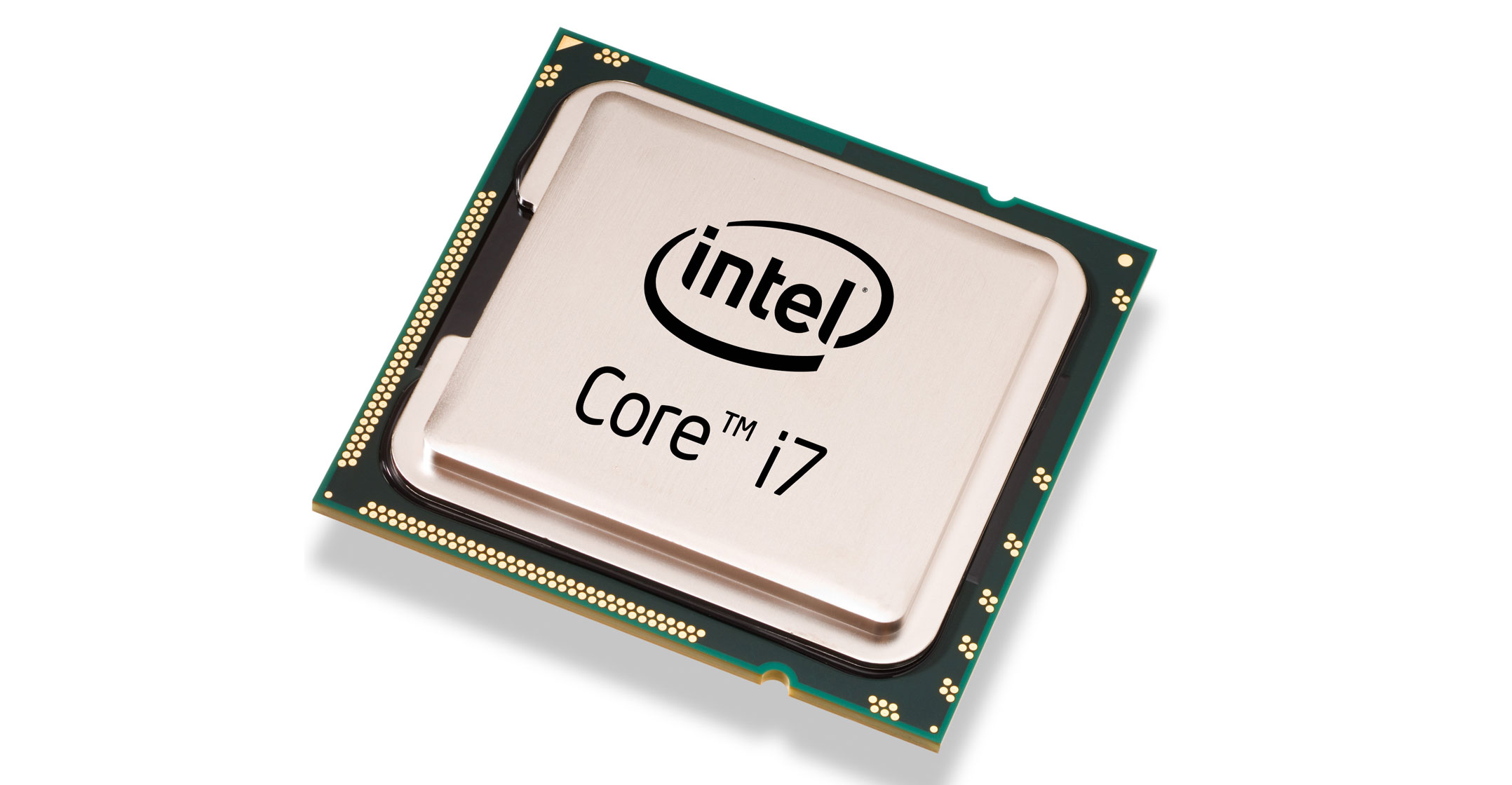
    Intel said on Wednesday that most of the processors running the world’s computers and smartphones have a feature that makes them susceptible to attack.

    The largest chip maker is working with rivals and partners on a fix, but the news sparked concern about this fundamental building block of the Internet, PCs and corporate networks.

    What’s the problem?

    Modern processors guess what they’ll have to do next and fetch the data they think they’ll need. That makes everything from supercomputers to smartphones zippy. Unfortunately, as Google researchers discovered, it also provides a way for bad actors to read data that had been thought to be secure. In a worst-case scenario that would let someone access your passwords.

    How bad is it?

    This won’t stop your computer working and doesn’t provide an avenue for hackers to put malicious software on your machine. There’s been no report so far of anyone’s computer being attacked in this manner, but in theory this puts important data at risk. Hardware and chip-level security has long been pushed by the industry as more tamper-proof than software. Those claims may have been overstated.

    Why are we talking about this now?

    This vulnerability was discovered last year by people Google employs to find such issues before the bad guys do. Usually, solutions are developed in private and announced in a coordinated way. This time the news leaked before the companies involved had a chance to get a fix in place and investors initially panicked thinking it was all an Intel problem.

    What’s being done to fix it?

    Chip makers and operating system providers, such as Google and Microsoft, are rushing to create software patches that will close the potential window of attack. Intel said this industry-wide effort will roll out over the next few weeks. Amazon.com said “all but a small single-digit percentage” of its servers have already been protected. In a blog post, Google said its security teams immediately “mobilised to defend” its systems and user data. Some customers of Android devices, Google Chromebook laptops and its cloud services still need to take steps to patch security holes, the company said. Patches for Windows devices are out now and the company is patching its cloud services, Microsoft said in a statement.

    Is this an Intel problem only?

    Intel said it’s an issue for all modern processors. Rival AMD stated that its products are at “near zero risk”. ARM Holdings, which has chip designs that support all smartphones, said that, at worst, the vulnerability could “result in small pieces of data being accessed” and advised users of its technology to keep their software up to date. Google fingered all three companies.

    What will the fallout be?

    Some computers, mostly older ones, could be slowed down by the software patches that will make them more secure. Intel said that in common situations software might be slowed down by as much as 3% or not at all. But in other rare situations, performance might be reduced as much as 30%. The company doesn’t expect any financial impact and said it thinks customers will keep buying. As the fixes haven’t been widely deployed yet, it’s unclear whether anyone will even notice or whether computer slowdowns will be widespread. Intel has only done lab tests.  — Reported by Ian King, with assistance from Dina Bass and Mark Bergen, (c) 2017 Bloomberg LP

    Follow TechCentral on Google News Add TechCentral as your preferred source on Google


    AMD Google Intel Microsoft top
    WhatsApp YouTube
    Share. Facebook Twitter LinkedIn WhatsApp Telegram Email Copy Link
    Previous ArticleIntel admits range of chips vulnerable to hack
    Next Article China to curb power to some bitcoin miners

    Related Posts

    Absa's AI is writing its code and answering its calls - Johnson Idesoh

    Absa’s AI is writing its code and answering its calls

    19 August 2026
    Your iPhone is about to get a massive upgrade

    Your iPhone is about to get a massive upgrade

    18 August 2026
    Musk's Terafab: 1 300 Loftus Versfeld pitches under one roof

    Musk’s Terafab: 1 300 Loftus Versfeld pitches under one roof

    13 August 2026
    Company News
    Smarter operations take centre stage at Electra Mining Africa 2026

    Smarter operations take centre stage at Electra Mining Africa 2026

    20 August 2026
    Fidelity turns to Sigfox to spot fires before they start

    Fidelity turns to Sigfox to spot fires before they start

    19 August 2026
    Paratus Rwanda marks first year with AfPIF opening reception

    Paratus Rwanda marks first year with AfPIF opening reception

    18 August 2026
    Opinion
    The author, Jannie van Zyl

    Selling vapour is corporate suicide in slow motion

    16 July 2026
    Brazil's online gambling crackdown is a lesson for South Africa

    How Amazon outmanoeuvred Starlink in South Africa

    15 July 2026
    The Popia problem with agentic AI - Herman Haasbroek

    The Popia problem with agentic AI

    14 July 2026

    Subscribe to Updates

    Get the best South African technology news and analysis delivered to your e-mail inbox every morning.

    Latest Posts
    South Africa to get a new national 5G broadband network - Iain Stevenson

    South Africa to get a new national 5G broadband network

    20 August 2026
    How Comsol turned 60MHz into a national 5G bet - Iain Stevenson

    How Comsol turned 60MHz into a national 5G bet

    20 August 2026
    South Africa's AI neutrality has not yet been tested - Solly Malatsi

    South Africa’s AI neutrality has not yet been tested

    20 August 2026
    Bitcoin roars back to life after Trump pushes Clarity Act - DOnald Trump

    Bitcoin roars back to life after Trump pushes Clarity Act

    20 August 2026
    © 2009 - 2026 NewsCentral Media
    Built and maintained by Chronon
    • Cookie policy (ZA)
    • TechCentral – privacy and Popia

    Type above and press Enter to search. Press Esc to cancel.

    Manage consent

    TechCentral uses cookies to enhance its offerings. Consenting to these technologies allows us to serve you better. Not consenting or withdrawing consent may adversely affect certain features and functions of the website.

    Functional Always active
    The technical storage or access is strictly necessary for the legitimate purpose of enabling the use of a specific service explicitly requested by the subscriber or user, or for the sole purpose of carrying out the transmission of a communication over an electronic communications network.
    Preferences
    The technical storage or access is necessary for the legitimate purpose of storing preferences that are not requested by the subscriber or user.
    Statistics
    The technical storage or access that is used exclusively for statistical purposes. The technical storage or access that is used exclusively for anonymous statistical purposes. Without a subpoena, voluntary compliance on the part of your Internet Service Provider, or additional records from a third party, information stored or retrieved for this purpose alone cannot usually be used to identify you.
    Marketing
    The technical storage or access is required to create user profiles to send advertising, or to track the user on a website or across several websites for similar marketing purposes.
    • Manage options
    • Manage services
    • Manage {vendor_count} vendors
    • Read more about these purposes
    View preferences
    • {title}
    • {title}
    • {title}