Close Menu
TechCentralTechCentral

    Subscribe to the newsletter

    Get the best South African technology news and analysis delivered to your e-mail inbox every morning.

    Facebook X (Twitter) YouTube LinkedIn
    WhatsApp Facebook X (Twitter) LinkedIn YouTube
    TechCentralTechCentral
    • News
      VALR and Luno lead public revolt against treasury's crypto draft

      VALR and Luno lead public revolt against treasury’s crypto draft

      9 September 2026

      Dis-Chem gets serious about e-commerce – again

      8 September 2026
      Shoprite's CTO is thinking of a future where new recruits arrive with their own AI agents - Chris Shortt

      Shoprite’s CTO is thinking of a future where new recruits arrive with their own AI agents

      8 September 2026
      Rubicon's EV charging network is profitable - and growing fast - Watts & Wheels

      Rubicon’s EV charging network is profitable – and growing fast

      8 September 2026
      Vodacom recruits former JSE chief as chair succession begins - Leila Fourie

      Vodacom recruits former JSE chief as chair succession begins

      8 September 2026
    • World
      'This is not circular': Jensen Huang defends $3.5-billion MediaTek deal

      ‘This is not circular’: Jensen Huang defends $3.5-billion MediaTek deal

      2 September 2026
      AI-generated music banned from Australian charts

      AI-generated music banned from Australian charts

      26 August 2026
      Traders brace for a R4.5-trillion swing in Nvidia's value

      Traders brace for a R4.5-trillion swing in Nvidia’s value

      25 August 2026
      Russia building its own Starlink - and faster than expected - Vadym Skibitskyi

      Russia building its own Starlink – and faster than expected

      11 August 2026
      Meta AI will now tell parents if their teen is in crisis

      Meta AI will now tell parents if their teen is in crisis

      17 July 2026
    • In-depth
      Google DeepMind CEO Demis Hassabis. Image: John Sears

      The plan to stop AI from breaking the world

      16 July 2026
      The internet has a Strait of Hormuz problem

      The internet has a Strait of Hormuz problem

      15 July 2026
      AI boom sparks rally, frenzy and fear

      AI boom sparks rally, frenzy and fear

      11 June 2026
      Every plug-in hybrid on sale in South Africa, ranked by price - Lamborghini Temerario

      Every plug-in hybrid on sale in South Africa, ranked by price

      7 June 2026
      What Wi-Fi 8 will mean for wireless networks

      What Wi-Fi 8 will mean for wireless networks

      1 June 2026
    • TCS
      Winstone Jordaan on building a national EV charging network

      Winstone Jordaan on building a national EV charging network

      2 September 2026
      Watts & Wheels S1E8: 'Tesla lands in Africa, just not here'

      Watts & Wheels S1E8: ‘Tesla lands in Africa, just not here’

      24 August 2026
      TCS | Herotel CEO Van Zyl Botha on beating Starlink to South Africa

      TCS | Herotel CEO Van Zyl Botha on beating Starlink to South Africa

      14 August 2026
      Meet the CIO | Discovery's Derek Wilcocks on AI, guardrails and growth

      Meet the CIO | Derek Wilcocks on how AI personalised Vitality

      13 August 2026
      TCS | Money just became native to the internet - Steven Boykey Sidley

      TCS | Money just became native to the internet – Steven Boykey Sidley

      12 August 2026
    • Opinion
      The fragile joint in the Capitec machine - Pambos Soteriades

      The R197-billion market the banks can’t reach

      25 August 2026
      South African tech's compounding debt problem - Jannie van Zyl

      Management consulting as we know it is over

      21 August 2026
      South African tech's compounding debt problem - Jannie van Zyl

      The most dangerous customer is the quiet one

      10 August 2026
      South African tech's compounding debt problem - Jannie van Zyl

      South African tech’s compounding debt problem

      29 July 2026
      The fragile joint in the Capitec machine - Pambos Soteriades

      Best network, worst vibes: the puzzle of SA telecoms

      20 July 2026
    • Company Hubs
      • 1Stream
      • Africa Data Centres
      • AfriGIS
      • Altron Digital Business
      • Altron Document Solutions
      • Altron Group
      • Arctic Wolf
      • Ascent Technology
      • AvertITD
      • BBD
      • Braintree
      • CallMiner
      • CambriLearn
      • CM.com
      • Contactable
      • CYBER1 Solutions
      • Digicloud Africa
      • Digimune
      • Domains.co.za
      • ESET
      • Euphoria Telecom
      • HOSTAFRICA
      • Incredible Business
      • iONLINE
      • IQbusiness
      • Iris Network Systems
      • Kaspersky
      • LSD Open
      • Mitel
      • NEC XON
      • Netstar
      • Network Platforms
      • Next DLP
      • Ovations
      • Paracon
      • Paratus
      • Q-KON
      • SevenC
      • SkyWire
      • Solid8 Technologies
      • Telit Cinterion
      • Telviva
      • Tenable
      • Vertiv
      • Videri Digital
      • Vodacom Business
      • Vox
      • Wipro
      • Workday
      • XLink
    • Sections
      • AI and machine learning
      • Banking
      • Broadcasting and Media
      • Cloud services
      • Contact centres and CX
      • Cryptocurrencies
      • Education and skills
      • Electronics and hardware
      • Energy and sustainability
      • Enterprise software
      • Financial services
      • HealthTech
      • Information security
      • Internet and connectivity
      • Internet of Things
      • Investment
      • IT services
      • Lifestyle
      • Policy and regulation
      • Public sector
      • Retail and e-commerce
      • Satellite communications
      • Science
      • SMEs and start-ups
      • Social media
      • Talent and leadership
      • Telecoms
      • Watts & Wheels
    • Events
    • Advertise
    TechCentralTechCentral
    Home » Sections » Electronics and hardware » Reports of the smartphone’s impending death are greatly exaggerated

    Reports of the smartphone’s impending death are greatly exaggerated

    AI wearables are advancing fast, but affordability and functionality will keep smartphones firmly in charge for now.
    By Tinashe Mazodze28 January 2026
    Twitter LinkedIn Facebook WhatsApp Email Telegram Copy Link
    Get breaking news on WhatsApp

    Reports of the smartphone's impending death are greatly exaggerated

    Will AI devices, like the ones under development by former Apple design chief Jony Ive at OpenAI, displace smartphones in the coming years as the primary way people interact with technology and the internet?

    It’s an intriguing question, and it’s an area where companies like OpenAI and Meta Platforms are making huge bets – billions of dollars in the case of Meta.

    OpenAI CEO Sam Altman has confirmed the company is working on a screen-free AI device designed by Ive while Meta has expanded sales of AI-powered smart glasses and reduced focus on virtual reality headsets. Amazon, meanwhile, has integrated its upgraded Alexa system into its wearables, including smart glasses and earbuds.

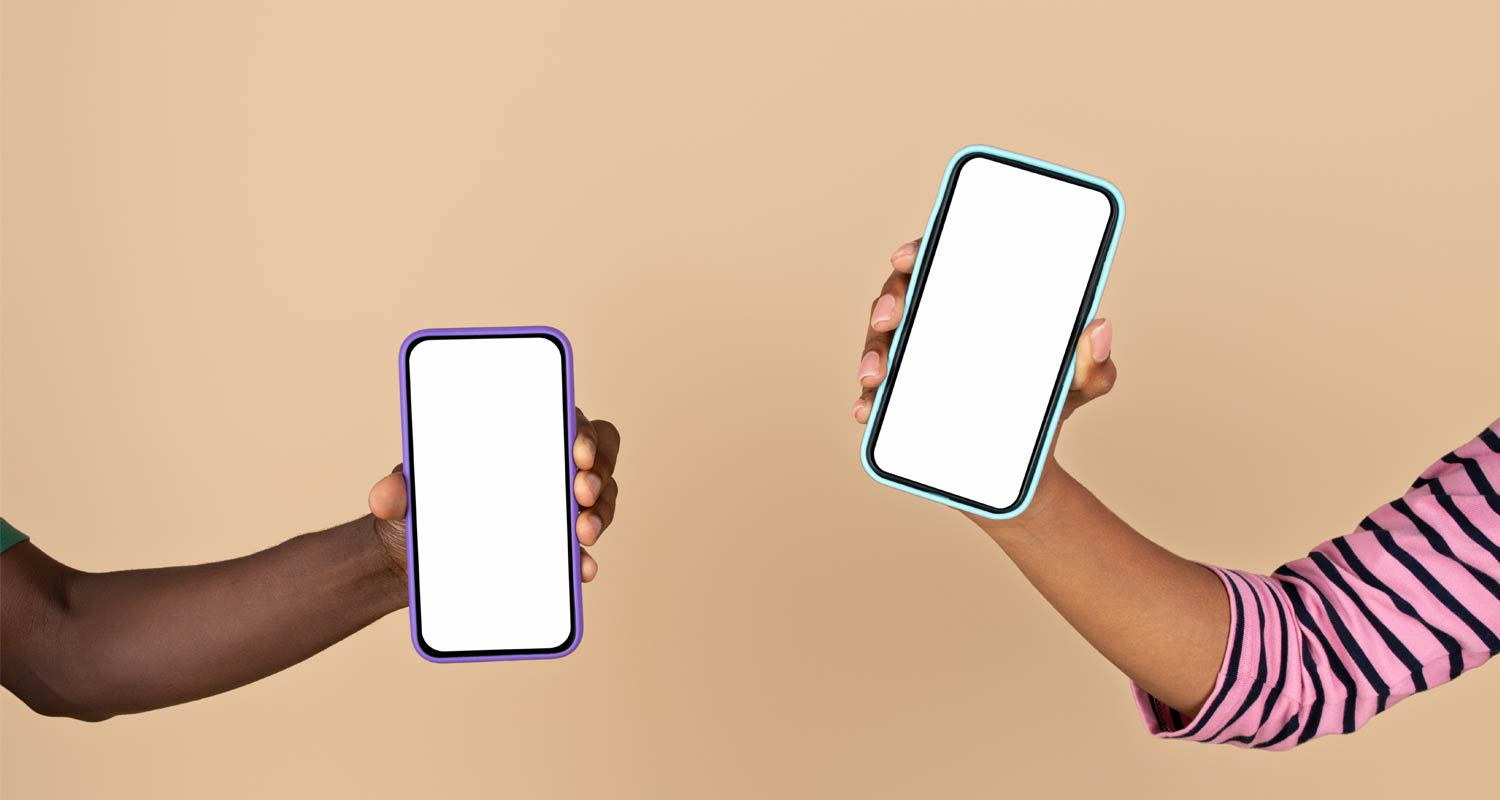
    Wearable devices are becoming more common as people look for quicker ways to do everyday tasks

    But will these developments eventually lead to the development of a new product category that makes the smartphone irrelevant – or at least, less relevant?

    Samsung Electronics is not convinced, downplaying claims that smartphones are living on borrowed time and countering predictions from tech leaders – including Nokia CEO Pekka Lundmark, Elon Musk and Meta Platforms boss Mark Zuckerberg – who have suggested wearables and embedded devices could replace phones within a decade.

    “Smartphones are not ending,” Justin Hume, vice president of Samsung Mobile South Africa, told TechCentral this week. “They remain the primary personal device.”

    He noted that predictions often ignore on-the-ground realities, especially in emerging markets. “2G networks still operate across Africa. Affordability decides adoption.”

    More natural

    Wearable devices are becoming more common as people look for quicker ways to do everyday tasks. Smartwatches and payment rings handle small actions without opening a phone. Tech companies see this shift as a chance to reduce screen time and make technology feel more natural. The growth of wearables shows change in how people use devices, and does not necessarily portend the end of smartphones.

    VezoRing is a South African fintech startup focused on wearable payments. The company makes battery-free payment rings that allow users to pay and share details with a tap. VezoRing co-founders Jake Pinkus and Lawrence Baker think wearables will grow, but replacing smartphones anytime soon is unlikely.

    Read: Apple tops global smartphone rankings in 2025

    Pinkus said the shift to wearables and embedded tech is the “next logical step”, but stressed phones remain necessary for screens and communication. Baker said adoption, not innovation, is the limiting factor. “The tech is there,” he said. “People are not.”

    Market data supports Samsung’s position. HSBC estimates there are about 15 million smart glasses users worldwide, while Apple sold roughly 250 million iPhones last year. The figures were cited in an article published by The Economist last week that examined whether smartphones will survive the AI age.

    Samsung's Justin Hume
    Samsung’s Justin Hume

    Economic pressures are affecting the smartphone industry. Counterpoint Research analyst Yang Wang told The Economist that global smartphone shipments are expected to fall by 6% in 2026. Rising memory chip prices have increased production costs for a typical device by about US$70. Chip supply is also shifting towards AI data centres as semiconductor foundries prioritise higher-margin AI processors for companies like Nvidia, reducing capacity for smartphone manufacturers.

    Platform control is another key factor. Apple charges developers up to 30% on app purchases, while AI firms are trying to reach users directly, avoiding app store fees and ecosystem restrictions.

    Samsung’s Hume emphasised that AI complements smartphones rather than replacing them. “AI strengthens the phone. Data stays personal,” he said.

    The next few years will test the balance between traditional smartphones and emerging AI devices

    The Economist concluded that AI is changing the balance of power within the Apple/Google ecosystem rather than eliminating smartphones. The competition now focuses on software, data and user relationships.

    Industry experts predict the next few years will test the balance between traditional smartphones and emerging AI devices. For now, adoption rates, affordability and core functionality will see smartphones continuing to function as the default personal computing device for the vast majority of users.  – © 2026 NewsCentral Media

    Get breaking news from TechCentral on WhatsApp. Sign up here.

    Add TechCentral as a preferred source on GoogleFollow TechCentral on Google NewsGet breaking news on WhatsApp


    Apple Jake Pinkus Jony Ive Justin Hume Lawrence Baker OpenAI Samsung VezoRing
    WhatsApp YouTube
    Share. Facebook Twitter LinkedIn WhatsApp Telegram Email Copy Link
    Previous ArticlePopia is strong, Paia needs reform, says Information Regulator
    Next Article Chinese car makers flood South Africa while factories lag

    Related Posts

    Huawei Mate XT2 tri-fold smartphone shown open at the Huawei launch event

    Huawei, Xiaomi crash Apple’s party with new foldable flagships

    8 September 2026
    UN warns AI could disrupt democracy itself - Mohamed Azakir

    UN warns AI could disrupt democracy itself

    7 September 2026
    OpenAI logo signage, illustrating the launch of the GPT-6 Astra model

    OpenAI chases Anthropic’s enterprise lead with GPT-6 Astra

    4 September 2026
    Company News
    How dual-source technology is changing laser engraving

    How dual-source technology is changing laser engraving

    8 September 2026
    Why SA homes need better Wi-Fi, not faster internet - Vox Telecom

    Why SA homes need better Wi-Fi, not faster internet

    8 September 2026
    Most enterprises don't have an identity strategy - they have a patchwork - Contactable

    Most enterprises don’t have an identity strategy – they have a patchwork

    7 September 2026
    Opinion
    The fragile joint in the Capitec machine - Pambos Soteriades

    The R197-billion market the banks can’t reach

    25 August 2026
    South African tech's compounding debt problem - Jannie van Zyl

    Management consulting as we know it is over

    21 August 2026
    South African tech's compounding debt problem - Jannie van Zyl

    The most dangerous customer is the quiet one

    10 August 2026

    Subscribe to Updates

    Get the best South African technology news and analysis delivered to your e-mail inbox every morning.

    Latest Posts
    VALR and Luno lead public revolt against treasury's crypto draft

    VALR and Luno lead public revolt against treasury’s crypto draft

    9 September 2026

    Dis-Chem gets serious about e-commerce – again

    8 September 2026
    Shoprite's CTO is thinking of a future where new recruits arrive with their own AI agents - Chris Shortt

    Shoprite’s CTO is thinking of a future where new recruits arrive with their own AI agents

    8 September 2026
    Rubicon's EV charging network is profitable - and growing fast - Watts & Wheels

    Rubicon’s EV charging network is profitable – and growing fast

    8 September 2026
    © 2009 - 2026 NewsCentral Media
    Built and maintained by Chronon
    • Cookie policy (ZA)
    • TechCentral – privacy and Popia

    Type above and press Enter to search. Press Esc to cancel.

    Manage consent

    TechCentral uses cookies to enhance its offerings. Consenting to these technologies allows us to serve you better. Not consenting or withdrawing consent may adversely affect certain features and functions of the website.

    Functional Always active
    The technical storage or access is strictly necessary for the legitimate purpose of enabling the use of a specific service explicitly requested by the subscriber or user, or for the sole purpose of carrying out the transmission of a communication over an electronic communications network.
    Preferences
    The technical storage or access is necessary for the legitimate purpose of storing preferences that are not requested by the subscriber or user.
    Statistics
    The technical storage or access that is used exclusively for statistical purposes. The technical storage or access that is used exclusively for anonymous statistical purposes. Without a subpoena, voluntary compliance on the part of your Internet Service Provider, or additional records from a third party, information stored or retrieved for this purpose alone cannot usually be used to identify you.
    Marketing
    The technical storage or access is required to create user profiles to send advertising, or to track the user on a website or across several websites for similar marketing purposes.
    • Manage options
    • Manage services
    • Manage {vendor_count} vendors
    • Read more about these purposes
    View preferences
    • {title}
    • {title}
    • {title}