Persistent delays in announcing the financial close of the first 28 large renewable energy power plants in SA is cause for grave concern.
These projects had navigated the first window of the country’s Renewable Energy Independent Power Producer’s Procurement Programme (REIPPP) using a public-private partnership model based on a competitive bidding process governed by a request for proposals (RFP). The RFP is characterised by a very strict timetable.
There are several reasons for us all to be concerned. These renewable power plants will be the first independent (non-Eskom) producers of electricity in SA at any scale.
Right now, the country needs additional electricity generation capacity. SA, through Eskom has a generation capacity of roughly 37GW, but we need another 10GW almost immediately if we want economic growth.
The REIPPP also introduces a model for public-private partnerships that may have wider application for SA’s R3 trillion infrastructure build-out. For this reason, it is vital that the REIPPP produces its intended results.
It is difficult to determine the reasons for the delays, but it appears there are numerous outstanding issues related to shareholder arrangements, land rights, grid connections, department of energy consents and financing across most of the proposed projects. Without resolution of all of these, the banks will not provide the financing needed for them to proceed.
That renewables must be part of the SA electricity generation mix is set out in the Integrated Resource Plan of 2010. The commitment to invest in renewables is bolstered by the country’s international commitments to reduce carbon dioxide emissions but also by the conditions imposed by the World Bank’s loan to finance the Medupi and Kusile coal-fired power stations. SA is therefore compelled to introduce renewables whether one accepts the overwhelming scientific evidence that global warming is caused by increased CO₂ levels in the atmosphere or not, or whether global warming itself presents a threat to the global environment or not.
SA’s high carbon emissions
SA has one of the worst CO₂ emissions profile in the world. The reason for this is that very cheap electricity fuelled the country’s industrialisation from the 1930s onwards. This has been possible because of abundant and cheap (near the surface) coal resources. The result of this is that, of the current roughly 37GW in electricity generation capacity, 93% of it is from coal-fired stations, 5% from Koeberg and the balance from hydro and gas.
India generates 69% of its electricity from coal and China 79%, but the US is just 49% and the EU 28%. SA emits the highest CO₂, just short of 1kg of the stuff, per kWh generated. The US’s total emissions are almost half of that per kWh, the EU, less than half.
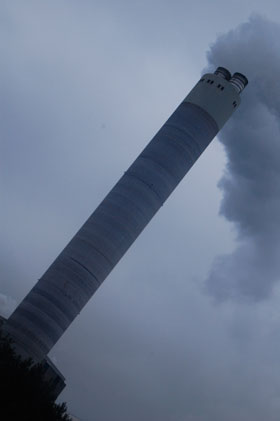
The average SA household consumes 2 400kWh of electricity annually. Our total current CO₂ emissions are 237m tonnes per year.
The REIPPP is set up to select projects from three main bidding windows, which will hopefully procure 3 725MW of “generating capacity” at an estimated total investment of R75bn. However, to put all this in context, the Medupi and Kusile coal fired power stations (also suffering persistent delays in construction) will have a capacity of more than 4 700MW each. So, these are very small steps.
Going forward, the Integrated Resource Plan provides that 42% of new electricity generation should come from renewables. If this is achieved, then renewables would constitute 9% of SA’s electricity energy mix by 2030. Measuring renewables against coal (or nuclear) is not easy. Renewables generally do not have storage, so they only generate electricity when the wind is blowing or the sun is shining. Coal or baseload generators have a different problem. In general terms, they can only produce the same amount of electricity all the time.
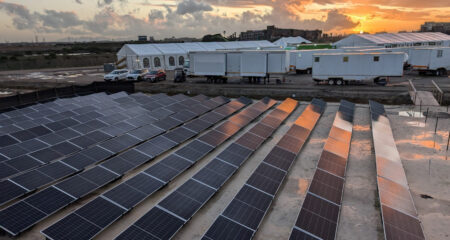
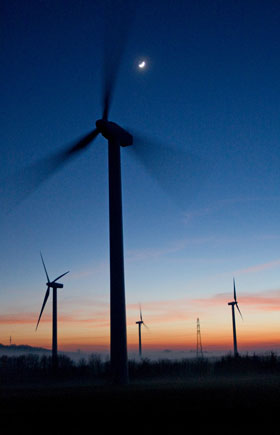
The two biggest technologies to be introduced under REIPPP, large-scale photovoltaic (PV) and onshore wind turbines, are settled technologies. PV plants use silicon-crystal cells that operate as a semiconductor: when sunlight strikes the cell, a certain portion of it is absorbed within the semiconductor, knocking electrons loose into an electric field that acts to force electrons freed by sunlight to flow in a certain direction, thereby generating electricity. This current must then be converted to alternating current (AC) before it can be introduced into the grid.
Wind turbines generate AC directly by having the turbine, connected through a gearbox to a generator.
A third technology, concentrated solar, uses mirrors to concentrate sunlight (heat) onto a specific point, typically a container filled with a salt mixture, which super-heats it. This heat is then combined with water to produce steam to turn a generator using the same electricity generation principles as coal-fired or nuclear plants.
The advantage of super-heated salt is that it can be employed to produce electricity around the clock, not just when the sun is up.
Current PV panels can convert about 10% of the sunlight that hits them and there are losses thereafter. There is some excitement here: in experimental lab conditions, scientists have recently succeeded in pushing this figure up to 40%. Already in 1919, a German Professor Betz determined the maximum theoretical efficiency limit for wind turbines to be 59%. This, and transmission losses (via gearboxes and the like), mean the best wind turbines today are able to be 30% efficient. These numbers are not that different from the efficiencies in relation to the power source in coal-fired stations or, say, an internal combustion engine.
The Holy Grail for most renewables is not the generating technology, but rather storage. In countries such as Brazil and Norway, which have large amounts of fresh water and a matching topography, pumped storage via hydroelectric magazines works. Elsewhere, any practical solution seems to be far into the future.
How the RFP works
The RFP for the renewable energies procurement programme, developed by the department of energy in consultation with several specialist consultants, procures renewable energy via a competitive bidding process through the three bidding windows.
The first bidding window closed at the end of 2011 and the 28 projects selected from that bidding window now need to close. In the broadest terms, this is how the whole thing works:
- Developers (the entrepreneurs of this story) go out and find the best sites for their particular technology (mostly sun and wind). Proximity to an Eskom substation into which electricity can be fed is a very important criterion.
- Having done so, these developers set about measuring the “resource” and also undertake comprehensive and expensive environmental impact assessments. Everything has to be covered and all necessary approvals have to be done.
- Provisional agreements with Eskom for the feed-in need to be concluded.
- Later in the process, the shareholding mix (counter parties), the chosen engineering procurement and construction partner as well as the operations and maintenance partner all have to be nailed down.
- Crucially, all the funding and debt arrangements have to be sorted out.
Most of the world’s biggest developers, equipment suppliers, contractors and renewable financiers are all in SA, putting together and punting their projects through these bidding windows.
Bids are assessed on the basis of 70% being allocated to price and 30% to other factors such as local procurement, black economic empowerment, skills development, job creation, enterprise development, socio-economic development ,and the like.
The bid tariff — the price at which power can be delivered to the grid — is a key driver. The REIPPP has a competitive bidding process, so if your tariff is too high, you will not be selected. A winning bidder gets to have its price fixed and indexed against inflation over 20 years. Because, technically, these power plants are relatively simple and use proven technologies and payment for their power, output is guaranteed. As much as 80% of the financing for them is obtained through local banks which, in turn, use principles not dissimilar to commercial property finance to provide the money required.
On the other hand, investors have a minimum return in mind. The “quality” of the resource (sun or wind) drives the bid tariffs. Distribution pricing is determined on the basis that the resource has a 90% chance of performing better over the life of the plant.
Many aspirant bidders do not even make it to bid. The record so far shows that of the projects bid for, only one in four get accorded “preferred bidder status”.
This status entitles them to apply for a generating licence and finalise all the arrangements needed to finance and build the facility (closing) within, say, 18 months. Once closing occurs, the developer takes its fee, typically 5% of the value of the project value.
SA’s REIPPP may be the most sophisticated procurement process for renewables in the world. Several million rand was spent on designing and implementing it. Right now, it may also be the largest. The timelines are brutal and bid documentation runs to several thousand pages. These projects are huge, costing easily a billion rand apiece for a medium sized facility and three times that for the biggest projects.
Essentially, to be bid-compliant, the proposed project must be “shovel ready”. The general idea for reaching financial close should be ticking off several “conditions precedent” without too much trauma. Clearly, this has not played out as planned.
Fortuitous timing
The competitive bidding process is already producing results aided by fortuitous timing. Anticipating massive increases in renewable plant installations around the world, manufacturers scaled up massively and, as with other commodity-type products in other sectors, the enormous Chinese manufacturing engine started to produce the components at a massive scale.
The financial crisis in 2008 forced governments to scale back on new renewable energy plants and now, globally, there is huge overcapacity in the manufacturing of renewable energy components. This has already forced several manufacturers to the wall and is also now the subject of a trade dispute between the US and China, with the Americans accusing the Chinese of dumping PV panels on the US market. One benefit of this is rapidly falling component prices. Bid window one (now being closed) saw PV’s average tariff at R2,75/kWh delivered to the grid. By bid window two, this had fallen by 40% to R1,65/kWh.
Wind energy production in bid window one averaged R1,14/kWh, which has now fallen by more than 20% to 89c/kWh. PV is now already below the current Eskom blended retail tariff, while wind is now well below this.
Increases in Eskom’s tariffs next year will make these renewables even more competitive, even before any possible carbon tax on top of that.
That the REIPPP succeeds in its objectives is important for the country as a whole. We can say this: already a whole new renewables ecosystem of capacity and skills has sprung up and SA has taken its first steps to diversify its power generation mix. More importantly, the programme gives us an opportunity to see how public-private partnerships can work and hopefully where they are most useful.
SA’s R3 trillion infrastructure spending programme will need these partnerships if this infrastructure budget is to be spent effectively. If we cannot make the first window of the REIPPP work, the failures will telescope not only into the rest of the renewables programme, but will send a message around the world: SA is too complicated and too risky for big, long-term inward investments. One trusts that everyone involved in the close of window one will bear this in mind.
- Dirk de Vos is an independent commentator and head of QED Solutions