Close Menu
TechCentralTechCentral

    Subscribe to the newsletter

    Get the best South African technology news and analysis delivered to your e-mail inbox every morning.

    Facebook X (Twitter) YouTube LinkedIn
    WhatsApp Facebook X (Twitter) LinkedIn YouTube
    TechCentralTechCentral
    • News
      'Construction mafia and spies': alarm over new Icasa rules

      ‘Construction mafia and spies’: alarm over new Icasa rules

      7 July 2026
      GTA VI and the weight of hype

      GTA VI and the weight of hype

      7 July 2026
      South Africa can still catch the AI wave - here's how

      South Africa can still catch the AI wave – here’s how

      7 July 2026
      World's first teen social media ban is failing

      World’s first teen social media ban is failing

      7 July 2026
      Total grid blackout in Zimbabwe

      Total grid blackout in Zimbabwe

      7 July 2026
    • World
      Swingeing jobs cuts at Microsoft's Xbox unit

      Swingeing jobs cuts at Microsoft’s Xbox unit

      6 July 2026

      SK Hynix ends Samsung’s 26-year reign at the top

      22 June 2026
      Google on the hook for what its AI tells users, court rules

      Google on the hook for what its AI tells users, court rules

      15 June 2026
      How Russians juggle VPNs to outwit the Kremlin

      How Russians juggle VPNs to outwit the Kremlin

      15 June 2026
      Amazon CEO flagged Anthropic AI risks to Washington - Andy Jassy

      Amazon CEO flagged Anthropic AI risks to Washington

      14 June 2026
    • In-depth
      AI boom sparks rally, frenzy and fear

      AI boom sparks rally, frenzy and fear

      11 June 2026
      Every plug-in hybrid on sale in South Africa, ranked by price - Lamborghini Temerario

      Every plug-in hybrid on sale in South Africa, ranked by price

      7 June 2026
      What Wi-Fi 8 will mean for wireless networks

      What Wi-Fi 8 will mean for wireless networks

      1 June 2026
      Alfa's electric rebel - Alfa Romeo Junior Elettrica Veloce

      Alfa’s electric rebel

      29 April 2026
      Africa switches on as Europe dims the lights

      Africa switches on as Europe dims the lights

      9 April 2026
    • TCS
      TCS+ | How Tracker is turning vehicle data into business strategy - Silvia Schollenberger

      TCS+ | How Tracker is turning vehicle data into business strategy

      1 July 2026
      TCS+ | IBM Bob: an AI-powered 'development partner' for the enterprise - David Spurway

      TCS+ | IBM Bob: an AI-powered development partner for the enterprise

      30 June 2026
      Watts & Wheels S1E6: 'A flawless Alfa and a bakkie that divides'

      Watts & Wheels S1E6: ‘A flawless Alfa and a bakkie that divides’

      17 June 2026
      Watts & Wheels S1E6: 'A flawless Alfa and a bakkie that divides'

      Watts & Wheels S1E5: ‘A Bentley of the bush and a car that swims’

      8 June 2026
      TCS | Charge's R1.8-billion bet on an off-grid EV future - Charge chairman Joubert Roux

      TCS | Charge’s R1.8-billion bet on an off-grid EV future

      18 May 2026
    • Opinion
      The author, Fanie van Rooyen

      The AI utopia South Africa can’t afford

      1 July 2026
      The author, Jannie van Zyl

      South Africa’s broadband future is being decided in orbit, not in Pretoria

      30 June 2026
      The author, Pambos Soteriades

      The pivot South Africa’s MVNOs cannot afford to miss

      23 June 2026
      Brazil's online gambling crackdown is a lesson for South Africa

      Brazil’s online gambling crackdown is a lesson for South Africa

      22 June 2026
      Finish the job Mandela started - Farzam Ehsani

      Finish the job Mandela started

      18 June 2026
    • Company Hubs
      • 1Stream
      • Africa Data Centres
      • AfriGIS
      • Altron Digital Business
      • Altron Document Solutions
      • Altron Group
      • Arctic Wolf
      • Ascent Technology
      • AvertITD
      • BBD
      • Braintree
      • CallMiner
      • CambriLearn
      • CM Telecom
      • Contactable
      • CYBER1 Solutions
      • Digicloud Africa
      • Digimune
      • Domains.co.za
      • ESET
      • Euphoria Telecom
      • HOSTAFRICA
      • Incredible Business
      • iONLINE
      • IQbusiness
      • Iris Network Systems
      • Kaspersky
      • LSD Open
      • Mitel
      • NEC XON
      • Netstar
      • Network Platforms
      • Next DLP
      • Ovations
      • Paracon
      • Paratus
      • Q-KON
      • SevenC
      • SkyWire
      • Solid8 Technologies
      • Telit Cinterion
      • Telviva
      • Tenable
      • Vertiv
      • Videri Digital
      • Vodacom Business
      • Wipro
      • Workday
      • XLink
    • Sections
      • AI and machine learning
      • Banking
      • Broadcasting and Media
      • Cloud services
      • Contact centres and CX
      • Cryptocurrencies
      • Education and skills
      • Electronics and hardware
      • Energy and sustainability
      • Enterprise software
      • Financial services
      • HealthTech
      • Information security
      • Internet and connectivity
      • Internet of Things
      • Investment
      • IT services
      • Lifestyle
      • Policy and regulation
      • Public sector
      • Retail and e-commerce
      • Satellite communications
      • Science
      • SMEs and start-ups
      • Social media
      • Talent and leadership
      • Telecoms
      • Watts & Wheels
    • Events
    • Advertise
    TechCentralTechCentral
    Home » Sections » Satellite communications » Starlink hype vs reality in South Africa

    Starlink hype vs reality in South Africa

    Starlink dominates South African headlines, but pricing and market realities raise questions about who it's really for.
    By Jens Langenhorst26 January 2026
    Twitter LinkedIn Facebook WhatsApp Email Telegram Copy Link
    News Alerts
    WhatsApp

    Starlink hype vs reality in South Africa

    South African media has been saturated with Starlink coverage for months. Every ministerial statement, every regulatory development, every parliamentary objection becomes headline news. Yet amid this relentless coverage, a curious question emerges: why Starlink specifically?

    The regulatory challenges facing Elon Musk’s satellite service aren’t unique. Major global technology companies have long navigated South Africa’s broad-based black economic empowerment frameworks when entering the market.

    According to Paul Colmer, executive nember at the Wireless Access Providers’ Association, what makes Starlink different is its need for a radio licence, which under the Electronic Communications Act requires 30% equity ownership by historically disadvantaged South Africans. SpaceX’s global policy prohibits local equity dilution, creating an impasse that played out in Government Gazettes, ministerial directives and parliamentary committee objections throughout 2025.

    The hype surrounding Starlink has overshadowed a more fundamental question: what is the actual addressable market

    In December 2025, communications minister Solly Malatsi issued a policy directive asking Icasa to align its regulations with the ICT BEE sector code, which recognises equity equivalent investment programmes (EEIPs) as an alternative to direct ownership.

    SpaceX has committed R2.5-billion in local investment, including R500-million to connect 5 000 schools with free internet and equipment. The ball now sits firmly in Icasa’s court – and regulatory processes aren’t resolved by ministerial finger-snapping, regardless of political pressure.

    But here’s what’s puzzling: OneWeb’s LEO services are already operational in South Africa through partnerships with Paratus, Q-KON Africa and others. Amazon Leo (previously Project Kuiper) is preparing to launch here, too. Yet these services generate minimal public interest. The hype surrounding Starlink has overshadowed a more fundamental question: what is the actual addressable market, and who really needs this service?

    The affordability question

    Starlink promises affordable broadband connectivity anywhere at fibre-like speeds. But the word “affordable” requires context. Published pricing in neighbouring Eswatini and Lesotho shows a monthly subscription costs between R900-R950, plus a R3 800 once-off equipment cost (for the Starlink Mini kit). These figures likely indicate what South Africans can expect.

    Compare this to fibre-to-the-home (FTTH) services, which typically cost around R950/month for uncapped 100Mbit/s connectivity. At its entry level, Starlink is therefore coming in at the higher end of the FTTH market, and pricing only goes up from there, making it comparatively less affordable.

    Read: Starlink risks ceding ground to rivals in South Africa amid licensing battle

    According to Icasa’s “State of the ICT Sector” report, South Africa has 2.7 million fixed broadband subscriptions, with 2.47 million being FTTH connections. A household committing to R950 monthly sits firmly in LSM7-10 brackets – those with at least R20 000 monthly income. In the 2023 tax year, 1.3 million people earning over R500 000 annually contributed 75% of all personal income tax.

    This suggests that between 1.3 million and 2.5 million households can afford premium internet subscriptions – and most already have them, either through FTTH or fixed-wireless services from local wireless internet service providers.

    Jens Langenhorst
    The author, Jens Langenhorst

    The data points to a sobering reality: the addressable market for Starlink broadband services in South Africa will be a fraction of middle-to-high income households. Some may switch providers, others may use it as backup or for mobile connectivity during travel. But these represent incremental additions, not a transformative market opportunity.

    South Africa has more than 19 million households. In lower LSM bands, innovative companies are already building fiber networks in townships and low-income areas. Fibertime has connected over 250 000 homes with uncapped 100Mbit/s at R5/day, targeting two million homes by 2028. TooMuchWifi serves over 70 communities in the Western Cape, providing uncapped internet to over a million users, also at R5/day.

    R5 daily equals R150 monthly – nowhere near Starlink territory at current pricing.

    The real opportunity

    Where Starlink’s value proposition becomes compelling is in areas where traditional infrastructure remains economically unviable: game farms, forestry stations, remote rural communities, villages and schools.

    This is where local wireless ISPs have a significant opportunity. Within its proposed equity equivalent obligations, Starlink has committed to providing free connectivity for 5 000 schools. But here’s the crucial detail: Starlink isn’t an infrastructure provider or a wireless ISP. It’s a satellite service delivering connectivity to a location – not a complete solution.

    This creates an ecosystem opportunity for local wireless ISPs to build infrastructure around these remote Starlink deployments. It’s not a box-drop solution; it’s about creating local- and wide-area networks on farms and at remote schools, establishing proper network management and providing ongoing technical services. The satellite terminal gets connectivity to the site – but someone needs to distribute that connectivity throughout the premises, maintain the equipment, troubleshoot issues and integrate it with existing systems.

    Read: Amazon Leo steps up to challenge Musk’s Starlink

    This is precisely why mobile provider solutions like fixed wireless and fibre haven’t succeeded in these regions. They treat remote deployments as drop-box solutions, delivering connectivity to a point without concerning themselves with last-mile distribution to every classroom, every house on a farm or every building in a village. Starlink will encounter the same limitations unless local connectivity providers are engaged to bridge the gap from the terminal to the actual devices people use.

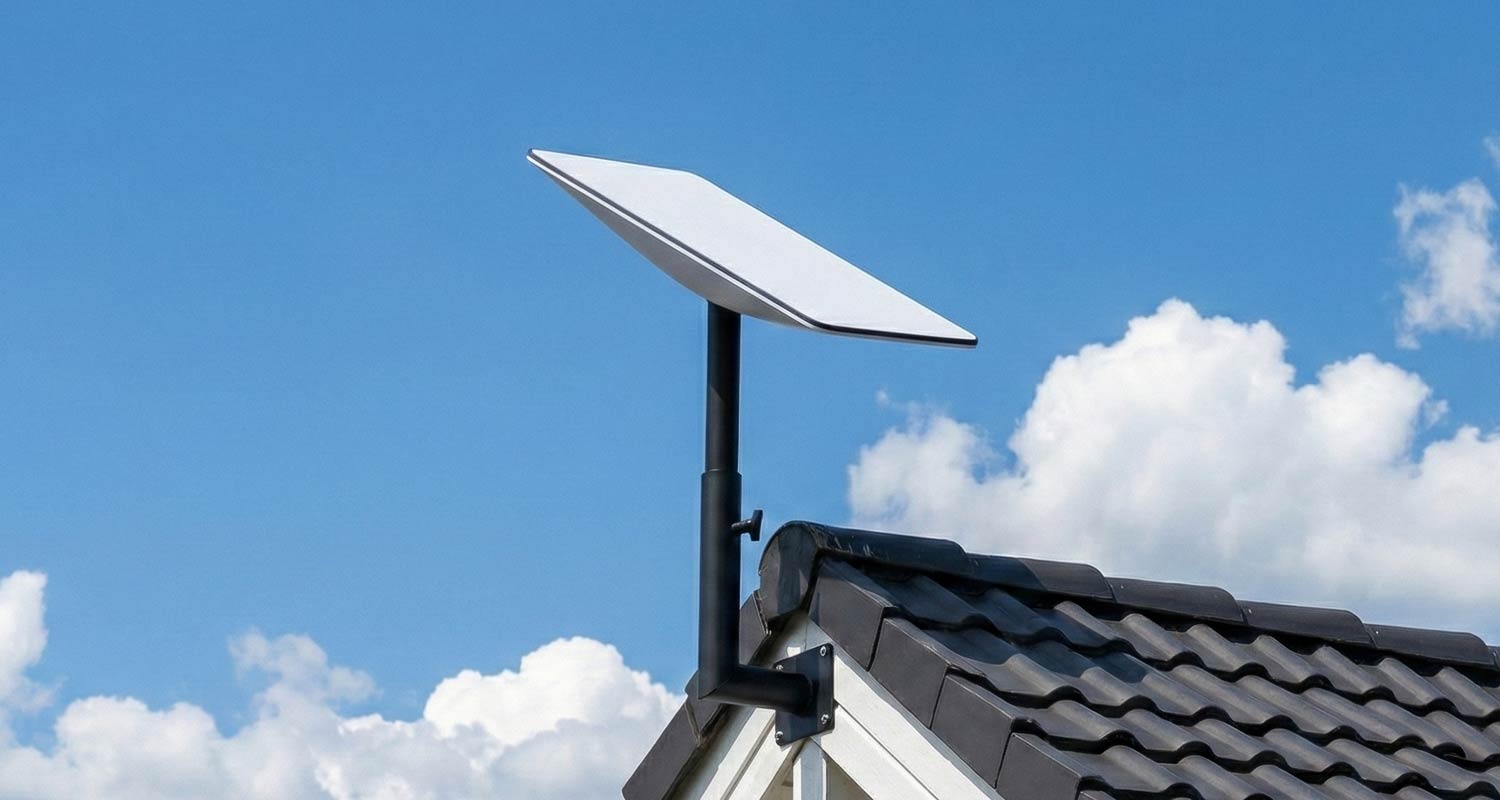
    Amazon Leo terminal on a rooftop
    Amazon Leo terminal on a rooftop

    For wireless ISPs, this represents a genuine business opportunity: not competing against Starlink, but complementing it by providing the infrastructure, management and support services that transform satellite connectivity into usable internet access for end users.

    Market context and competition

    Starlink reportedly has over seven million subscribers globally, making South Africa an attractive market even if only a fraction of households adopt the service. The demand was proven when over 12 000 “illegal” terminals were sold and activated in South Africa between 2023 and early 2024, demonstrating real appetite despite regulatory uncertainty.

    Will Starlink serve a purpose? Absolutely. Significant gaps exist in internet coverage across South Africa, particularly outside fibred urban and suburban areas. Is the South African market critical to Starlink? Perhaps less than the hype suggests.

    Extending these benefits across all economic segments will require targeted strategies…

    By the time political and regulatory processes conclude, other LEO providers – Amazon Leo and China’s Thousand Sails constellation – will be ready to compete. For Starlink, entering before these competitors gain traction matters strategically, but the market itself will be divided among multiple providers.

    Once LEO broadband satellite services become fully operational in South Africa, they’ll serve a significant portion of the population, though universal access remains unlikely.

    Given current pricing structures, extending these benefits across all economic segments will require targeted strategies tailored to different income levels – and crucially, local infrastructure partners who can turn satellite connectivity into meaningful internet access for communities that need it most.

    • The author, Jens Langenhorst, is specialist RF engineer and vice chairman of Wapa, the Wireless Access Providers’ Association

    Get breaking news from TechCentral on WhatsApp. Sign up here.

    Follow TechCentral on Google News Add TechCentral as your preferred source on Google


    Elon Musk Icasa Jens Langenhorst SpaceX Starlink Wapa Wireless Access Providers Association
    WhatsApp YouTube
    Share. Facebook Twitter LinkedIn WhatsApp Telegram Email Copy Link
    Previous ArticleRand breaks through R16/$ – and may have further to run
    Next Article Arctic Wolf expands leading Security Operations Warranty to South Africa

    Related Posts

    'Construction mafia and spies': alarm over new Icasa rules

    ‘Construction mafia and spies’: alarm over new Icasa rules

    7 July 2026
    World's first teen social media ban is failing

    World’s first teen social media ban is failing

    7 July 2026
    Malatsi comes out swinging in Starlink lobbying row - Solly Malatsi

    Malatsi comes out swinging in Starlink lobbying row

    6 July 2026
    Company News
    Finding focus: a strategic approach to cybersecurity for SMBs - Kaspersky

    Finding focus: a strategic approach to cybersecurity for SMBs

    6 July 2026
    Why voice-first communication matters more in the AI era - Mitel

    Why voice-first communication matters more in the AI era

    6 July 2026
    Friendship was the hard part of online school - until now - CambriLearn

    Friendship was the hard part of online school – until now

    6 July 2026
    Opinion
    The author, Fanie van Rooyen

    The AI utopia South Africa can’t afford

    1 July 2026
    The author, Jannie van Zyl

    South Africa’s broadband future is being decided in orbit, not in Pretoria

    30 June 2026
    The author, Pambos Soteriades

    The pivot South Africa’s MVNOs cannot afford to miss

    23 June 2026

    Subscribe to Updates

    Get the best South African technology news and analysis delivered to your e-mail inbox every morning.

    Latest Posts
    'Construction mafia and spies': alarm over new Icasa rules

    ‘Construction mafia and spies’: alarm over new Icasa rules

    7 July 2026
    GTA VI and the weight of hype

    GTA VI and the weight of hype

    7 July 2026
    South Africa can still catch the AI wave - here's how

    South Africa can still catch the AI wave – here’s how

    7 July 2026
    World's first teen social media ban is failing

    World’s first teen social media ban is failing

    7 July 2026
    © 2009 - 2026 NewsCentral Media
    Built and maintained by Chronon
    • Cookie policy (ZA)
    • TechCentral – privacy and Popia

    Type above and press Enter to search. Press Esc to cancel.

    Manage consent

    TechCentral uses cookies to enhance its offerings. Consenting to these technologies allows us to serve you better. Not consenting or withdrawing consent may adversely affect certain features and functions of the website.

    Functional Always active
    The technical storage or access is strictly necessary for the legitimate purpose of enabling the use of a specific service explicitly requested by the subscriber or user, or for the sole purpose of carrying out the transmission of a communication over an electronic communications network.
    Preferences
    The technical storage or access is necessary for the legitimate purpose of storing preferences that are not requested by the subscriber or user.
    Statistics
    The technical storage or access that is used exclusively for statistical purposes. The technical storage or access that is used exclusively for anonymous statistical purposes. Without a subpoena, voluntary compliance on the part of your Internet Service Provider, or additional records from a third party, information stored or retrieved for this purpose alone cannot usually be used to identify you.
    Marketing
    The technical storage or access is required to create user profiles to send advertising, or to track the user on a website or across several websites for similar marketing purposes.
    • Manage options
    • Manage services
    • Manage {vendor_count} vendors
    • Read more about these purposes
    View preferences
    • {title}
    • {title}
    • {title}