
Close Menu
TechCentralTechCentral

    Subscribe to the newsletter

    Get the best South African technology news and analysis delivered to your e-mail inbox every morning.

    Facebook X (Twitter) YouTube LinkedIn
    WhatsApp Facebook X (Twitter) LinkedIn YouTube
    TechCentralTechCentral
    • News
      Cell C boss buys into his own turnaround - Jorge Mendes

      Cell C boss buys into his own turnaround

      22 September 2026
      Nedbank: the cash economy won't die until digital ID arrives - Mfundo Nkuhlu

      Nedbank: the cash economy won’t die until digital ID arrives

      22 September 2026
      Warren Wheatley resigns as Africa Bitcoin CEO

      Warren Wheatley resigns as Africa Bitcoin CEO

      22 September 2026
      WeTransfer founder joins Prosus in AI leadership shake-up

      WeTransfer founder joins Prosus in AI leadership shake-up

      22 September 2026
      Bank Zero breaks even as Mukuru migration swells its base - Yatin Narsai

      Bank Zero breaks even as Mukuru migration swells its base

      22 September 2026
    • World
      Anthropic weighs new model launch to blunt OpenAI's Astra surge - Anthropic CEO Dario Amodei and OpenAI CEO Sam Altman

      Anthropic weighs new model launch to blunt OpenAI’s Astra surge

      21 September 2026
      Hackers hack hackers: ShinyHunters seizes cl0p's dark web site

      Hackers hack hackers as dark web feud erupts

      21 September 2026
      Film piracy malware is reaching corporate machines

      Film piracy malware is reaching corporate machines

      21 September 2026
      Crypto's big bet fails as US senate sinks Clarity Act

      Crypto’s big bet fails as US senate sinks Clarity Act

      16 September 2026
      'This is not circular': Jensen Huang defends $3.5-billion MediaTek deal

      ‘This is not circular’: Jensen Huang defends $3.5-billion MediaTek deal

      2 September 2026
    • In-depth
      Meta to the AI industry: slow down without us - Mark Zuckerberg

      Meta to the AI industry: slow down without us

      16 September 2026
      Google DeepMind CEO Demis Hassabis. Image: John Sears

      The plan to stop AI from breaking the world

      16 July 2026
      The internet has a Strait of Hormuz problem

      The internet has a Strait of Hormuz problem

      15 July 2026
      AI boom sparks rally, frenzy and fear

      AI boom sparks rally, frenzy and fear

      11 June 2026
      Every plug-in hybrid on sale in South Africa, ranked by price - Lamborghini Temerario

      Every plug-in hybrid on sale in South Africa, ranked by price

      7 June 2026
    • TCS
      TCS | Octotel's Trevor van Zyl on the fibre merger question

      TCS | Octotel’s Trevor van Zyl on the MetroFibre merger question

      16 September 2026
      Meet the CIO | Shoprite's Chris Shortt on what a supermarket becomes

      Meet the CIO | Shoprite’s Chris Shortt on what a supermarket becomes

      9 September 2026
      Rubicon's EV charging network is profitable - and growing fast - Watts & Wheels

      Rubicon’s EV charging network is profitable – and growing fast

      8 September 2026
      Winstone Jordaan on building a national EV charging network

      Winstone Jordaan on building a national EV charging network

      2 September 2026
      Watts & Wheels S1E8: 'Tesla lands in Africa, just not here'

      Watts & Wheels S1E8: ‘Tesla lands in Africa, just not here’

      24 August 2026
    • Opinion
      Regulating AI: apply the laws we have first - Dirk de Vos

      Regulating AI: apply the laws we have first

      21 September 2026
      The end is nigh, and the shares go on sale in October - Duncan McLeod

      The end is nigh, and the shares go on sale in October

      14 September 2026
      The fragile joint in the Capitec machine - Pambos Soteriades

      The R197-billion market the banks can’t reach

      25 August 2026
      South African tech's compounding debt problem - Jannie van Zyl

      Management consulting as we know it is over

      21 August 2026
      South African tech's compounding debt problem - Jannie van Zyl

      The most dangerous customer is the quiet one

      10 August 2026
    • Company Hubs
      • 1Stream
      • Africa Data Centres
      • AfriGIS
      • Altron Digital Business
      • Altron Document Solutions
      • Altron Group
      • Arctic Wolf
      • Ascent Technology
      • AvertITD
      • BBD
      • Braintree
      • CallMiner
      • CambriLearn
      • CM.com
      • Contactable
      • CYBER1 Solutions
      • Digicloud Africa
      • Digimune
      • Domains.co.za
      • ESET
      • Euphoria Telecom
      • HOSTAFRICA
      • Incredible Business
      • iONLINE
      • IQbusiness
      • Iris Network Systems
      • Kaspersky
      • LSD Open
      • Mitel
      • NEC XON
      • Netstar
      • Network Platforms
      • Next DLP
      • Ovations
      • Paracon
      • Paratus
      • Q-KON
      • SevenC
      • SkyWire
      • Solid8 Technologies
      • Telit Cinterion
      • Telviva
      • Tenable
      • Vertiv
      • Videri Digital
      • Vodacom Business
      • Vox
      • Wipro
      • Workday
      • XLink
    • Sections
      • AI and machine learning
      • Banking
      • Broadcasting and Media
      • Cloud services
      • Contact centres and CX
      • Cryptocurrencies
      • Education and skills
      • Electronics and hardware
      • Energy and sustainability
      • Enterprise software
      • Financial services
      • HealthTech
      • Information security
      • Internet and connectivity
      • Internet of Things
      • Investment
      • IT services
      • Lifestyle
      • Policy and regulation
      • Public sector
      • Retail and e-commerce
      • Satellite communications
      • Science
      • SMEs and start-ups
      • Social media
      • Talent and leadership
      • Telecoms
      • Watts & Wheels
    • Events
    • Advertise
    TechCentralTechCentral
    Home » Sections » Investment » The R800-billion mistake hollowing out the JSE

    The R800-billion mistake hollowing out the JSE

    South Africa's capital markets are being hollowed out due to a change in the country's offshore investment rules.
    By Duarte Da Silva24 May 2026
    Twitter LinkedIn Facebook WhatsApp Email Telegram Copy Link
    Get breaking news on WhatsApp

    The R800-billion mistake hollowing out the JSE - Duarte da Silva
    The author, Duarte da Silva

    I write this not in anger, but in sorrow. And with the weight of 30 years spent in markets that made South Africa exceptional.

    I have spent that time at some of the largest investment banks in the world – Merrill Lynch, Credit Suisse and Macquarie – and across those years I have seen capital markets function at their best and at their worst. I know what a healthy market looks like. I know what a dying one looks like.

    • I was there for the technology boom of the 1990s, when the JSE briefly became a destination for global capital and South African tech businesses dared to imagine themselves as world class.
    • I watched the rise of the South African property sector through the 2000s, as listed vehicles unlocked a new asset class and brought a generation of investors into the market.
    • I was present for the commodity super-cycle driven by Chinese industrialisation – the years when South Africa’s resource endowment seemed capable of financing an entire national future.

    I have believed, through every cycle of this country’s turbulent history, that South Africa’s financial architecture was one of its great unsung strengths.

    So, I must now ask, plainly and on the record: what have we done to it?

    We have made a series of decisions – without adequate analysis, without consequence modelling, without sufficient regard for what was being dismantled. And we are living with the result: a domestic capital market in the advanced stages of dissolution.

    The JSE in name only

    Let us start with something that deserves to be said plainly. The JSE Top 40 – the index most South Africans associate with investing at home – is, in large part, not a South African index. More than 80% of the revenues generated by the companies within it originate outside this country.

    Naspers, Glencore, Richemont, British American Tobacco, Anglo American – these are global enterprises that happen to be domiciled or listed in Johannesburg. Their growth, their capital allocation, their fortunes are determined in London, Geneva, Shanghai and New York.

    That is not a criticism of those companies. It is an observation about what our primary index actually measures. And it is not the health of the South African economy.

    Warning that South Africa's digital competitiveness is in retreat

    When our retirement funds, our unit trusts, our institutional investors put capital into the JSE Top 40, they are in large measure gaining offshore economic exposure through a local wrapper. The domestic capital market has become a mechanism for exporting capital rather than deploying it at home, a post office box.

    There is the delisting crisis – a slow haemorrhaging that has received far less attention than it deserves. There were over 800 JSE-listed companies in the 1990s. Now only circa 280 JSE-listed companies today.

    More than half the companies that once made up South Africa’s public market have gone. Some were acquired. Some failed. But a significant and growing number delisted because the JSE could no longer offer them what a capital market is supposed to provide: fair valuations, adequate liquidity and meaningful access to growth capital.

    The window to act is narrowing. These are not irreversible trends, but they are becoming so

    When valuations are compressed and institutional demand is thin, the cost of being listed – compliance, disclosure, shareholder management – becomes impossible to justify. So companies leave. And when they leave, they take with them the transparency of public reporting, the accountability that listed status demands and the investment opportunity that ordinary South Africans in retirement funds would otherwise have accessed.

    The companies considering listing next look at this landscape and draw the obvious conclusion. They list in London. They list in Amsterdam. They list in New York. And South Africa’s next generation of great businesses is built somewhere else, for someone else’s benefit.

    What broke?

    In February 2022, the offshore allocation limit for South African retirement funds under Regulation 28 of the Pension Funds Act was raised from 30% to 45%. At the time, domestic retirement funds held R1.6-trillion in offshore assets – already at the 30% ceiling. The new limit created both the mandate and the incentive to move an additional R800-billion out of South Africa.

    The consequences were not hard to anticipate, and they arrived: reduced demand for JSE equities, a weaker rand, diminished appetite for South African government bonds and a further erosion of South Africa’s weighting in the MSCI Emerging Markets Index – already below 3%.

    Read: SpaceX’s record-setting IPO is here

    Foreign investors, watching this, drew their own conclusions. Over the past decade they have withdrawn over US$2.5-billion from South African bonds and equities – $1.25-billion in bonds, US$1.4-billion in equities.

    The question that must be confronted directly is this: if South Africans are not investing in South Africa, why would the world?
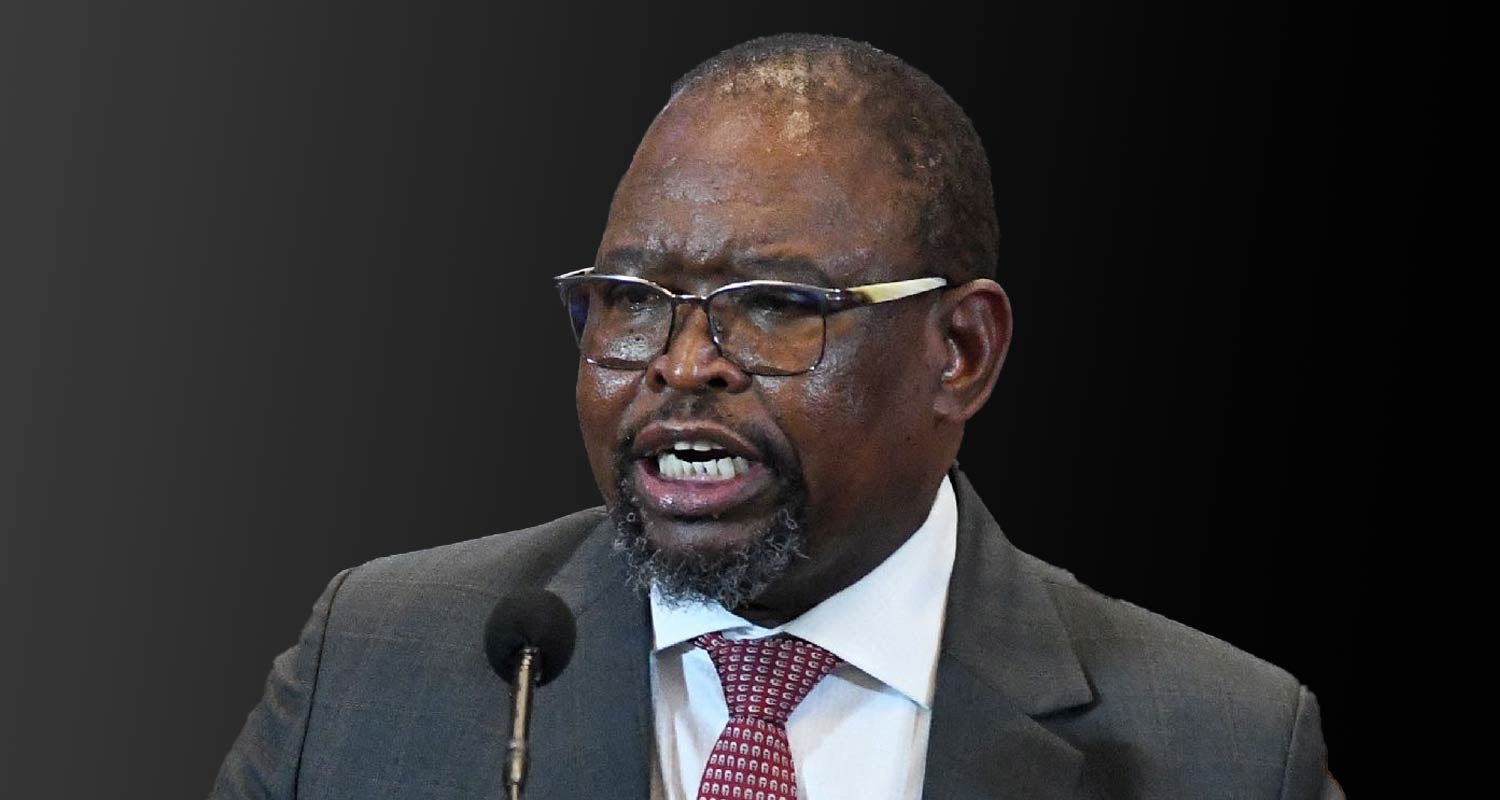
    Finance minister Enoch Godongwana. Image: GCIS
    Finance minister Enoch Godongwana. Image: GCIS

    Finance minister Enoch Godongwana has since acknowledged publicly that national treasury made a serious mistake. That acknowledgement matters. But acknowledgement without reversal is not a policy – it changes nothing. A further structural problem compounds the damage. Inward listings – foreign-domiciled companies listed on the JSE – are currently excluded from the offshore allocation count. This means a retirement fund manager can maintain effectively full offshore economic exposure while remaining technically compliant with domestic regulations. The rules exist. Their purpose has been circumvented.

    The compact we have broken

    The tax incentives embedded in South Africa’s retirement savings framework – contribution deductions, tax-free compounding, exemptions on fund income – were not granted arbitrarily. They reflect a social compact: the state forgoes revenue today in exchange for capital that remains productively deployed within the economy that granted the benefit.

    When 45% of that capital is permitted to leave South Africa permanently, the second half of the compact is voided. The taxpayer subsidy flows offshore. The infrastructure deficit deepens. The companies that might have been funded go elsewhere. And the retirement saver – living with a weakening currency, deteriorating public services and a country starved of productive investment – pays the price without ever being told why.

    What must be done

    The window to act is narrowing. These are not irreversible trends, but they are becoming so. The offshore allocation must be returned to 30%. Inward listings must be counted within that allocation rather than permitted to circumvent it. New flows should be subject to revised limits immediately. Existing portfolios should be given 18 months to comply – a timeline that is entirely achievable.

    As a corresponding measure, the prescribed assets debate should be suspended: by expanding the domestic capital pool through this reversal, we achieve the objective of directing investment towards South Africa without the coercive mechanisms that undermine fund manager discretion and accountability.

    None of this is radical. It is a restoration of what worked.

    I do not write this as someone who has given up on South Africa. I write it as someone who has watched this market through three of its most consequential chapters – the tech boom, the property rise and the commodities super-cycle – and who has sat on both sides of the transaction, in Johannesburg and in the global banking centres that decide where capital flows.

    The JSE was, during those years, a genuine source of national pride. It functioned. It financed. It gave ordinary South Africans a stake in the country’s growth. It can do so again. But not if we continue to look away from what is happening to it. This is my attempt to ensure that we do not.

    • The author, Duarte da Silva, is an experienced CEO with a history in the investment and financial services industries
    • Subscribe to TechCentral’s daily newsletter
    • Get breaking news alerts on WhatsApp

    Add TechCentral as a preferred source on GoogleFollow TechCentral on Google NewsGet breaking news on WhatsApp


    Duarte da Silva Enoch Godongwana JSE
    WhatsApp YouTube
    Share. Facebook Twitter LinkedIn WhatsApp Telegram Email Copy Link
    Previous ArticleDDoS attacks expose South Africa’s cyber response gap
    Next Article Webinar today: a 30-day plan to protect your SME from cyberattacks

    Related Posts

    Cell C boss buys into his own turnaround - Jorge Mendes

    Cell C boss buys into his own turnaround

    22 September 2026
    Visa crackdown is latest US blow to South Africa ties - Marco Rubio

    Visa crackdown is latest US blow to South Africa ties

    16 September 2026
    Godongwana tears into his own government's ICT policy drift - Enoch Godongwana

    Godongwana tears into his own government’s ICT policy drift

    14 September 2026
    Company News
    How agentic AI is transforming South African security operations - Maidar Secure Strike48

    How agentic AI is transforming South African security operations

    22 September 2026
    Closing the AI impact gap - Jason Molesworth and Biase De Gregorio - iqbusiness

    Closing the AI impact gap

    22 September 2026
    Sigfox looks to bridge IoT and AI

    Sigfox South Africa looks to bridge IoT and AI

    22 September 2026
    Opinion
    Regulating AI: apply the laws we have first - Dirk de Vos

    Regulating AI: apply the laws we have first

    21 September 2026
    The end is nigh, and the shares go on sale in October - Duncan McLeod

    The end is nigh, and the shares go on sale in October

    14 September 2026
    The fragile joint in the Capitec machine - Pambos Soteriades

    The R197-billion market the banks can’t reach

    25 August 2026

    Subscribe to Updates

    Get the best South African technology news and analysis delivered to your e-mail inbox every morning.

    Latest Posts
    Cell C boss buys into his own turnaround - Jorge Mendes

    Cell C boss buys into his own turnaround

    22 September 2026
    Nedbank: the cash economy won't die until digital ID arrives - Mfundo Nkuhlu

    Nedbank: the cash economy won’t die until digital ID arrives

    22 September 2026
    How agentic AI is transforming South African security operations - Maidar Secure Strike48

    How agentic AI is transforming South African security operations

    22 September 2026
    Closing the AI impact gap - Jason Molesworth and Biase De Gregorio - iqbusiness

    Closing the AI impact gap

    22 September 2026
    © 2009 - 2026 NewsCentral Media
    Built and maintained by Chronon
    • Cookie policy (ZA)
    • TechCentral – privacy and Popia

    Type above and press Enter to search. Press Esc to cancel.

    Manage consent

    TechCentral uses cookies to enhance its offerings. Consenting to these technologies allows us to serve you better. Not consenting or withdrawing consent may adversely affect certain features and functions of the website.

    Functional Always active
    The technical storage or access is strictly necessary for the legitimate purpose of enabling the use of a specific service explicitly requested by the subscriber or user, or for the sole purpose of carrying out the transmission of a communication over an electronic communications network.
    Preferences
    The technical storage or access is necessary for the legitimate purpose of storing preferences that are not requested by the subscriber or user.
    Statistics
    The technical storage or access that is used exclusively for statistical purposes. The technical storage or access that is used exclusively for anonymous statistical purposes. Without a subpoena, voluntary compliance on the part of your Internet Service Provider, or additional records from a third party, information stored or retrieved for this purpose alone cannot usually be used to identify you.
    Marketing
    The technical storage or access is required to create user profiles to send advertising, or to track the user on a website or across several websites for similar marketing purposes.
    • Manage options
    • Manage services
    • Manage {vendor_count} vendors
    • Read more about these purposes
    View preferences
    • {title}
    • {title}
    • {title}