Close Menu
TechCentralTechCentral

    Subscribe to the newsletter

    Get the best South African technology news and analysis delivered to your e-mail inbox every morning.

    Facebook X (Twitter) YouTube LinkedIn
    WhatsApp Facebook X (Twitter) LinkedIn YouTube
    TechCentralTechCentral
    • News
      Nedbank hires MTN's former tech chief as group CIO - Nikos Angelopoulos

      Nedbank hires MTN’s former tech chief as group CIO

      31 July 2026
      Eskom's diesel bill falls 86% as breakdowns hit eight-year low

      Eskom’s diesel bill falls 86% as breakdowns hit eight-year low

      31 July 2026
      Ramaphosa signs off on taking the grid away from Eskom

      Ramaphosa signs off on taking the grid away from Eskom

      31 July 2026
      Microsoft just had the biggest day in stock market history

      Microsoft just had the biggest day in stock market history

      31 July 2026
      MTN Nigeria's growth engine stalled in second quarter - Karl Toriola

      MTN Nigeria’s growth engine stalled in second quarter

      31 July 2026
    • World
      Meta AI will now tell parents if their teen is in crisis

      Meta AI will now tell parents if their teen is in crisis

      17 July 2026
      IBM shares crash 25% as AI upends software spending - Arvind Krishna

      IBM shares crash 25% as AI upends software spending

      15 July 2026
      Jony Ive's first OpenAI device: an AI smart speaker - Jony Ive and Sam Altman

      Jony Ive’s first OpenAI device: an AI smart speaker

      15 July 2026
      Stripe, Advent in talks to buy PayPal for $53-billion

      Stripe, Advent in talks to buy PayPal for $53-billion

      15 July 2026
      Memory crisis sends smartphone market into steep decline

      Memory crisis sends smartphone market into steep decline

      13 July 2026
    • In-depth
      The plan to stop AI from breaking the world - Google DeepMind CEO Demis Hassabis. Image: John Sears

      The plan to stop AI from breaking the world

      16 July 2026
      The internet has a Strait of Hormuz problem

      The internet has a Strait of Hormuz problem

      15 July 2026
      AI boom sparks rally, frenzy and fear

      AI boom sparks rally, frenzy and fear

      11 June 2026
      Every plug-in hybrid on sale in South Africa, ranked by price - Lamborghini Temerario

      Every plug-in hybrid on sale in South Africa, ranked by price

      7 June 2026
      What Wi-Fi 8 will mean for wireless networks

      What Wi-Fi 8 will mean for wireless networks

      1 June 2026
    • TCS
      TCS+ | Why South African workers must become supervisors of digital labour - Accelera Digital Group Cliff de Wit

      TCS+ | Why South African workers must become supervisors of digital labour

      31 July 2026
      TCS | Rapid deployment rules can't work without municipalities: ACT - Nomvuyiso Batyi

      TCS | Icasa’s rules skip the real bottleneck: ACT

      30 July 2026
      TCS+ | iStore Business on why Apple makes sense for SMEs - Sudesh Pillay and Tamia Nontsikelelo

      TCS+ | iStore Business on why Apple makes sense for SMEs

      30 July 2026
      TCS+ | A smarter approach to cloud for South African businesses - Joel Chacko and Jonathan Oaker

      TCS+ | A smarter approach to cloud for South African businesses

      28 July 2026
      TCS | How Optasia lends billions to people banks can't see - Salvador Anglada

      TCS | How Optasia lends billions to people banks can’t see

      23 July 2026
    • Opinion
      The author, Jannie van Zyl

      Selling vapour is corporate suicide in slow motion

      16 July 2026
      Brazil's online gambling crackdown is a lesson for South Africa

      How Amazon outmanoeuvred Starlink in South Africa

      15 July 2026
      The Popia problem with agentic AI - Herman Haasbroek

      The Popia problem with agentic AI

      14 July 2026
      The author, Fanie van Rooyen

      South Africa can still catch the AI wave – here’s how

      7 July 2026
      The author, Fanie van Rooyen

      The AI utopia South Africa can’t afford

      1 July 2026
    • Company Hubs
      • 1Stream
      • Africa Data Centres
      • AfriGIS
      • Altron Digital Business
      • Altron Document Solutions
      • Altron Group
      • Arctic Wolf
      • Ascent Technology
      • AvertITD
      • BBD
      • Braintree
      • CallMiner
      • CambriLearn
      • CM Telecom
      • Contactable
      • CYBER1 Solutions
      • Digicloud Africa
      • Digimune
      • Domains.co.za
      • ESET
      • Euphoria Telecom
      • HOSTAFRICA
      • Incredible Business
      • iONLINE
      • IQbusiness
      • Iris Network Systems
      • Kaspersky
      • LSD Open
      • Mitel
      • NEC XON
      • Netstar
      • Network Platforms
      • Next DLP
      • Ovations
      • Paracon
      • Paratus
      • Q-KON
      • SevenC
      • SkyWire
      • Solid8 Technologies
      • Telit Cinterion
      • Telviva
      • Tenable
      • Vertiv
      • Videri Digital
      • Vodacom Business
      • Vox
      • Wipro
      • Workday
      • XLink
    • Sections
      • AI and machine learning
      • Banking
      • Broadcasting and Media
      • Cloud services
      • Contact centres and CX
      • Cryptocurrencies
      • Education and skills
      • Electronics and hardware
      • Energy and sustainability
      • Enterprise software
      • Financial services
      • HealthTech
      • Information security
      • Internet and connectivity
      • Internet of Things
      • Investment
      • IT services
      • Lifestyle
      • Policy and regulation
      • Public sector
      • Retail and e-commerce
      • Satellite communications
      • Science
      • SMEs and start-ups
      • Social media
      • Talent and leadership
      • Telecoms
      • Watts & Wheels
    • Events
    • Advertise
    TechCentralTechCentral
    Home » Opinion » Sipho Maseko » Why Telkom created Openserve

    Why Telkom created Openserve

    By Sipho Maseko13 October 2015
    Twitter LinkedIn Facebook WhatsApp Email Telegram Copy Link
    News Alerts
    WhatsApp

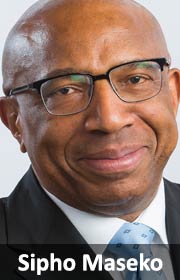
    sipho-maseko-180Two years ago, we set out on a journey to transform Telkom, to turn the company around and to place it on a path to long-term growth and sustainability.

    Very little about the last two years has been easy.

    We have tackled inefficiencies, complexity and high costs, while also reducing our debt, stabilising our mobile business and concluding our long-awaited Business Connexion acquisition.

    Our quest to improve customer experience remains a primary focus.

    The Telkom team has delivered some remarkable results and we are well on track to stabilise the business. But much remains to be done.

    The global and local telecommunications market will continue to evolve. Competition in both the retail and wholesale segments will continue to increase in severity. And customers across all market segments will continue to demand cutting-edge solutions — as they should.

    In such an environment, we cannot sit back and let the winds of change wash over us. In our business, inaction spells irrelevance. We have to respond. We have to take responsibility for our future and carve our own path. Instead of being a slave to circumstance, we must be master of our destiny.

    It has been two years of tumultuous change. Change brings with it uncertainty and insecurity and our people have had to weather these storms with us as we push forward to build a Telkom that connects all communities.

    But this journey is not just about one business. It is not just about Telkom.

    As our industry has evolved, so, too, must we.

    We must welcome a more open-access environment and all the opportunities it offers.
    People speak of broadband as a critical national resource and we agree. We need to democratise broadband.

    I personally envisage a South Africa where, like water and electricity, broadband should be within everyone’s reach. It should be open to access.

    The vibrant and inclusive information society that is envisaged by the national development plan will remain out of reach, until we collectively bridge our nation’s digital divide.

    But to deliver meaningful and impactful change in an open access world, we have had to review our Telkom operating model.

    In August, we announced that we would be reorganising our company into core business units of consumer, enterprise, wholesale and networks, supported by a lean and effective corporate centre.

    By better organising the business into core business units, we are able to really sharpen our focus on customers.

    Without customer satisfaction, growth is quite simply not possible.

    Functional separation will help create that environment for growth. It is the right thing to do for our business. And it will also provide us with the scope to turn our broadband intentions and aspirations into our national reality.

    Through this separation, and the creation of Openserve, we remove critical stumbling blocks on our path to success.

    This separation will drive greater customer centricity and will allow us to focus on our future sources of competitive advantage — by best knowing our customers’ strategies, objectives and aspirations.

    Separation frees the organisation to more closely focus on the centre of our business — the customer.

    We have to provide our customers with a distinct, truly memorable experience. This is of paramount importance. Our customers deserve the best. It is our job to ensure they get it.

    We are transforming the company to become nimble and responsive so that we can meaningfully challenge any competition.

    We are building a structure that will allow us to execute this separation and live up to this goal so we can meet customer’s expectations, so we can grow of business and so that we can modernise our economy.
    The Openserve logo
    The Openserve logo

    The launch of Openserve introduces us to a new era for Telkom. We are designing a business that will make this an era of partnership in connectivity and transparent and fair relationships between us and our clients.

    Along with focus, we need accountability. Shared accountability is tantamount to no accountability. Whether it is profit and loss, investment decisions or utilisation rates, clear and single-point accountabilities are good for the customer — and good for the business.

    Focus and accountability help us remove complexity. Clearer decision making is suddenly possible, which in turn allows us to better leverage our infrastructure investment. All this unlocks shareholder value.

    Openserve must be able to compete with its peers. We will deploy networks faster. We will be efficient in how we use capital and we need to serve all Internet service providers in the right way, with the right teams.

    As a free-standing division of Telkom, Openserve must develop its own culture and capabilities so that they we can compete and win.

    What we will create is effectively an agnostic platform for all.

    Openserve must deliver access to broadband and connectivity services to all the service providers.

    It must hit its financial targets for the Telkom business but in doing so it will also play a leading role in making broadband in South Africa as pervasive as possible.

    There is no doubt that a South Africa that offers broadband access for all is a strong and growing South Africa. As a business, we will benefit from pervasive broadband access as we are the best suited to deliver it.

    We have the most pervasive fibre network in the country. We have the broadest network, the most number of masts and towers and we have the fixed and mobile capabilities and capacities to make it happen.

    At some point, the digital divide becomes too big. By acting now, we are not only bridging the gap but ensuring millions of South Africans can join us on this journey. Openserve will be at the heart of this access revolution.

    With the right products and the right pricing, Openserve will have massive ramifications in the transformation of our economy.

    Our actions today will set us on an irreversible path to providing the connected future South Africa deserves.

    A Roman philosopher once wrote that if one does not know to which port one is sailing, no port is favourable.

    Well, we know which port we have chosen and we know it is the right one. Our task now is the navigate both the calm and stormy seas that await us on this journey, knowing that in doing so, we are making history and shaping the success of our collective futures.

    • Sipho Maseko is group CEO at Telkom

    Follow TechCentral on Google News Add TechCentral as your preferred source on Google


    BCX Business Connexion Openserve Sipho Maseko Telkom Telkom Openserve
    WhatsApp YouTube
    Share. Facebook Twitter LinkedIn WhatsApp Telegram Email Copy Link
    Previous ArticleTelkom’s rivals must follow its lead: Cwele
    Next Article Telkom spins off wholesale arm as Openserve

    Related Posts

    Huawei Connect 2026: taking South African AI beyond pilots

    Huawei Connect 2026: taking South African AI beyond pilots

    29 July 2026
    Fat bonuses at Telkom despite group missing own targets - Serame Taukobong

    Fat bonuses at Telkom despite group missing own targets

    23 July 2026
    Openserve hits back in fibre ISP row

    Openserve hits back in fibre ISP row

    20 July 2026
    Company News
    Domains.co.za launches self-hosted n8n VPS hosting

    Domains.co.za launches self-hosted n8n VPS hosting

    31 July 2026
    Smarter.tech '26 shows why smarter technology begins with context - Obsidian Systems

    Context is the missing piece in enterprise AI: Obsidian

    31 July 2026
    Huawei launches 12 intelligent transport solutions in South Africa - Sam Tang

    Huawei launches 12 intelligent transport solutions in South Africa

    30 July 2026
    Opinion
    The author, Jannie van Zyl

    Selling vapour is corporate suicide in slow motion

    16 July 2026
    Brazil's online gambling crackdown is a lesson for South Africa

    How Amazon outmanoeuvred Starlink in South Africa

    15 July 2026
    The Popia problem with agentic AI - Herman Haasbroek

    The Popia problem with agentic AI

    14 July 2026

    Subscribe to Updates

    Get the best South African technology news and analysis delivered to your e-mail inbox every morning.

    Latest Posts
    Nedbank hires MTN's former tech chief as group CIO - Nikos Angelopoulos

    Nedbank hires MTN’s former tech chief as group CIO

    31 July 2026
    Eskom's diesel bill falls 86% as breakdowns hit eight-year low

    Eskom’s diesel bill falls 86% as breakdowns hit eight-year low

    31 July 2026
    Ramaphosa signs off on taking the grid away from Eskom

    Ramaphosa signs off on taking the grid away from Eskom

    31 July 2026
    TCS+ | Why South African workers must become supervisors of digital labour - Accelera Digital Group Cliff de Wit

    TCS+ | Why South African workers must become supervisors of digital labour

    31 July 2026
    © 2009 - 2026 NewsCentral Media
    Built and maintained by Chronon
    • Cookie policy (ZA)
    • TechCentral – privacy and Popia

    Type above and press Enter to search. Press Esc to cancel.

    Manage consent

    TechCentral uses cookies to enhance its offerings. Consenting to these technologies allows us to serve you better. Not consenting or withdrawing consent may adversely affect certain features and functions of the website.

    Functional Always active
    The technical storage or access is strictly necessary for the legitimate purpose of enabling the use of a specific service explicitly requested by the subscriber or user, or for the sole purpose of carrying out the transmission of a communication over an electronic communications network.
    Preferences
    The technical storage or access is necessary for the legitimate purpose of storing preferences that are not requested by the subscriber or user.
    Statistics
    The technical storage or access that is used exclusively for statistical purposes. The technical storage or access that is used exclusively for anonymous statistical purposes. Without a subpoena, voluntary compliance on the part of your Internet Service Provider, or additional records from a third party, information stored or retrieved for this purpose alone cannot usually be used to identify you.
    Marketing
    The technical storage or access is required to create user profiles to send advertising, or to track the user on a website or across several websites for similar marketing purposes.
    • Manage options
    • Manage services
    • Manage {vendor_count} vendors
    • Read more about these purposes
    View preferences
    • {title}
    • {title}
    • {title}